Why Are School Buses Yellow?
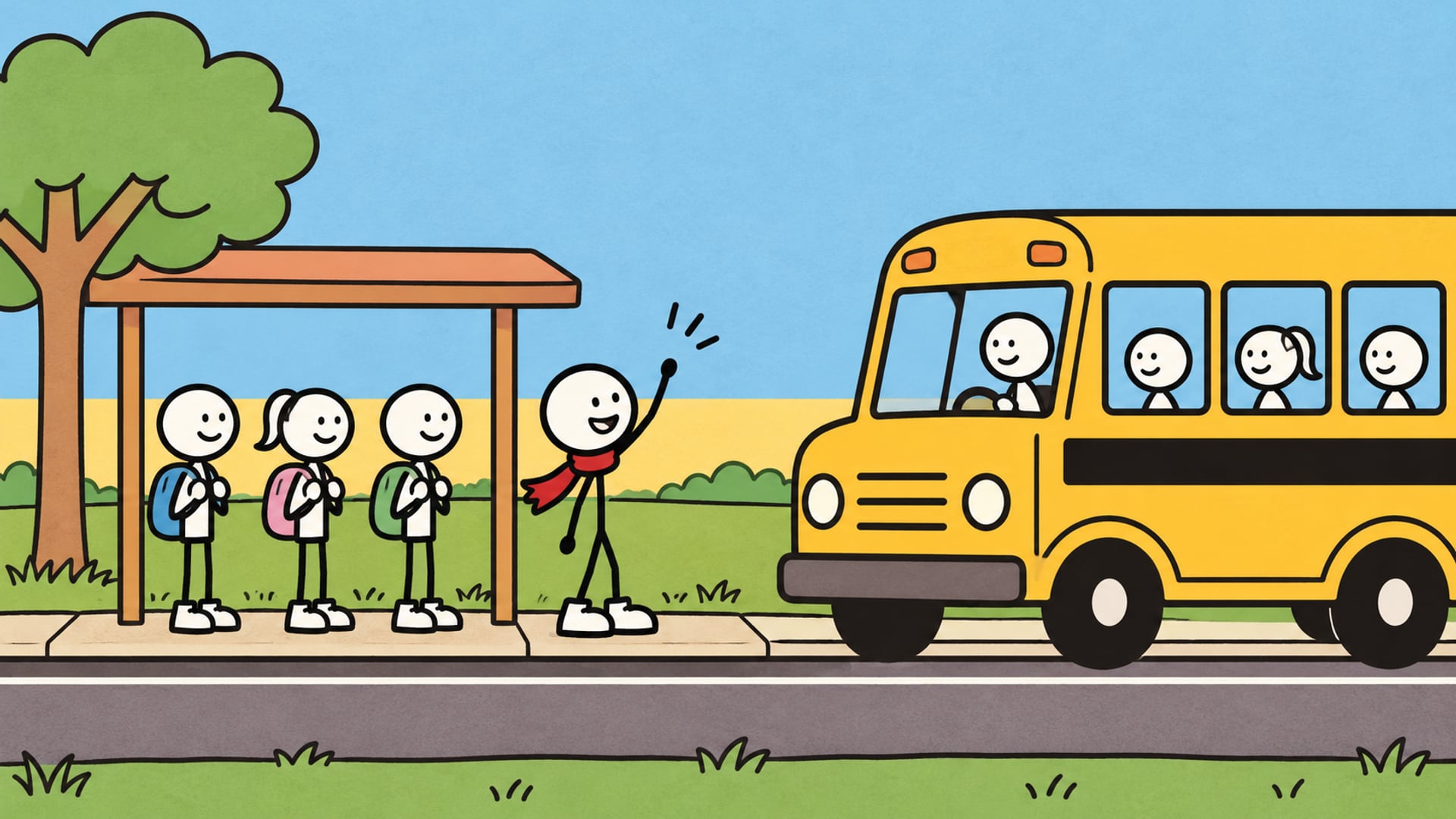
School buses are yellow because a 1939 conference at Teachers College picked a yellow-orange shade that made black lettering easy to read in early-morning and late-afternoon light. It was a decision by educators, officials and engineers, not a federal paint law. The color became standard on conventional American school buses.

In this explainer +
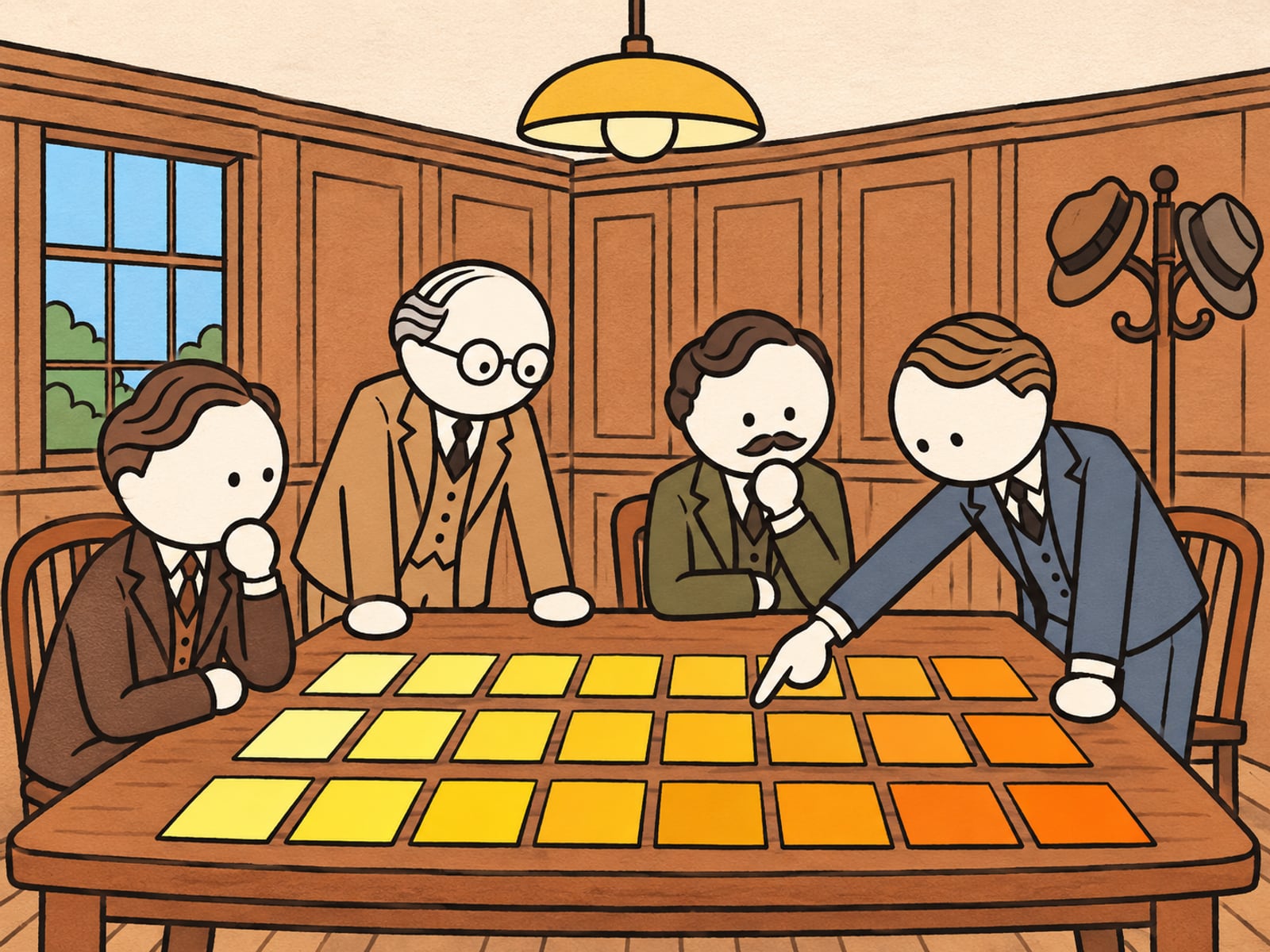
It's April 1939, in the Grace Dodge Room at Teachers College in New York City, and about 50 paint samples are laid out for the people in the room to study.
They run from lemon yellow to deep orange-red. The conference these people came for will settle on one shade, and it's the one American school buses are still known for.
The short answer: the yellow was chosen at a seven-day conference that Frank W. Cyr organized at Teachers College, Columbia University, because black lettering was easiest to read against that yellow-orange shade in early-morning and late-afternoon light. Here's how a wall of paint chips became the look of the school bus.
Before the bus had a color
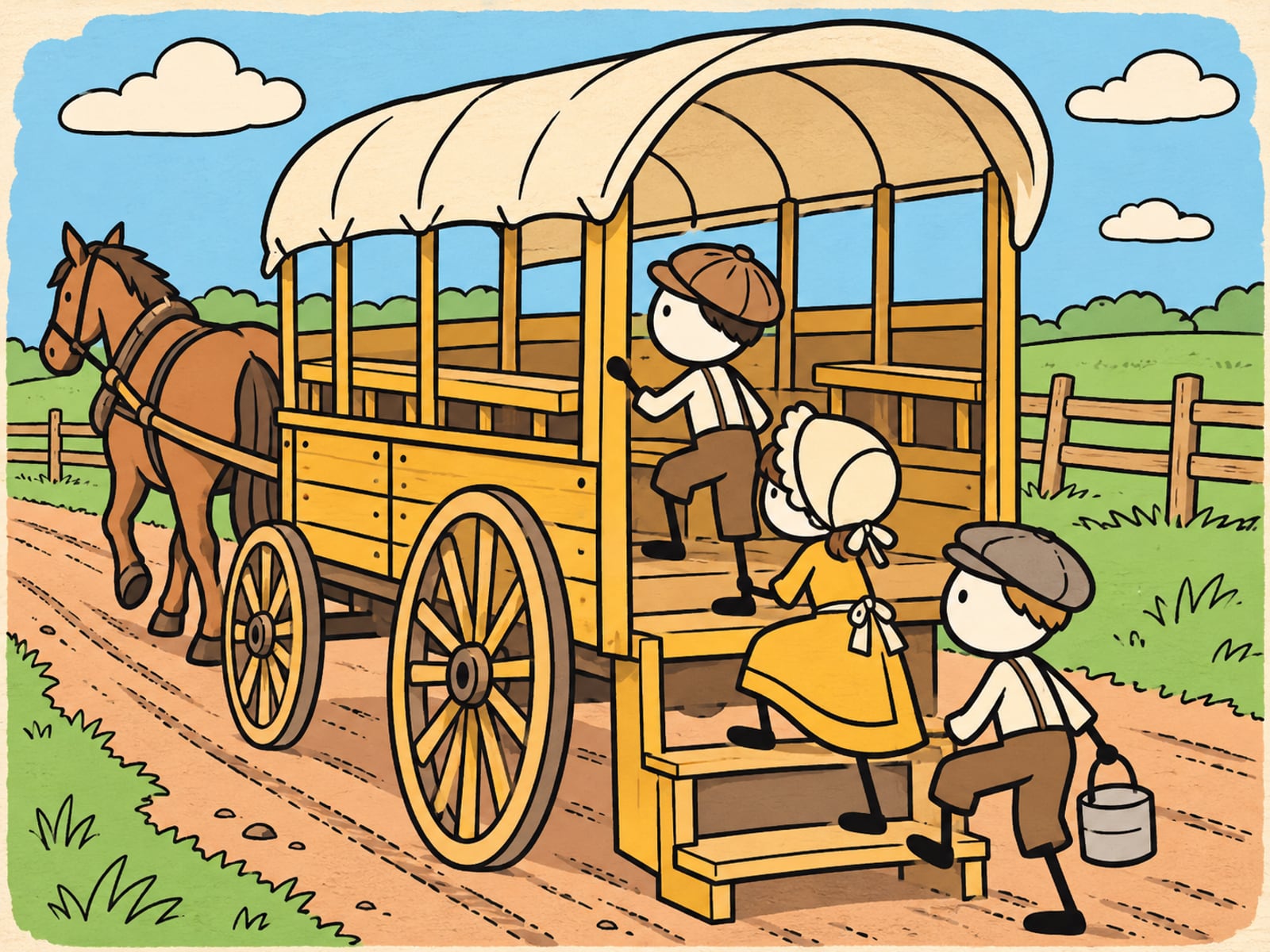
For a long time, there was no bus. Many American children simply walked to small, local schools. Some rural districts sent wagons instead, horse-drawn ones that people called "kid hacks" or "school wagons," according to the Smithsonian.
In 1892, Wayne Works built a purpose-made horse-drawn "School Car" for an Ohio school district. It had benches along the sides and an entrance at the back, so the children would not frighten the horses, as the Idaho Heritage Trust tells it.
Then came motor trucks and buses, which gradually replaced the wagons in the early 1900s.
What color were they? Whatever a district felt like. Early school vehicles could be drab, ordinary wagon colors, or whatever a local district selected. One district reportedly painted its buses red, white and blue for patriotic reasons. A Kansas district used horse-drawn wheat wagons. And the Smithsonian preserves a 1939 school bus painted "double-deep orange," a reminder that orange-yellow shades were already out on the road before anyone made them official.
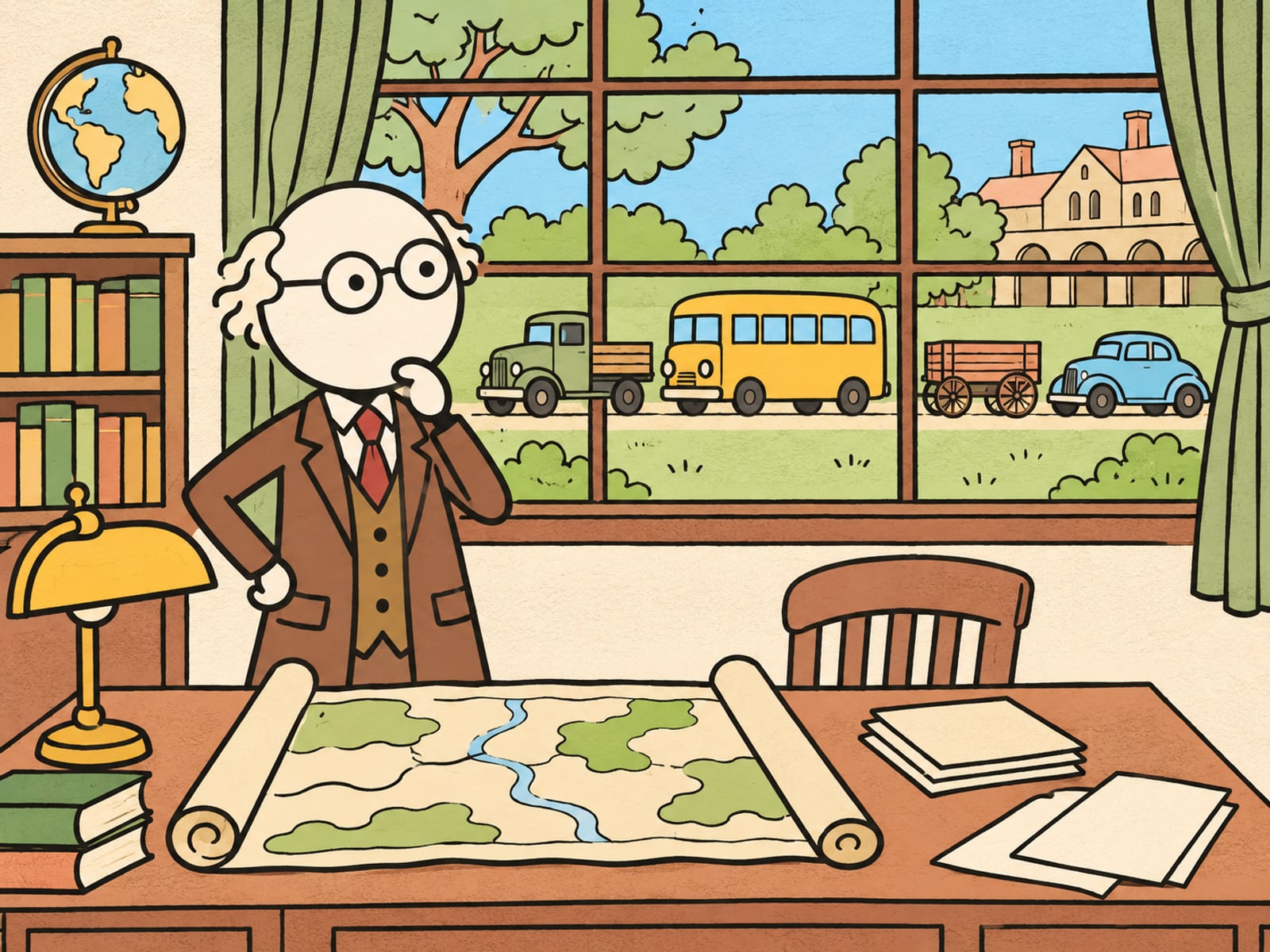
The professor with a survey
Frank W. Cyr was a professor of rural education at Teachers College, Columbia University. Before that, he had taught in rural schools and served as a school superintendent in Nebraska. His work was about making rural education, and the rides to it, better.
In 1937, Cyr surveyed how children were being carried to school. What he found was a patchwork: trucks, buses and old wagons, carrying children under different local requirements.
So, in April 1939, he organized a seven-day conference at Teachers College. Transportation officials from all 48 states came, along with educators, school-bus makers, engineers and paint specialists. A $5,000 Rockefeller Foundation grant paid for it, according to the Teachers College obituary for Cyr.
The group adopted national standards for school-bus construction and safety. Depending on how the published set is described, that was 42 or 44 standards. They covered body length and width, aisle width, door placement, emergency exits, seating, brakes, exterior lettering and more. And one of them was a standard exterior color.
Cyr later became known as the "Father of the Yellow School Bus."
Fifty samples, one shade
Back to the Grace Dodge Room. According to Smithsonian Magazine, the samples ran from lemon yellow to deep orange-red. The participants narrowed them to a small group of yellow-orange shades.
Then they chose the one that made black lettering easiest to read in the early morning and late afternoon, when the light is low.
That's it. That was the deciding test.
The paint got a name, too. It was first called "National School Bus Chrome," after the lead-chromate pigment in it. Later it was renamed "National School Bus Glossy Yellow." And because paint could not always be mixed identically, the 1939 decision allowed for slight variation in shade.
Why yellow and black work together
Is it only a story about 1939, or does the reasoning still hold? Transportation and police groups still make the same case. The International Association of Chiefs of Police says in a resolution that black on yellow gives contrast and visibility in early-morning and late-afternoon light, and makes school buses immediately recognizable to motorists, officers and safety officials.
A Virginia Tech dissertation sums up the commonly cited visual explanation: yellow is easier to notice at the edge of your vision than other colors, while black lettering stays readable against it.
In other words, the color does two jobs. It gets noticed, and the words on it can be read.
Yellow today, and its limits
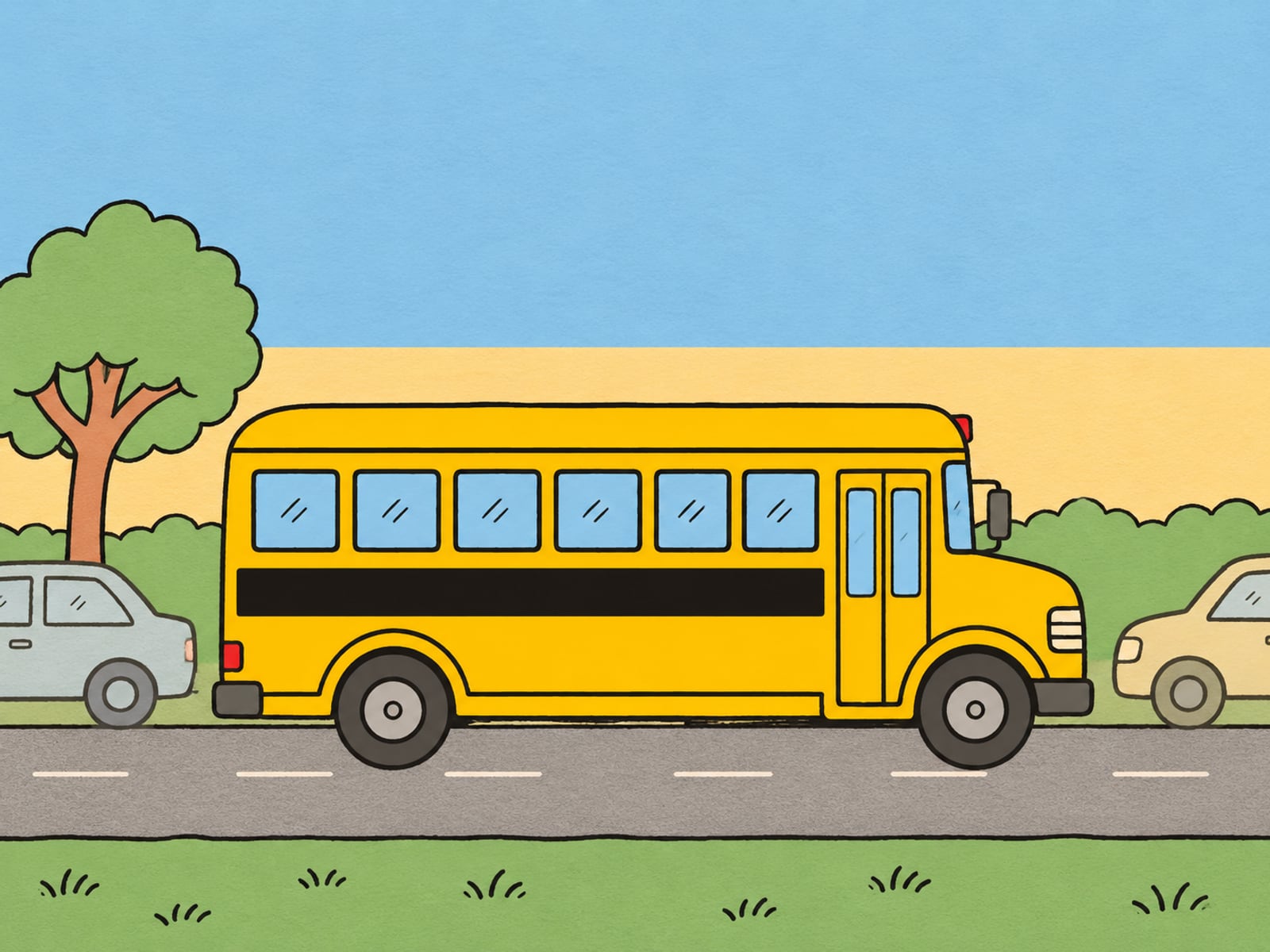
Is every school bus in America required to be yellow by federal law? No. NHTSA recommends "National School Bus Glossy Yellow" through its Highway Safety Program Guideline 17, and it describes that as a recommendation to states, not a federal color mandate. State and local governments set the rules for how school buses are identified, as NHTSA explains in its school bus regulations FAQs.
States commonly adopt the recommendation. Virginia law, for example, requires school buses to be painted yellow and limits that color and school-bus markings to qualifying school buses.
The National School Transportation Specifications and Procedures, issued through the National Congress on School Transportation, also specifies "National School Bus Yellow" for the body. It allows a few variations: a white roof in specified areas, black exterior trim, and black or yellow on the flat top of the hood. Multi-Function School Activity Buses are exempt from the color requirements. The current manual is on file as a PDF from the Kansas State Department of Education.
The practical result: yellow is nearly universal among conventional American school buses, even though no federal law paints them.
Outside the United States
The look changes at the border. Mexico has no single national school-bus appearance, and the rules are local or state-based. Puebla's regulations name "amarillo tráfico," identified as RAL 1023 or Pantone 1235, for school-transport vehicles, according to the state's transportation regulations.
Colombia asks for alternating yellow (Pantone 109) and black stripes on the rear of school-transport vehicles, under Decree 1079.
Spain mostly runs school transport on ordinary buses or coaches that are authorized for the job. What marks them is a yellow V-10 sign with black figures and the words "TRANSPORTE ESCOLAR," as the DGT manual describes.
The record
| Date | What happened | Source |
|---|---|---|
| 1892 | Wayne Works builds a horse-drawn "School Car" for an Ohio district, with a rear entrance | Idaho Heritage Trust |
| Early 1900s | Motor trucks and buses gradually replace school wagons | Smithsonian, "A Brief History of the School Bus" |
| 1937 | Frank W. Cyr surveys the trucks, buses and wagons carrying children | Teachers College, Cyr obituary |
| April 1939 | About 50 paint samples are shown in the Grace Dodge Room at Teachers College | Smithsonian Magazine |
| April 1939 | A seven-day conference with officials from all 48 states adopts national school-bus standards | Teachers College, Cyr obituary |
| April 1939 | The conference picks the shade that makes black lettering easiest to read in low light | Teachers College, "School Bus Yellow" |
| 1939 | A 36-passenger Dodge bus in bright orange paint serves a consolidated school in Martinsburg, Indiana | Smithsonian National Museum of American History |
| 2025 | The 17th National Congress edition of the national specifications calls for National School Bus Yellow | National School Transportation Specifications and Procedures |
Questions people ask
Why do school buses have flashing red lights and stop arms? 01
They warn other road users when children are boarding, leaving or crossing. The yellow body and black "SCHOOL BUS" lettering tell drivers what the vehicle is, and the lights and stop arm tell them what is happening right now. NHTSA's Guideline 17 describes this identity.
Why do some school buses have black hoods, bumpers or white roofs? 02
Those are variations that state specifications permit within the National School Bus Yellow standard. The national specifications allow a white roof in specified areas, black exterior trim, and black or yellow on the flat top of the hood.
Why do school buses have emergency exits at the rear? 03
The design traces back to horse-drawn school cars, whose rear entrances reduced the chance of frightening the horses. The 1939 conference also adopted standards for emergency exits.
Why are American school buses different from buses in Spain or Mexico? 04
Each country has its own transportation system, vehicle rules, school routes and local governments. The United States built a distinctive yellow bus body. Spain puts a sign on ordinary authorized vehicles, and Mexico's rules vary by state.
A color that stuck
No federal paint law made school buses yellow. A professor surveyed a patchwork, a roomful of officials and engineers compared paint samples, and a shade won because black letters could be read on it in thin morning light.
Today the color still tells drivers that children may be boarding or crossing.
The yellow was picked so the black lettering could be read in the early morning and late afternoon, and it became the look of the American school bus.
Sources

- Smithsonian Magazine, "History: How School Buses Became Yellow"
- Smithsonian Magazine, "A Brief History of the School Bus"
- Smithsonian National Museum of American History, "School Bus"
- Teachers College, Columbia University, "School Bus Yellow"
- Teachers College, Columbia University, "Frank W. Cyr, Father of the Yellow School Bus, Dies"
- Idaho Heritage Trust, "The Pine Street School Bus Restoration and the History of Student Transportation"
- International Association of Chiefs of Police, 2013 resolutions
- Virginia Tech, Cornett dissertation (2015)
- NHTSA, "School Bus Regulations FAQs"
- NHTSA, "Highway Safety Program Guideline 17"
- Kansas State Department of Education, "National School Transportation Specifications and Procedures"
- Puebla, "Reglamento de la Ley de Transporte del Estado de Puebla"
- Colombia, Decree 1079
- Spain, Dirección General de Tráfico, "Manual III RVP 2024"