Why Does Saturn Have Rings?
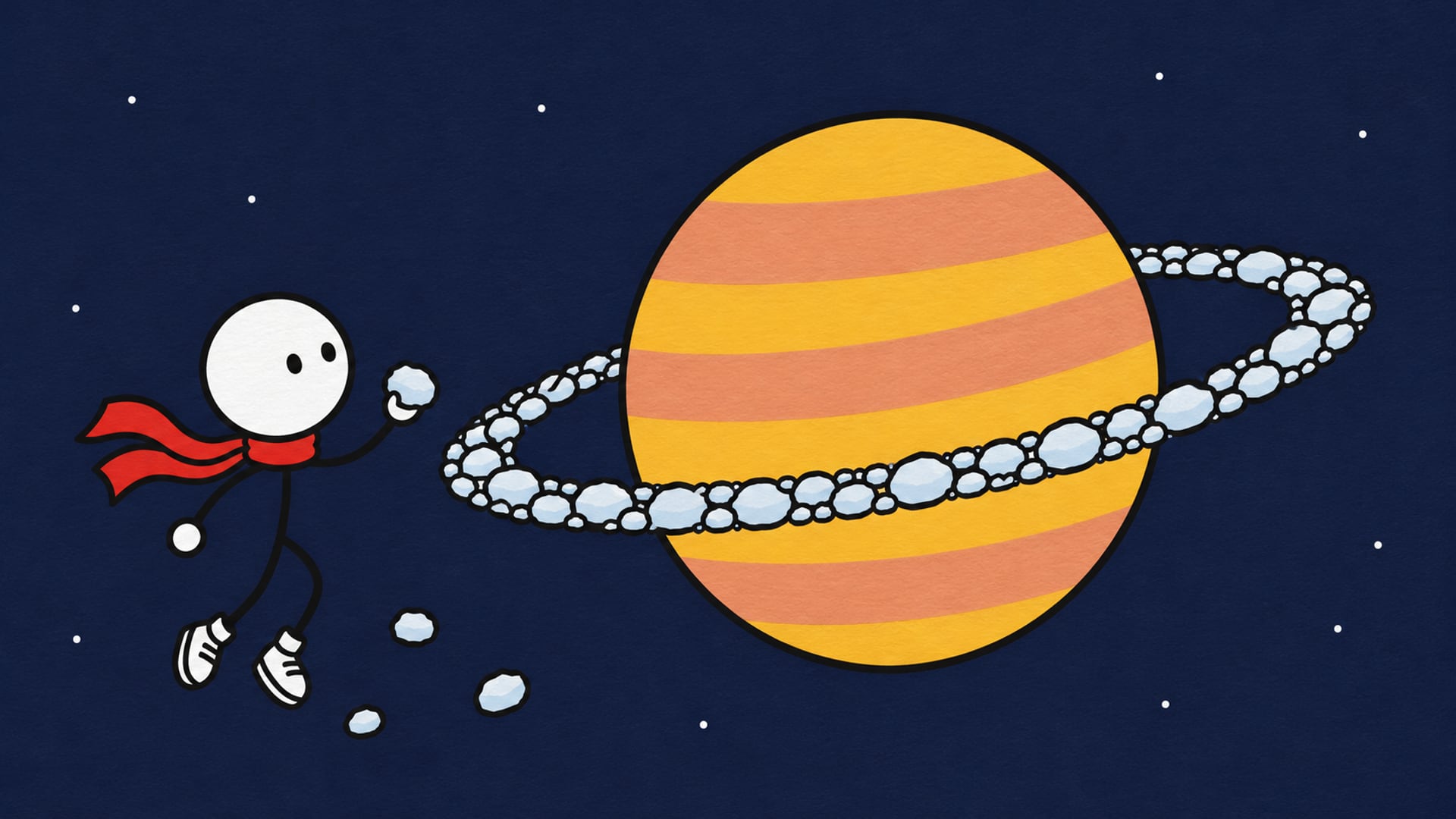
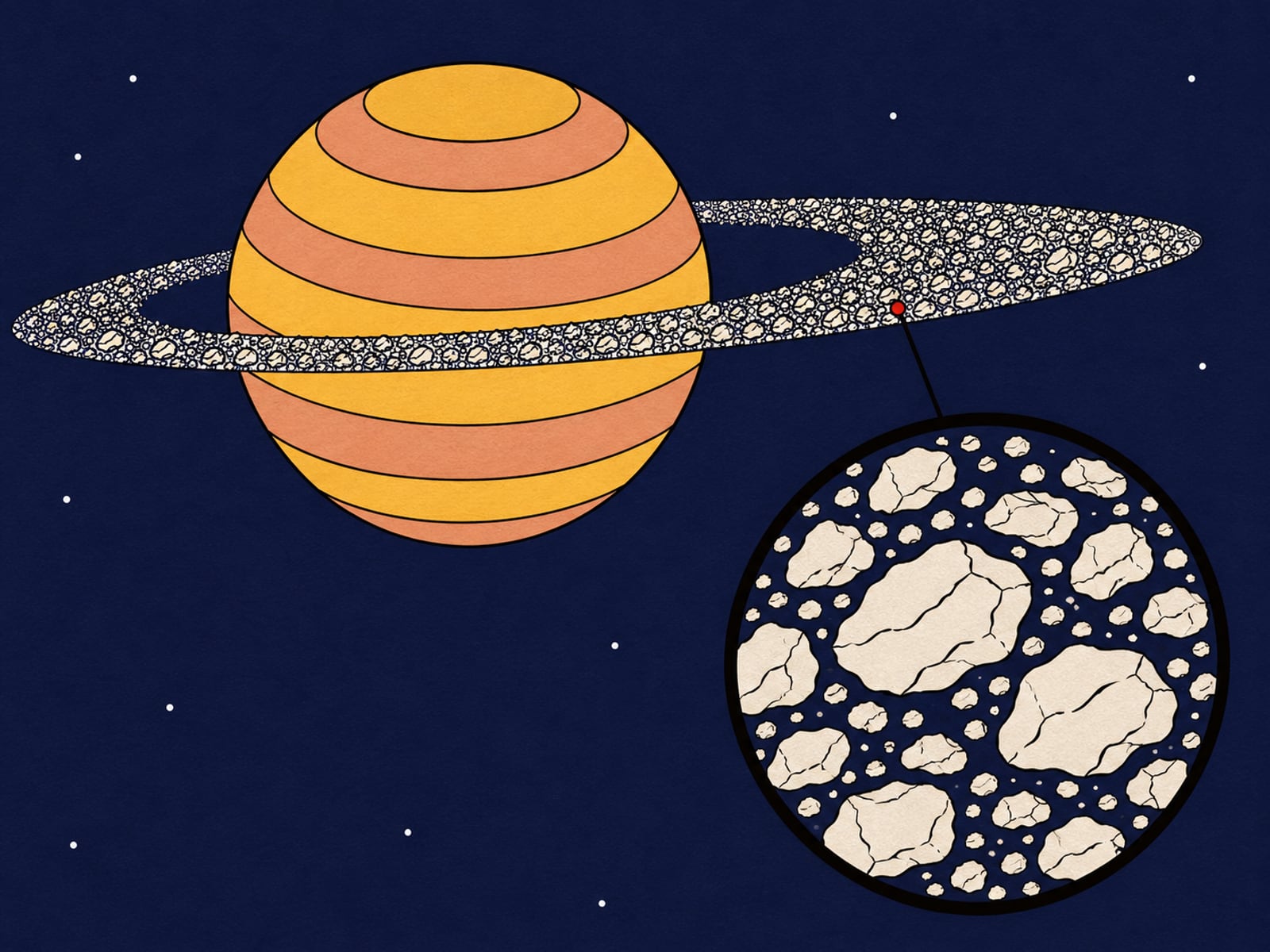
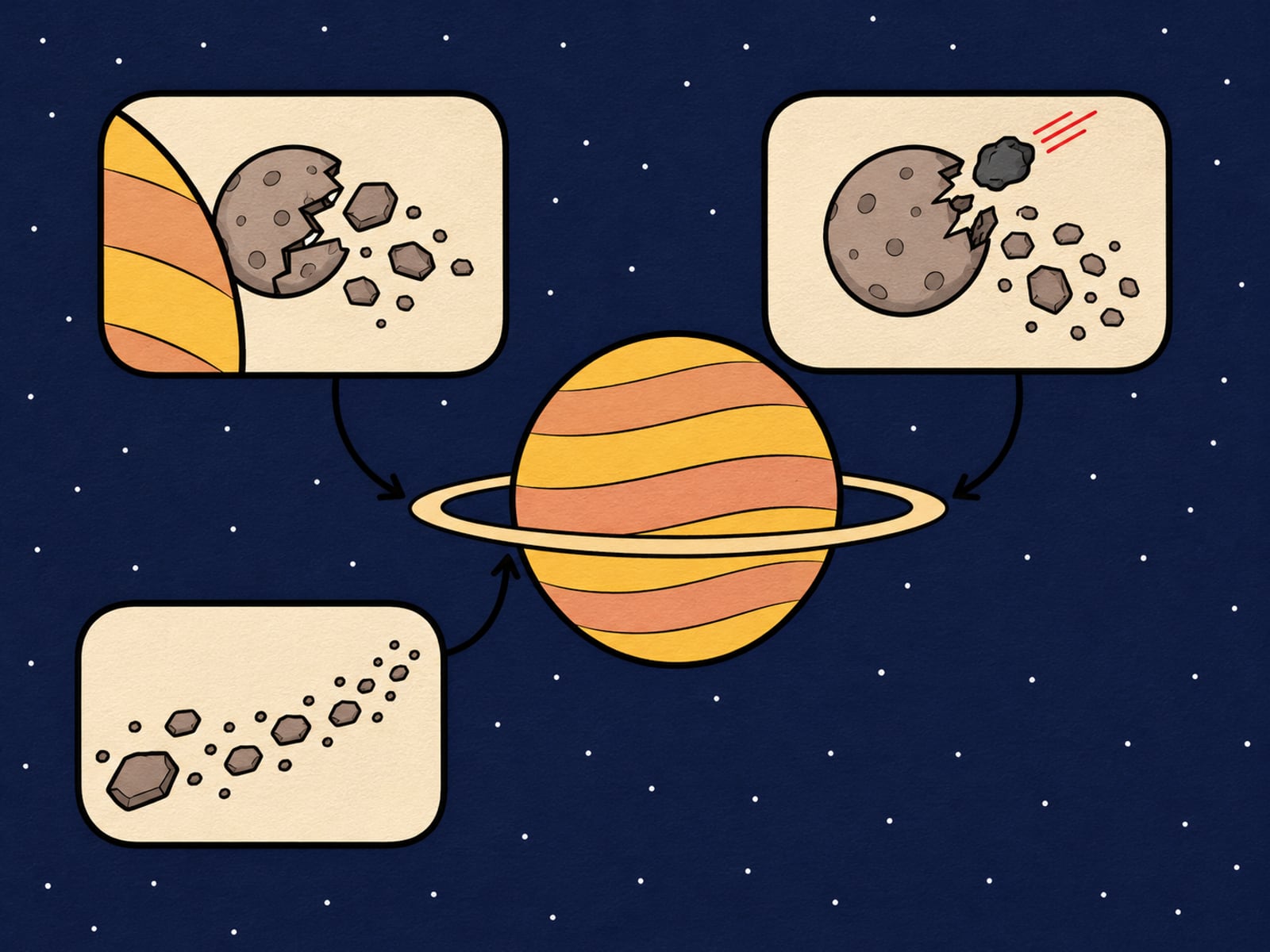
Saturn's rings are not solid sheets. They are countless separate particles, mostly water ice mixed with dust and rock, ranging from microscopic grains to boulders. NASA lists three possible origins, a moon torn apart by Saturn's tides, a moon shattered by an impact, or leftover moon-building material, and the age of the rings is still debated.

In this explainer +
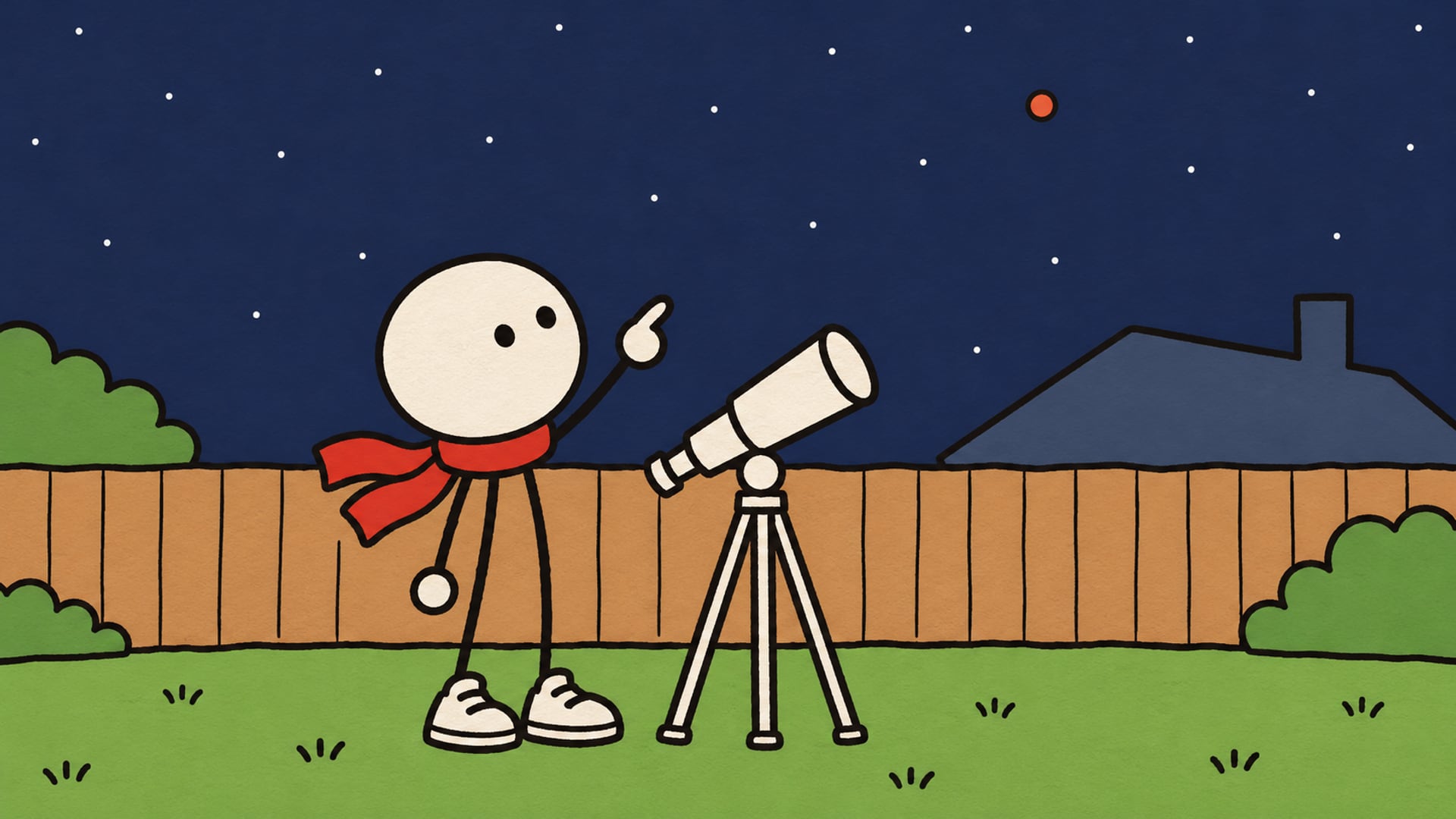
Galileo pointed a telescope at Saturn in 1610 and saw two strange shapes, one on each side of the planet. He took them for separate bodies, or maybe handles attached to it.
They were rings.
Saturn's rings are countless separate particles, mostly water ice mixed with dust and rock, from microscopic grains to boulders. How they got there is still an open question. Scientists have a short list of ideas and a lively argument about the age.
Christiaan Huygens proposed the ring answer in 1659. The rest of this post follows the idea from there: what the rings are made of, how wide and thin they are, who worked out what and when, the competing ideas about their origin, and why they seemed to vanish in 2025.
A very wide, very flat swarm
The rings are huge in one direction and almost nothing in the other. NASA gives the ring system a width of about 400,000 kilometers, while its thickness can be as little as 100 meters. Measurements from the Cassini spacecraft put the main A, B and C rings at about 10 meters thick or less in most places, according to the NASA Cassini FAQ.
In other words, the rings are enormously wide and extremely thin. And they are not a sheet at all.
Think of it like this: a swarm of snowballs of every size, all circling the same planet and flattened into a single layer. From far away, the swarm looks like a solid band. Up close, it is bits of ice.
What Galileo saw, and what came next
Galileo Galilei, an Italian astronomer, was the first to look at Saturn through a telescope, in 1610. He saw strange objects on both sides of the planet and first read them as separate bodies or handles attached to Saturn, as NASA's Saturn lithograph tells it.
In 1659, the Dutch astronomer Christiaan Huygens used a more powerful telescope and proposed that Saturn was surrounded by a thin, flat ring. Sixteen years later, in 1675, Giovanni Domenico Cassini identified the division between what we now call the A and B rings.
Then the spacecraft arrived. From 1979 to 1981, NASA's Voyager probes showed that the rings were made mostly of water ice, with ringlets, braided structures and spokes.
NASA's Cassini spacecraft arrived at Saturn in July 2004 and began a 13-year study of the planet, its rings and its moons. In 2005 it detected water-rich jets from the moon Enceladus. Those jets supply much of Saturn's diffuse E ring, according to NASA's Cassini rings overview.

Where did the rings come from, and how old are they?
Here the story stops being settled. NASA lists three possibilities in its Cassini FAQ:
- A moon, or a moon-sized body, was torn apart by Saturn's tidal forces inside the Roche limit, the zone close enough to the planet for those forces to win.
- A moon was shattered by an impact.
- Leftover material from moon formation never assembled into a larger moon.
The age is also contested, and the numbers do not agree. NASA's 2019 analysis of Cassini gravity measurements estimated that the main rings formed 10 million to 100 million years ago. A 2023 study led by Sascha Kempf at the University of Colorado Boulder used Cassini dust measurements to estimate an exposure age of no more than about 400 million years.
An older reading has not gone away. NASA reported in 2006 that Cassini observations were consistent with rings as old as Saturn, about 4.5 billion years, with ring material recycled as moons break apart and reform. The disagreement comes down to how quickly micrometeoroid dust darkens the rings and how much ring material is recycled or removed.
There is also one proposal with a name. A 2022 model led by Jack Wisdom of MIT suggested that a lost moon called Chrysalis may have broken apart about 160 million years ago, as El País reported. It is a model, not an established record.
Other ringed planets, and the rings that "vanished"
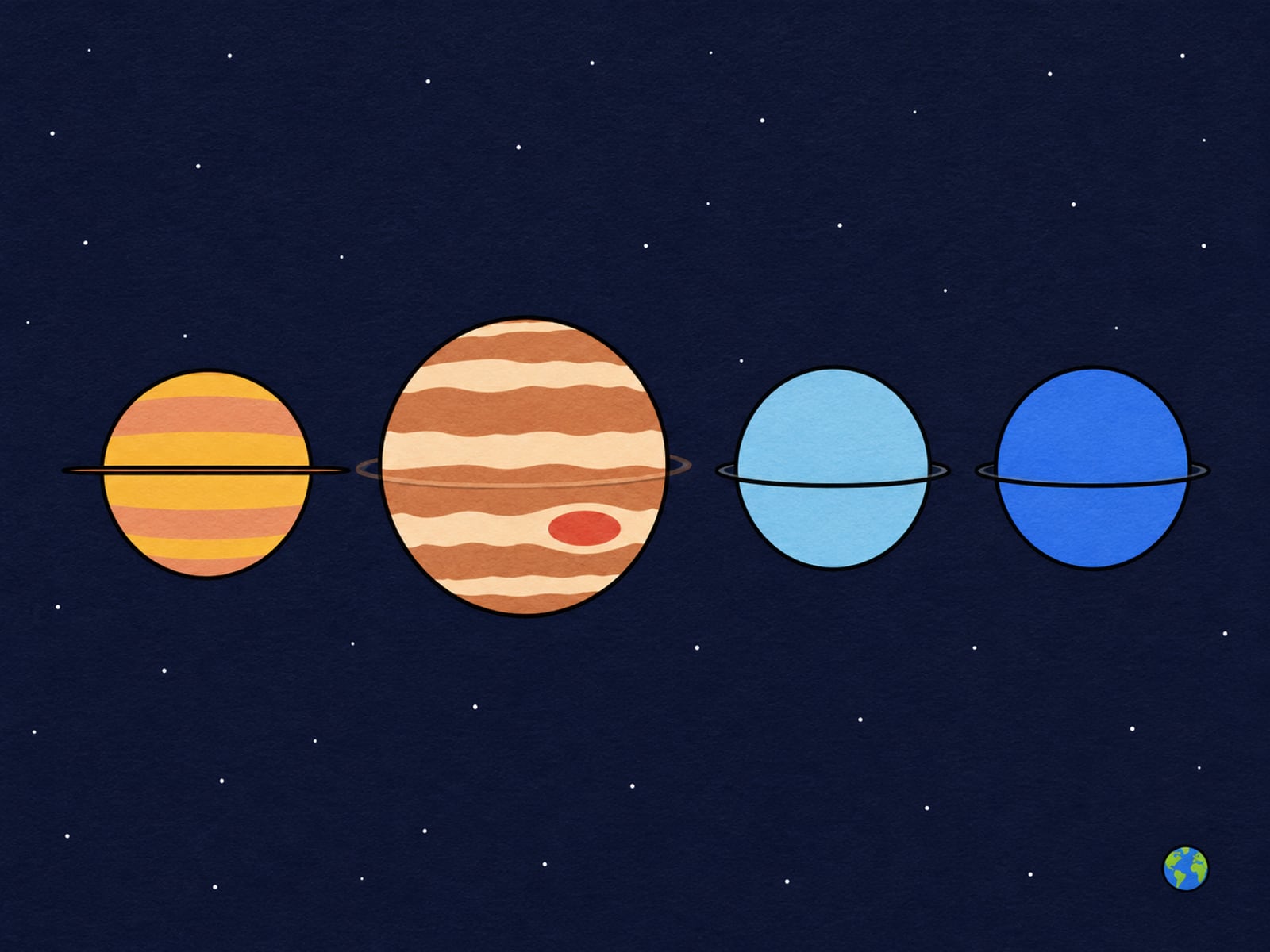
Saturn is not the only ringed planet. Jupiter, Uranus and Neptune have rings too. Jupiter's are faint dust rings, easiest to detect from spacecraft or in infrared. Uranus and Neptune have darker, narrower rings. Saturn's look so bright because they hold abundant reflective water ice, as NASA's Solar System basics explains.
On March 23, 2025, Earth crossed Saturn's ring plane. The rings are so thin compared with their width that, seen exactly edge-on, they shrink to a nearly invisible line. They did not disappear. Only the angle changed. Saturn also sat only about 10 degrees west of the Sun that day, which made it hard to observe, and NASA's Hubble page adds that these crossings come roughly every 13 to 16 years.
It is the same ring system from Mexico, Spain or Argentina. What changes is the viewing angle, the planet's height in the sky and the night. El País in Spain points to Saturn's 29-year orbit and changing ring tilt as the reason the rings look more open or more edge-on. In Argentina, Clarín notes that a small, well-focused telescope can show the rings when Saturn is well placed in the evening sky.
The record
| Date | What happened | Source |
|---|---|---|
| 1610 | Galileo sees strange shapes on both sides of Saturn and takes them for separate bodies or handles | NASA, Saturn lithograph |
| 1659 | Christiaan Huygens proposes a thin, flat ring around Saturn | NASA, Saturn lithograph |
| 1675 | Giovanni Domenico Cassini identifies the division between the A and B rings | NASA, Saturn lithograph |
| 1979 to 1981 | Voyager shows the rings are mostly water ice, with ringlets, braided structures and spokes | NASA, Saturn lithograph |
| July 2004 | Cassini arrives at Saturn to begin a 13-year study | NASA Space Place, Saturn's rings |
| 2005 | Cassini detects water-rich jets from Enceladus that supply much of the E ring | NASA, Cassini rings overview |
| 2006 | NASA reports Cassini observations consistent with rings as old as Saturn, about 4.5 billion years | NASA, "Saturn's Rings May Be Old Timers" |
| 2019 | NASA's analysis of Cassini gravity data estimates the main rings formed 10 million to 100 million years ago | NASA, Cassini data and relatively new rings |
| 2023 | Kempf's team estimates an exposure age of no more than about 400 million years | University of Colorado Boulder |
| March 23, 2025 | Earth crosses Saturn's ring plane and the rings look nearly edge-on | NASA, Hubble ring-plane crossing |
Questions people ask
These are the questions that come right after "why does Saturn have rings?"
1. Why does Saturn have rings? 01
NASA's three candidates are a moon torn apart by Saturn's tides, a moon shattered by an impact, or leftover material from moon formation that never assembled into a larger moon. Which one it was is not settled.
2. What are Saturn's rings made of? 02
Mostly water ice, mixed with dust and rocky fragments. The pieces range from microscopic grains to boulders and bus-sized objects, and in some descriptions mountain-sized chunks.
3. Why are Saturn's rings so bright? 03
They hold a lot of reflective water ice, and sunlight scatters off the particles. That is why Saturn's rings are easy to see, while the darker, narrower rings of Uranus and Neptune are harder to spot.
4. Will Saturn's rings disappear permanently? 04
They are losing material. In ring rain, charged icy particles spiral down Saturn's magnetic field, as NASA's ring-rain research describes. Other processes remove or recycle ring material too, including moons breaking apart and reforming.
Why the question stays open
Galileo saw handles. Huygens saw one thin ring. Cassini found a gap, Voyager found spokes, and the Cassini spacecraft found jets of ice from a moon. Every better look has added something.
The rings lose material through ring rain and recycle it as moons break apart and reform, so the answer depends on how long that has been going on. Scientists have put the age anywhere from tens of millions of years to billions.
Saturn's rings are countless bits of ice, and how they got there is still an open question.
Sources

- NASA, Saturn lithograph
- NASA Space Place, "Saturn's rings"
- NASA, Cassini FAQ
- NASA, Cassini rings overview
- NASA, Cassini data and relatively new rings
- University of Colorado Boulder, 2023 study on the age of Saturn's rings
- NASA, "Saturn's Rings May Be Old Timers"
- El País, "Una luna desconocida de Saturno se desintegró para crear sus anillos"
- NASA, Solar System basics
- NASA, Hubble ring-plane crossing
- El País, "Una breve historia astronómica de los sorprendentes anillos de Saturno"
- Clarín, observing Saturn and its rings
- NASA, ring-rain research