Why Is Pluto Not a Planet?
Under the IAU's 2006 definition, a planet must orbit the Sun, be nearly round, and have cleared the neighborhood around its orbit. Pluto meets the first two but shares its region with other Kuiper Belt objects, so the IAU classed it as a dwarf planet. Some scientists, including Alan Stern of NASA's New Horizons mission, dispute that definition.

In this explainer +
Pluto is not a planet under the 2006 definition of the International Astronomical Union (IAU), an international scientific body.
Here is the short version. That definition says a planet must have cleared the neighborhood around its orbit. Pluto shares its region with other Kuiper Belt objects, so it is classed as a dwarf planet. It does pass the first two tests, because it orbits the Sun and is nearly round. And some scientists still dispute the definition.
The story runs in order. First, a 1930 find in Arizona and a name suggested by a schoolgirl. Second, the icy crowd that astronomers found beyond Neptune. Third, a vote in Prague in 2006. Last, the 2015 New Horizons flyby, which gave everyone a close look at the world in question.
The three tests a planet has to pass
The IAU wrote its definition down in Resolution 5A, and the official IAU record of the 2006 votes has the exact words:
> "A 'planet' is a celestial body that (a) is in orbit around the Sun, (b) has sufficient mass for its self-gravity to overcome rigid body forces so that it assumes a hydrostatic equilibrium (nearly round) shape, and (c) has cleared the neighbourhood around its orbit."
In other words, three tests. Does it circle the Sun? Is it massive enough that its own gravity pulled it into a nearly round shape? Has it cleared out its orbital neighborhood?
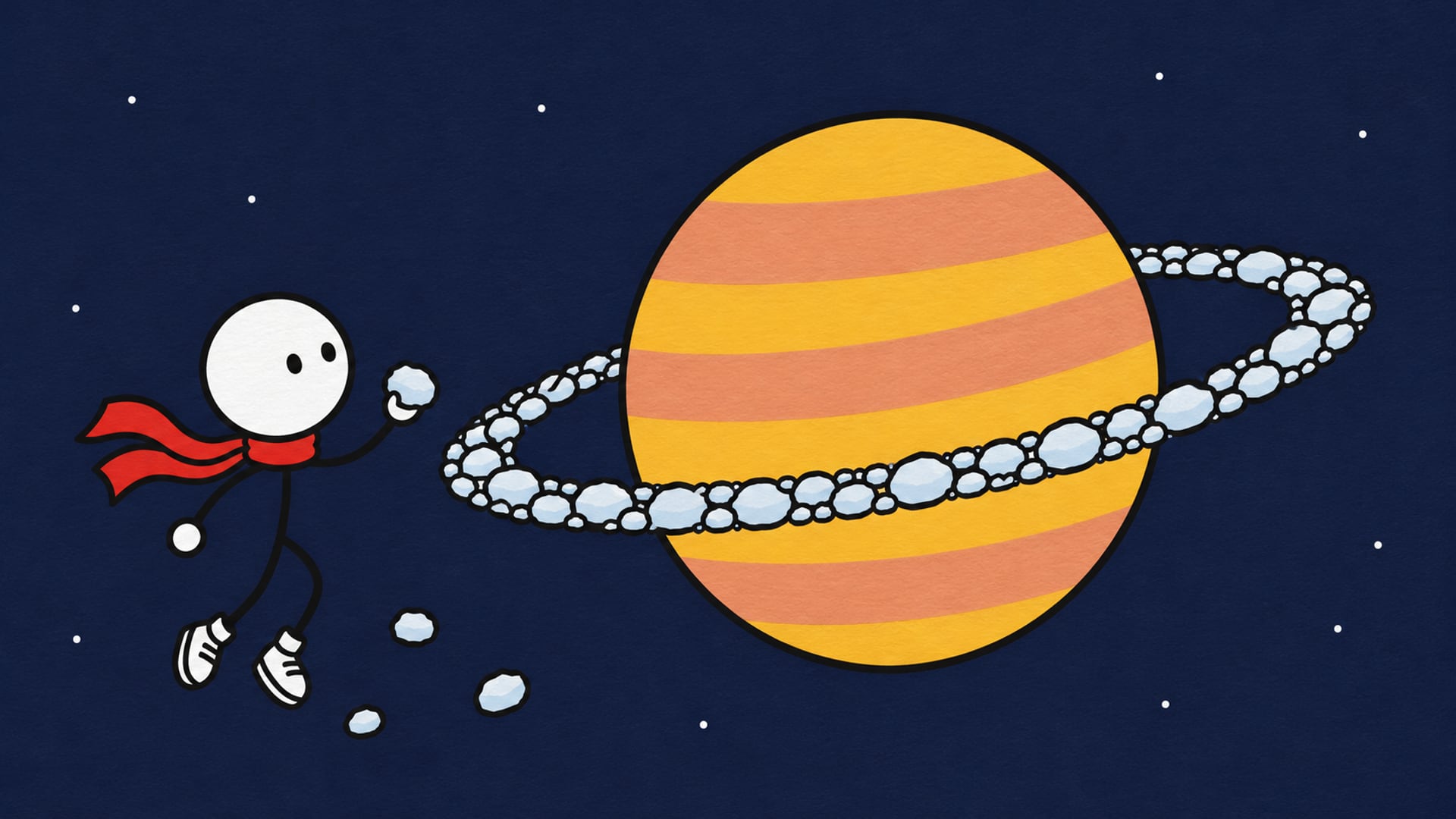
Pluto passes the first two. It orbits the Sun, and its gravity has made it nearly round. It fails the third, because it shares its region with other Kuiper Belt objects.
Think of it like this: a planet is the main thing in its lane. Pluto's lane is crowded.
A second resolution, 6A, then named the result: "Pluto is a 'dwarf planet' by the above definition and is recognized as the prototype of a new category of trans-Neptunian objects." Trans-Neptunian just means "beyond Neptune."
From Planet X to a crowded belt
Pluto was found on 18 February 1930 by Clyde Tombaugh at Lowell Observatory in Flagstaff, Arizona. The observatory had hired him to photograph the sky while searching for Percival Lowell's proposed "Planet X." NASA's account of the Charon discovery image describes how he compared photographic plates with a blink comparator and spotted a moving point of light.
The name came from an 11-year-old. On 14 March 1930, Venetia Burney was at breakfast in England with her mother and her grandfather, Falconer Madan, when the talk turned to the newly found planet. She suggested "Pluto," after the Roman god of the underworld. Madan passed the idea to astronomer Herbert Hall Turner, who sent it to Lowell Observatory, as NASA's page on Venetia Burney Phair tells it. Not a bad morning's work.
For decades, that made nine planets. Then the neighbors started turning up.
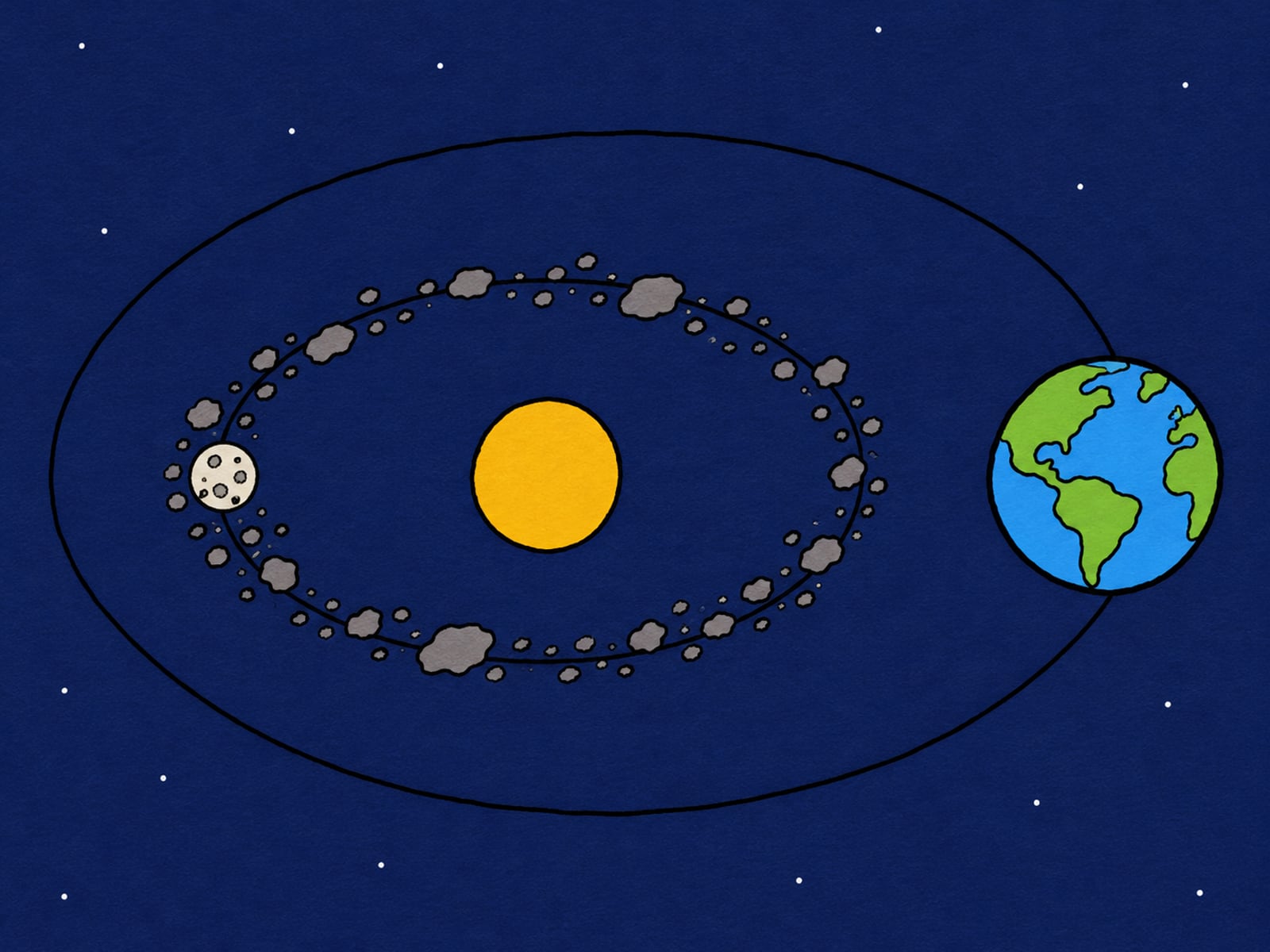
In 1992, David Jewitt and Jane Luu found 1992 QB1 after years of searching. It was the first confirmed object in the Kuiper Belt, a region beyond Neptune full of icy, rocky bodies, according to NASA's Kuiper Belt overview. Pluto was starting to look less like a lone ninth planet and more like one member of a large population.
Then came Eris. In 2005, Mike Brown, Chad Trujillo and David Rabinowitz announced an object first designated 2003 UB313 and nicknamed "Xena," later named Eris. Early measurements suggested it was slightly larger than Pluto.
That forced a choice. Either Eris became a tenth planet, or astronomers needed a definition that covered Pluto and similar objects together.

Prague, 24 August 2006
The choice was made in Prague on 24 August 2006, at a vote of IAU members. Resolution 5A, the three-part definition, passed by a great majority, though that vote was not counted. Resolution 6A, naming Pluto a dwarf planet, passed with 237 in favor, 157 against and 17 abstentions.
That is a real majority, and also 157 votes the other way. Keep both facts in mind.
The result sorted the Solar System into a new set of boxes. Pluto, Eris and Ceres went into the dwarf-planet category, and the recognized planet count became eight, as NASA's page on Eris and the IAU record both show.
The ruling is not an American one. It comes from the IAU, so it holds well beyond U.S. classrooms. UNAM Global in Mexico explains the three-part definition and names the orbit-clearing test as the reason Pluto does not qualify. The Instituto de Astrofísica de Andalucía, part of CSIC in Spain, describes Pluto as reclassified in 2006 after other trans-Neptunian objects were found.

What New Horizons saw, and who still disagrees
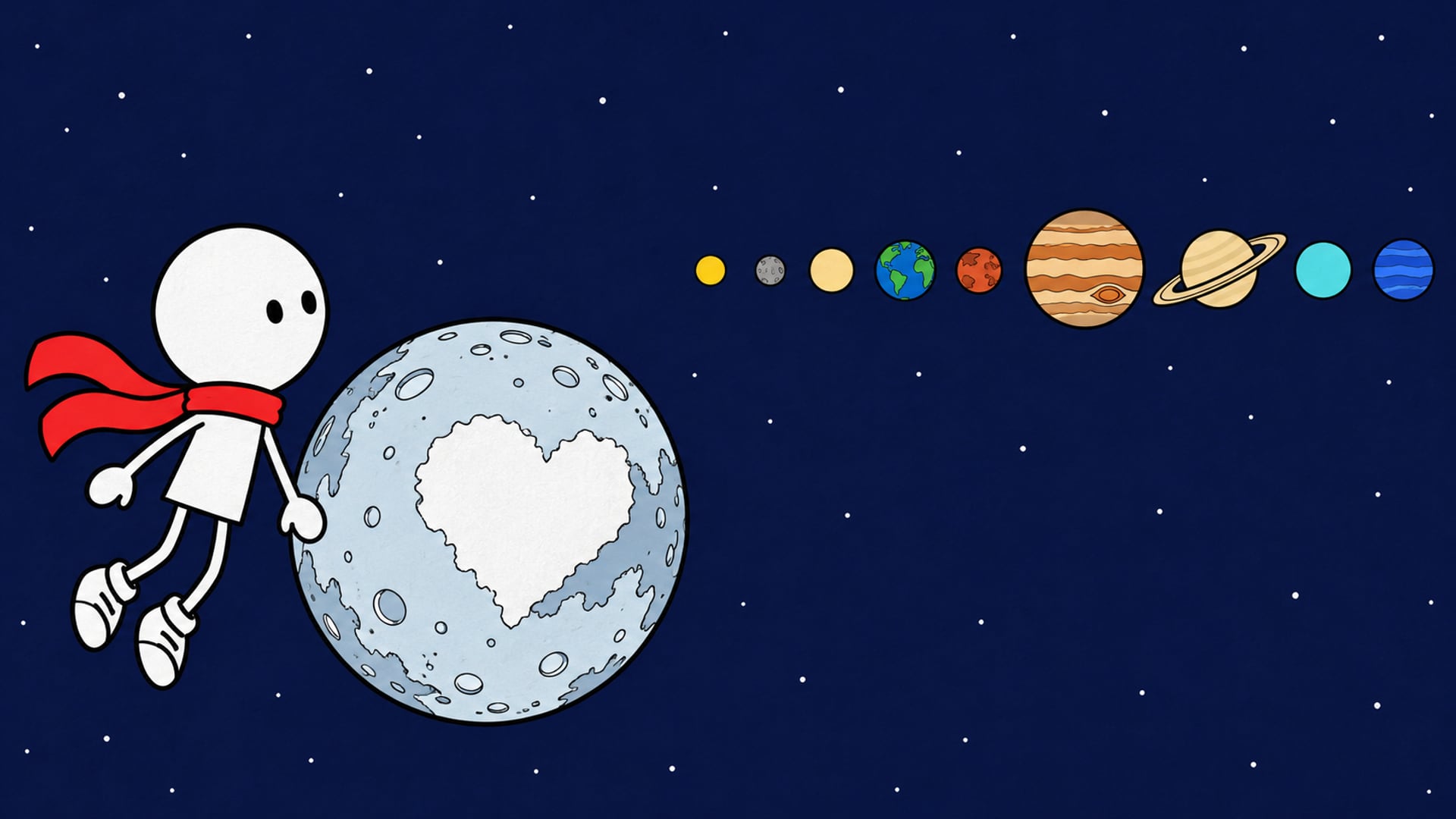
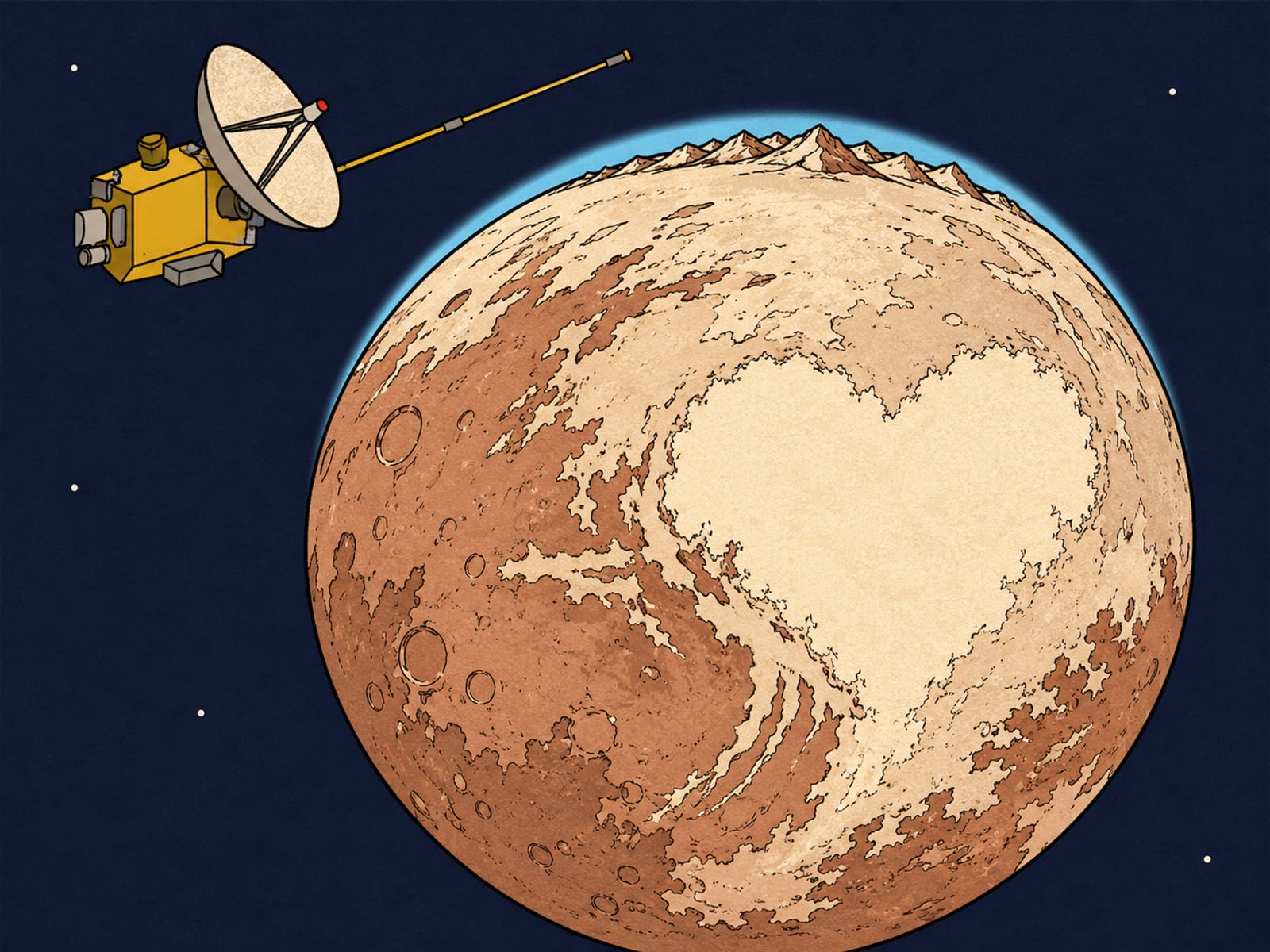
On 14 July 2015, NASA's New Horizons spacecraft made the first close-up visit to Pluto. NASA's report on the haze and flowing ice lists what came back: a large heart-shaped region named Tombaugh Regio, a plain of nitrogen, carbon monoxide and methane ices, ice that appears to flow like glaciers, tall mountains and more than a dozen layers of haze.
For many people, that did not look like a leftover. It looked like a world.
Alan Stern, the principal investigator of New Horizons, argues exactly that. In a NASA interview, his case is that Pluto and other dwarf planets have the same kinds of physical features as larger planets, such as atmospheres, moons, geological activity, cores and crusts. He also argues that the IAU rule makes status depend on location. In his example, an Earth-sized object placed near Pluto's orbital region would fail the orbit-clearing test even though nothing about the object had changed.
The disagreement is not only his. NASA's own page, What is a planet?, notes that astronomers did not unanimously agree with the definition. Some found it too restrictive or unclear. Others hold that orbital context matters when describing how planetary systems form and change.
So, the classification is official, and the argument is live. Both are true at once.
The record
| Date | What happened | Source |
|---|---|---|
| 18 February 1930 | Clyde Tombaugh finds Pluto at Lowell Observatory, Flagstaff, Arizona | NASA, Charon discovery image |
| 14 March 1930 | 11-year-old Venetia Burney suggests the name "Pluto" at breakfast | NASA, Venetia Burney Phair |
| 1992 | Jewitt and Luu find 1992 QB1, the first confirmed Kuiper Belt object | NASA, Kuiper Belt in depth |
| 21 October 2003 | Brown, Trujillo and Rabinowitz record images of a distant moving object, later designated 2003 UB313 | NASA, Eris and NASA, tenth planet photo |
| July 2005 | The object later named Eris is announced as similar in size to or larger than Pluto | NASA, Kuiper Belt in depth |
| 24 August 2006 | IAU members vote in Prague on a definition of "planet" and create the dwarf-planet category | IAU, 2006 resolution votes |
| August 2006 | Pluto, Eris and Ceres join the dwarf-planet category; the recognized planet count becomes eight | IAU, 2006 resolution votes |
| 14 July 2015 | New Horizons makes the first close-up visit to Pluto | NASA, New Horizons mission |
Questions people ask
These are the follow-up questions that come right after "why is Pluto not a planet?"
1. Why is Pluto in the Kuiper Belt? 01
Pluto sits beyond Neptune, in the region where many icy trans-Neptunian objects orbit. The Kuiper Belt is that region, and the first confirmed object found there was 1992 QB1. Pluto's classification as a Kuiper Belt object follows from where it is and what it shares that space with.
2. Why did Eris cause Pluto's reclassification? 02
Eris was first measured as slightly larger than Pluto. If Pluto counted as a planet, Eris seemed to qualify too, and astronomers faced a tenth planet and possibly more. The 2006 definition settled it by covering Pluto and similar objects together.
3. Why does Pluto have a heart-shaped region? 03
The heart is Tombaugh Regio, named for the man who found Pluto. It includes Sputnik Planum, a vast plain of nitrogen, carbon monoxide and methane ices. The surface there looks young, with a nearly crater-free area and ice that appears to flow like glaciers, which points to recent geological activity.
4. Could Pluto become a planet again? 04
That would take a change by the IAU to its definition or its classification. The 2006 resolution remains the official one. Alan Stern and other scientists continue to dispute it, but a dispute is not a ruling.
One definition, one open argument
Pluto itself did not change in 2006. It still orbited the Sun, and it was still nearly round. What changed was the rule used to sort the Solar System, and a rule can be argued with.
The 2006 rule gives Pluto a name of its own: dwarf planet, the prototype of a new category. The scientists who dispute that rule still do.
Pluto's status comes from a 2006 definition, and the debate about that definition is still open.
Sources

- IAU, "2006 General Assembly: Result of the IAU Resolution votes"
- NASA, "Venetia Burney Phair"
- NASA, "Charon discovery image"
- NASA, "Kuiper Belt in depth"
- NASA, "Eris"
- NASA, "Tenth planet discovered"
- NASA, "What is a planet?"
- NASA, "New Horizons team finds haze, flowing ice on Pluto"
- NASA, "New Horizons mission"
- NASA, interview with Alan Stern, NASA at 50
- UNAM Global, "¿Por qué Plutón no es planeta?"
- Instituto de Astrofísica de Andalucía, "Plutón. Quién te ha visto y quién te ve"