Who Invented Television?
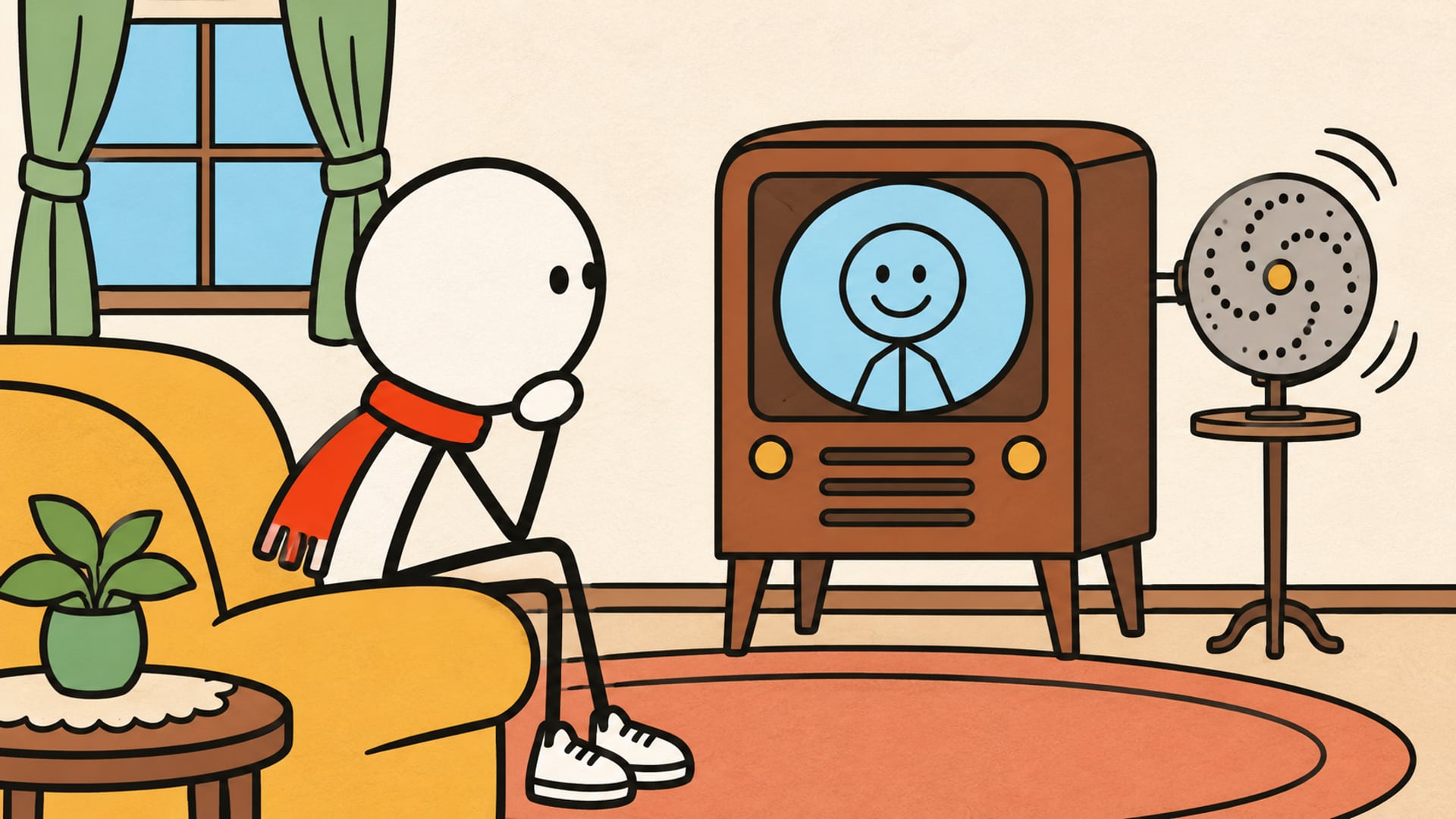
John Logie Baird demonstrated the first working television in 1926, using mechanical scanning disks. Philo Farnsworth developed the first fully electronic television system in 1927. Several earlier inventors, including Paul Nipkow, Vladimir Zworykin and Guillermo González Camarena, supplied essential parts of the technology.

In this explainer +
John Logie Baird publicly demonstrated the first working television in London in 1926, and Philo Farnsworth built the first fully electronic system in San Francisco in 1927.
So, which one gets the credit? Each of them, for a different half of the job. Baird's system was crude and low-definition, and it ran on rotating scanning disks, an idea Paul Gottlieb Nipkow had patented in Germany in 1884. Nipkow never built a working system. Farnsworth's electronic method is the one that led to modern sets.
Here's the route we'll take. First, the mechanical version, with its spinning disks. Second, the electronic version, and the patent fight that followed it. Third, the color version, which came from Mexico.
First, the mechanical version
Start in 1884. Paul Gottlieb Nipkow patents a rotating disk with spiral holes in Germany, a way of scanning an image into separate points. Telefónica's history of television gives him that credit. Think of it like this: the disk is a gate that lets an image through one small piece at a time.
It was an important foundation. It was also only a patent. Nipkow did not build a working television system.
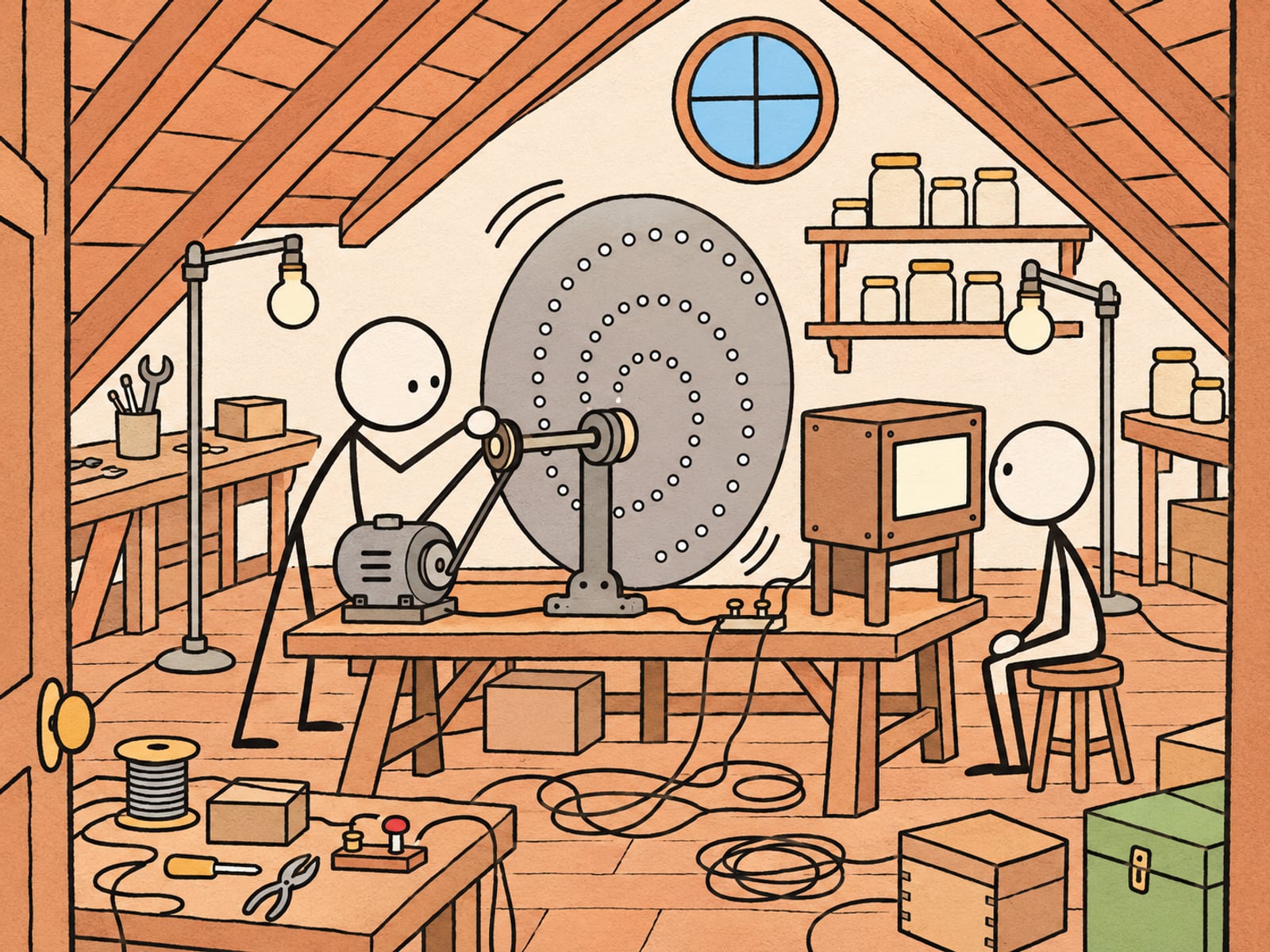
Now skip ahead to the autumn of 1925. Baird is working in two attic rooms at 22 Frith Street in London's Soho, surrounded by wires, lamps and a rotating scanning disk. On 2 October, a man named William Edward Taynton sits in front of the equipment while the machine transmits his face. It had shown a ventriloquist's dummy first. English Heritage marks the spot with a blue plaque.
The Science Museum Group describes that transmission as a moving image with tone gradation, meaning shades between light and dark, not just black and white.
Then comes the public showing. On 26 January 1926, at the same address, about 40 members of the Royal Institution watch a faint moving image on a small screen. Baird called his machine a "televisor."
He was not alone with spinning disks. Charles Francis Jenkins in the United States also transmitted moving images with a mechanical scanning system. His Radiovisor receiver was sold in limited numbers around 1929 to 1931, according to the Smithsonian.
Second, the electronic version
Rewind to 1921. Philo T. Farnsworth is 14, plowing a potato field on his family's farm near Rigby, Idaho. He looks back at the parallel furrows behind the horse-drawn disk harrow and sees more than dirt. He sees rows. In other words, lines, and an image could be scanned along lines, one at a time, then rebuilt somewhere else.
In 1922, he draws the idea on a blackboard for his high-school chemistry teacher, Justin Tolman. The plan was to turn light into electrons, send the information along, and rebuild the image on a cathode-ray screen.
A fair warning about this scene. It comes mainly from testimony by his wife, Elma "Pem" Farnsworth, repeated by the Television Academy. Accounts give the year as 1921 or 1922. The details stay the same: a teenager, an Idaho farm, furrows, and line-by-line scanning.
On 7 January 1927, Farnsworth filed a U.S. patent, US1773980A, for a system that converted an image into electrical signals by scanning small areas and rebuilt the image at the receiver. It was granted on 26 August 1930.
On 7 September 1927, he transmitted an electronic image from his laboratory at 202 Green Street in San Francisco. The Smithsonian keeps an image dissector in its collections. It is an electronic device, not a spinning disk.

The patent fight
Farnsworth was not the only person chasing electronic television. Vladimir Zworykin, who came from Russia to the United States, filed a U.S. television-system patent on 29 December 1923. That is earlier than Farnsworth's filing. His later camera technology became important to electronic television, especially through RCA.
So, who won? In the priority dispute with RCA and Zworykin, the U.S. Patent Office ruled in Farnsworth's favor. The U.S. Census Bureau's history of the dispute says it ended with RCA licensing Farnsworth's patents.
RCA's work still reached the public. In 1939, it presented electronic television to a large audience at the New York World's Fair, as the Smithsonian describes.
The fight was about the electronic camera and who had priority over image scanning. It was a dispute over one part of a long chain.
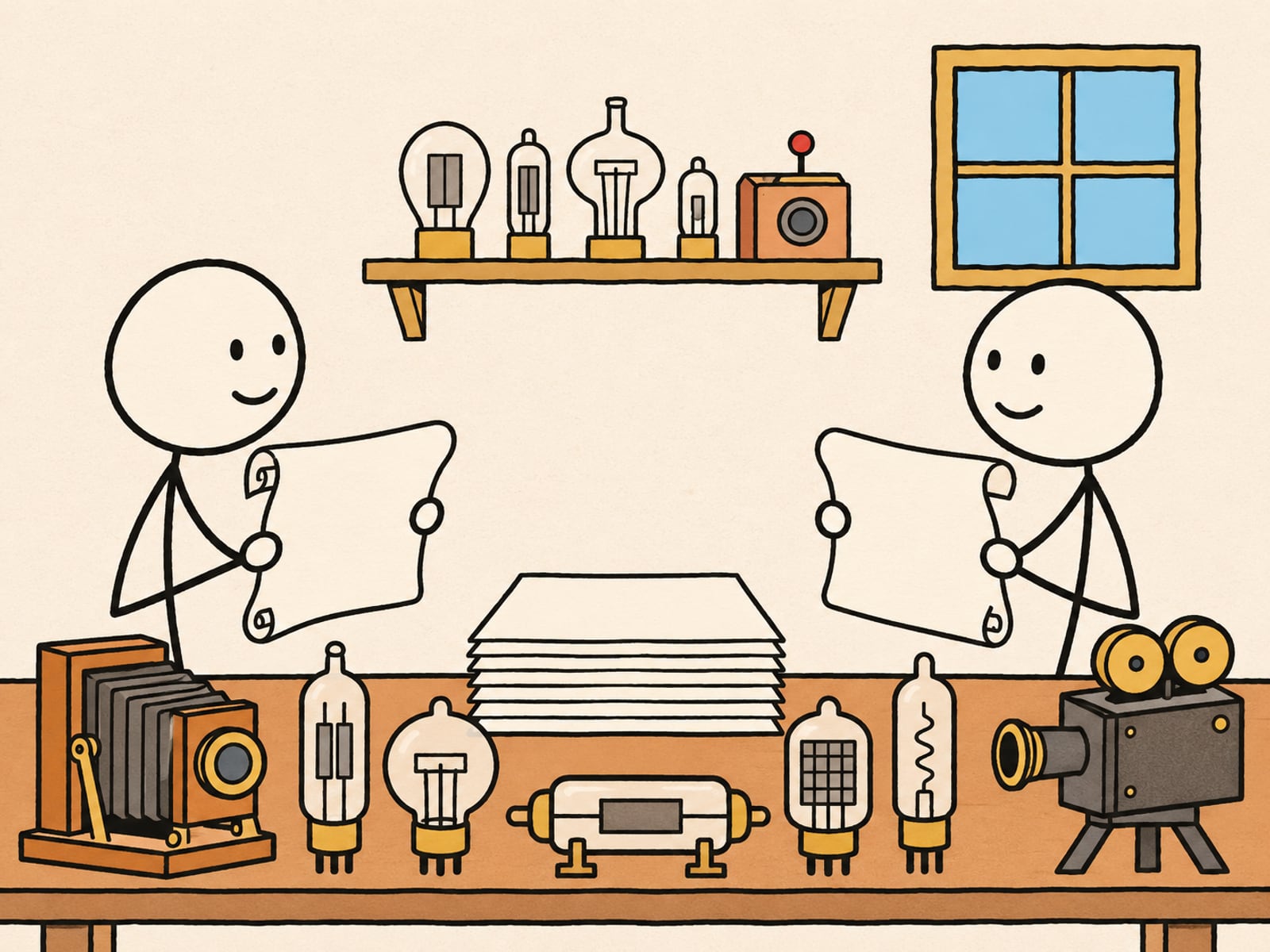
Third, the color version from Mexico
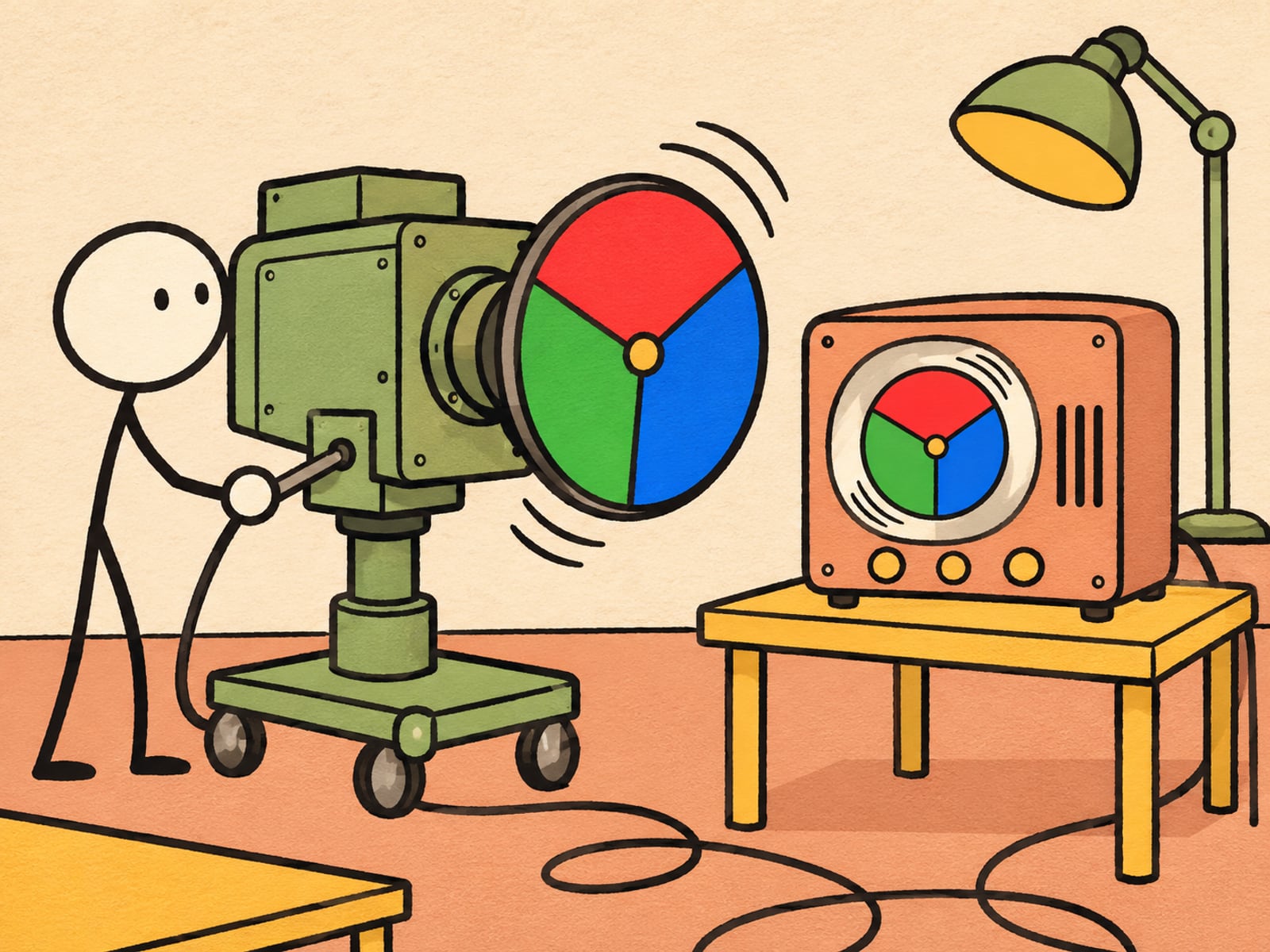
Black-and-white sets were not the end of the story. Guillermo González Camarena, a Mexican engineer, produced a sequential field color system in 1939, according to Gaceta UNAM.
On 19 August 1940, he patented an "adaptador cromoscópico para aparatos de televisión" in Mexico, patent number 40235. The Mexican patent document is online. A matching U.S. patent followed in 1942.
The system used red, green and blue filters and rotating disks, in the camera and in the receiver. Yes, spinning disks again.
It is worth being exact about what he made. It was an adaptable color system for television receivers, not the invention of television as a whole. It could be adapted from black-and-white equipment, which helped make color transmission possible.
From lab bench to living room
Back in Britain, the BBC began a 30-line public service in 1932 using Baird's mechanical system. In 1936 it tested Baird's system against the Marconi-EMI electronic system. In 1937 it dropped Baird's for the 405-line Marconi-EMI electronic one.
Thirty lines against 405.
Spain came to it later. Televisión Española made its first official broadcast on 28 October 1956 from Madrid, with a speech, regional choirs and dances, musical performances and a religious ceremony, according to RTVE. Only about 600 television sets were available in Madrid at the time.
By the 1950s, television had become a mass household medium in the United States, the United Kingdom, Mexico, Spain and other countries.
The record
| Date | What happened | Source |
|---|---|---|
| 1884 | Paul Nipkow patents a rotating disk with spiral holes in Germany | Telefónica |
| 29 December 1923 | Vladimir Zworykin files a U.S. television-system patent | Google Patents |
| 2 October 1925 | Baird transmits a moving face at 22 Frith Street, London | English Heritage |
| 26 January 1926 | About 40 Royal Institution members watch Baird's demonstration | Science Museum Group |
| 7 September 1927 | Farnsworth transmits an electronic image in San Francisco | Congressional Record |
| 26 August 1930 | Farnsworth's patent US1773980A is granted | Google Patents |
| 1932 | The BBC starts a 30-line public service with Baird's system | Science Museum Group |
| 1937 | The BBC drops it for the 405-line Marconi-EMI electronic system | Science Museum Group |
| 19 August 1940 | Camarena patents a color-television adapter in Mexico, number 40235 | Mexican patent document |
| 28 October 1956 | Televisión Española makes its first official broadcast from Madrid | RTVE |
Questions people ask
Why did early televisions use spinning disks? 01
A spinning disk with holes could scan an image mechanically, breaking it into separate points, which is what Nipkow's 1884 patent described. Early electronic components were limited, and Baird built on the disk.
Why did electronic television replace mechanical television? 02
It came down to image quality and speed. Electronic scanning could handle more lines, with better resolution and reliability. The BBC's move from a 30-line mechanical service to a 405-line electronic one is the clearest example.
Why did color television take so long to arrive? 03
Color meant sending separate color information and keeping it in step. It also meant building receivers that were compatible with what viewers already owned, and agreeing on technical standards. Camarena's 1940 adapter was designed to work with receivers adapted from black-and-white sets.
Why was Philo Farnsworth in a patent fight with RCA? 04
Both sides claimed priority over the electronic camera and image scanning. Zworykin filed in 1923 and RCA built on his camera technology, but the Patent Office ruled in Farnsworth's favor, and RCA ended up licensing his patents.
Whose set is it, then?
The set in your living room has several hands in its history. Nipkow patented the scanning disk, Baird made it work on a screen, Farnsworth took the disks out, Zworykin's camera work fed RCA's, and Camarena added color.
So, when someone asks who invented television, the short answer is two names and a crowd.
Baird showed the first working picture, and Farnsworth built the electronic method that led to modern sets.
Sources

- Science Museum Group, John Logie Baird
- English Heritage, John Logie Baird blue plaque
- Google Patents, Farnsworth's U.S. Patent US1773980A
- Smithsonian National Museum of American History, Farnsworth image dissector
- Smithsonian National Museum of American History, Radiovisor receiver
- Smithsonian National Museum of American History, television at the 1939 World's Fair
- Google Patents, Zworykin's U.S. Patent US2141059A
- U.S. Census Bureau, history of the Farnsworth patent dispute
- Television Academy, Philo T. Farnsworth Hall of Fame tribute
- U.S. Government Publishing Office, Congressional Record, 9 September 2002
- Gaceta UNAM, Guillermo González Camarena
- Camarena's Mexican patent document
- RTVE, history of the first Televisión Española broadcast
- Telefónica, origin and history of television