Who Invented the Telephone?
Alexander Graham Bell is credited with the telephone because he won U.S. Patent No. 174,465 on March 7, 1876, and he and Watson made the first widely accepted intelligible call on March 10, 1876. Meucci, Gray, Reis and Bourseul each built or proposed a speech or sound device before or alongside him. Bell won the patent; many hands built the telephone.

In this explainer +
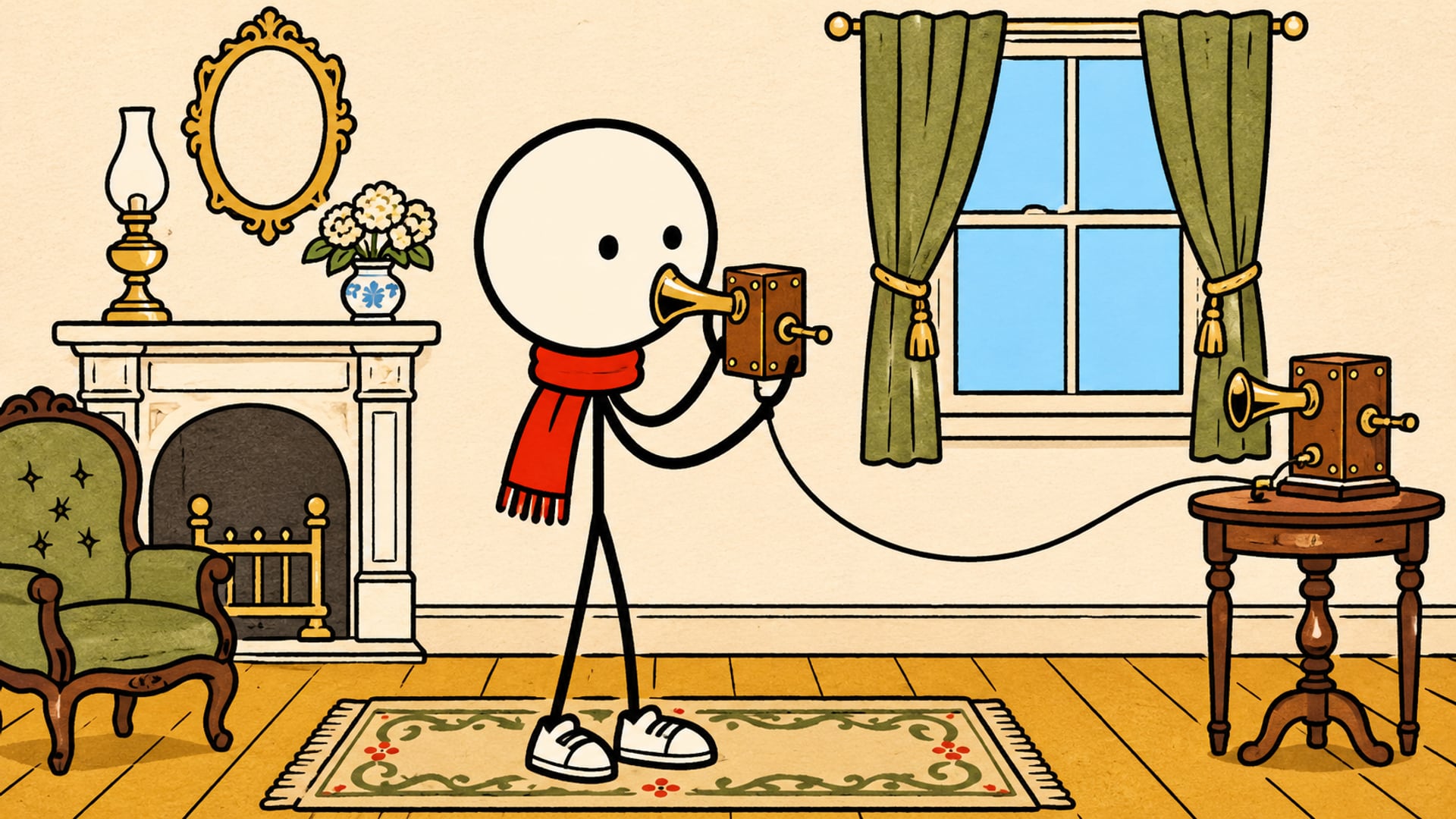
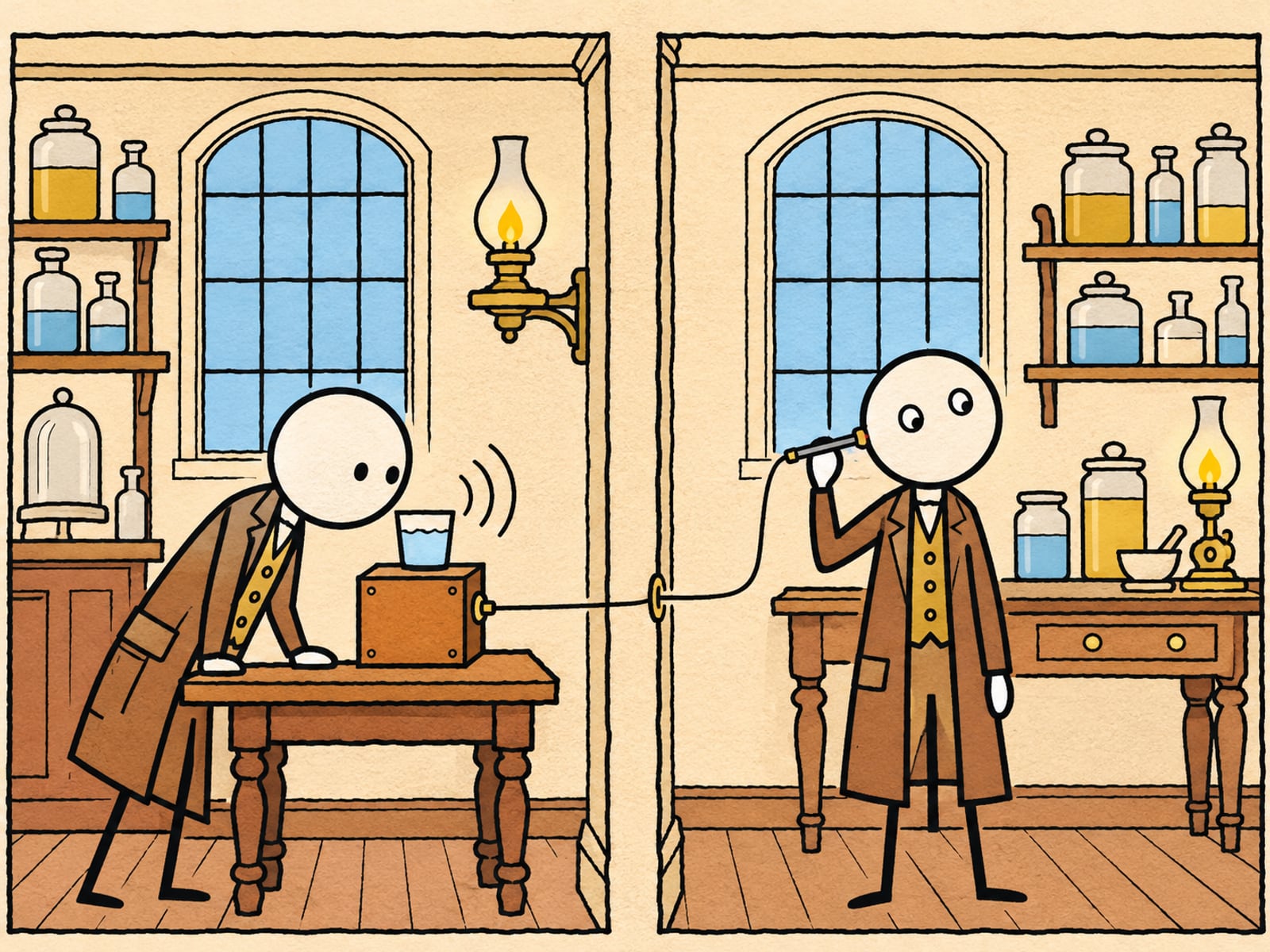
It's March 10, 1876, in Alexander Graham Bell's laboratory in Boston. Bell speaks into a liquid transmitter while Thomas Watson waits in another room with a reed receiver pressed to his ear.
Then Bell calls out: "Mr. Watson, come here, I want to see you." Bell wrote the moment down in his laboratory notebook.
Here is the short answer to who invented the telephone. Bell is usually credited, because he holds the decisive U.S. patent, No. 174,465, granted March 7, 1876. But Antonio Meucci, Elisha Gray, Johann Philipp Reis and Charles Bourseul built or proposed earlier and competing versions.
Those words came three days after the patent was granted, and they are the first widely accepted intelligible conversation by telephone. The rest of the story is a race, and the order of the runners matters.
A house on Staten Island, and a patent that lapsed
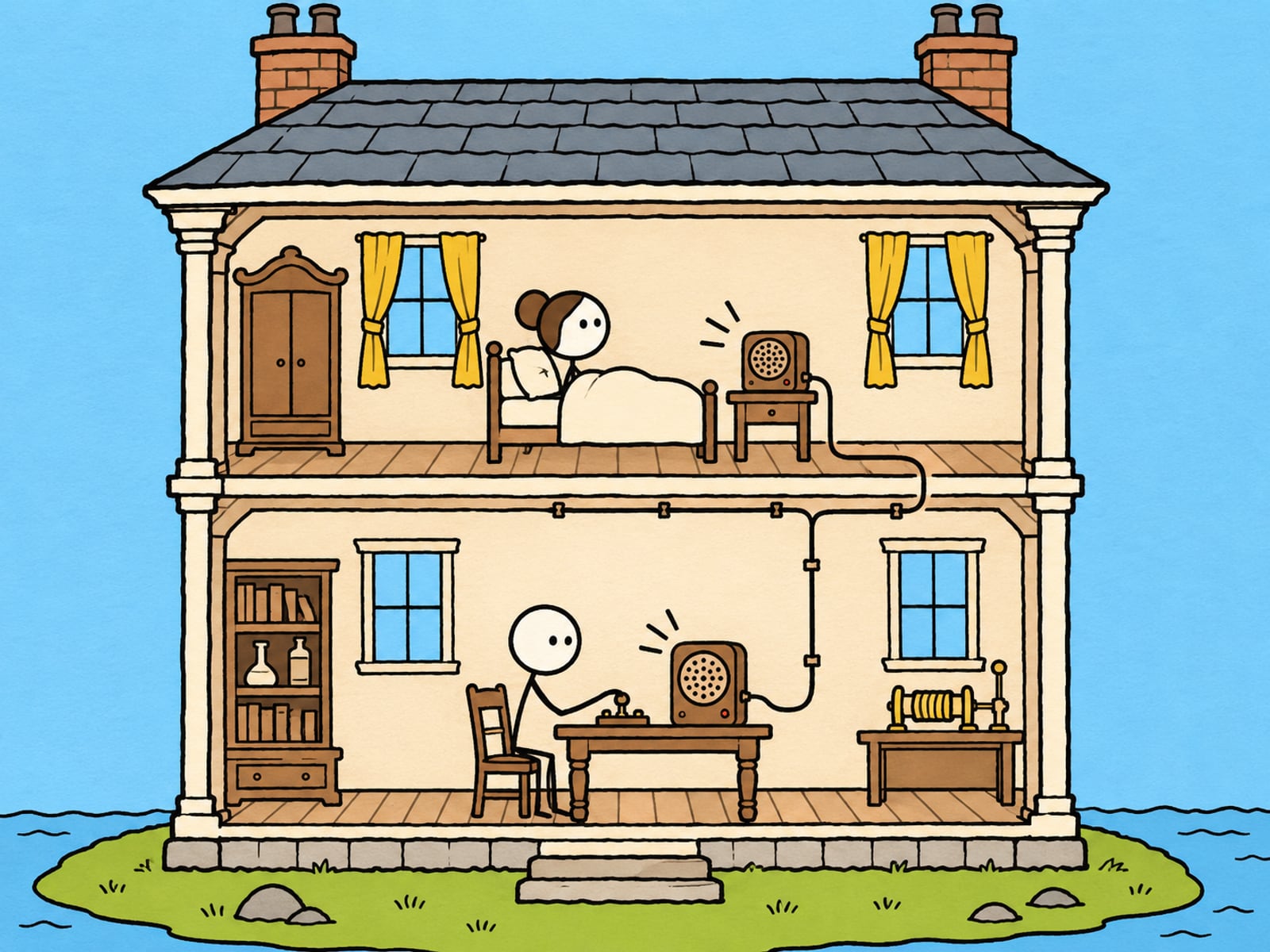
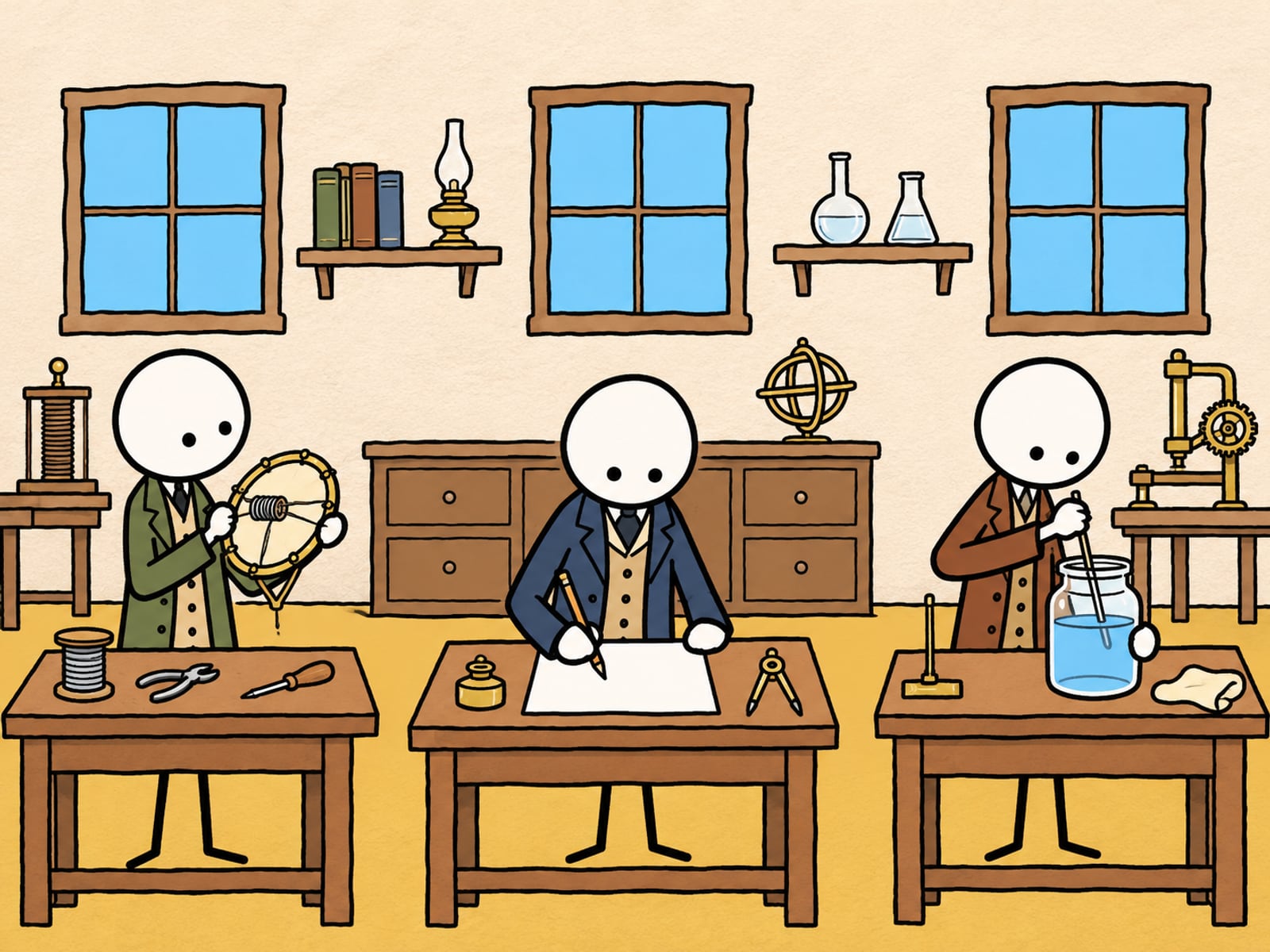
Start with Antonio Meucci, an Italian inventor who worked in Havana and later in New York. By 1854, he had built a device he called the "teletrofono." It linked his wife's bedroom with rooms in their Staten Island home. He demonstrated it publicly in 1860.
On December 28, 1871, Meucci filed a patent caveat. In other words, a formal notice that an inventor is working on an idea. A caveat is not a patent, and it has to be renewed.
His caveat lapsed. He could not afford the renewal fee after 1874.
In 2002, the U.S. House passed a resolution, H. Res. 269, that acknowledged his work. It did not grant him a patent, and it did not overturn Bell's. You can read it in the 2002 Congressional Record.
Two Europeans and an American
Meucci was not alone. Johann Philipp Reis, in Germany, showed an electrical sound transmitter with a vibrating membrane in 1861 or 1863, depending on the source. It reproduced musical tones and some sounds, but generally not speech you could count on. That is a real claim to an early electrical telephone experiment. It is not a claim to the first practical speech telephone.
Charles Bourseul, in France, published an idea in 1854 for sending speech electrically with a flexible plate and electrical contacts. He did not build a working telephone. His part was the proposal, not the device.
Then there is Elisha Gray, in the United States. He developed a water-based transmitter that could carry speech. On February 14, 1876, he filed a telephone caveat at the Patent Office.
That's the same day Bell's patent application reached the same office. Popular accounts say Bell filed two hours before Gray. The exact order, and who saw whose papers, is disputed, so it stays a dispute here. What the National Museums Scotland and the USPTO guide agree on is the date.
What Bell's patent actually said
Bell was born in Edinburgh in 1847. His patent, titled "Improvement in Telegraphy," described transmitting "vocal or other sounds telegraphically" by producing electrical undulations similar to the vibrations of speech.
Read that again: it was filed as a telegraph improvement. In June 1875, Bell and Watson had been testing a vibrating reed, a diaphragm and an electromagnet while trying to improve the telegraph. The telephone came out of that work.
His 1876 device was an early wire telephone with a vibrating diaphragm, an electromagnet and an electrical circuit. It was not the handset you know. There was no separate microphone and earpiece yet.
The patent held up where it counted. The U.S. Supreme Court upheld Bell's priority in the telephone litigation of the 1880s, in the Telephone Cases. That is the difference between an early device and legal credit. Bell was the first to obtain the broad U.S. patent that survived that long fight, and to show a working system carrying intelligible speech.
Before the call, and after it
Before the telephone, people sent word by messengers, letters and newspapers. They used drums, bells, flags and smoke signals for simple warnings. Optical telegraph towers relayed coded signals. Samuel Morse's electric telegraph sent coded pulses over wires, but it took trained operators, and it never carried a spoken conversation.
After Bell, the pieces arrived fast:
- Thomas Edison's carbon transmitter in 1877 made voices louder and improved the distance a call could travel.
- The Bell Telephone Company was formed in 1877 to market the device.
- The first U.S. exchange opened in New Haven, Connecticut, in 1878, and operators connected subscribers.
- The Bell Company introduced the Blake transmitter in 1878, which combined improvements by Edison, Emile Berliner and Francis Blake with Bell's system.
Automatic switching in the 1890s began reducing the need for operators. AT&T opened New York to San Francisco service in 1915. The first commercial transatlantic service opened in 1927. Martin Cooper of Motorola made the first handheld mobile call in 1973, and IBM's Simon in 1994 was an early smartphone.
Which call was the first long-distance call?
It depends on what you count as long distance.
On August 10, 1876, Bell spoke between Brantford and Paris, Ontario, about 13 kilometers apart. Parks Canada identifies it as the world's first long-distance call.
On October 9, 1876, Bell and Watson held the first two-way conversation over outdoor telegraph wires, between Boston and Cambridge, about two miles apart. Watson reportedly answered with "Ahoy," according to the Communications Museum Trust.
On January 25, 1915, Bell in New York and Watson in San Francisco made the first ceremonial transcontinental call.
The record
| Date | What happened | Source |
|---|---|---|
| 1854 | Meucci has built his "teletrofono" in his Staten Island home | 2002 Congressional Record |
| 1861 or 1863 | Reis shows his electrical sound transmitter | Smithsonian report |
| December 28, 1871 | Meucci files a patent caveat | 2002 Congressional Record |
| February 14, 1876 | Bell's patent application and Gray's caveat reach the Patent Office | National Museums Scotland |
| March 7, 1876 | Bell is granted U.S. Patent No. 174,465 | Library of Congress |
| March 10, 1876 | Bell calls "Mr. Watson, come here, I want to see you." | Library of Congress Bell papers |
| August 10, 1876 | Bell speaks between Brantford and Paris, Ontario | Parks Canada |
| October 9, 1876 | Bell and Watson talk between Boston and Cambridge | Communications Museum Trust |
| 1878 | First U.S. exchange opens in New Haven | Encyclopedia.com |
| January 25, 1915 | Ceremonial New York to San Francisco call | Library of Congress |
Questions people ask
A few follow-ups come up every time this story gets told.
Why did Bell get credit if Meucci built an earlier telephone? 01
Credit followed the paperwork as well as the hardware. Building a device, filing a patent application and winning legal priority are three different things. Meucci built and demonstrated his device, but his caveat lapsed, and Bell's patent was the one upheld in court.
Why did Bell and Elisha Gray file on the same day? 02
Both men were racing to patent a practical speech transmitter in February 1876. Bell's application and Gray's caveat reached the Patent Office on February 14. Which one came first that day is disputed.
Why did early telephones need operators? 03
There was no automatic switching. A central exchange, like the one that opened in New Haven in 1878, had to connect each call by hand. Automatic switching began reducing that need in the 1890s.
Who invented the phone, in one line? 04
Bell holds the decisive 1876 patent and is credited with the first practical telephone. He was part of a larger group of inventors who built earlier or competing versions.
Who gets the credit now
Think of it like this: a patent is a finish line, and the telephone people use today crossed many of them. The version that reached the public combined Bell's principle with improvements by Edison, Berliner and Blake.
So, the name on the patent and the names on the telephone are not quite the same list. Bell won the patent, and many hands built the telephone.
Sources

- Library of Congress, telephone invention guide
- Library of Congress, Bell papers
- Library of Congress, first transatlantic telephone call
- U.S. Supreme Court, Telephone Cases
- Congressional Record, June 11, 2002 (H. Res. 269)
- National Museums Scotland, "Did Alexander Graham Bell invent the telephone?"
- USPTO, educational guide
- Smithsonian, historical report
- Parks Canada, first long-distance call
- Communications Museum Trust, telephone history
- Encyclopedia.com, telephones