Why Do We Say Bless You?

People answered sneezes with a wish or a religious gesture in ancient Greece and Rome, centuries before the plague of 590. The tale that Pope Gregory I ordered "God bless you" during that plague appears in the much later Golden Legend, not in Gregory's own account. So, the record does not say who began the habit; the words simply changed by language and country.

In this explainer +
It's the winter of 589 to 590, and Rome is sick.
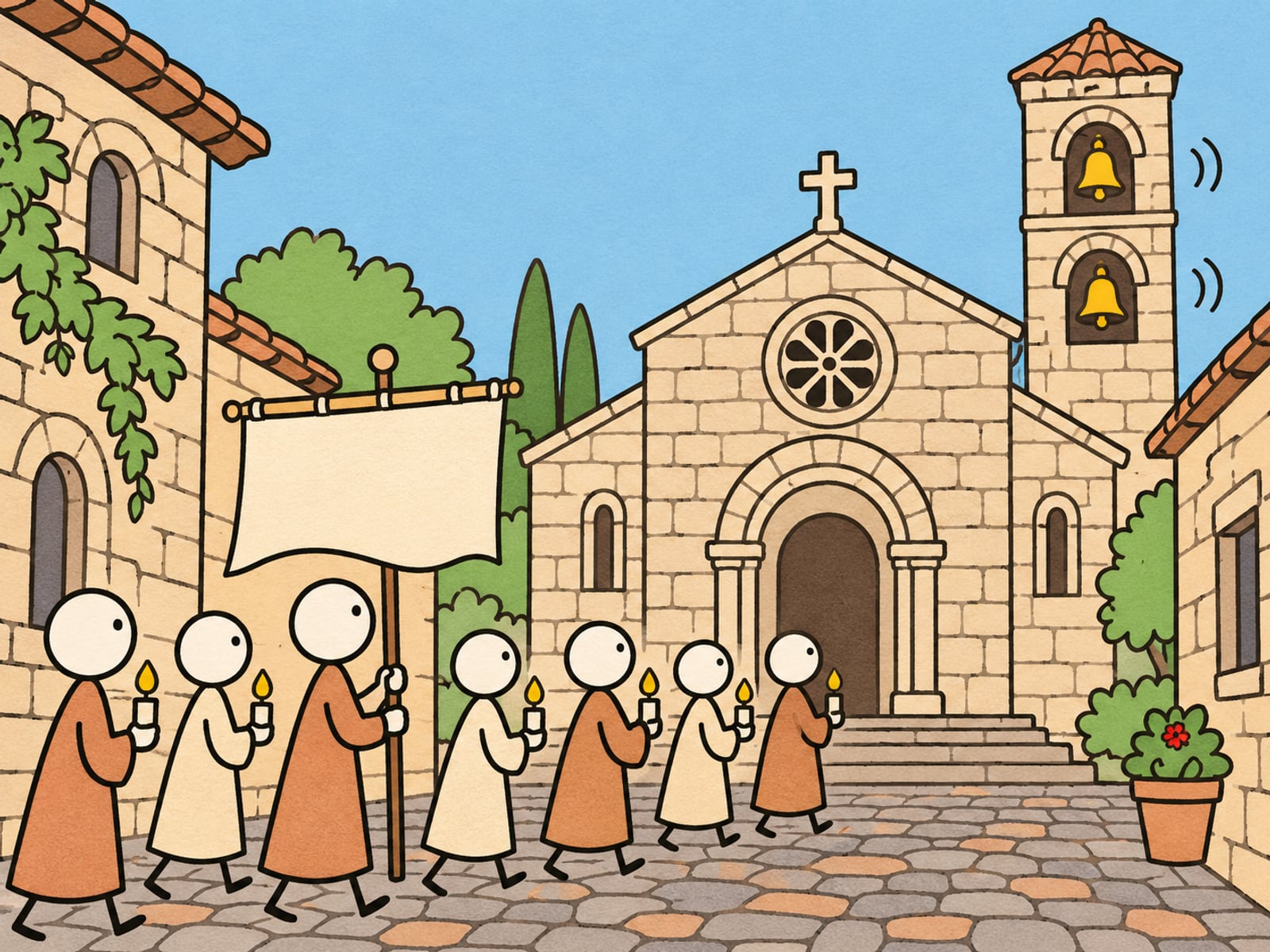
An epidemic moves through the crowded streets. Church bells ring. On February 8, 590, Pope Pelagius II dies. In a city like that, a sneeze would have made people turn their heads, and what they said back is the question here.
The story most of us know says that answer was ordered by the next pope, Gregory I, and that it became "God bless you." Who said it first? The Roman plague is the famous answer, but the record points to an older one: people in Greece and Rome were answering sneezes long before 590, and no first speaker is named anywhere.
The plague story, told straight
Who said it first? Start with the famous version.
During the Roman plague of 590, the story goes, Pope Gregory I told people to say "God bless you" whenever someone sneezed, because a sneeze was thought to signal that death was close.
Parts of that are solid. Rome did suffer a serious epidemic in 589 to 590, and Pelagius II did die on February 8, 590. There was a real procession through the city too, which a 1969 historical review in Persée describes.
The sneeze part comes later. It appears in the Golden Legend, a text written well after Gregory's day, and not in Gregory's own account. The same 1969 review notes that Gregory himself left out the famous angel and several of the supernatural details that later tellers attached to the procession.
In other words, the plague and the procession happened. The claim that Gregory invented the sneeze blessing in 590 is a later tradition, and nobody has shown it to be his doing.
Greece and Rome got there first
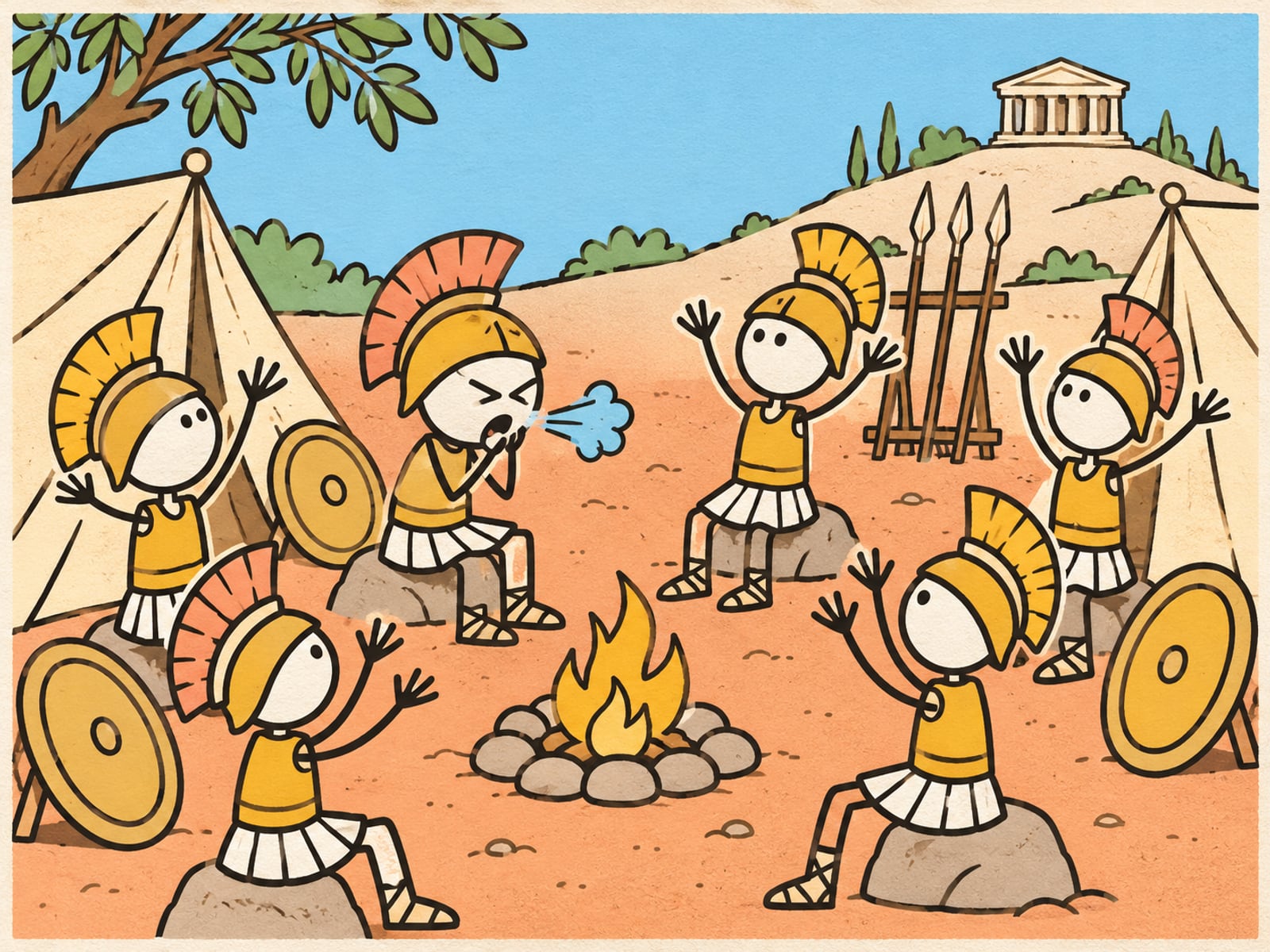
Who said it first? Go back to 401 BCE, almost a thousand years before Gregory, and people are already reacting to sneezes.
In Xenophon's Anabasis, which probably describes events in 401 BCE, a soldier sneezes while Xenophon is speaking to the army. The soldiers answer with a religious gesture to Zeus Saviour. They read the sneeze as a favorable sign. This is described in Pieter W. van der Horst's article "The Omen of Sneezing" in Ancient Society, 2013.
Other Greek writers say the same thing in their own ways. Aristotle reported that people regarded a sneeze as divine. Homer's Odyssey presents a sneeze as a favorable omen.
Rome kept the habit going. Petronius mentions saying "Salve!" to someone who has just sneezed. Pliny the Elder asked why people greeted sneezes at all, and wrote that Emperor Tiberius expected the observance. Hugh Bowden of King's College London covers these examples in "On Kissing and Making Up".
So, when the plague arrived in 590, the greeting was already old. Pliny was asking why people did it long before Gregory was pope.
Who said it first? The record names no one. It just keeps showing people doing it.
Soul, heart and the sneeze itself
Why would a sneeze deserve a reply in the first place? Some of the old answers have nothing to do with germs.
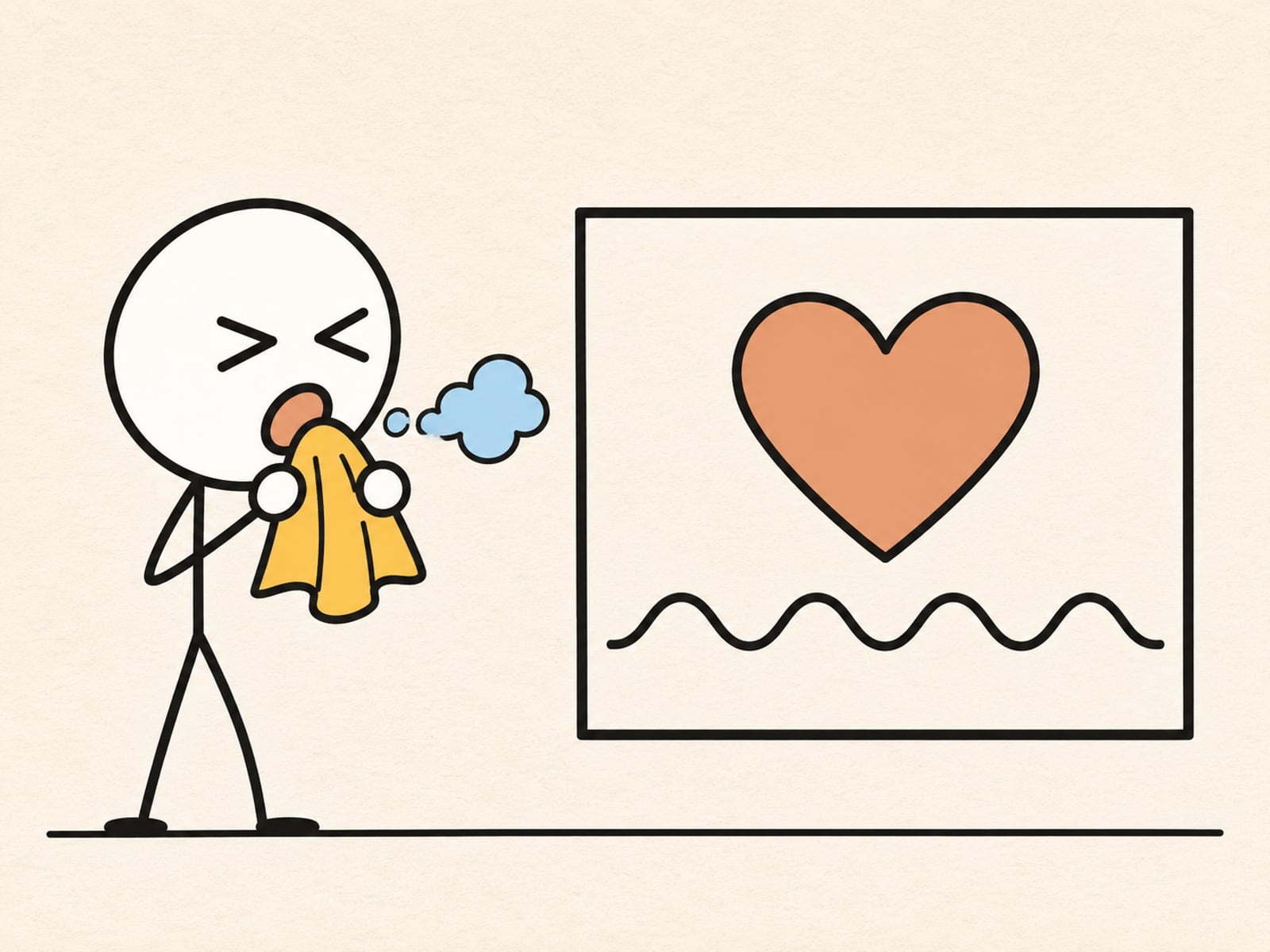
Older beliefs held that the soul, or the vital breath, lived in the head or the body, so a sneeze could be read as the soul slipping out. Another idea says the heart stops for an instant. Both are folklore.
Medically, a sneeze is an involuntary reflex. Cleveland Clinic describes it as the body expelling air through the nose and mouth when the nasal lining is irritated. The pressure change in your chest can briefly alter blood flow and heart rhythm, which can feel like a skipped beat. But the heart's electrical activity continues, as the University of Arkansas for Medical Sciences states.
That's it. A reflex, a pressure blip, and a very old habit of reading meaning into both.
Gesundheit, Jesús and the rest
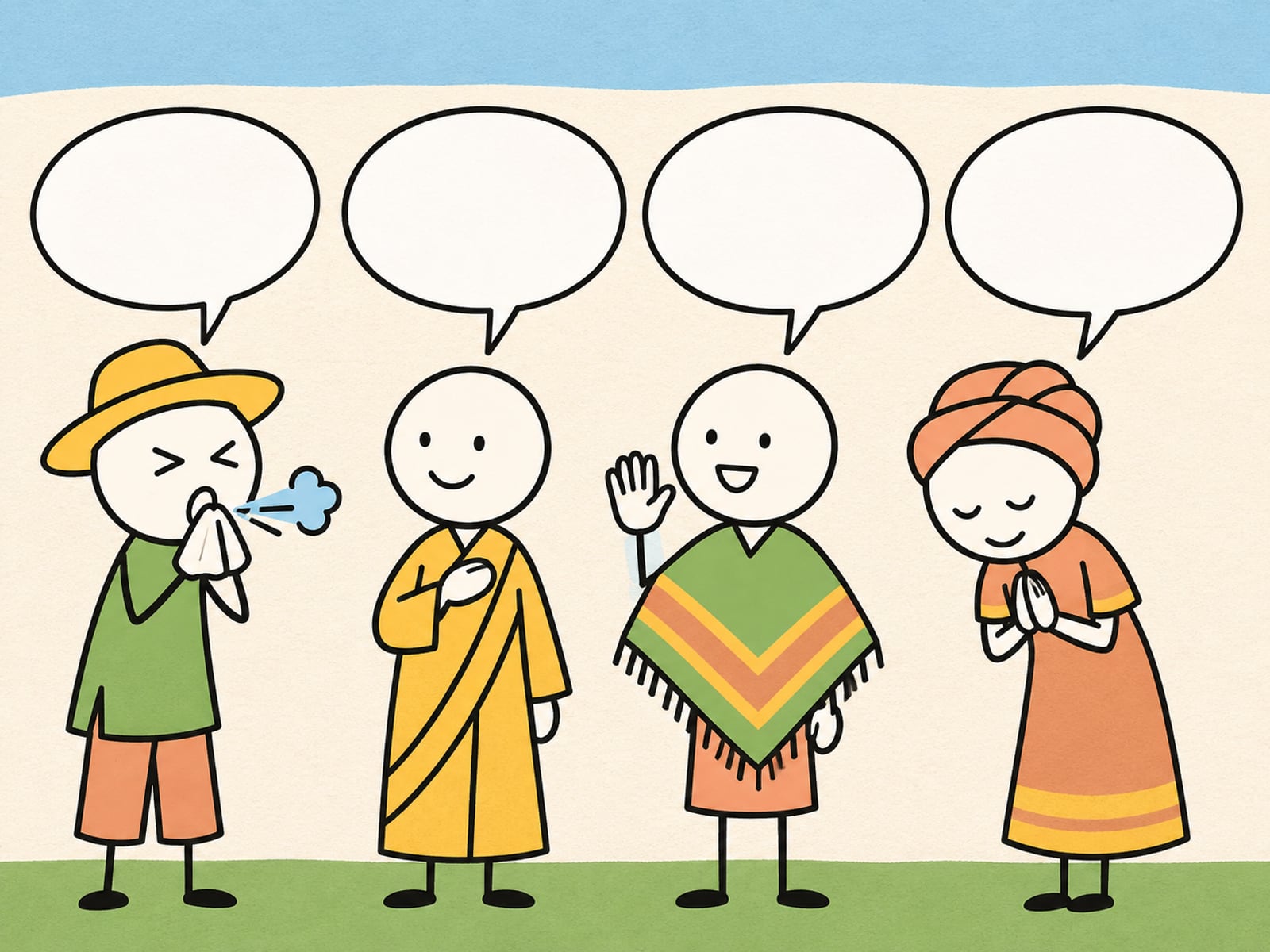
The words changed as the habit traveled. Here is where the common ones sit.
English. "Bless you" is the reply most English speakers know. The record does not give a first date for the English version.
German and American English. "Gesundheit" is German for "health." It came into American English through German-speaking immigration, and in the United States it was first a toast, a greeting and a reply to a sneeze. Newspaper evidence shows it in American use by the late nineteenth century. A 1902 newspaper story describes a German-American family teaching its children to say "gesundheit" after a sneeze, and a 1907 beer advertisement calls it a common American greeting and toast, as summarized in an English Language and Usage answer built on those papers.
Merriam-Webster's first-known-use date for the word is 1914, according to the Boston Globe. Its 1936 dictionary defined it mainly as a toast. The 1949 edition added use after a sneeze, and the 1963 edition defined it primarily as a wish for good health after sneezing. It even outlasted World War I, when some American institutions tried to ban German words.
Spanish. In Spain, "Jesús" has traditionally been the reply, and "salud" is common too. The sneezer often answers "gracias," as the Spanish newspaper AS explains. In Mexico, both "salud" and "Jesús" are documented, according to a UNAM linguistics article. Usage can vary by family, region and religious background.
French. "Santé" or "à vos souhaits."
Further back. In his 1871 book Primitive Culture, Edward B. Tylor gathered customs from Greek, Roman, medieval and other sources. They include a Hindu "Live," with the reply "With you," and a Zulu "I am now blessed."
Some cultures do not routinely acknowledge an adult's sneeze at all.
The record
| Date | What happened | Source |
|---|---|---|
| Homer's world | The Odyssey presents a sneeze as a favorable omen | Tylor, Primitive Culture |
| Probably 401 BCE | A soldier sneezes during Xenophon's speech and the army makes a religious gesture to Zeus Saviour | Bowden, "On Kissing and Making Up" |
| February 8, 590 | Pope Pelagius II dies during the Roman epidemic | Persée review |
| Later medieval storytelling | The Golden Legend links the Roman plague with a blessing after a sneeze | The Golden Legend |
| 1871 | Edward B. Tylor gathers sneeze customs in Primitive Culture | Tylor, Primitive Culture |
| 1902 | A newspaper story describes a German-American family teaching children to say "gesundheit" after a sneeze | English Language and Usage |
| 1907 | A beer advertisement calls "gesundheit" a common American greeting and toast | English Language and Usage |
| 1914 | Merriam-Webster's first-known-use date for "gesundheit" | Boston Globe |
| 1963 | Merriam-Webster's edition defines "gesundheit" primarily as a wish for good health after sneezing | Boston Globe |
Questions people ask
Why do people in Spain say Jesús when someone sneezes? 01
"Jesús" has traditionally been the reply in Spain, with "salud" also common. The answer turns on Spain's Christian history and the use of Jesus's name as a protective response. The sneezer usually says "gracias."
Why do Germans say Gesundheit? 02
It is simply the German word for "health," used as a wish after a sneeze. It also moved into American English through German-speaking immigrants, first as a toast and then as the reply to a sneeze.
Does your heart stop when you sneeze? 03
No. A sneeze changes the pressure in your chest for a moment, and that can briefly alter blood flow and heart rhythm. It can feel like a skipped beat, but it is not a cardiac arrest, and the heart's electrical activity continues.
Why do some people say nothing when someone sneezes? 04
It depends on local etiquette, religious tradition, language and whether a stranger's sneeze is acknowledged at all. Some cultures do not routinely acknowledge an adult's sneeze. In some settings, French speakers may not respond to a stranger the way Mexican speakers do.
A small wish with a long memory
The same small reply turns up in a Greek camp, on a Roman street, in a Spanish home and in an American toast. The plague of 590 is part of the story, because people told it for centuries, but it is not the start of it.
Who said it first? Nobody on the record. The wish is old, the words change by country, and the record does not say who said it first.
Sources

- Persée, review of the 590 Roman plague and Gregory's procession
- The Golden Legend (text)
- Pieter W. van der Horst, "The Omen of Sneezing," Ancient Society, 2013
- Hugh Bowden, "On Kissing and Making Up," King's College London
- Edward B. Tylor, Primitive Culture, 1871
- Cleveland Clinic, "Sneezing"
- University of Arkansas for Medical Sciences, "Does Your Heart Stop for an Instant When You Sneeze?"
- Boston Globe, dictionary class of 1914
- English Language and Usage, "How did Gesundheit work its way into common American usage?"
- AS, explanation of "Jesús" and "salud"
- UNAM, intercultural expressions article