Why Is Chicago Called the Windy City?
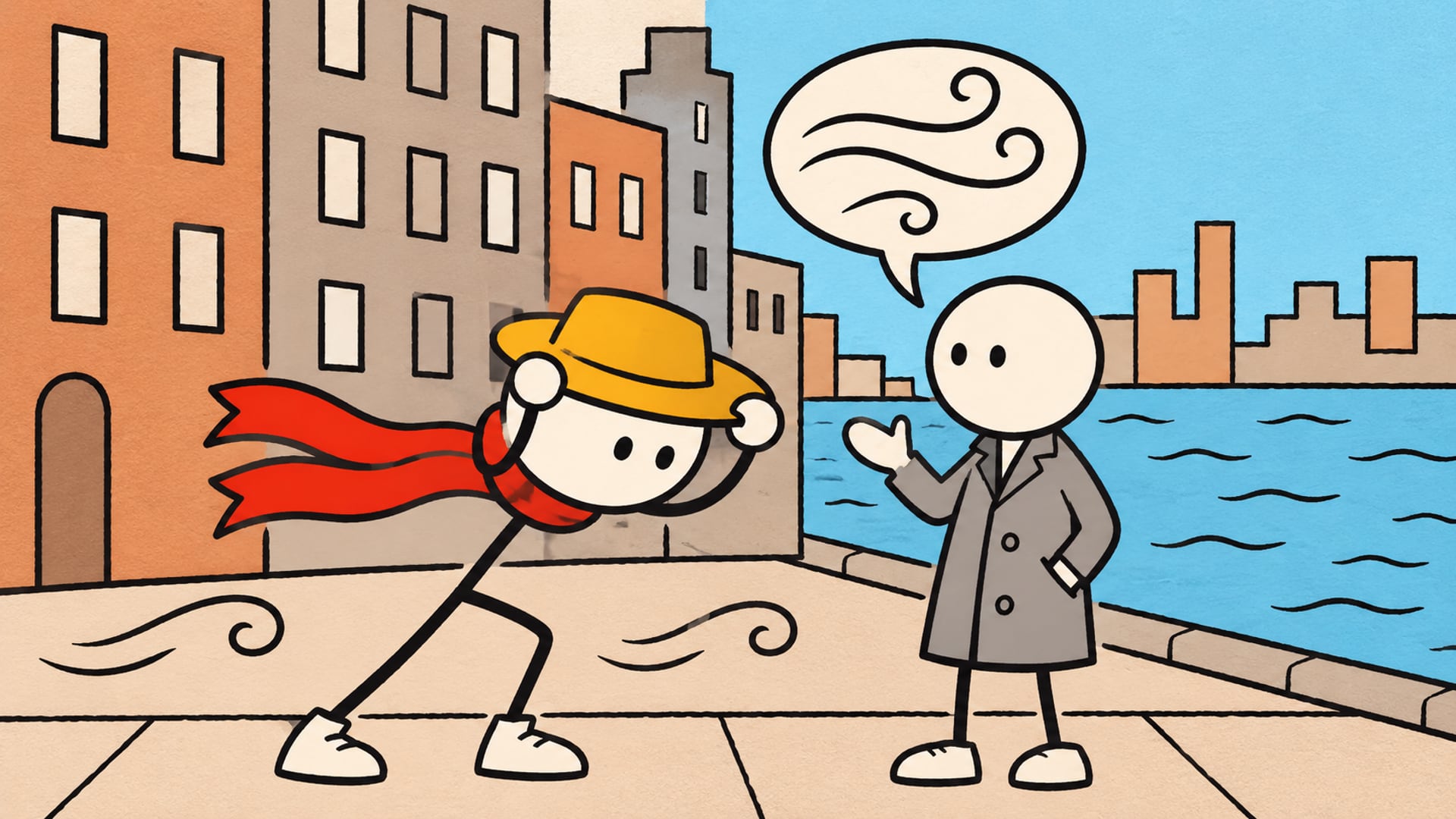
Chicago was called the "Windy City" in print by 1858, and the phrase already pointed at both real wind and big talk. The 1893 World's Fair rivalry with New York helped attach a political and promotional meaning to a nickname that was already in circulation.

In this explainer +
The popular story goes like this: Charles A. Dana, editor of New York's Sun, is said to have attacked Chicago's fair promoters as "windy" in the run-up to the 1893 World's Fair, and the nickname stuck.
It's a good story. It has a rivalry, a newspaper editor and a city with something to prove.
Then there's the Chicago Tribune of April 7, 1858. According to etymologist Barry Popik, it used "windy city" for Chicago's residents, described as "full of wind." That is 35 years before the fair opened.
So, the nickname was in print by 1858, and it carried two meanings from early on: the weather, and boastful talk. The fair rivalry later gave it a political and promotional edge. Which brings us to the question that runs through this whole story: is the city windy, or full of wind?
1858 to 1876: the wind and the talk arrive together
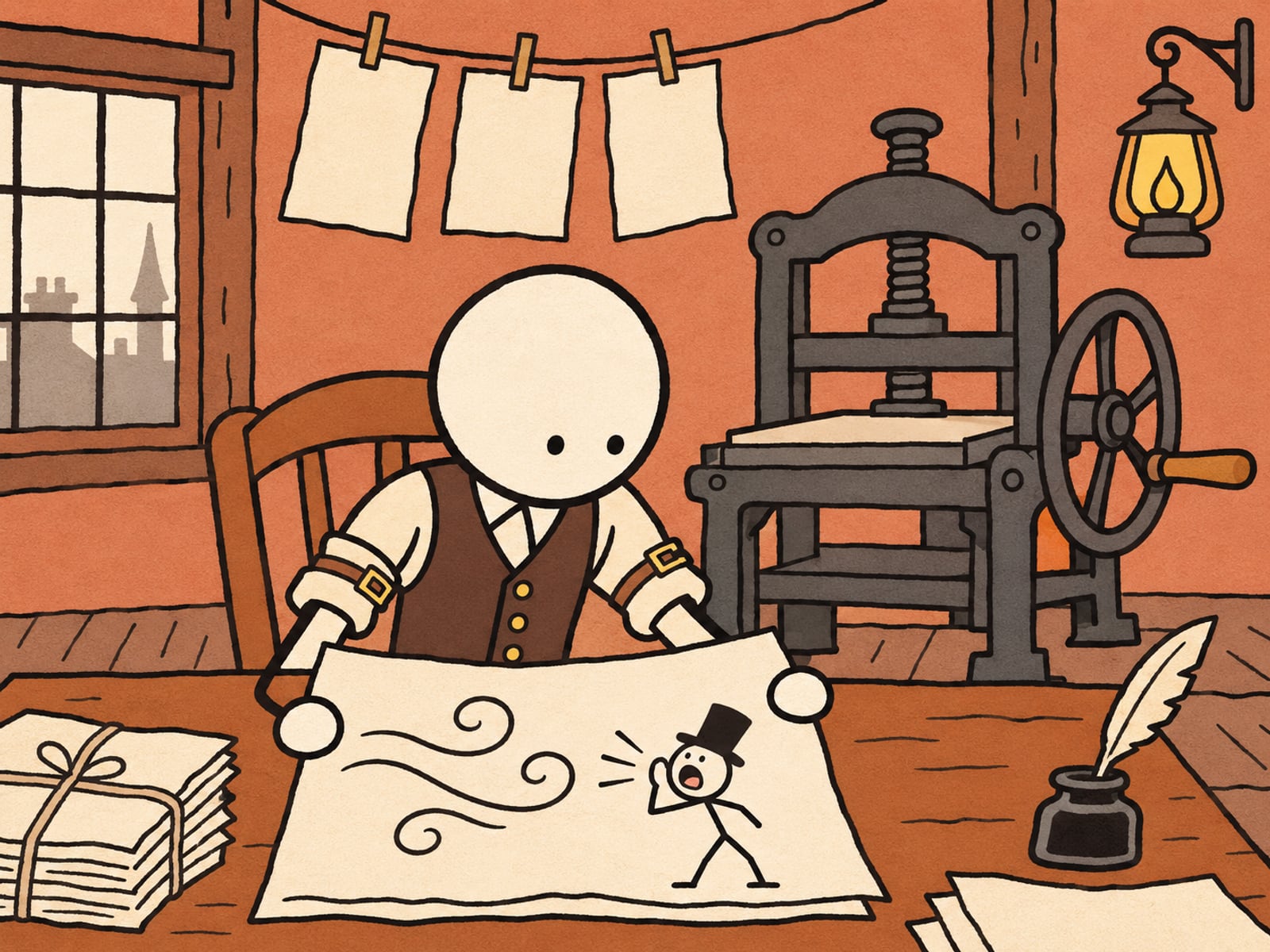
Start with the Tribune. On April 7, 1858, Popik's citation shows "windy city" used for Chicago residents as "full of wind." That is the talk meaning, and it is the earliest documented Chicago use.
The first spoken use can't be dated, because talk leaves no print. So 1858 is the earliest date on the page, not a birthday.
The weather meaning shows up next. In 1875, the Cincinnati Enquirer printed "Chicago Blowing" about a "wind-swept, fire-scorched and frozen city," according to Popik's summary.
Then, on May 9, 1876, the same paper ran a headline reading "That Windy City," followed by "Some of the Freaks of the Last Chicago Tornado." The article described objects blown around by a tornado in Chicago. The wording also left room for a joke about Chicago's boastful public figures.
One headline, two readings. That's the pattern.
Chicago's own newspapers were not shy about wind either. They promoted the city's lake breezes during the 1850s through the 1870s, as the Encyclopedia of Chicago records it.
So, by 1876, a reader could take the phrase either way. Is the city windy, or full of wind?
1885 to 1893: the fair walks into a nickname
The phrase kept traveling before the fair ever came up. The Cleveland Gazette used "From the Windy City" in a Chicago news heading on September 19, 1885, according to the Encyclopedia of Chicago. A Louisville newspaper used "Windy City" for Chicago in 1886, as Popik's 2006 update notes.
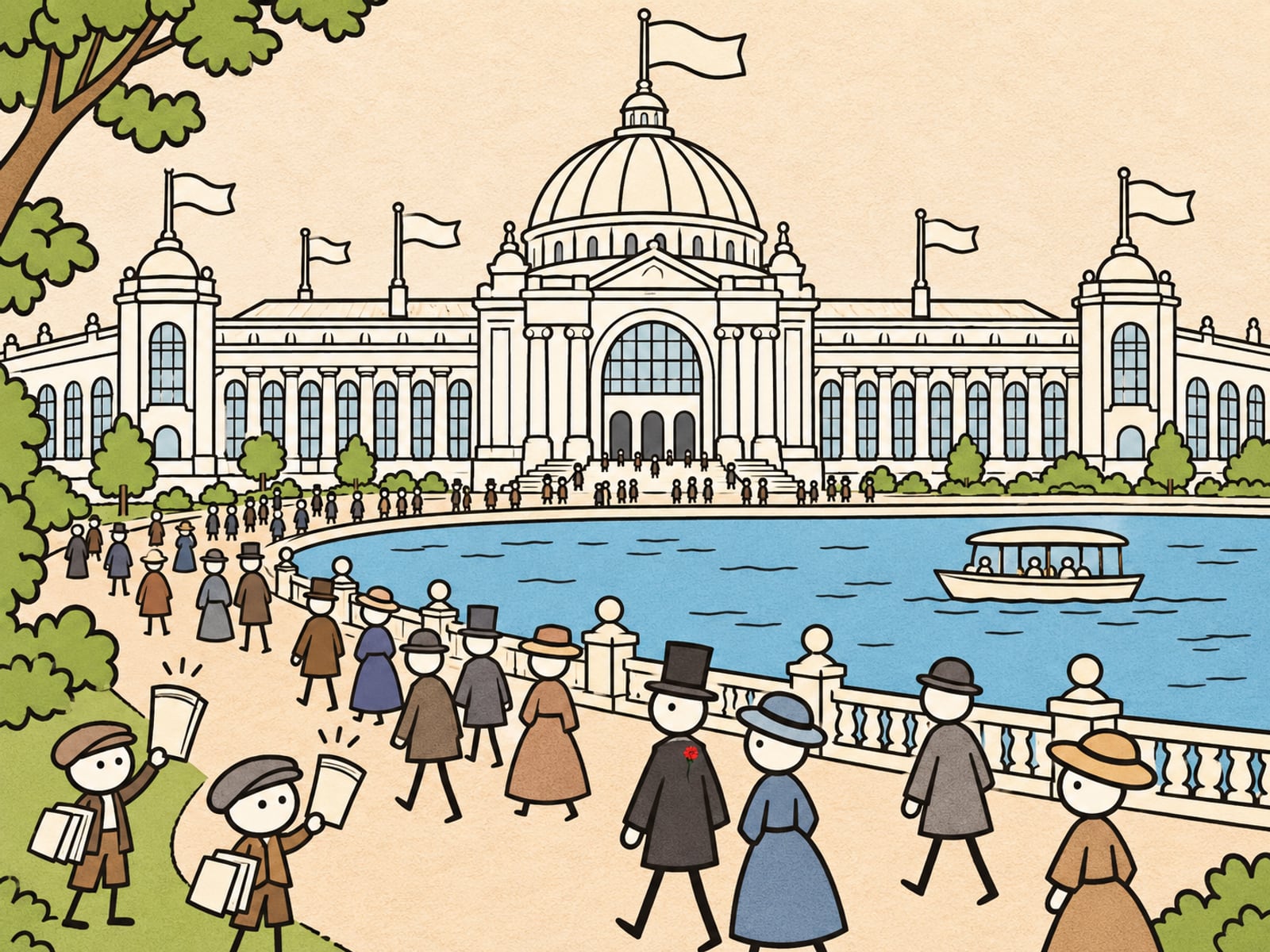
Now to the famous version. Chicago and New York competed to host the 1893 World's Columbian Exposition. Chicago's promoters made grand claims for their city, and New York newspapers mocked them as "windy," as History tells it.
Chicago won. The fair opened on May 1, 1893, in Jackson Park, as the Chicago Public Library tells it.
Dana is often credited with spreading the nickname nationally, and that is the version most people hear. In other words, the fair made the nickname famous, and the dated record shows it was already in print.
What the dated record shows is simpler. The fair rivalry helped attach a political and promotional meaning to a nickname that was already circulating. It gave an old joke a new target.
That's the second turn of the same question. Is the city windy, or full of wind?
The wind itself
Now for the weather. Chicago is windy, but it is not the windiest big city in the country.
A comparison built on NOAA National Climatic Data Center data, as compiled by Current Results, gives Chicago an average annual wind speed of 10.3 mph, or 16.6 km/h. That ranks twelfth among 56 large metropolitan areas.
These cities average more, per that windiest-cities list:
- Boston: 12.3 mph
- Oklahoma City: 12.2 mph
- Buffalo: 11.8 mph
- Milwaukee: 11.5 mph
- Dallas: 10.7 mph
Kansas City and San Francisco sit at 10.6, and Cleveland, Minneapolis and Virginia Beach at 10.5.
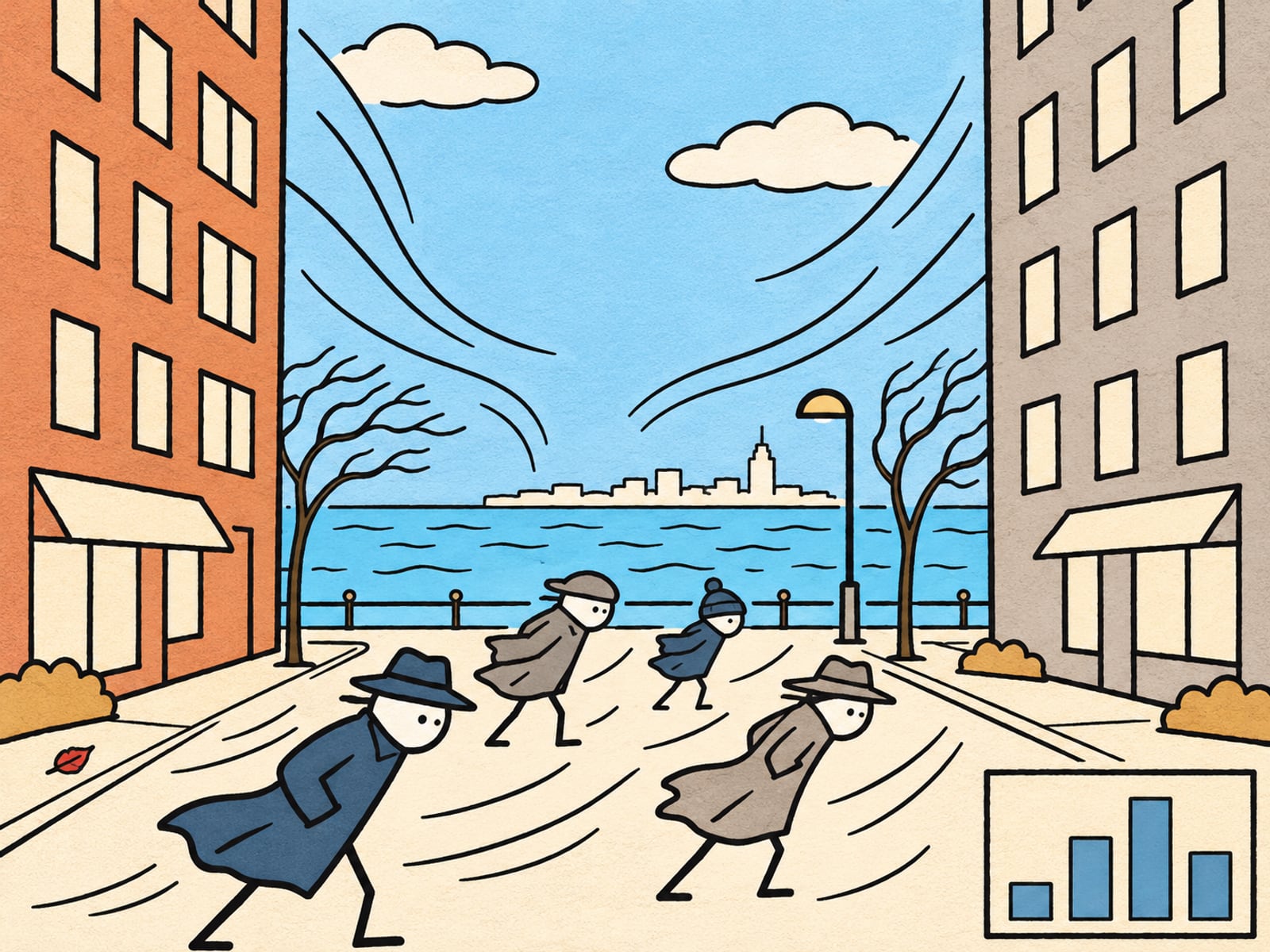
So, why does it feel so windy? Chicago sits beside Lake Michigan, and gusts between tall buildings make the nickname feel literal, especially in cold weather. For local climate numbers, the National Weather Service in Chicago publishes 1991 to 2020 normals for O'Hare.
Think of it like this: the average says "breezy," and the street corner downtown in January says something else. Both are true.
So, the wind is real, though not record-setting. The talk was real too. Is the city windy, or full of wind?
The record
| Date | What happened | Source |
|---|---|---|
| April 7, 1858 | The Chicago Tribune uses "windy city" for residents "full of wind" | Barry Popik, Windy City summary |
| 1875 | The Cincinnati Enquirer prints "Chicago Blowing" about a "wind-swept, fire-scorched and frozen city" | Barry Popik, Windy City summary |
| May 9, 1876 | The Cincinnati Enquirer runs "That Windy City" over a story on a Chicago tornado | Barry Popik, Windy City summary |
| September 19, 1885 | The Cleveland Gazette heads a Chicago news item "From the Windy City" | Encyclopedia of Chicago, "Windy City" |
| 1886 | A Louisville newspaper uses "Windy City" for Chicago | Barry Popik, Windy City 2006 update |
| 1889 to 1890 | Chicago and New York compete to host the 1893 fair; New York papers mock Chicago's promoters as "windy" | History, Why Is Chicago Called the "Windy City"? |
| May 1, 1893 | The World's Columbian Exposition opens in Jackson Park | Chicago Public Library, When the World Came to Chicago |
Questions people ask
Who first called Chicago the Windy City? 01
The earliest documented use for Chicago is the Chicago Tribune of April 7, 1858, according to Barry Popik. The first time someone said it out loud can't be dated, so 1858 is the earliest date in print.
Is Chicago the windiest big city in the US? 02
No. Chicago averages 10.3 mph a year, twelfth among 56 large metropolitan areas in a comparison based on NOAA data, per Current Results. Boston, at 12.3 mph, averages more.
Why is Chicago called the Second City? 03
Chicago was the second-largest US city for much of the late nineteenth and early twentieth centuries. A. J. Liebling's 1952 book Chicago: The Second City compared it with New York, and the improv comedy company later took the name, according to the Encyclopedia of Chicago.
Why is Chicago called the City of Big Shoulders? 04
It comes from Carl Sandburg's poem "Chicago," first published in 1914, which called the city the "City of the Big Shoulders." The image points to industrial workers, stockyards, factories and railroads, as the Encyclopedia of Chicago explains.
Why is Chicago so windy near the lake? 05
Chicago sits exposed beside Lake Michigan. Regional weather systems, cold-season pressure differences and wind speeding up around tall buildings all add to it.
Why one nickname holds the whole city
One phrase holds Chicago's weather, its boasting and its 1893 fair. The newspapers of the 1850s and 1870s already carried both meanings, long before anyone in New York picked up a pen about the fair.
That is why the nickname has lasted. It never had to choose.
So, one last time: is the city windy, or full of wind?
Both.
Sources

- Barry Popik, "Windy City" summary
- Barry Popik, Windy City 2006 update
- Encyclopedia of Chicago, "Windy City"
- History, "Why Is Chicago Called the 'Windy City'?"
- Chicago Public Library, "When the World Came to Chicago"
- Current Results, "Annual Average Wind Speed in US Cities"
- Current Results, "Windiest Cities in the United States"
- National Weather Service Chicago, "Chicago O'Hare 1991 to 2020 Climate Normals"
- Encyclopedia of Chicago, "Second City"
- Encyclopedia of Chicago, "Carl Sandburg's 'Chicago'"