Who Invented the Airplane?
Wilbur and Orville Wright flew the first successful powered, sustained, controlled airplane at Kitty Hawk on December 17, 1903. They applied for a U.S. patent on March 23, 1903, and Patent No. 821,393 was granted on May 22, 1906. Others built the gliders, balloons and engines that came before, and many more built the airliner you board today.

In this explainer +
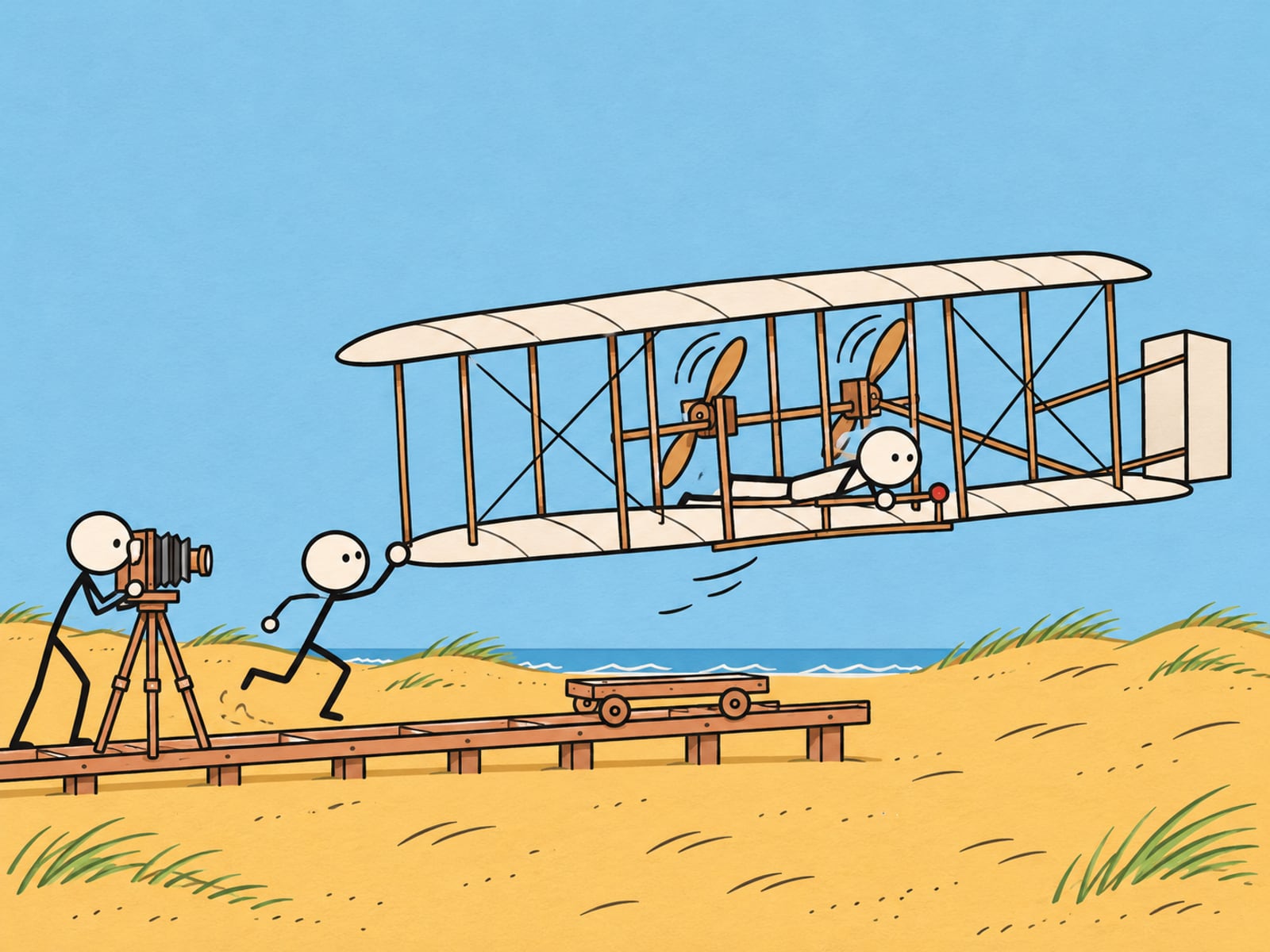
It's 10:35 a.m. on December 17, 1903, at Kitty Hawk, North Carolina. Orville Wright lies face down on the lower wing of a wooden biplane, and the machine is about to leave its launch rail. Wilbur runs alongside. A man named John Daniels stands by with a camera.
That is the moment most people mean when they ask who invented the airplane. Wilbur and Orville Wright are usually credited with the first successful powered, sustained, controlled heavier-than-air airplane, according to the Library of Congress.
The credit comes with a few honest footnotes. Others flew in balloons and gliders long before 1903, one rival claim from 1901 is still disputed, and a Brazilian inventor made a famous public flight in Paris three years later. We'll get to all of them, in order.
Four flights in one day
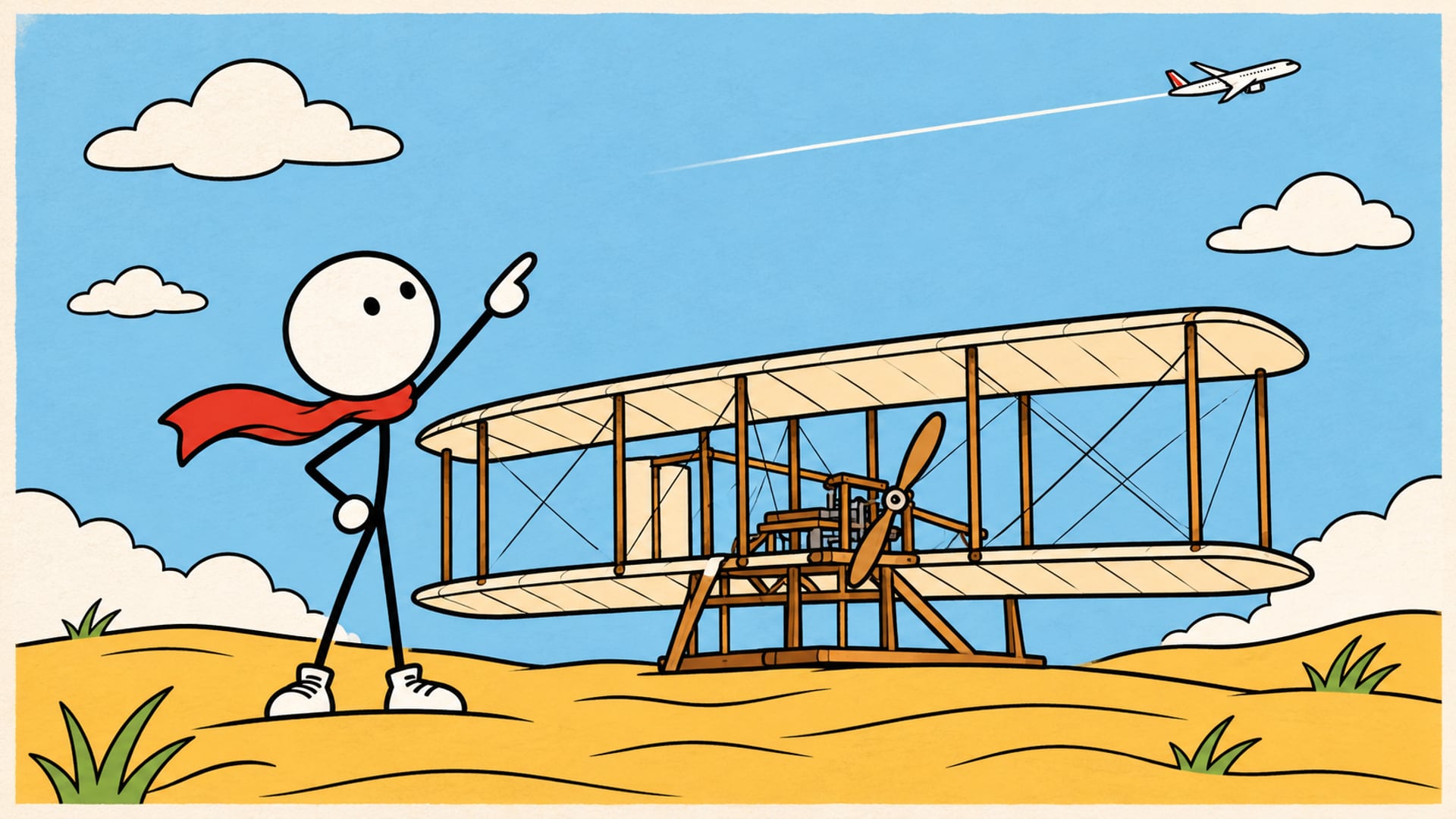
The National Park Service describes the Wright Flyer as a wooden-and-muslin biplane with a 12-horsepower gasoline engine, two propellers, and a control system for pitch, roll and yaw. Muslin is a light fabric.
It did not roll off on wheels. The Flyer ran down a 60-foot launching rail, because the soft sand made ordinary wheels impractical.
Then came the four flights, all on the same day, according to the National Park Service:
- Orville flew 12 seconds and covered 120 feet.
- Wilbur flew 12 seconds and covered 175 feet.
- Orville flew 15 seconds and covered 200 feet.
- Wilbur flew the longest: 59 seconds and 852 feet.
That's it. The whole day of flying adds up to well under two minutes in the air.
Then a gust of wind overturned the Flyer and badly damaged it, which ended the experiments for that season.
The patent that came with it
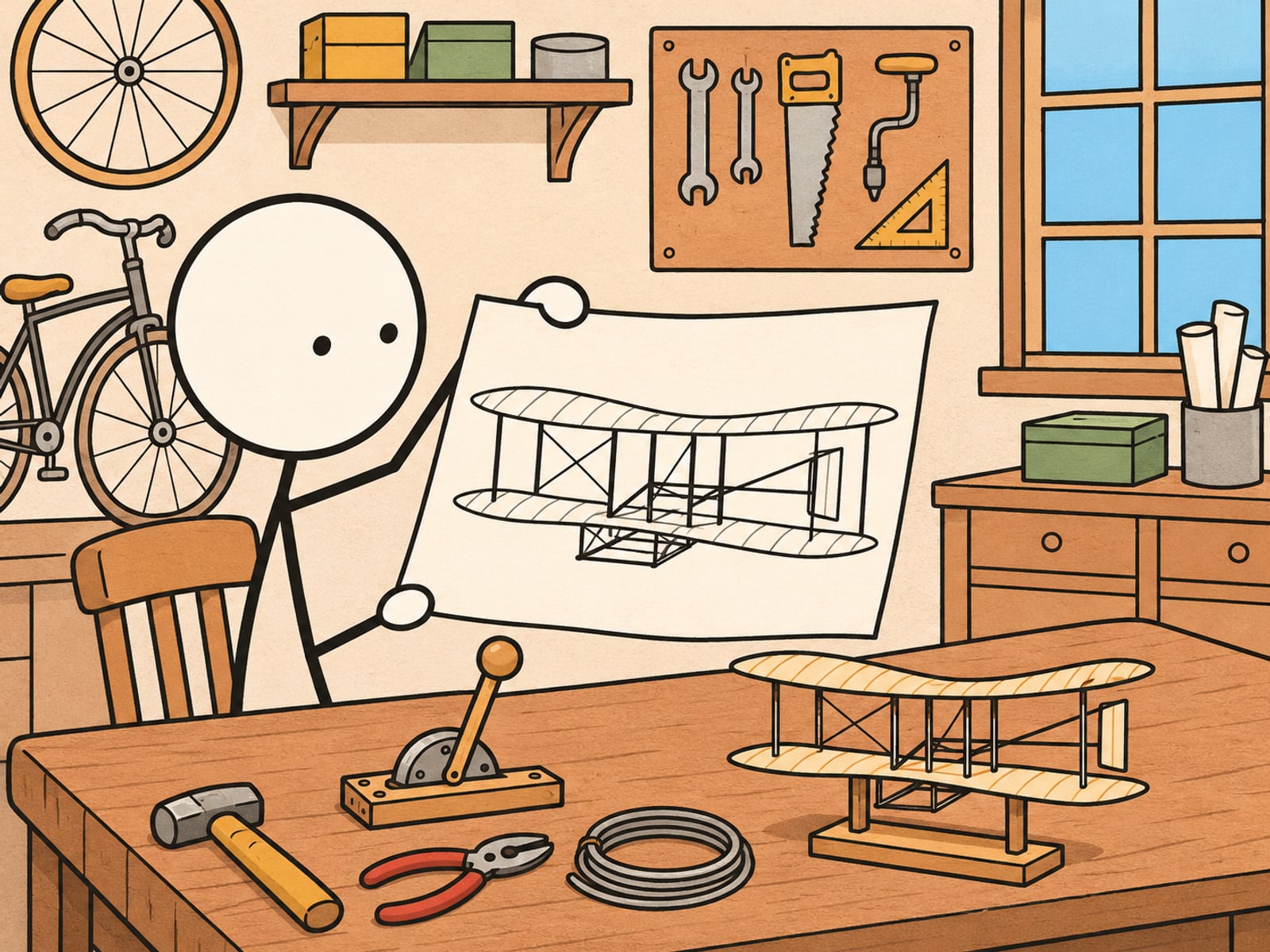
The brothers had not waited for Kitty Hawk to protect their idea. They applied for a U.S. patent on March 23, 1903, nine months before the flights. Patent No. 821,393, titled "Flying-Machine," was granted on May 22, 1906, according to the National Archives.
What did it cover? Mostly the system for keeping the aircraft balanced and steering it, including wing warping linked to the rudder, as the National Archives patent record lays out. In other words, the patent was about control, and control is exactly what separates a controlled flight from a lucky hop.
Who flew, or claimed to fly, before them
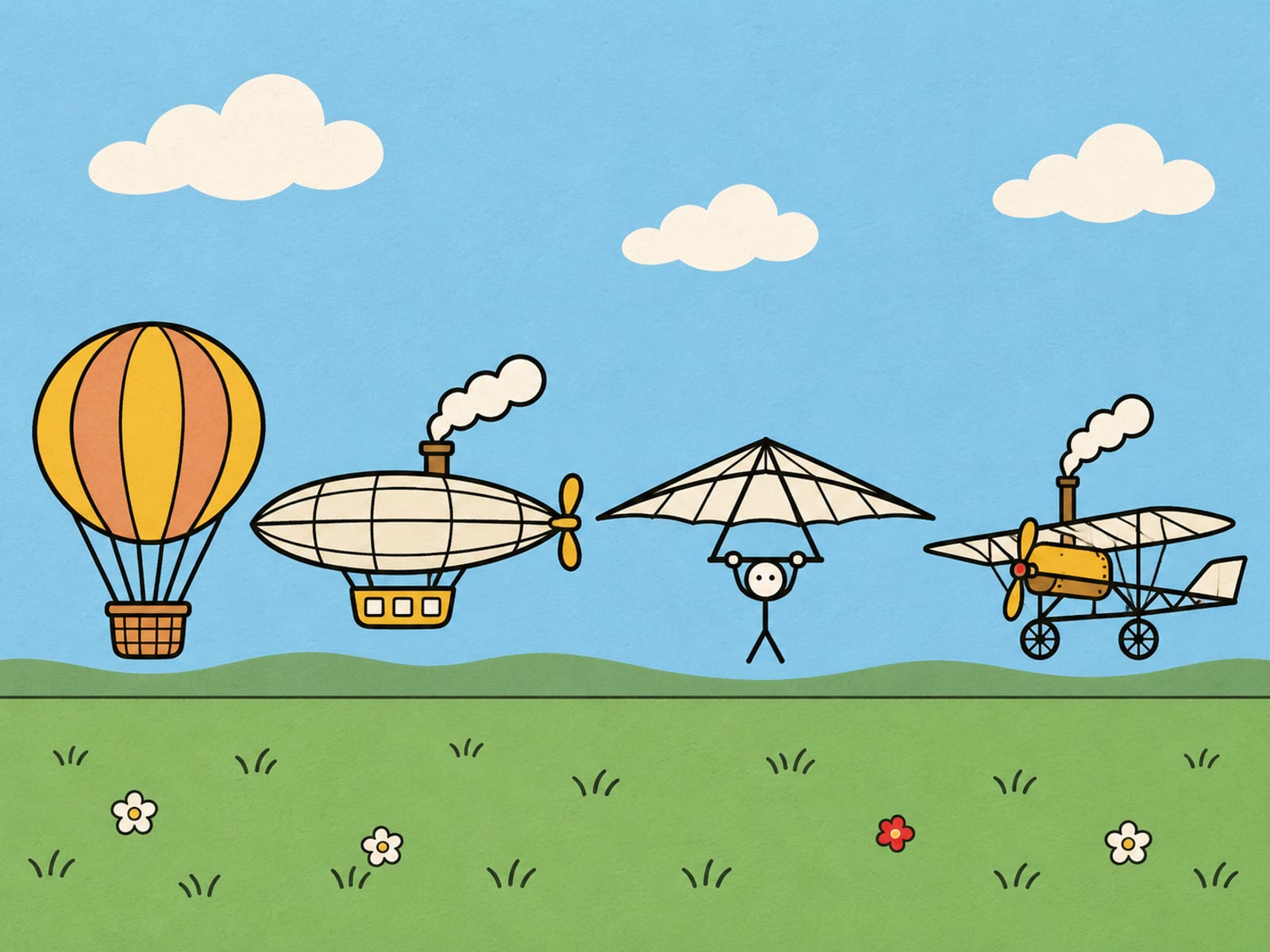
People left the ground long before 1903. In 1783, Jean-François Pilâtre de Rozier and François d'Arlandes made the first free human flight in a Montgolfier hot-air balloon. Henri Giffard flew a steam-powered dirigible in 1852. Both facts are in the Library of Congress timeline.
Then the heavier-than-air pioneers arrive:
- George Cayley, England, published principles of heavier-than-air flight and designed fixed-wing aircraft in the nineteenth century. He is often called the father of aeronautics, but he did not produce a successful powered airplane.
- Otto Lilienthal, Germany, made repeated glider flights from 1891 through 1896. His gliders had no engine, so they were predecessors of airplanes, not powered ones.
- Samuel P. Langley, United States, built successful steam-powered models in 1896. His full-size Aerodrome A crashed in two launch attempts in 1903.
- Gustave Whitehead was reported to have flown a powered machine near Bridgeport, Connecticut, on August 14, 1901. The claim rests on testimony and disputed evidence, and the Smithsonian's National Air and Space Museum rejects it because the evidence is unreliable and inconsistent.
The Wrights' own case is different in kind. It rests on photographs, witnesses, technical records and the machine itself, and their Flyer flew under its own engine power, stayed up for a sustained stretch, and could be controlled.
Paris, 1906, and a different kind of first
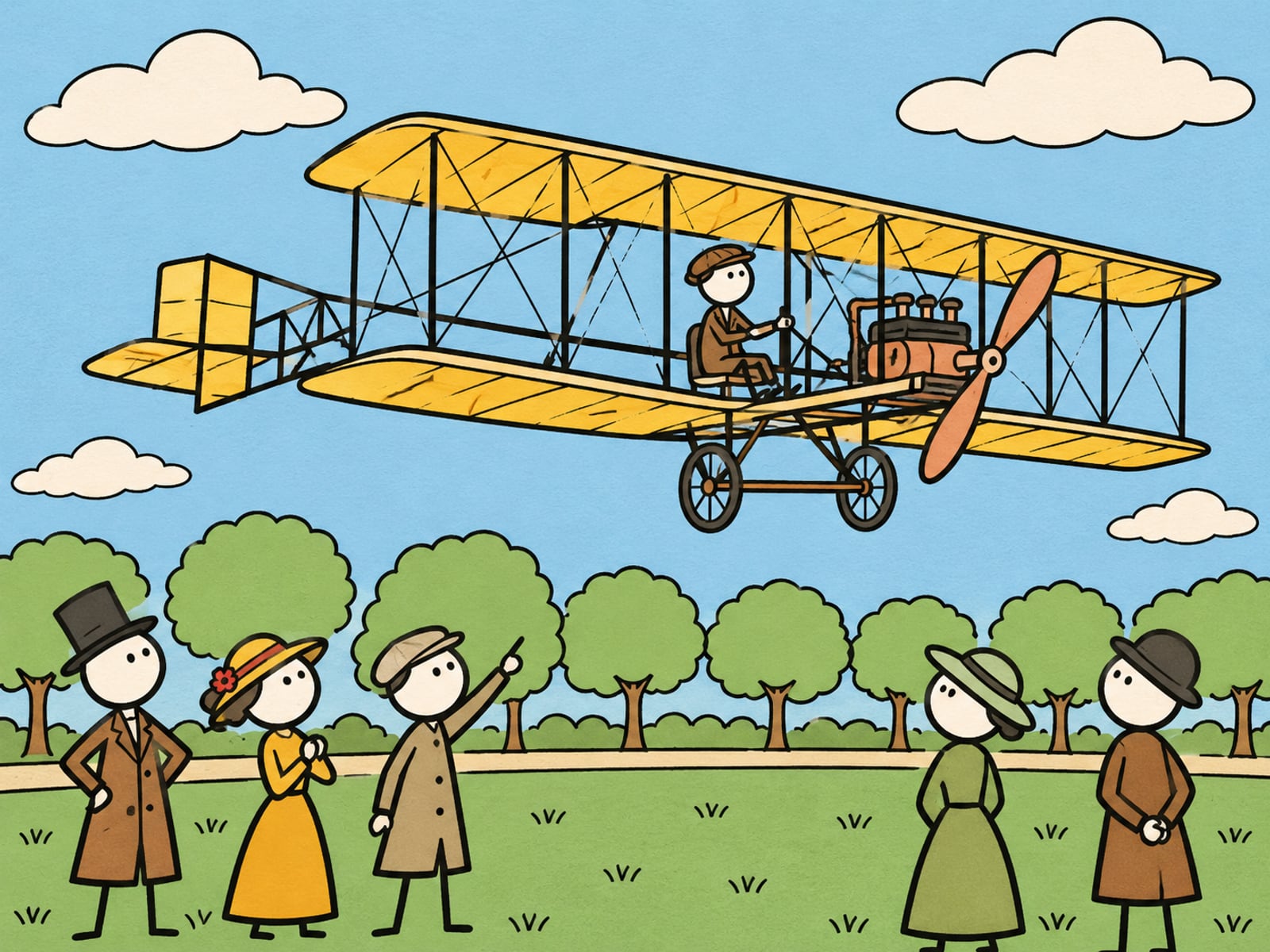
Now to Alberto Santos-Dumont, an inventor tied to both Brazil and France. On October 23, 1906, he flew his 14-Bis publicly at Bagatelle, in Paris, covering about 60 meters.
On November 12, 1906, he flew 220 meters in 21 seconds, in a flight officially observed by the Aero Club of France, according to the Fédération Aéronautique Internationale.
Here is why that matters. The 14-Bis took off under its own power, with no launching rail or catapult, and it did so in public. That makes it generally the first publicly observed and officially ratified powered airplane flight in Europe. It came three years after Kitty Hawk, so it is not the first powered flight overall.
Countries tell the story with different emphasis:
- Mexico. Mexico City International Airport's biography names Wilbur and Orville Wright as the first to achieve controlled, sustained flight in a powered heavier-than-air machine, starting on December 17, 1903.
- Spain. Fundación ENAIRE also credits the Wrights with 1903, and calls Santos-Dumont's 1906 flight the first airplane flight in Europe.
- Brazil. Brazil's civil aviation agency material calls Santos-Dumont the "Father of Aviation" for his October 23, 1906 public, self-powered takeoff. That does not erase the Wrights' 1903 flights.
From a 12-second hop to the airliner
The Flyer was an experiment, not a product. NASA's account of the early years says the Wrights kept improving it: in 1904 they flew a redesigned airplane at Huffman Prairie near Dayton, Ohio, and on September 20, 1904, it made the first complete circle in flight.
In 1905, the Wright Flyer III became the first practical airplane. On October 5, Wilbur flew for 39 minutes and covered about 24.5 miles. Compare that with 12 seconds in 1903.
Passenger airplane services began in 1919. Germany's Heinkel 178 became the first fully jet-propelled aircraft to fly in 1939. Today's airplanes have enclosed pressurized cabins, turbofan engines and computerized flight controls. Nothing like that was on the 1903 Flyer, which was an open-frame biplane with a pilot lying on the wing.
The record
| Date | What happened | Source |
|---|---|---|
| 1783 | First free human flight, in a Montgolfier hot-air balloon | Library of Congress |
| 1852 | Henri Giffard flies a steam-powered dirigible | Library of Congress |
| August 14, 1901 | Whitehead's disputed powered flight near Bridgeport, Connecticut | Smithsonian National Air and Space Museum |
| March 23, 1903 | The Wrights apply for a U.S. patent | National Archives |
| December 17, 1903 | Four powered flights at Kitty Hawk, the longest 59 seconds and 852 feet | National Park Service |
| September 20, 1904 | First complete circle in flight at Huffman Prairie | NASA |
| October 5, 1905 | Wilbur flies 39 minutes in the Flyer III, about 24.5 miles | NASA |
| May 22, 1906 | Patent No. 821,393 is granted | National Archives |
| October 23, 1906 | Santos-Dumont flies the 14-Bis publicly at Bagatelle | Brazilian Center for Research in Physics |
| November 12, 1906 | Santos-Dumont flies 220 meters in 21 seconds, officially observed | Fédération Aéronautique Internationale |
Questions people ask
Who invented the first airplane? 01
Wilbur and Orville Wright are usually credited. Their Flyer made the first powered, sustained, controlled heavier-than-air flight with a person aboard, near Kitty Hawk on December 17, 1903. Their U.S. patent, No. 821,393, covered the balance and control system.
Did anyone fly before the Wright brothers? 02
Yes, in other ways. People rode balloons from 1783 and Lilienthal glided from 1891 to 1896, but those were not powered airplanes. Whitehead's 1901 claim for a powered flight is disputed, and the Smithsonian's National Air and Space Museum rejects it.
Why did the Wright Flyer use a launch rail instead of wheels? 03
The National Park Service says the soft sand made ordinary wheels impractical. The answer turns on the deep sand and the aircraft's low takeoff speed. So, the Flyer ran along a 60-foot rail instead.
Why do some countries credit Santos-Dumont as the father of aviation? 04
Because his 14-Bis took off under its own power, in public, in October 1906, and a month later made a flight officially observed by the Aero Club of France. Brazilian government aviation material calls him the "Father of Aviation." It does not erase the Wrights' 1903 flights.
The Flyer was a beginning
The airplane people board today is a long way from a wooden biplane on a sand rail. Enclosed cabins, turbofan engines and computerized controls were added by many hands over many decades.
The Wrights flew first, and many others built the airplane people board today.
Sources

- Library of Congress, Timeline of Flight
- National Park Service, The Wright Flyer
- National Park Service, Four Powered Flights
- National Archives, Wright Brothers Patent
- National Archives, patent record
- Smithsonian National Air and Space Museum, Gustave Whitehead's claims
- Fédération Aéronautique Internationale, first flight by Santos-Dumont
- Brazilian Center for Research in Physics, Santos-Dumont
- NASA, Powered Aircraft 1903 to 1905
- Mexico City International Airport, Wilbur y Orville Wright
- Fundación ENAIRE, Volar: orígenes de la aviación en España
- Brazil's National Civil Aviation Agency, Asas do conhecimento