Who Invented Ice Cream?

No one person invented ice cream. Nancy M. Johnson is usually credited with the modern hand-cranked freezer, patented on 9 September 1843. Jacob Fussell is usually credited with the first American commercial ice-cream factory, built in Baltimore in 1851.

In this explainer +
On 9 September 1843, Nancy Johnson of Philadelphia was granted a patent for an "Artificial Freezer": a tub of ice and salt with a rotating dasher turning inside it.
That sounds like the birth of ice cream. It isn't, quite. The patent covers a machine, not the dessert. People had been freezing sweet, creamy mixtures for centuries before Johnson filed anything.
So, who invented ice cream? No single person did. Johnson is usually credited with the modern hand-cranked freezer, and Jacob Fussell is usually credited with the first American commercial ice-cream factory, built in Baltimore in 1851. The rest of the story is a long relay with a lot of unnamed runners.
Cold, salt and a lot of unnamed cooks
The first runners have no names. In Tang dynasty China, from A.D. 618 to 907, cooks mixed fermented buffalo, cow or goat milk with flour and camphor and chilled it, according to the Ice Cream Alliance. It's an early frozen dairy preparation, and nobody knows who made the first one.
Then came the trick that made frozen desserts practical. From the fourth to the thirteenth centuries, writers in India and the Arab world described using ice and salt. Salt lowers the freezing point of ice. In other words, the icy bath gets colder than plain ice can, cold enough to freeze a separate mixture sitting inside it.
Europe picked it up. The first European water ices and early ice creams probably appeared in Italy in the early 1600s, and ice cream was served at a Windsor Castle banquet for King Charles II in 1671. In 1694, Antonio Latini of Naples published a recipe for milk sorbet with candied pumpkin. In 1718, Mary Eales of England printed a recipe using cream and fruit, as Colonial Williamsburg tells it. Latini and Eales are documented recipe writers. They are not the inventors of ice cream; their pages show the dessert already on the move.
A few famous names turn up in the story too, and the record keeps them smaller than the legends do. Colonial Williamsburg notes there is no evidence Marco Polo brought an ice-cream recipe to Europe. Catherine de Medici married the future Henry II of France in 1533, before European cooks had documented artificial freezing methods. Nero is linked to snow with fruit juice and honey, a chilled fruit dessert rather than dairy ice cream, as History describes it.
A Philadelphia freezer and a Baltimore factory
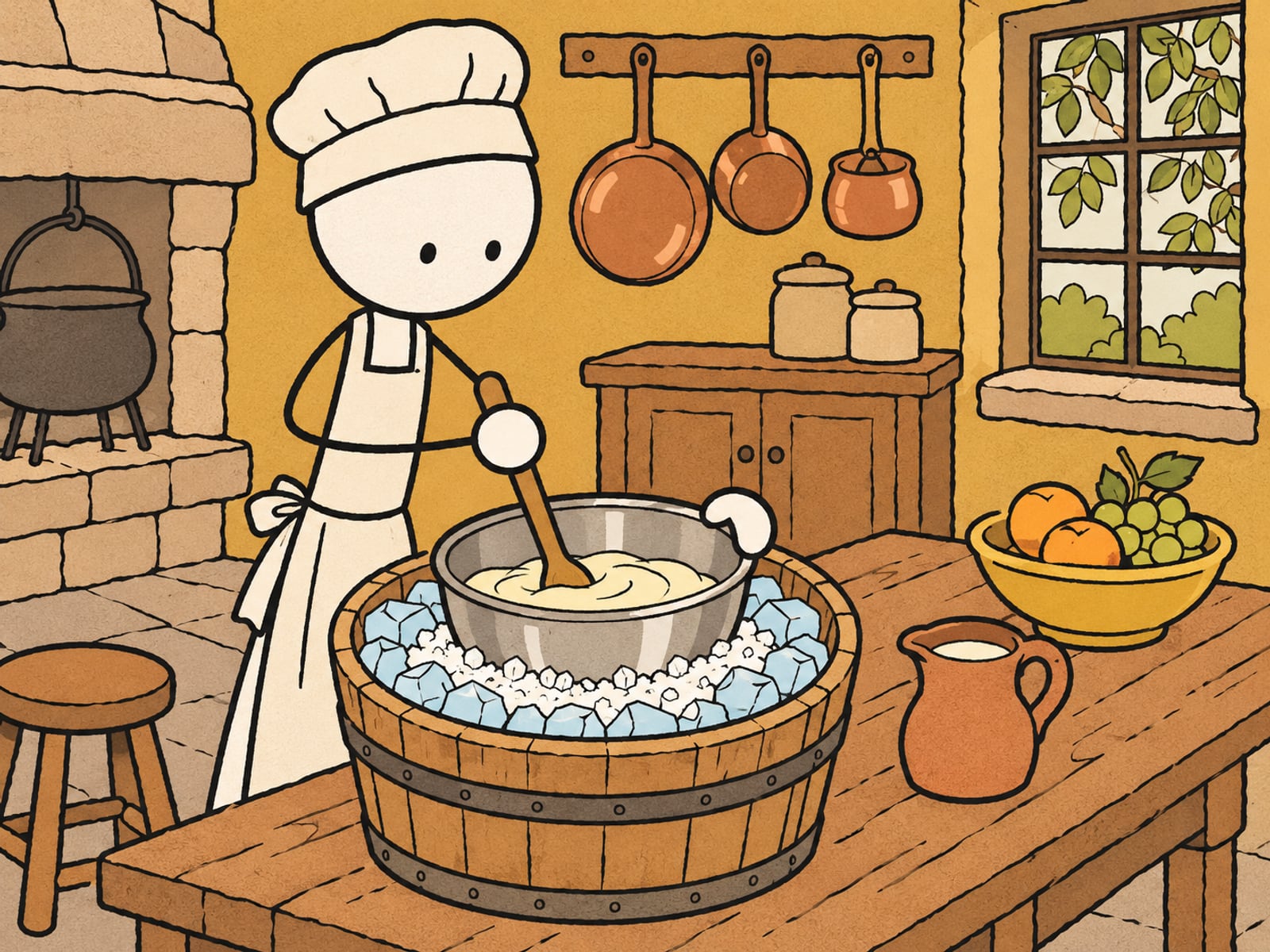
Before Johnson, freezing ice cream at home meant standing over a bowl in a bath of ice and salt, stirring and scraping by hand so big ice crystals would not form.
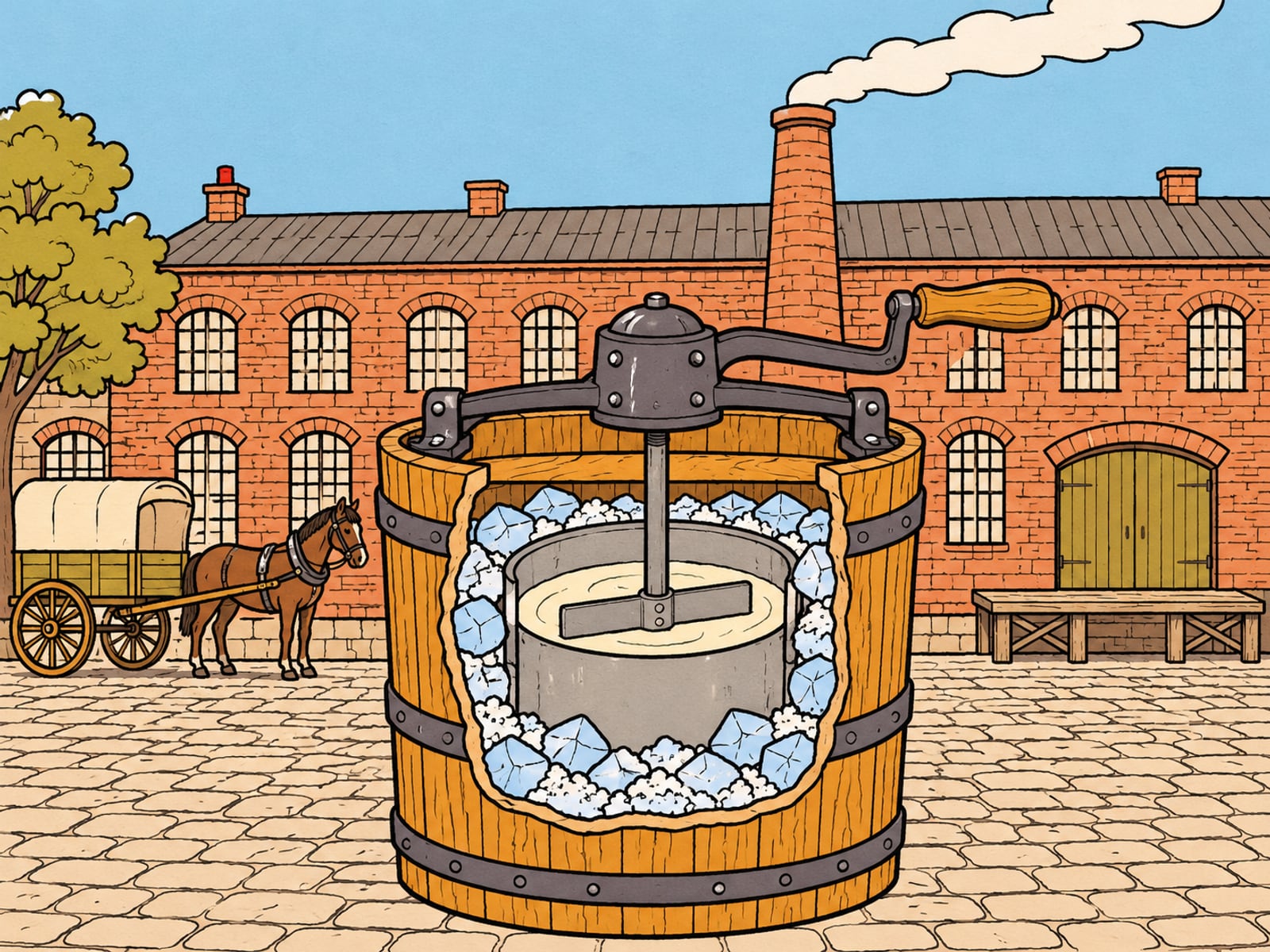
Her 1843 freezer put that work on a crank. The mixture sat in a container surrounded by ice and salt, and a rotating dasher kept it moving. The result was a smoother frozen dessert. That's the machine the patent describes, and it's why Johnson gets the credit in many American accounts.
Philadelphia had another name in the story. Augustus Jackson, a former White House chef, worked there from the 1820s on. According to the Library of Congress, he developed methods for controlling the freezing of custard, created flavors and sold ice cream in tin cans. He helped American production and distribution grow, though the surviving record does not establish him as the original inventor.
Then came Fussell. In 1851 he built an ice-cream factory in Baltimore, and ice cream began to turn from an expensive treat into a mass-produced product. Late in the nineteenth century, mechanical refrigeration made it less necessary to depend on stored natural ice and made transport, storage and large-scale sales possible.
Think of it like this: Johnson built the engine, and Fussell built the road. One made good ice cream easier to churn. The other made it something a whole city could buy.
The cone and the 1904 fair
Ice cream still needed something to eat it from. In 1902, Antonio Valvona, an ice-cream maker in Manchester, England, patented a metal mold for baking edible waffle-like cups, the Associated Press reports.
On 15 December 1903, Italo Marchiony, an Italian immigrant selling ice cream in New York City, received U.S. Patent No. 746,971 for a mold for making edible ice-cream cups. He later claimed he had sold ice cream in edible containers since 1896. The thing in his patent was closer to a shallow cup than to today's cone.
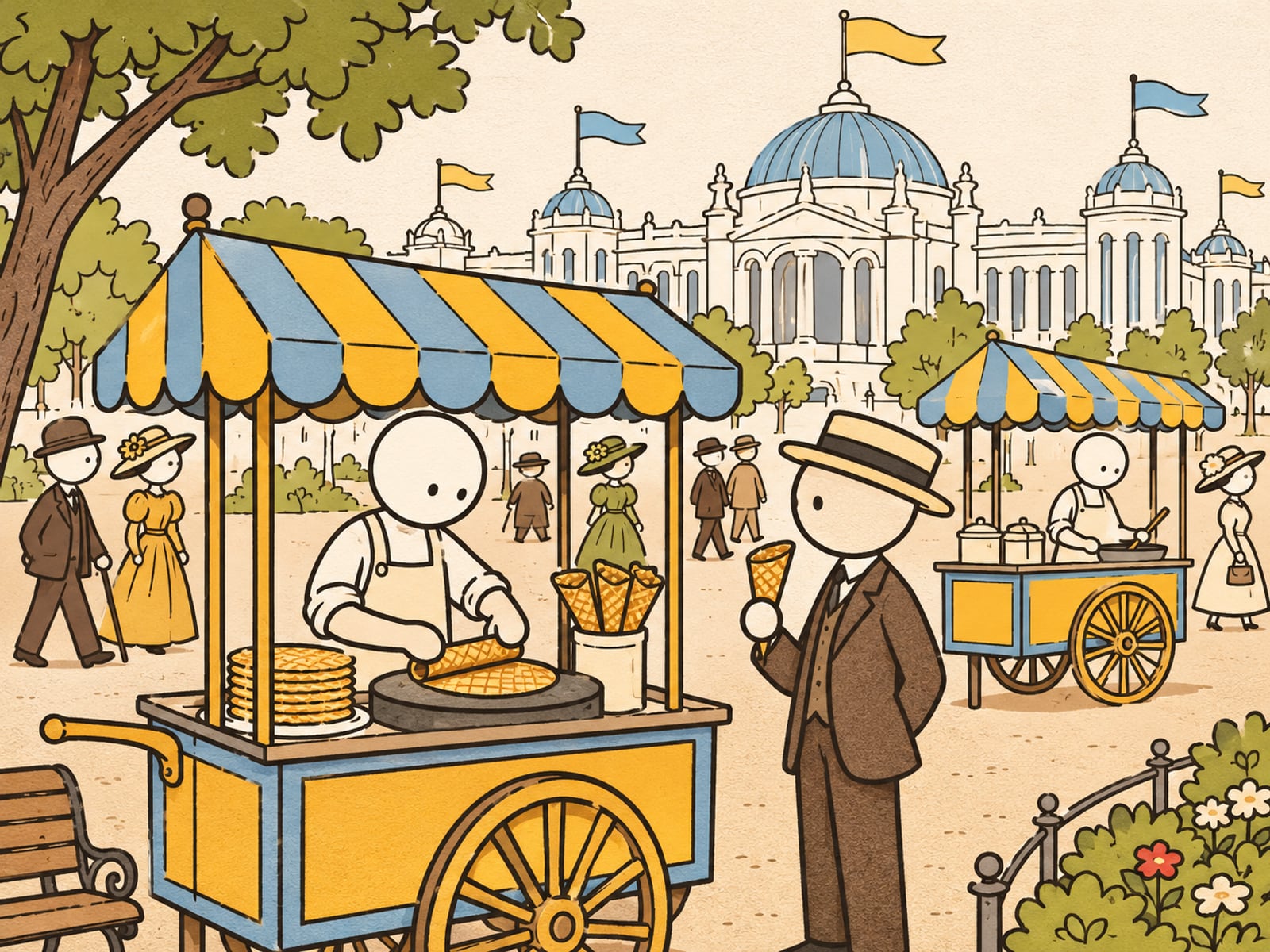
Then, in 1904, came the Louisiana Purchase Exposition in St. Louis. Ernest Hamwi, a Syrian immigrant selling zalabia, a crisp waffle-like pastry, later said a nearby ice-cream vendor ran out of dishes, so he rolled a zalabia into a funnel and filled it. That's Hamwi's own later account, as History tells it. Other vendors, including Abe Doumar, Nick and Albert Kabbaz and David Avayou, also claimed credit, and Time covers the dispute.
Which vendor made the first cone at the fair is not settled. What is certain is that the fair made the cone famous.
Ice cream outside the United States
The story doesn't start or end in America. Ice cream did not begin as a uniquely American invention, though the United States added major later steps in machinery, factory production and serving formats.
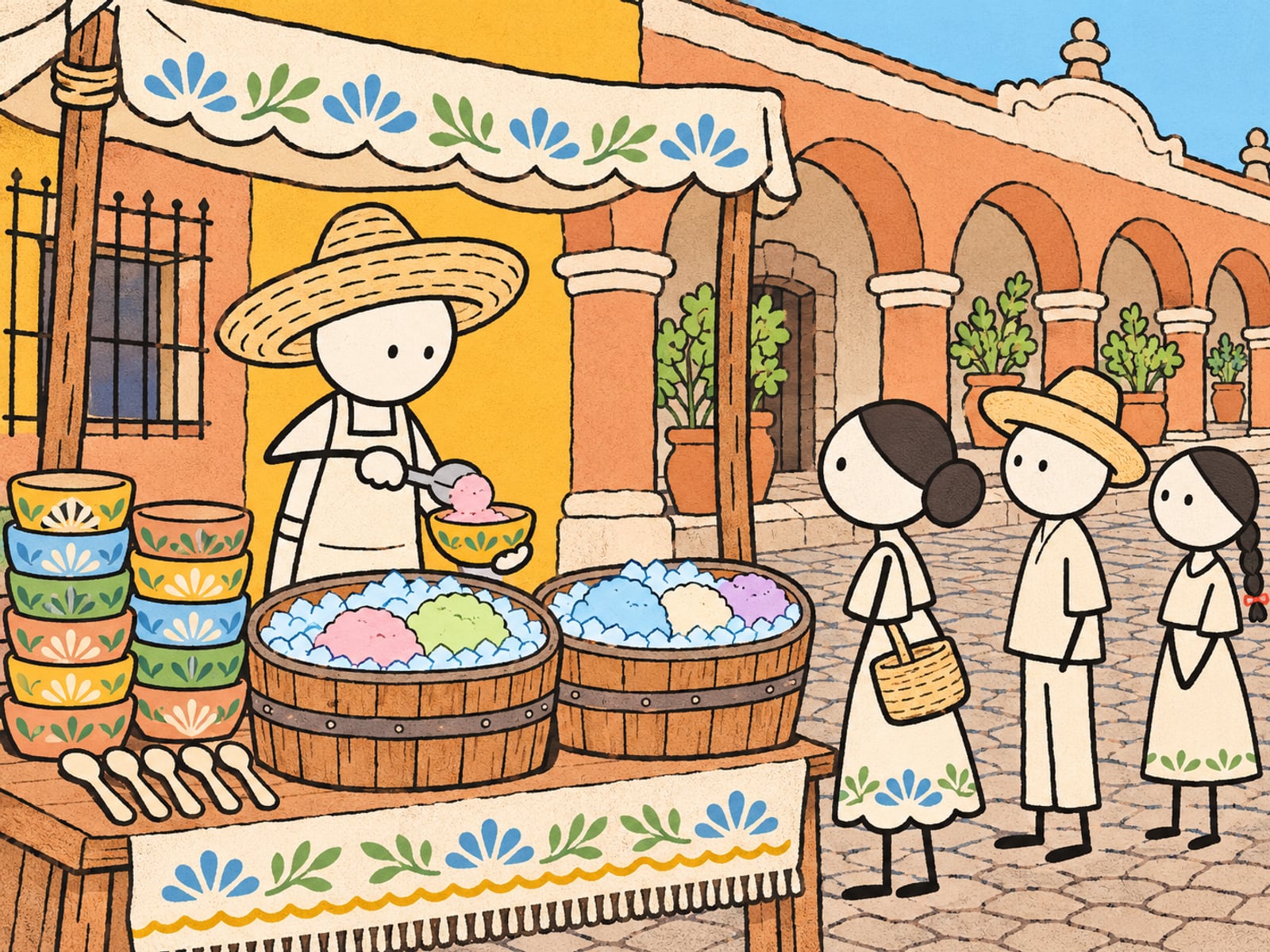
Mexico's National Institute of Anthropology and History records commercial ice-cream production in New Spain by the early seventeenth century. Mexican usage separates water-based nieves from milk-based helados.
In Spain, helado is the general word, while sorbete names a lighter, usually fruit-based dessert.
The record
| Date | What happened | Source |
|---|---|---|
| A.D. 618 to 907 | Tang dynasty cooks chill fermented milk mixed with flour and camphor | Ice Cream Alliance |
| 1694 | Antonio Latini of Naples publishes a milk-sorbet recipe with candied pumpkin | History |
| 1718 | Mary Eales of England prints an ice-cream recipe using cream and fruit | Colonial Williamsburg |
| 9 September 1843 | Nancy M. Johnson is granted a patent for an Artificial Freezer | Google Patents |
| 1851 | Jacob Fussell builds the first American commercial ice-cream factory in Baltimore | Library of Congress |
| 1902 | Antonio Valvona of Manchester patents a mold for edible ice-cream cups | Associated Press |
| 15 December 1903 | Italo Marchiony receives U.S. Patent No. 746,971 for an edible-cup mold | Google Patents |
| 1904 | Louisiana Purchase Exposition in St. Louis makes the cone famous | History |
Questions people ask
Who invented the ice cream cone? 01
No single inventor is established. Italo Marchiony patented a mold for edible ice-cream cups on 15 December 1903, but the object was closer to a shallow cup. At the 1904 St. Louis fair, Ernest Hamwi later said he rolled a zalabia into a funnel, and other vendors made their own claims.
Why does ice cream need ice and salt? 02
Salt lowers the freezing point of ice, so the icy bath around the ice-cream mixture gets colder than ice alone. That colder bath is what freezes the mixture in the container. It's the same ice-and-salt idea that writers in India and the Arab world described centuries before Johnson's freezer.
Why is ice cream creamy instead of icy? 03
Churning. As the mixture freezes, the dasher breaks up ice crystals and works air into it. Smaller crystals and trapped air give a smoother, creamier bite, which is the improvement Johnson's freezer is credited with.
What is the difference between gelato, sorbet and nieve? 04
Names for frozen desserts differ by region, and so do the ingredients behind them: dairy, fruit, fat, air and how the dessert is made. In Mexico, nieves are water-based and helados are milk-based. In Spain, sorbete usually means a lighter, fruit-based dessert.
One freezer, one factory, one fair
The ice cream in a cone came from a freezer patent, a factory and a fair, not from one kitchen. A Chinese cook, a pair of Italian and English recipe writers and a crowd of St. Louis vendors each added a piece.
No single person invented ice cream, but a Philadelphia freezer and a Baltimore factory made it a mass-produced treat.
Sources

- Google Patents, U.S. Patent No. 3,254, "Artificial Freezer" (Nancy M. Johnson, 1843)
- Library of Congress, "Sheet Music of the Week: We All Scream for Ice Cream Edition"
- Library of Congress, Inside Adams, "Ice Cream Inventions"
- Ice Cream Alliance, "History of Ice Cream"
- Colonial Williamsburg, early ice cream article
- History, "Where Do Ice Cream, Sorbet and Frozen Desserts Come From?"
- Google Patents, U.S. Patent No. 746,971 (Italo Marchiony, 1903)
- Associated Press, ice-cream cone history
- History, 1904 St. Louis World's Fair foods
- Time, ice-cream cone history
- INAH, Diario de Campo, Mexican ice-cream history
- Consumer, "El helado, un producto veraniego por excelencia"