Who invented the car?
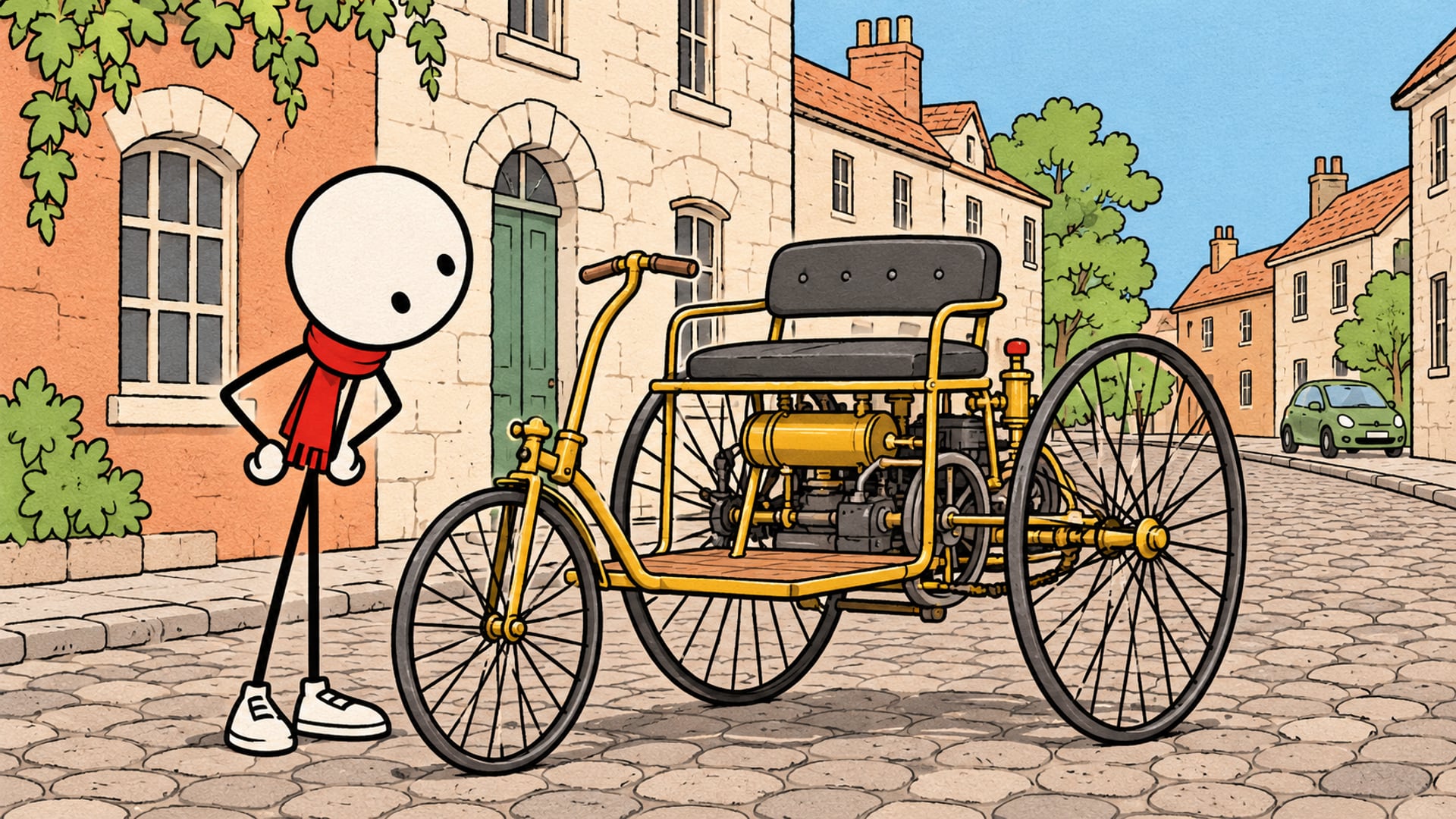
Carl Benz is usually credited with inventing the modern gasoline car. In 1886 he designed the engine and the road vehicle together as one machine, and patented it. Henry Ford came later: his Model T and his moving assembly line made cars affordable, but he did not invent the automobile.

In this explainer +
The first practical gasoline car was built in Mannheim, Germany, where Carl Benz's three-wheeled Patent-Motorwagen was first driven in 1885.
That is the usual answer, and the record backs it up. On January 29, 1886, Benz applied for German patent DRP 37435, and the German Patent and Trademark Office still identifies his Motorwagen as the first automobile.
But 1886 was a crowded year. Benz was not the only person with a gasoline vehicle on the road that year, and a few others had built self-propelled machines long before him. Here's how the story runs, and where Henry Ford comes in.
Benz, Mannheim and a patent number
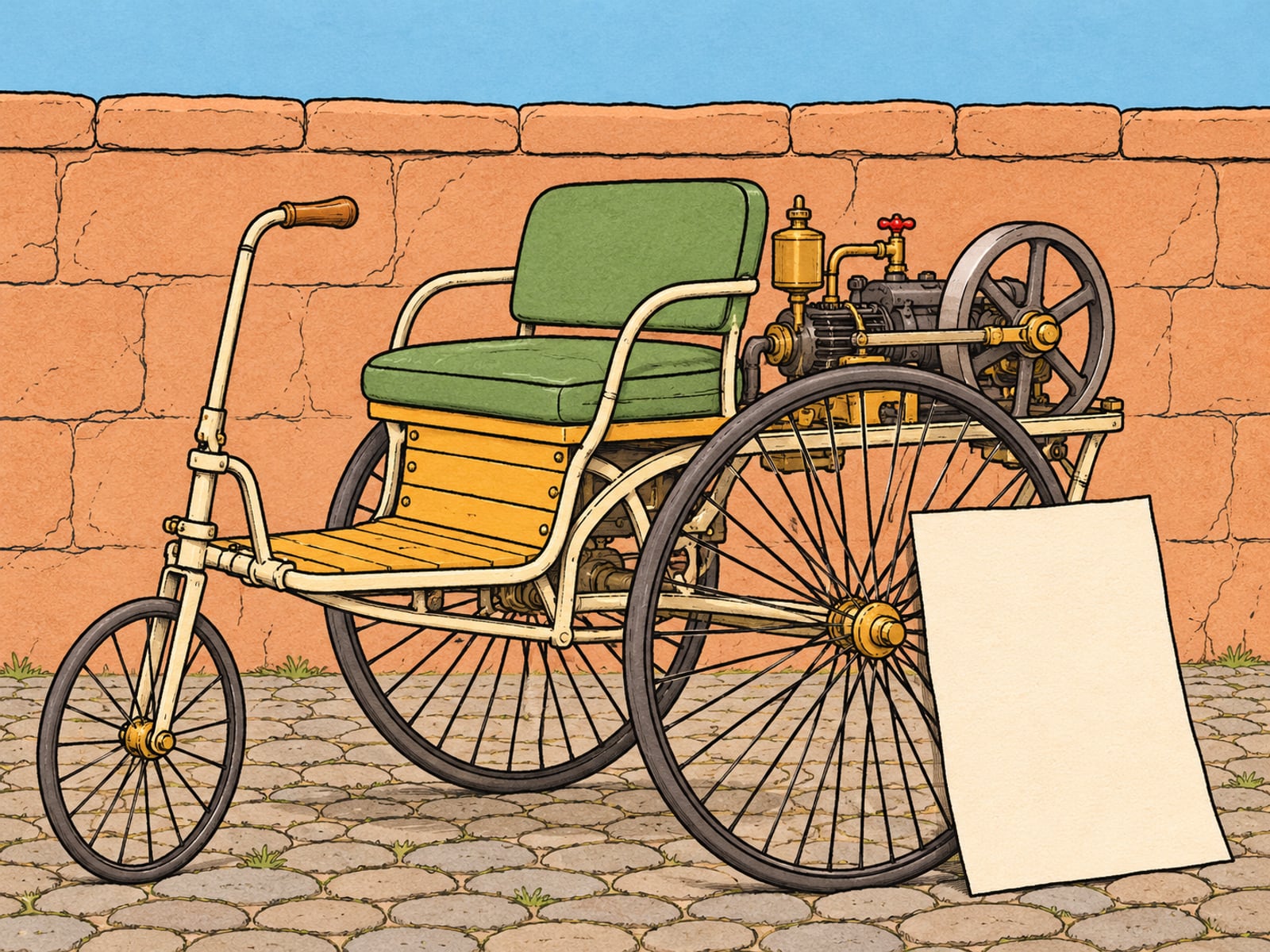
Start with what Benz actually made. His Motorwagen had a single-cylinder engine, three wheels, a tubular chassis and parts borrowed from bicycle design. It looked more like a motorized bicycle or carriage than like any car you know.
The important part was not any one piece. Benz designed the engine and the vehicle together, as one integrated machine. It was not a horse carriage with an engine bolted on.
The patent has a plain title: "Vehicle with gas engine operation." The German Patent and Trademark Office lists it as number 37435 and calls the Motorwagen No. 1 the first automobile. UNESCO's Memory of the World register describes the patent as authentic evidence of the invention of the automobile. Not many patent filings get that kind of treatment.
In other words, the credit does not rest on one famous story. It rests on a dated document and a machine built to go with it.
Others with a real claim
So, why is the answer "usually" Benz and not simply Benz? Because it depends on what you count as a car.
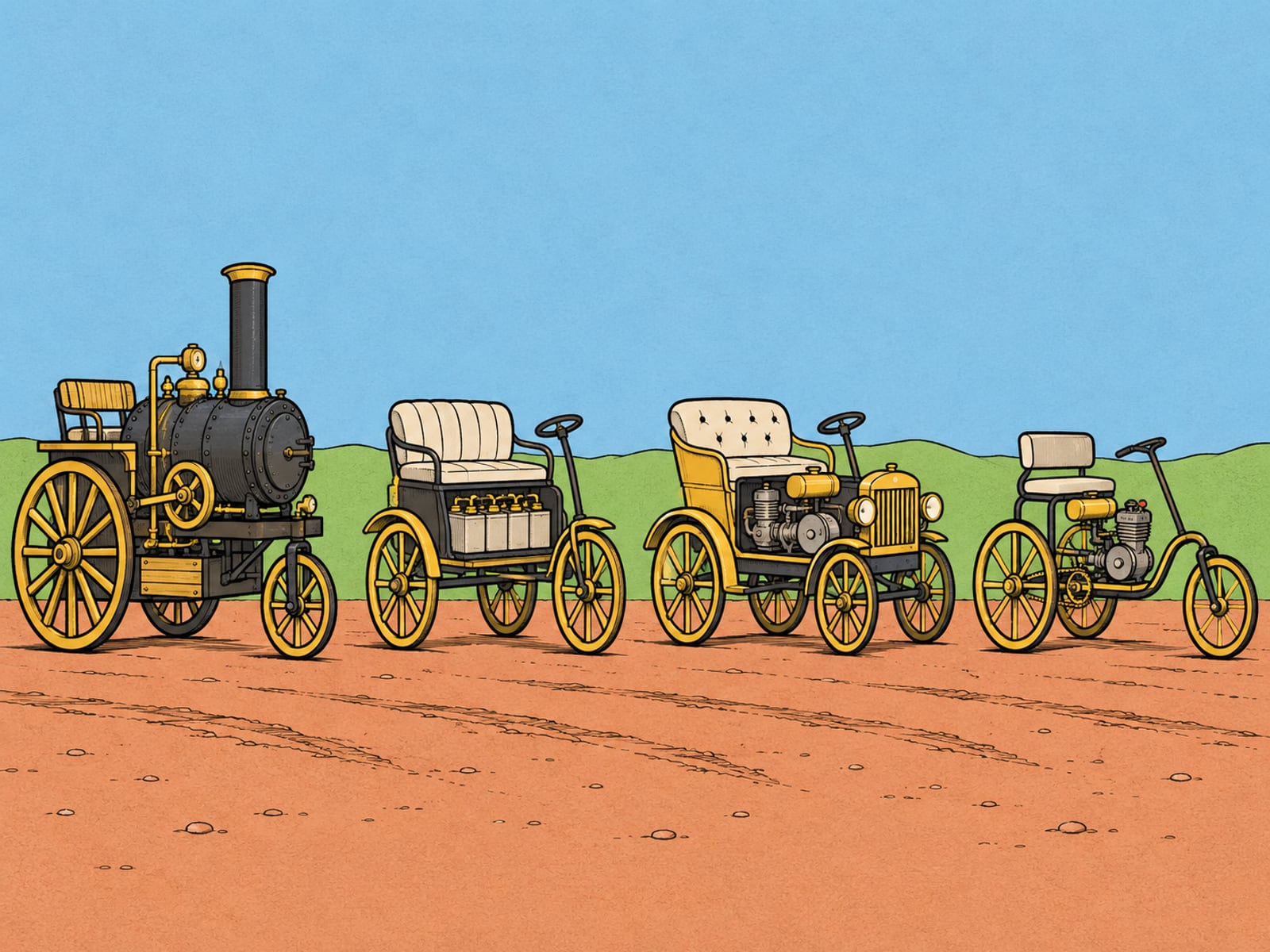
In France in 1769, Nicolas-Joseph Cugnot built a three-wheeled steam vehicle to haul artillery for the French army. It is often regarded as the first full-size, self-propelled road vehicle. But steam vehicles were cumbersome and slow to start, and they were not much use for ordinary personal travel.
Around 1832, in Scotland, Robert Anderson built an early, crude electric carriage. Its batteries could not be recharged, so it never became a practical road vehicle.
Then came 1886, Benz's own year. In Stuttgart, Gottlieb Daimler and Wilhelm Maybach developed a high-speed gasoline engine and installed it in a four-wheeled carriage. Their carriage is often described as the first four-wheeled automobile. The difference is in the approach: Daimler and Maybach first treated the engine as a power unit that could go into existing vehicles, while Benz designed car and engine together.
Across the Atlantic, Charles and Frank Duryea built a successful gasoline car in Springfield, Massachusetts, in 1893. That was after Benz's Motorwagen, not before it. Their work helped start the American car industry.
Put the list together and it reads like a relay race. Each runner carried the idea a bit farther, and Benz's machine is the one that is usually counted as the first practical gasoline car.
Bertha Benz takes the car on the road
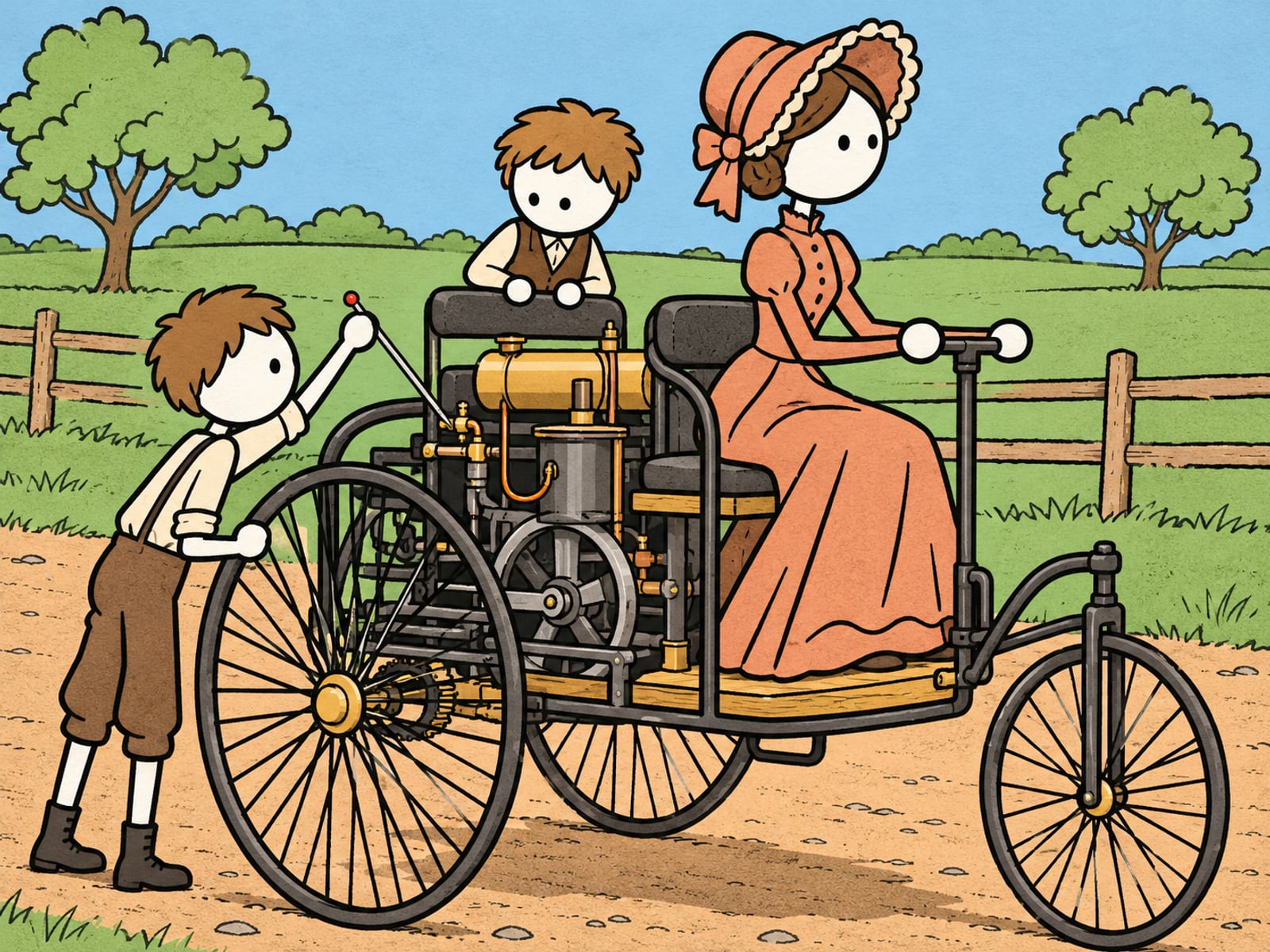
A car that only runs near its own workshop is a demonstration. In August 1888, Bertha Benz turned the Motorwagen into something more.
She took her sons Eugen and Richard from Mannheim to Pforzheim in an improved Motorwagen. She did it without telling Carl Benz in advance. The roads were mostly unpaved. The outward trip covered more than 100 kilometers, and Mercedes-Benz gives about 180 kilometers once you count the return and the detours.
She had to improvise along the way. She got fuel from a chemist's shop. When a fuel line blocked, she cleaned it with a hatpin. She also used a garter to repair insulation.
The drive showed that the Motorwagen could carry people a long way. It also showed where the machine needed work: better brakes, more reliable fuel systems and lower gears for hills. It is widely treated as the first long-distance automobile trip.
Henry Ford makes the car affordable
Now to the name most people say first. Henry Ford did not invent the car. His contribution was how cars were made, and who could buy one.
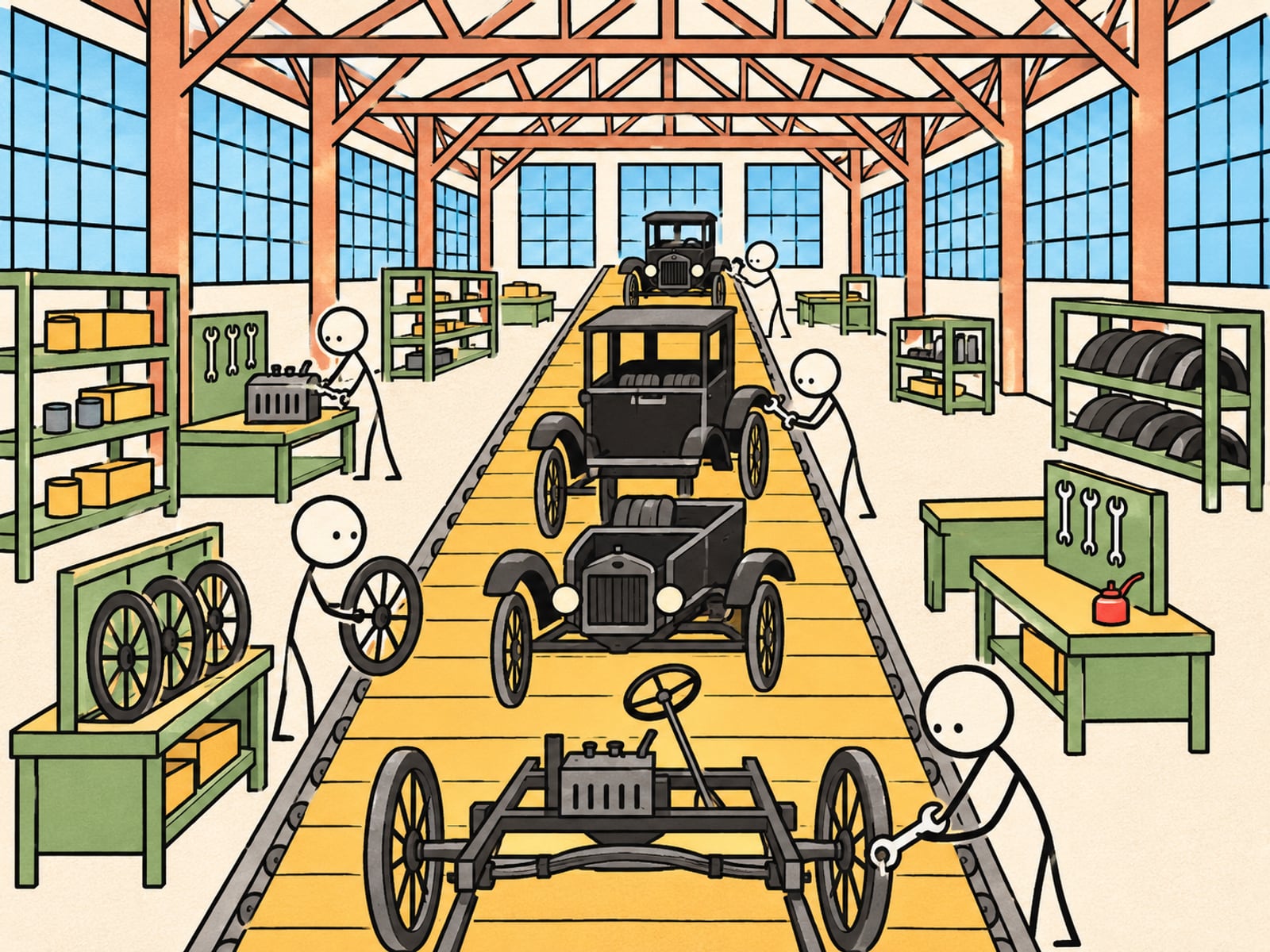
Ford introduced the Model T in 1908, and it became the best-known mass-market car. Then, in October 1913, he brought a moving assembly line to his factory in Highland Park, Michigan.
Before that, workers and parts moved around a mostly stationary car. On Ford's line, the chassis moved past fixed workstations, and each worker did one limited, repeated task. The Library of Congress records assembly time for a Model T falling from about 12.5 hours to 93 minutes.
Less time to build meant lower cost, and lower cost meant lower prices. Other manufacturers adopted similar methods. That is why Ford's name sits on mass production, and Benz's name sits on the car itself.
One more piece belongs here. From 1912 onward, the electric starter let drivers skip the hand crank, which made gasoline cars easier for anyone to start.
The car outside Germany and the United States
Benz's 1886 patent is the usual reference point everywhere. What changes from country to country is when cars arrived and who built them locally.
In Mexico, Fernando de Teresa imported an automobile in 1895. In 1896, Alexander Byron Mohler and William P. de Gress built one locally by hand, according to the Mexican government's transport history.
In Spain, Francisco Bonet i Dalmau designed and built a three-wheeled gasoline vehicle in 1890, according to a DGT historical article. Spain's first vehicle registration came in 1900 in the Balearic Islands: a French Clement with a Dion-Bouton engine, per the DGT.
In Britain, the UK government's road safety history notes the first recorded sale of a manufactured motor car, in 1888, to Émile Roger of Paris, who bought a gasoline-powered Benz.
The car was not an American event. Ford's system later had enormous influence, but the invention began in Europe.
The record
| Date | What happened | Source |
|---|---|---|
| 1769 | Nicolas-Joseph Cugnot builds a three-wheeled steam vehicle for the French army | History, Who Built the First Automobile? |
| About 1832 | Robert Anderson builds an early, crude electric carriage in Scotland | U.S. Department of Energy, History of the Electric Car |
| 1885 | Carl Benz first drives his three-wheeled Motorwagen in Mannheim | Deutsches Museum |
| January 29, 1886 | Benz applies for German patent DRP 37435 | German Patent and Trademark Office |
| 1886 | Daimler and Maybach install a gasoline engine in a four-wheeled carriage | History, Who Built the First Automobile? |
| August 1888 | Bertha Benz drives from Mannheim to Pforzheim with her sons | Mercedes-Benz, Bertha Benz |
| 1893 | Charles and Frank Duryea build a successful gasoline car in Springfield, Massachusetts | History, Model T |
| 1908 | Ford introduces the Model T | Deutsches Museum |
| 1912 onward | Electric starters remove the need for hand cranking | History, Car History Timeline |
| October 1913 | Ford's moving assembly line starts at Highland Park, Michigan | Library of Congress |
Questions people ask
Who invented the first car? 01
Carl Benz is usually credited with the first modern gasoline car. He built the three-wheeled Patent-Motorwagen in Mannheim, first drove it in 1885 and applied for his patent on January 29, 1886. Earlier steam and electric vehicles existed, so the answer depends on what you count as a car.
Did Henry Ford invent the car? 02
No. Ford introduced the Model T in 1908 and the moving assembly line in 1913, which changed how cars were made and who could afford one. The gasoline car itself dates to Benz in 1886.
Why did gasoline cars beat electric and steam cars? 03
The U.S. Department of Energy's history of the electric car points to several factors: fuel availability, driving range, startup time, battery limits and the spread of roads. The electric starter, from 1912 onward, helped too, because it removed the hand crank that had made gasoline cars harder to start.
Why did Henry Ford make cars cheaper? 04
He cut the cost of building them. Standardized parts, division of labor, the moving assembly line and high production volume all lowered the time it took to make each car.
Two names, one car
The gasoline car starts with Benz's 1886 design. A dated patent, a three-wheeled machine in Mannheim and a long drive to Pforzheim all point the same direction.
Everything after that was a matter of reaching more people. The electric starter made cars easier to run, and Ford's line made them cheaper to build.
Benz built the first practical gasoline car, and Ford made it affordable.
Sources

- German Patent and Trademark Office, Carl Benz patent 37435
- UNESCO Memory of the World, Benz patent
- Deutsches Museum, Benz Patent-Motorwagen and Ford Model T
- History, Who Built the First Automobile?
- History, Model T
- History, Car History Timeline
- U.S. Department of Energy, History of the Electric Car
- Mercedes-Benz, Bertha Benz
- Library of Congress, Ford moving assembly line
- Mexico's Secretaría de Comunicaciones y Transportes, first automobiles in Mexico
- DGT, vehicle registration history
- DGT, historical article on Francisco Bonet
- UK Government, history of road safety and the driving test