Why Are Flamingos Pink?
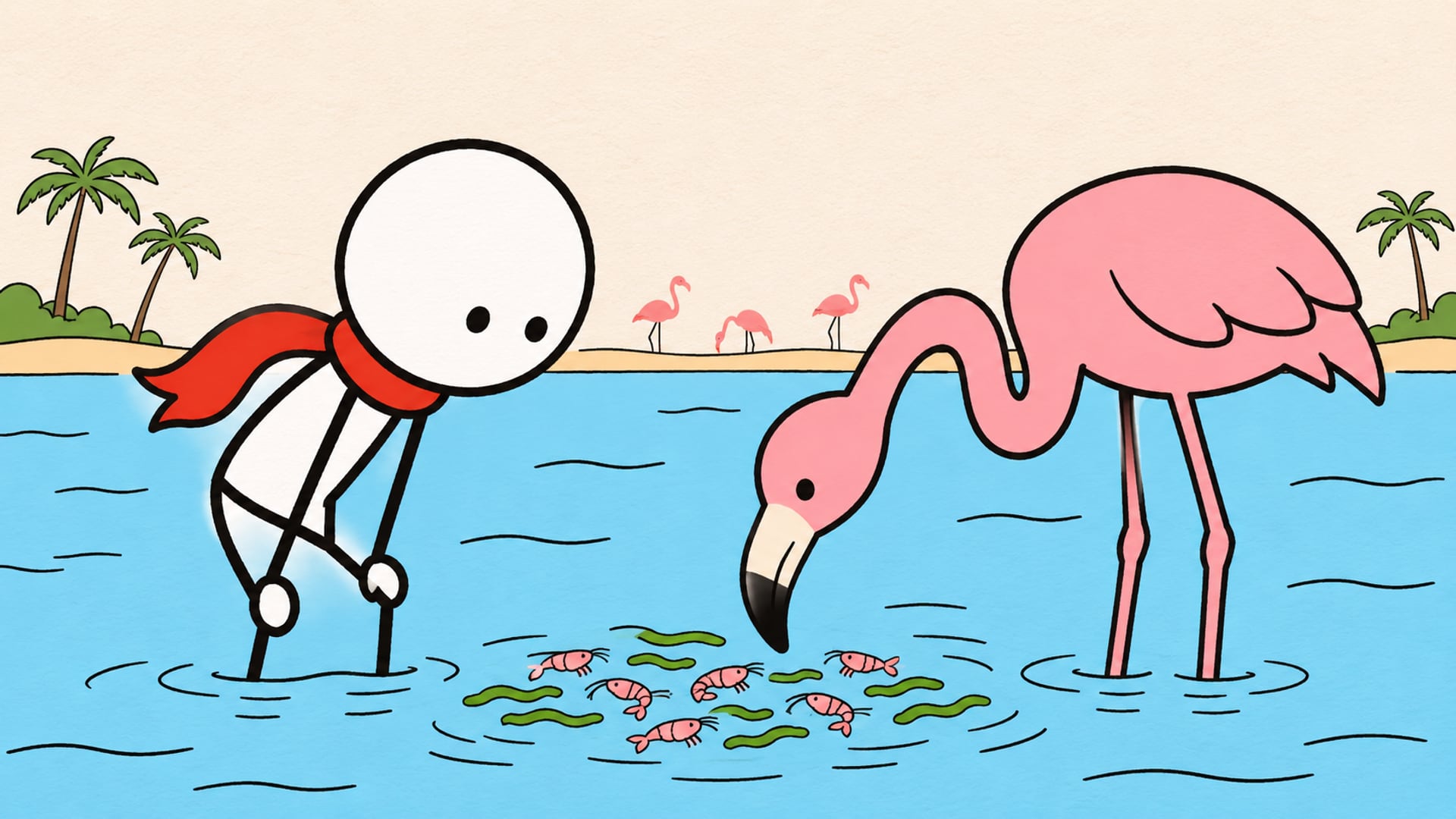
Flamingos are pink because of carotenoid pigments in the algae and brine shrimp they eat. The liver turns those pigments into pink and orange ones, and the body deposits them in feathers, legs, beak and skin. Chicks hatch gray-white and get pinker over several years, and the color fades slowly if the food stops.

In this explainer +
A flamingo looks as if someone painted it pink.
Nobody did. The color was eaten, and a chick hatches covered in gray-white down, not pink at all.
The answer, in one sentence: flamingos are pink because of carotenoids, pigments in the algae and tiny brine shrimp they eat, which the bird's liver breaks down into pink and orange pigments that are deposited in its feathers, legs, beak and skin, according to the Smithsonian's National Zoo. The exact shade depends on the species, the diet, the bird's age, molting and conditions.
And if you're wondering whether a flamingo would turn white if it stopped eating that food: yes, over time, but not at once. Missing one meal changes nothing you could see. So, the question to keep asking, from here to the last line, is the one a flamingo's whole life answers: What did it eat?
Gray chicks, pink adults
What did it eat? At first, nothing that could color it.
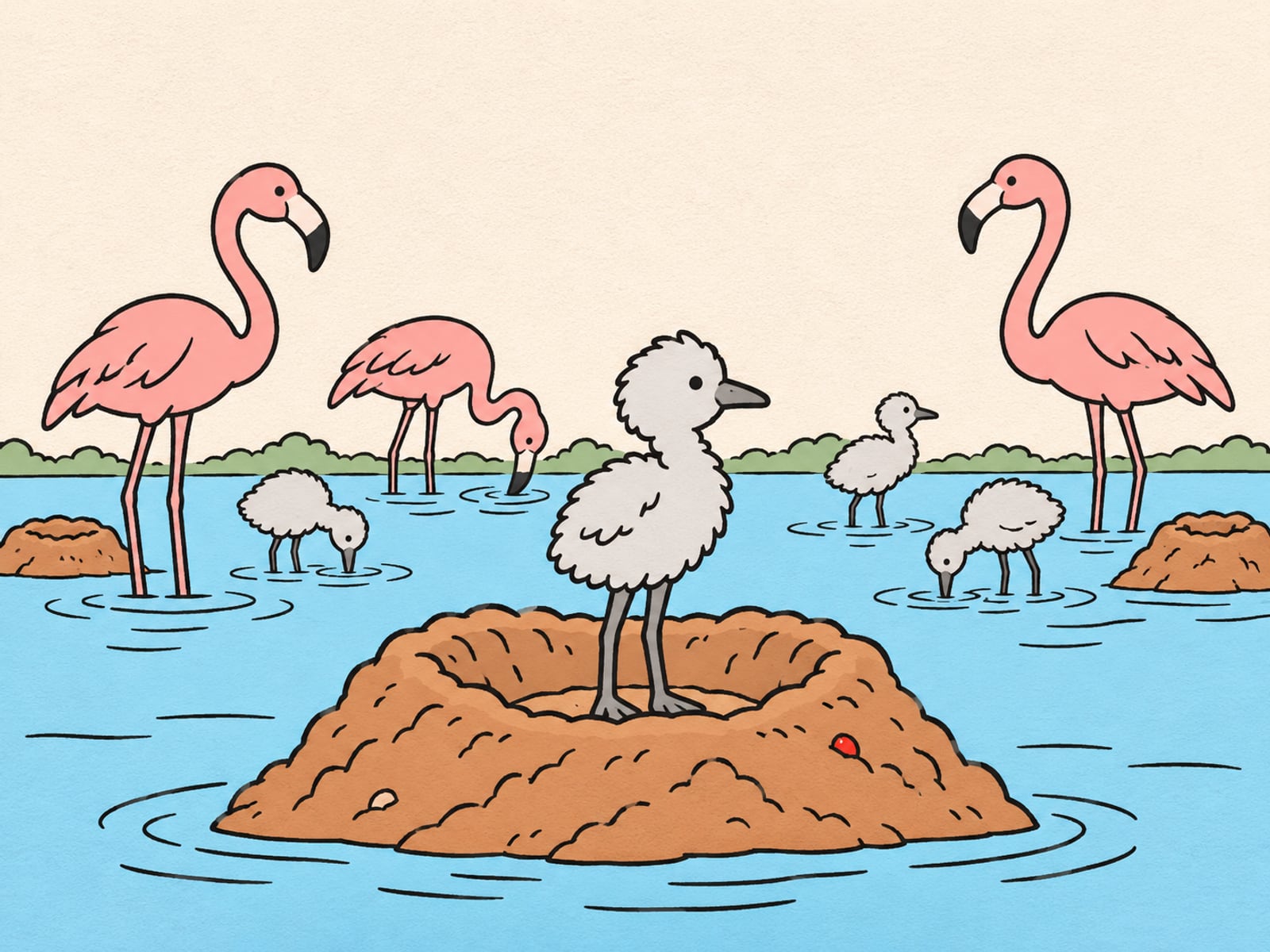
A flamingo chick hatches with white-gray or grayish down. Its bill is short and straight. At Fuente de Piedra Lagoon in Málaga, Spain, the Junta de Andalucía describes the start of that story: one egg, in a raised, crater-shaped mud nest. Later the chick stands in a nursery in shallow lagoon water, among other chicks, while adult flamingos supervise.
Then the color arrives, but slowly. As a chick feeds on carotenoid-rich food and replaces its juvenile feathers through successive molts, it gradually takes on the pink or pink-red of an adult. The National Zoo says it takes several years.
Several years is the safe way to say it, because no single age fits every flamingo. Species, individual birds, diet and molt history all differ.
One small trap for the eye: a newly hatched chick can have pink or red-looking legs. That is blood vessels showing through thin skin, which is a different thing from the carotenoid color in adult feathers.
Spanish headlines ask the same question from the other direction. RTVE's 2022 explainer, which cites Alicia Hernández of Oceanogràfic, is titled "¿Por qué los flamencos nacen blancos y se vuelven rosas?" In other words, why are they born white and then become pink? It is the same story told in the same order.
From algae to feather
What did it eat? Algae and tiny crustaceans, scooped from shallow water.
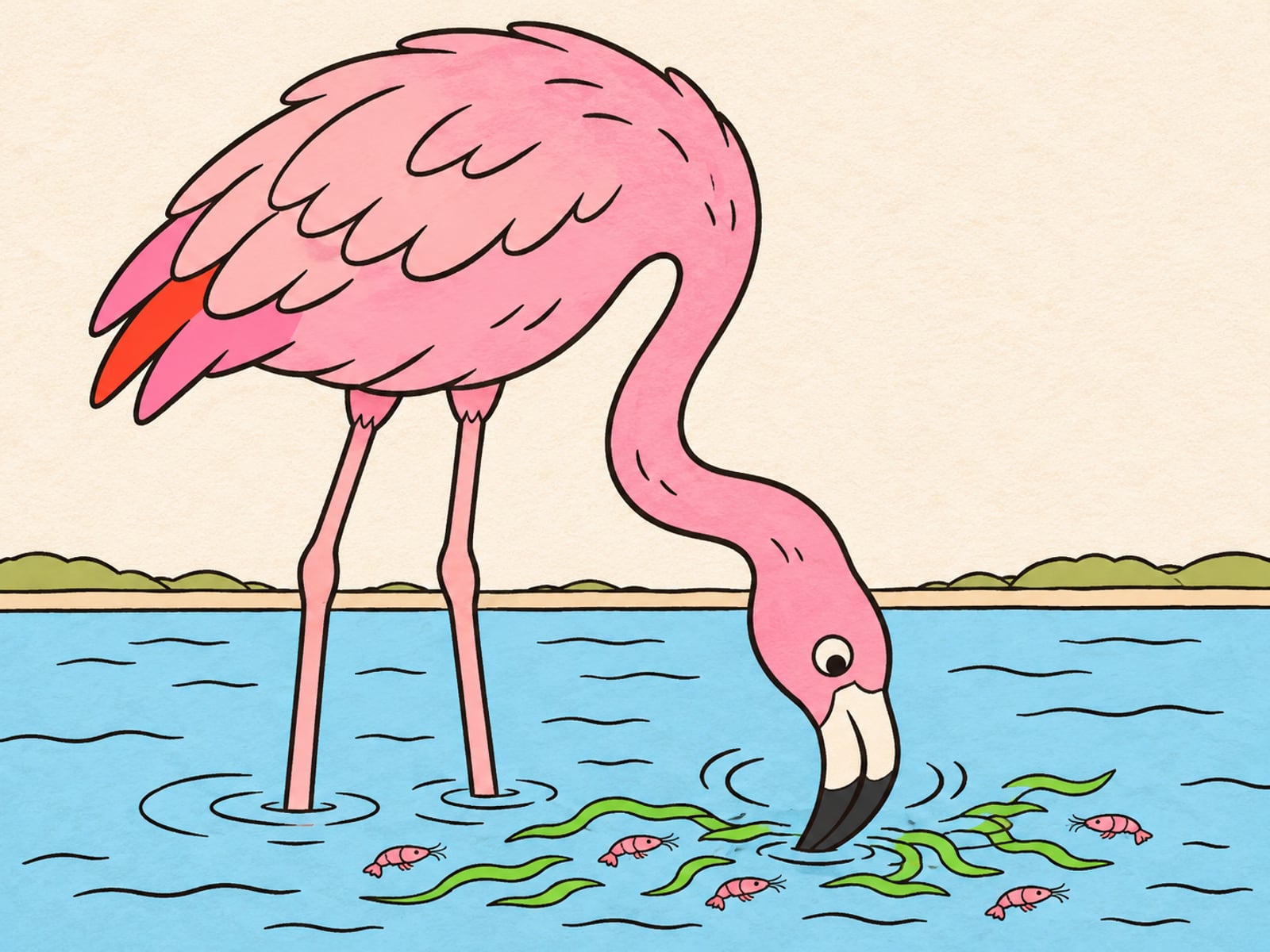
The scene: a flamingo bends its neck and turns its head upside down in shallow water. It sweeps its curved bill from side to side, filtering algae and tiny crustaceans out of the water.
Those two foods are one food chain. The algae make the carotenoids. Brine shrimp eat the algae and collect the pigments in their bodies. The flamingo eats both.
Think of it like this: the algae make the paint, the shrimp carry the cans, and the flamingo's liver opens them and mixes the shades.
That last step is real chemistry. Inside the bird, the pigments pass through the digestive system, and liver enzymes break the compounds down into pink and orange pigment molecules. The pigments are then carried toward growing feathers, legs and beak, and deposited there, in the skin and in other tissues too.
The main red carotenoids tied to flamingo plumage are canthaxanthin, phoenixanthin and astaxanthin. In greater flamingos, canthaxanthin is the main one deposited in the feathers.
Smithsonian Magazine put the whole idea in a headline: "For Some Species, You Really Are What You Eat." Flamingos are the poster bird for it.
The slow fade, and the zoo pellet
What did it eat? And what happens when the answer changes?
A diet poor in carotenoids makes the plumage paler over time. Most of that happens as colored feathers are replaced during molting, so it is gradual. It does not happen overnight, and it does not happen after one missed meal.
A 2021 paper in Ecology and Evolution by Chiale and colleagues has a title that says the same thing in a wry way: "The color of greater flamingo feathers fades when no cosmetics are applied."
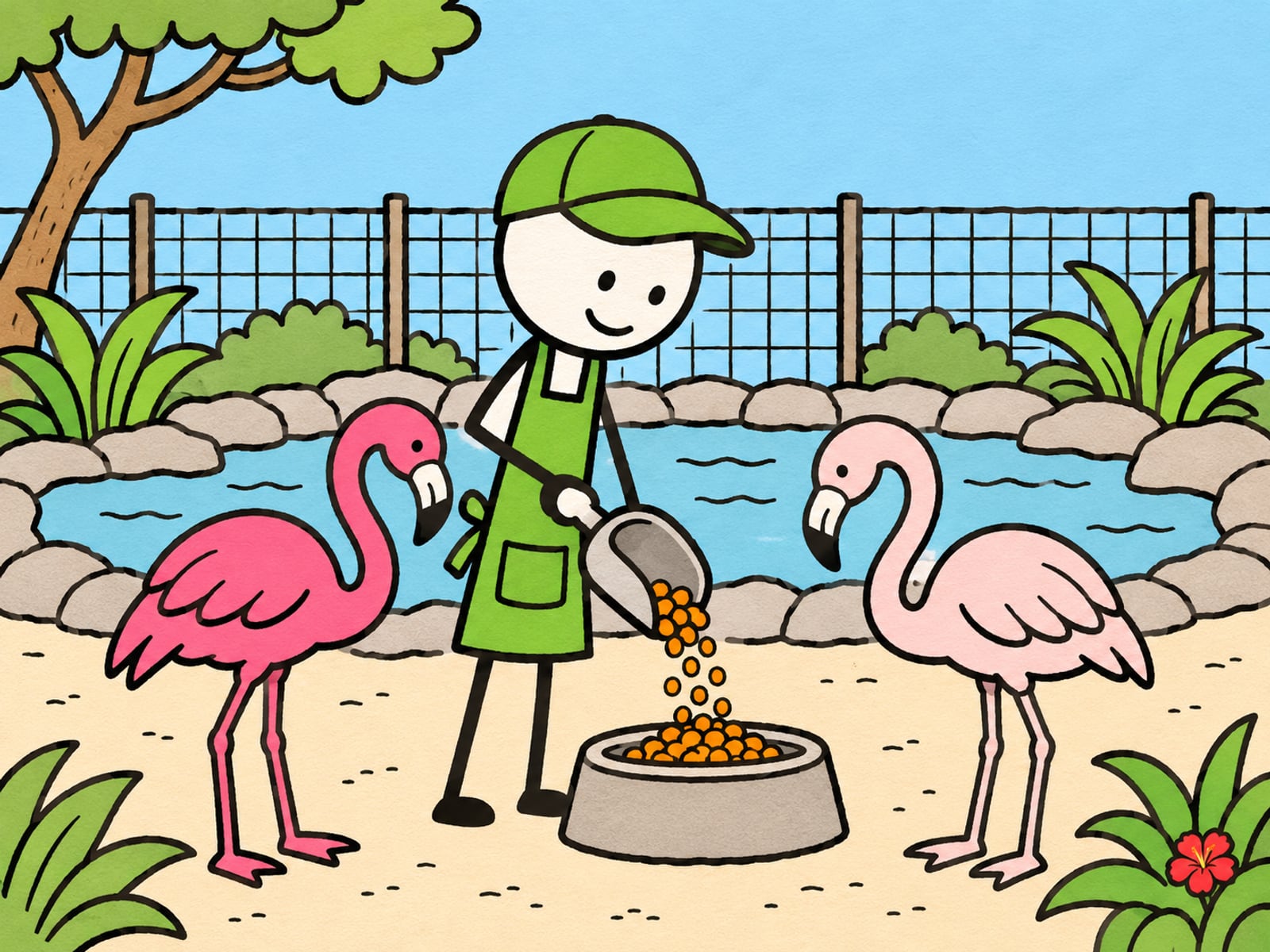
Zoos have to solve this problem every day, because a zoo bird eats what the zoo serves. The answer is a complete flamingo diet with added carotenoids. Canthaxanthin is a common supplement in commercial flamingo pellets, and the Mazuri Flamingo Complete Diet lists it as a color-supporting ingredient. That is the feed maker's own description.
In Spain, RTVE reported in 2010 that Zoo de Santillana del Mar gave its flamingos a carotene supplement because their compound feed did not contain enough pigment.
The AZA and EAZA flamingo husbandry guidelines say captive birds can stay alive and apparently healthy on a carotenoid-free diet if vitamin A is supplied, but their pigmentation fades. So, the supplement keeps the plumage natural. It does not invent a color the bird would not otherwise have.
The same menu in Mexico, Spain and Chile
What did it eat? The answer changes by place, and the pink does too.
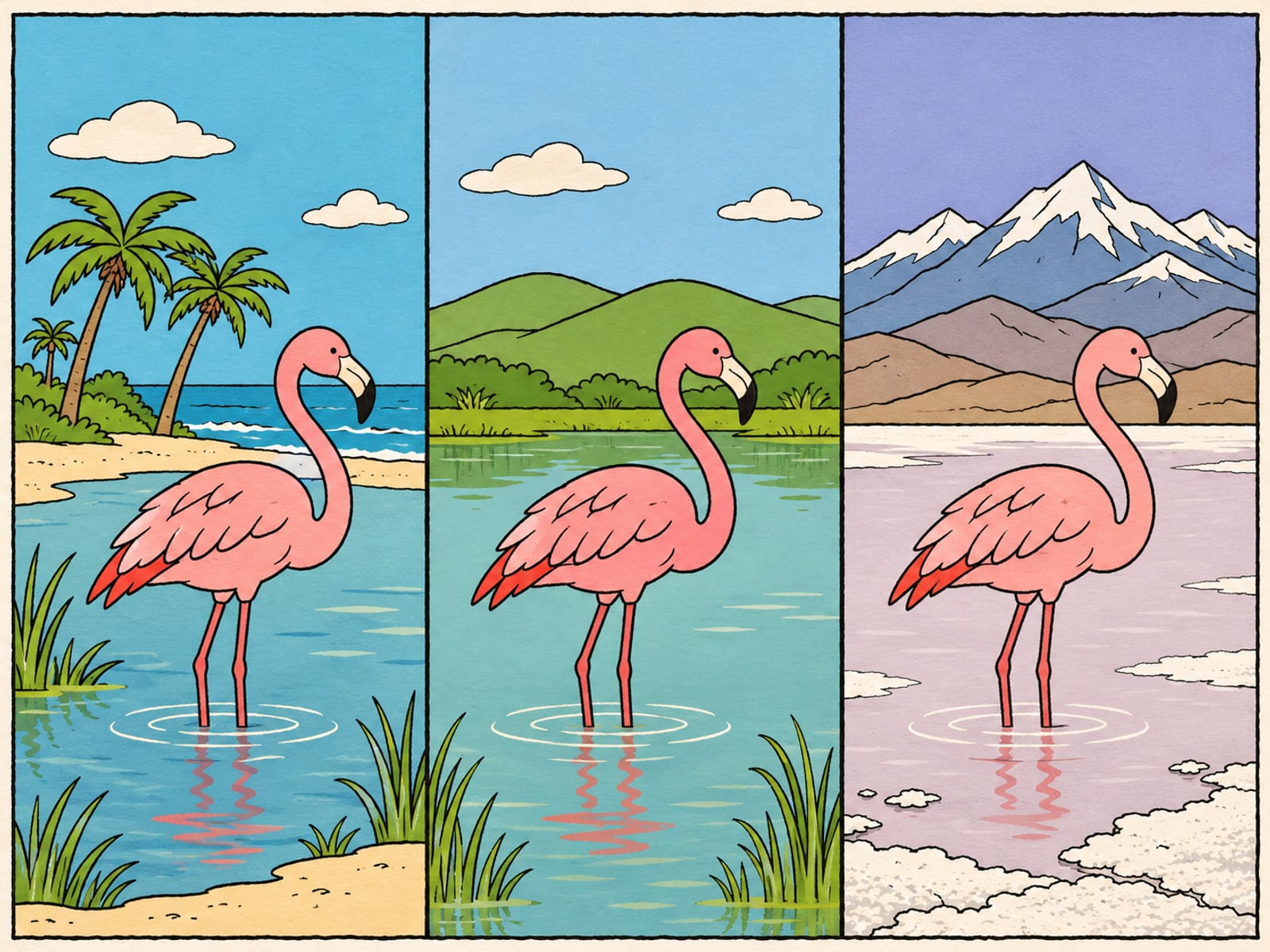
The mechanism is the same around the world: flamingos take in carotenoids through food, process them, and deposit them in feathers and other tissues. The species, the food organisms, the habitat and the resulting shade differ by region.
In Mexico, the American flamingo lives around the shallow coastal wetlands of Yucatán, including Ría Lagartos. Mexico's CPA says in its AVISE 39 bulletin that its pink plumage comes from pigments in its food, especially Artemia salina, a small crustacean rich in carotenoids.
In Spain, the greater flamingo breeds at Fuente de Piedra in Málaga, a protected nature reserve. Spain's flamingos run on the same food-to-pigment process as the American ones.
In Chile, CONAF's Reserva Nacional Los Flamencos protects habitat for three species that nest there: the Andean flamingo, James's flamingo and the Chilean or austral flamingo. Their high-altitude salt lakes are a long way from Yucatán's coast, yet their pink is likewise tied to dietary carotenoids.
The record
| Date | What happened | Source |
|---|---|---|
| 1970 | Fox and Lint publish "Metabolic fractionation, storage and display of carotenoid pigments by flamingoes" | Fox and Lint |
| 2010 | RTVE reports that Zoo de Santillana del Mar gives its flamingos a carotene supplement | RTVE, "¿Por qué los flamencos son de color rosa?" |
| 2017 | Young-Hui Chang and Lena H. Ting publish a Biology Letters study on how flamingos stand on one leg with little muscular force | Chang and Ting |
| 2021 | Chiale and colleagues publish a study on how greater flamingo feather color fades | Ecology and Evolution |
| 2022 | RTVE explains why flamingos are born white and turn pink, citing Alicia Hernández of Oceanogràfic | RTVE, "¿Por qué los flamencos nacen blancos y se vuelven rosas?" |
Questions people ask
Are flamingos born pink? 01
No. Chicks hatch with white-gray or grayish down, and they turn pink gradually as they eat carotenoid-rich food and replace their juvenile feathers. The National Zoo gives several years as the general timescale, though the exact time varies from bird to bird.
Do flamingos turn white without their food? 02
They fade, but slowly. A carotenoid-poor diet makes the plumage paler over time, mainly as colored feathers are replaced, so one skipped meal does not change the color. Zoo guidelines note that captive birds fed without carotenoids stay alive on vitamin A, but their pigmentation fades.
Why do some flamingos look brighter pink than others? 03
Several things add up: species, diet, how much carotenoid the bird has taken in, its age, its molt and its body condition. In greater flamingos, carotenoid-rich secretions from the preen gland, spread over the feathers, also play a part.
What do zoos feed flamingos to keep them pink? 04
A complete flamingo diet that includes added carotenoids, often as pellets. Canthaxanthin, the main carotenoid in greater flamingo feathers, is a common supplement in those pellets. Zoo Córdoba explains that the color intensity of its flamingos depends on diet.
Pink is a menu
What did it eat? Algae, and the brine shrimp that ate the algae.
That one answer covers the gray chick, the slow change over several years, the zoo pellet and the flamingos of Yucatán, Andalusia and the Chilean salt lakes. The pink is a meal you can see, and it takes years to finish.
A flamingo is pink because of what it eats.
Sources

- Smithsonian's National Zoo, "Why Are Flamingos Pink?"
- Smithsonian Magazine, "For Some Species, You Really Are What You Eat"
- Chiale et al., "The color of greater flamingo feathers fades when no cosmetics are applied," Ecology and Evolution, 2021
- Mazuri, "Flamingo Complete Diet"
- AZA and EAZA, Flamingo Husbandry Guidelines
- Junta de Andalucía, Fuente de Piedra Lagoon
- Junta de Andalucía, Fuente de Piedra Nature Reserve
- Mexico's CPA, AVISE 39 bulletin
- CONAF, Reserva Nacional Los Flamencos
- RTVE, "¿Por qué los flamencos nacen blancos y se vuelven rosas?"
- RTVE, "¿Por qué los flamencos son de color rosa?"
- Fox and Lint, "Metabolic fractionation, storage and display of carotenoid pigments by flamingoes," 1970
- Chang and Ting, "Mechanical evidence that flamingos can support their body on one leg with little active muscular force," Biology Letters, 2017
- Zoo Córdoba, "Flamenco Común"