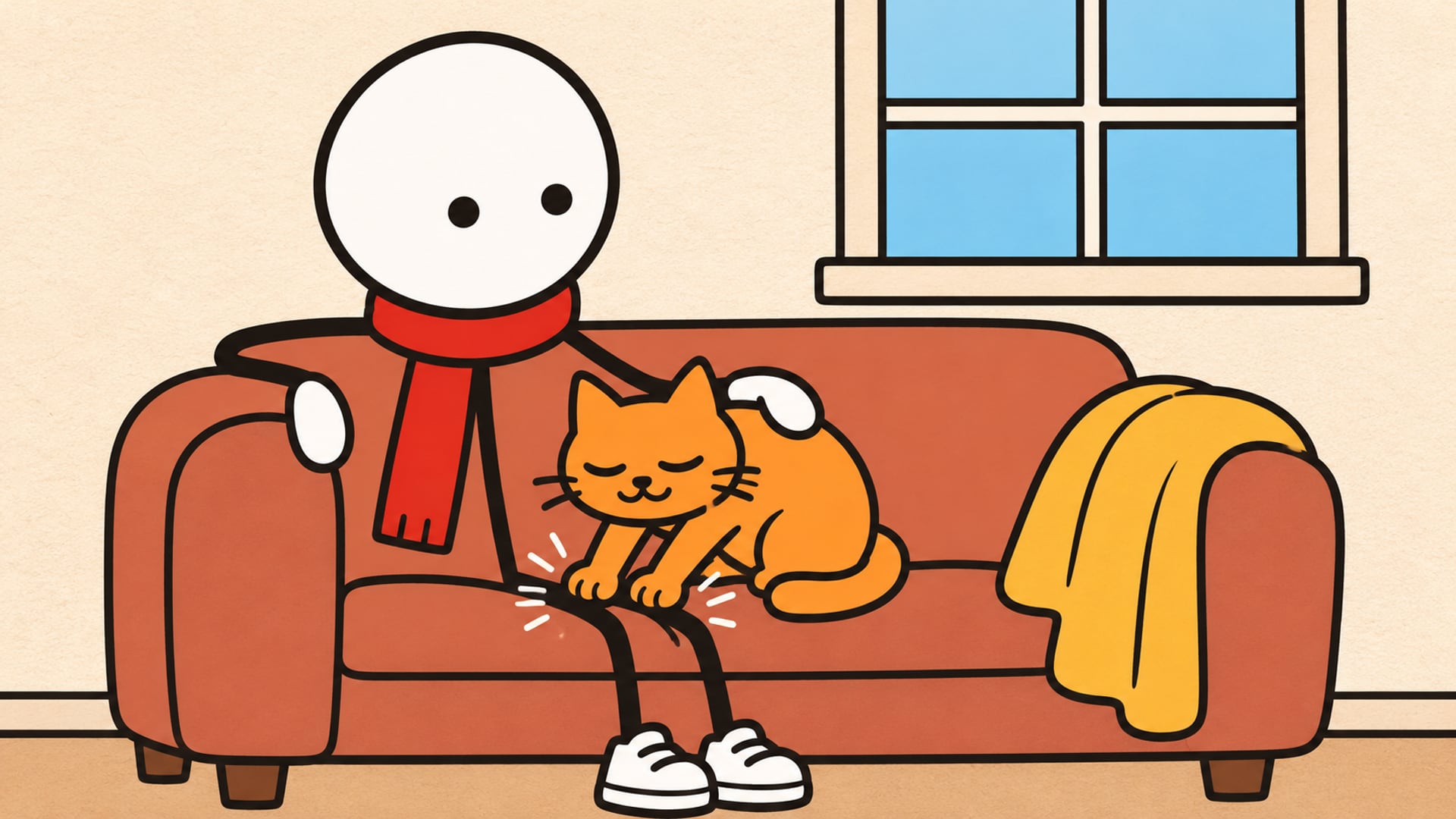
Why do cats purr?
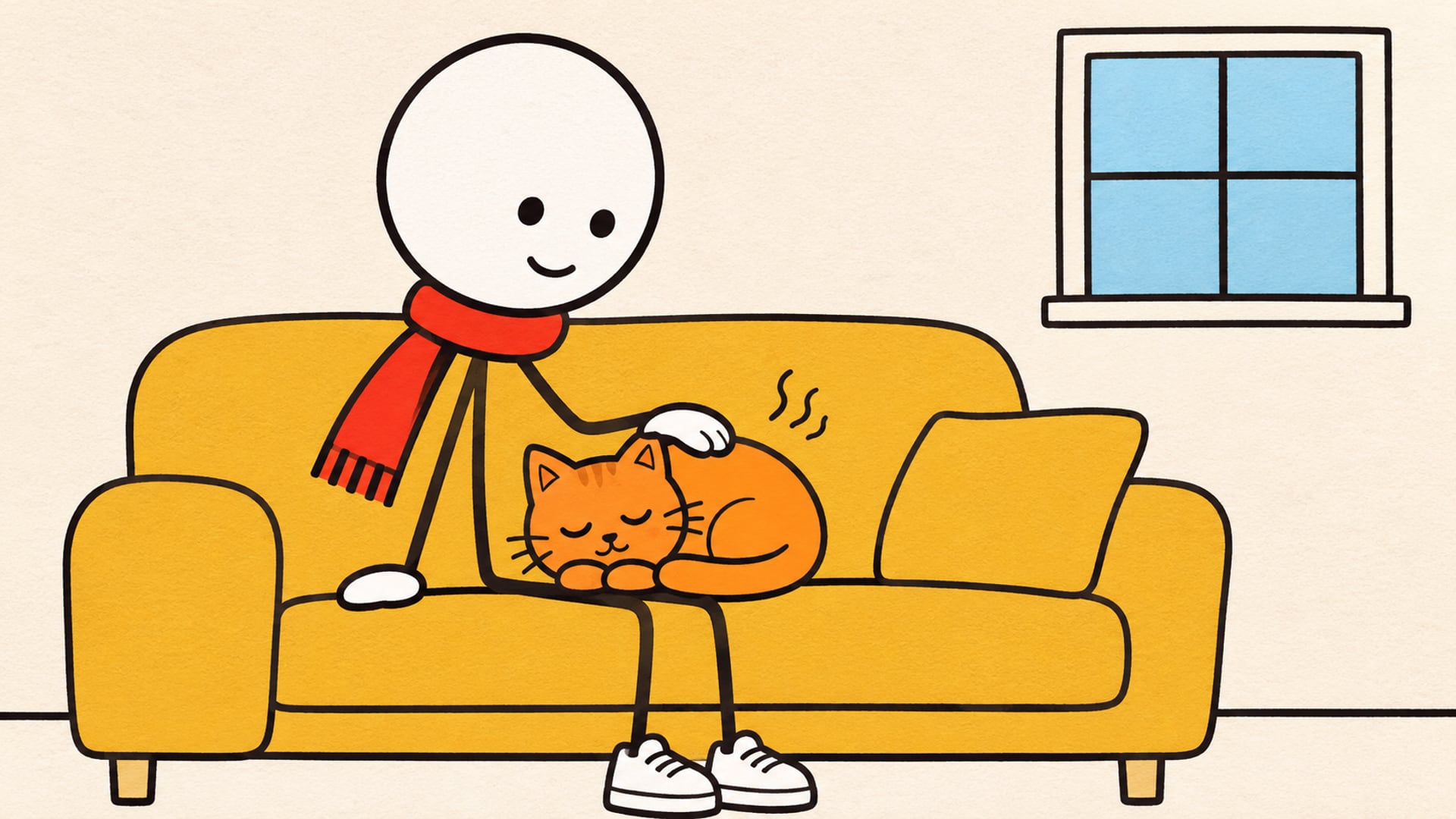
A purr is a rhythmic vibration in a cat's voice box that continues while the cat breathes in and while it breathes out. Kittens purr within days of birth, and adult cats purr when relaxed, but also when frightened, hurt or ill. A purr can go with contentment, but it is not a reliable sign that a cat is happy.

In this explainer +
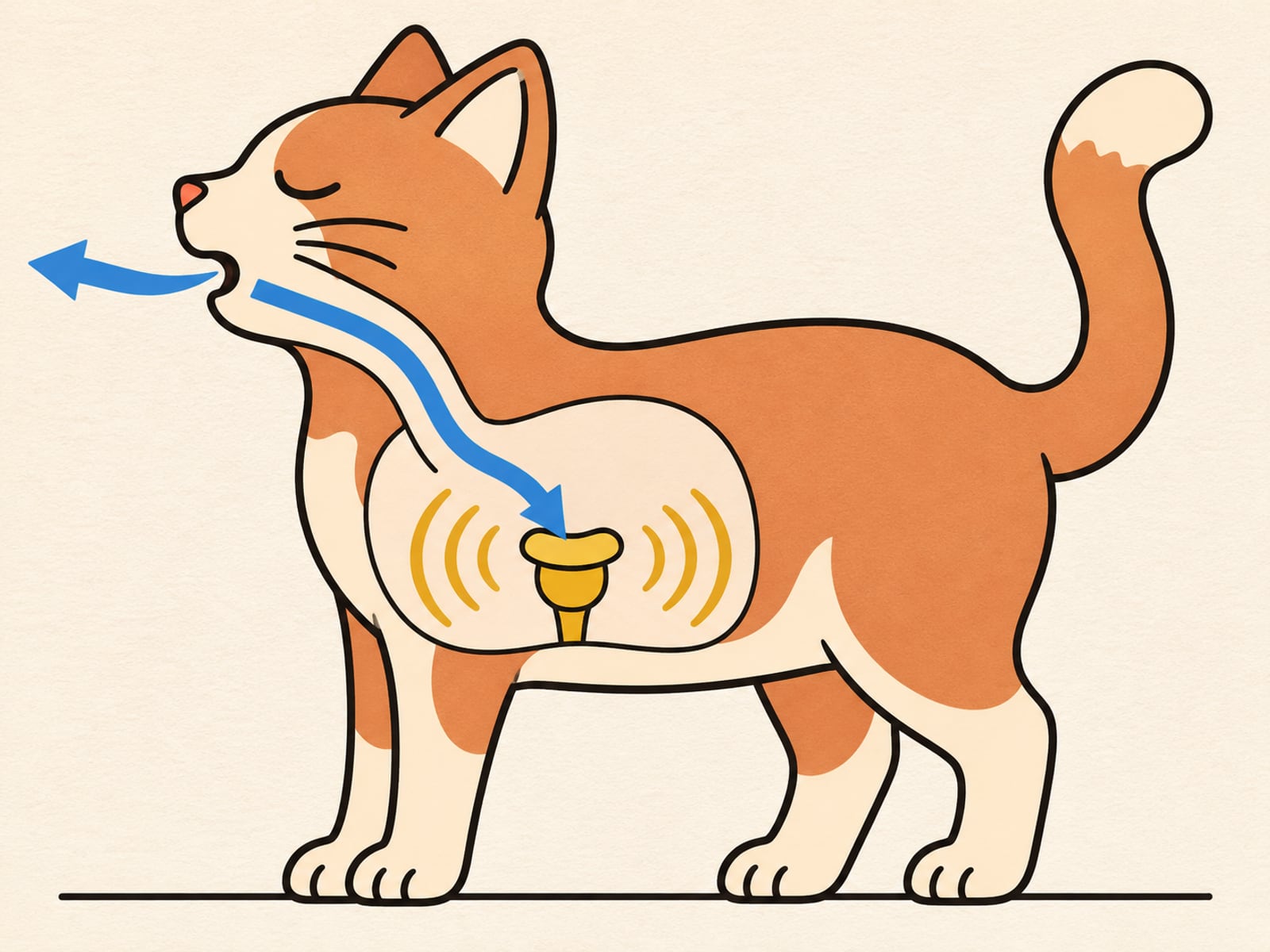
A cat purrs through a rhythmic vibration in the larynx, the voice box, while air moves in and out. Cats purr in more than one situation, and being happy is only one of them.
That is how the NC State College of Veterinary Medicine describes it. It also points out something odd. Most animal sounds happen on one half of a breath. The purr keeps going on the way in and on the way out.
Here is the route we'll take. First, how the sound is made. Second, when cats do it, which is wider than most people expect. Third, what the popular healing claim does and does not show.
How the sound is made
Start with the traditional account. Signals from the nervous system activate the muscles inside the voice box roughly 20 to 30 times per second. Those muscles narrow the opening in the larynx and release it again, over and over. Each squeeze and release makes a small pulse of pressure, and the pulses add up to the low, steady hum you know.
How fast is that? Domestic cats in a 1991 study by Sissom, Rice and Peters, published in the Journal of Zoology, averaged about 26.3 Hz. That is a bit over 26 vibrations every second.
That tidy picture is still being refined.
In 2023, Herbst and colleagues reported in Current Biology that cat larynges removed from the animal could produce purring-range sounds at 25 to 30 Hz. No nerve signals were involved and no muscle was contracting. The authors concluded that passive vibration of specialized tissue in the vocal folds may contribute to the sound. They did not completely rule out active muscle control in living cats.
Think of it like this: a flag in a steady wind. Nobody is flapping it, yet it flutters at its own pace because of what it is made of. It is only an analogy, and the study does not say the whole purr works this way. What it says is that the tissue itself may do part of the work.
When cats purr
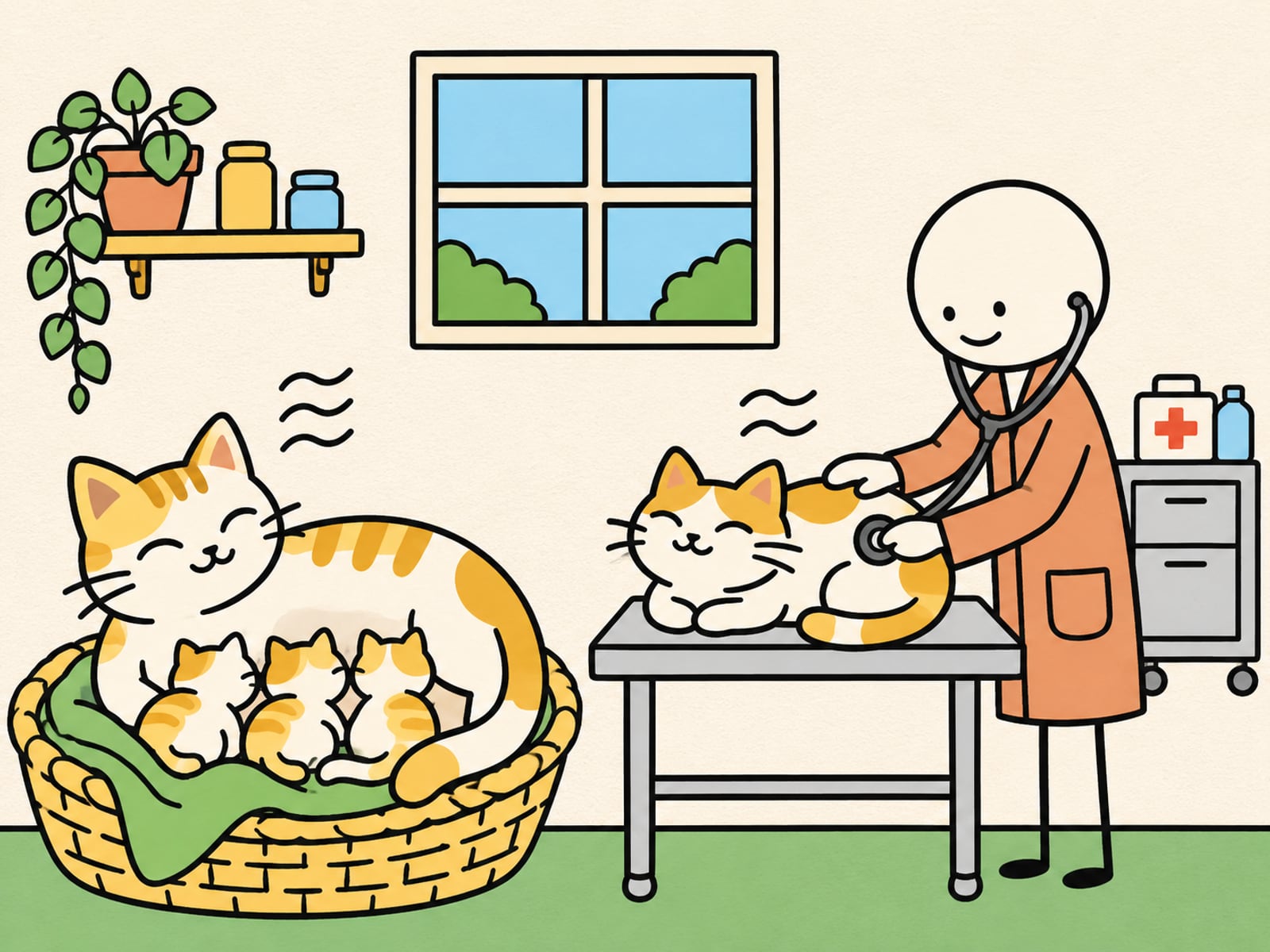
The earliest purrs come from the smallest cats. Kittens can purr within a few days of birth, especially while nursing. Mothers purr too, while nursing or grooming their kittens.
Adult cats purr during relaxed contact, petting, resting, eating and falling asleep. They also purr when greeting familiar cats or people. A Fellowship of Animal Behaviour Clinicians article on cat communication covers this ground too.
Now the part that surprises people. Cats may also purr during fear, stress, pain, illness, veterinary examinations, injury and labor.
Think of a cat carried into an exam room, handled by strangers, clearly uncomfortable, and purring anyway. The NC State account includes exactly that kind of case, along with injured cats that keep purring in emergency settings. So, the purr is better read as a sound cats make in many states, not a gauge of one.
If a cat's behavior changes, especially with signs of illness or pain, that is a reason to ask a veterinarian.
The purr that asks for breakfast
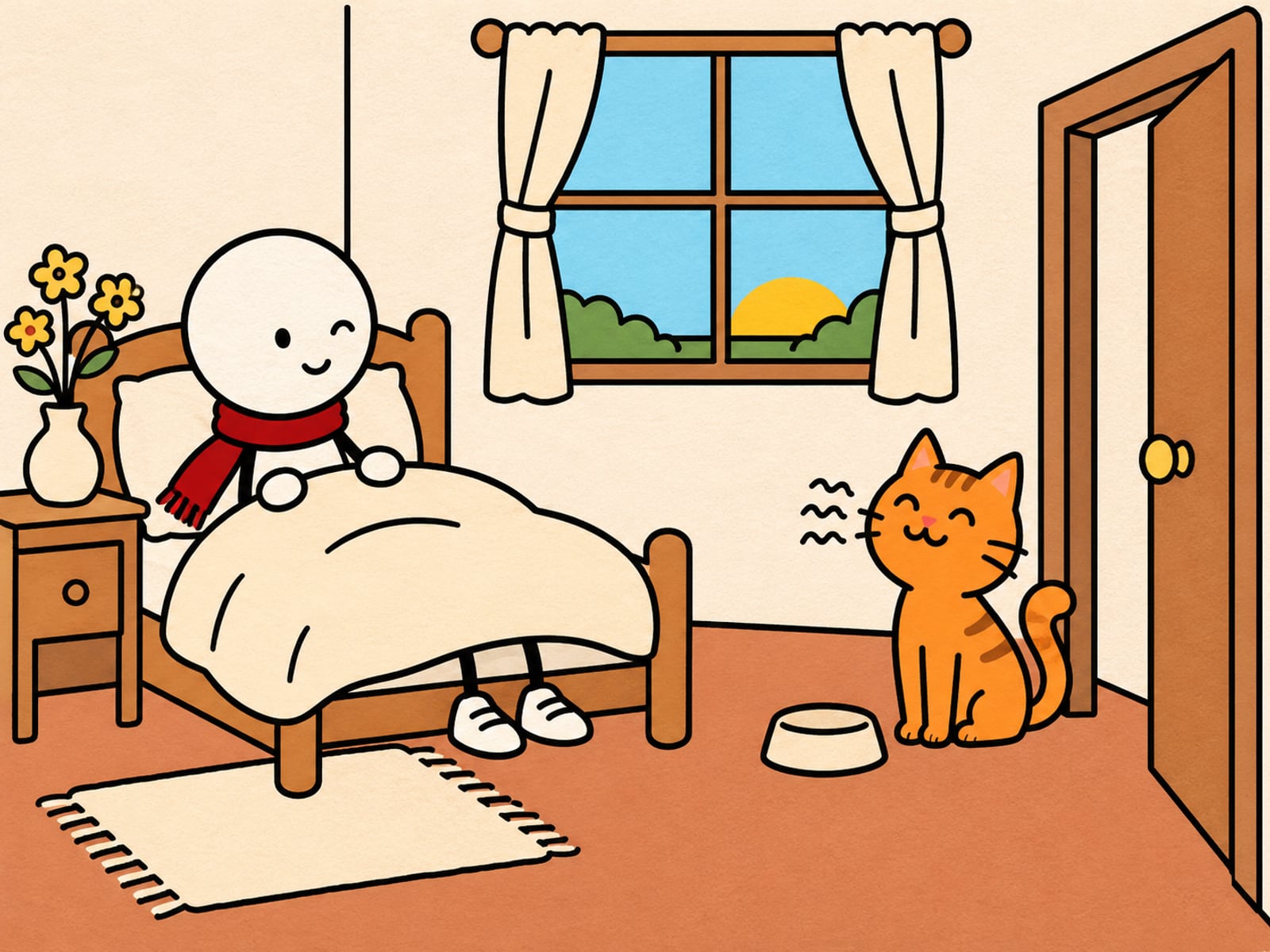
Some purrs seem to carry a request.
In 2009, Karen McComb and colleagues reported in Current Biology that some domestic cats produce a "solicitation purr" when they want food or attention from people. Inside the usual low purr sits a higher-pitched part that resembles a baby's cry.
McComb knew the sound at home. Her cat Pepo would wake her in the morning with an unusually insistent purr, and she would get up and refill his food bowl, as RTVE tells it.
The study put that hunch to a test. Cat owners recorded their pets' ordinary purrs and their urgent-sounding ones, and listeners rated how insistent each recording seemed. People rated the solicitation purrs as more urgent and harder to ignore. Cat owners were better than non-owners at picking them out, which suggests experience may sharpen the ear, as the ABC Science report from 2009 describes.
What the study did not show is that cats consciously manipulate people. It showed that the sound of some purrs can make a request feel urgent.
The healing claim, as a hypothesis
You may have heard that a purr heals bones. Here is where that idea comes from.
In 2006, Elizabeth von Muggenthaler presented recordings of 47 felids in a conference paper, including domestic cats, cheetahs, pumas, ocelots and servals. She reported purring frequencies of roughly 25 to 150 Hz. She then compared those with vibration ranges that have been studied for bone growth, fracture healing, muscle recovery and pain reduction.
That is a frequency overlap. It is a reason to ask a question, and the Library of Congress also discusses the idea. It is not proof that a purr heals bones or wounds. The paper did not establish that purring speeds healing in cats or in people, and controlled studies showing that effect have not been established.
The word to watch is "overlap." Two things sharing a number does not make one cause the other.
The record
| Date | What happened | Source |
|---|---|---|
| 1991 | Sissom, Rice and Peters report an average purr of about 26.3 Hz in domestic cats | Journal of Zoology |
| 2002 | Weissengruber and colleagues publish on the voice-box anatomy behind roaring and purring cats | Journal of Anatomy |
| 2006 | Elizabeth von Muggenthaler presents recordings of 47 felids, with purring frequencies of roughly 25 to 150 Hz | Conference paper |
| 2009 | Karen McComb and colleagues report the "solicitation purr" with a cry-like higher-pitched part | PubMed record for Current Biology |
| 2009 | ABC Science reports on the solicitation purr study | ABC Science |
| 2023 | Herbst and colleagues find that excised cat larynges produce purring-range sounds at 25 to 30 Hz without neural input | Current Biology |
Questions people ask
A few follow-up questions come up again and again.
How do cats purr? 01
Through rhythmic vibration in the larynx while air moves through it. The usual account has nerve signals activating the laryngeal muscles about 20 to 30 times per second. The 2023 Current Biology study suggests passive tissue vibration may play a part as well.
Why do cats purr when I pet them? 02
Adult cats commonly purr during relaxed contact, and petting is a classic case. Pleasure and learned communication can both be part of it. The cat's body language around the purr helps show what the purr goes with.
Why do cats purr while nursing? 03
Kittens can purr within a few days of birth. The sound can help a mother and her kittens stay in contact, and a kitten's purr may signal that it is present and nursing successfully. Mothers purr while nursing or grooming too.
Can a cat's purr heal bones? 04
That is a hypothesis, not an established effect. It rests on the overlap between purring frequencies of roughly 25 to 150 Hz and vibration ranges studied for bone growth and healing. Direct controlled evidence that a purr heals bones, wounds or pain has not been established.
So, what does a purr tell you?
It tells you the cat is communicating. That much is safe. What it does not do, on its own, is settle the cat's mood.
A cat on a lap, a kitten at its mother, a cat hungry at 6 a.m., and a cat at the vet can all make the same basic sound. The mechanism is the same. The situation is what changes.
A purr can mean contentment, but it is not a reliable sign that a cat is happy.
Sources

- NC State College of Veterinary Medicine, "Why do cats purr? NC State University College of Veterinary Medicine behavior expert explains"
- Sissom, Rice and Peters, Journal of Zoology, 1991
- Herbst et al., Current Biology, 2023
- Fellowship of Animal Behaviour Clinicians, "Cat Communication"
- McComb et al., PubMed record for Current Biology, 2009
- ABC Science, 2009 report on the solicitation purr
- RTVE, account of McComb's study
- Elizabeth von Muggenthaler, "The Felid Purr: A Bio-mechanical Healing Mechanism," 2006 conference paper
- Library of Congress, "Why and how do cats purr?"
- Weissengruber et al., Journal of Anatomy, 2002