Why Do Cats Knead?
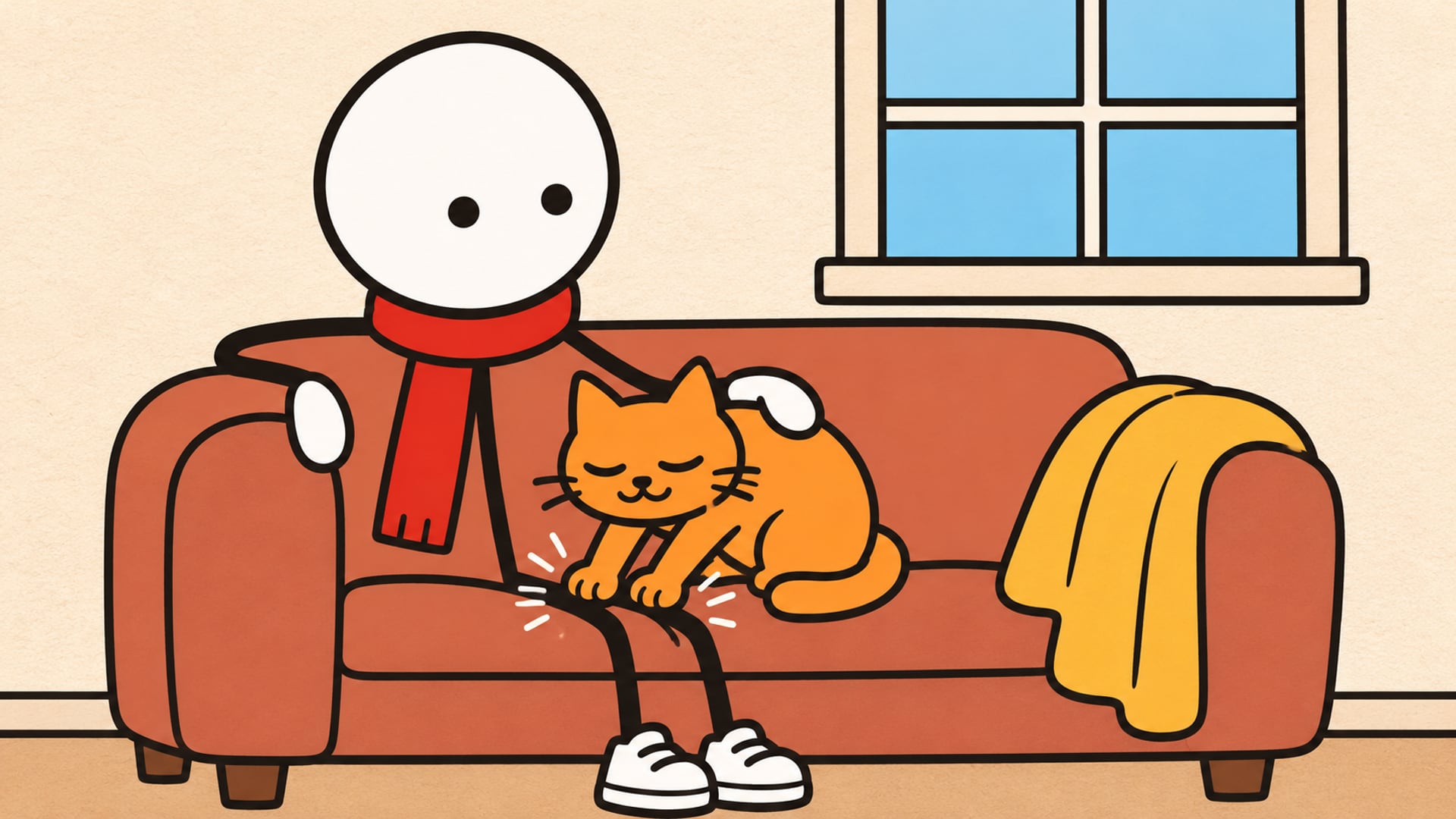
Kneading is a cat's rhythmic pressing of its front paws against something soft, often with the claws sliding out and in. Kittens do it from birth to stimulate milk flow while nursing, and adult cats appear to keep the habit when they feel relaxed and comfortable. The exact job of adult kneading is unsettled, so scent, nest-making and stretching are best treated as ideas.

In this explainer +
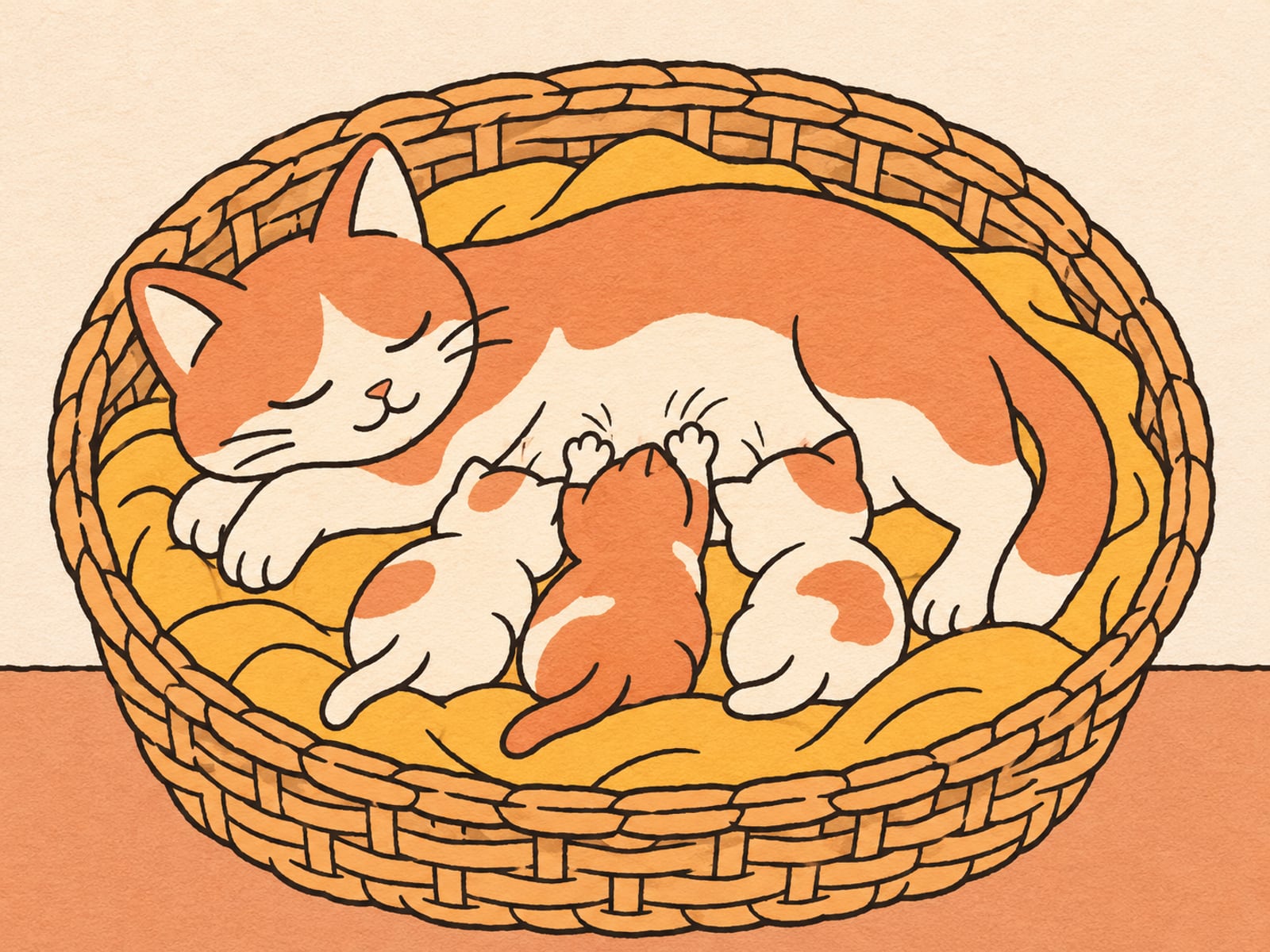
A kitten lies against its mother and presses its front paws into her belly, one and then the other, over and over. The pressing helps the milk come.
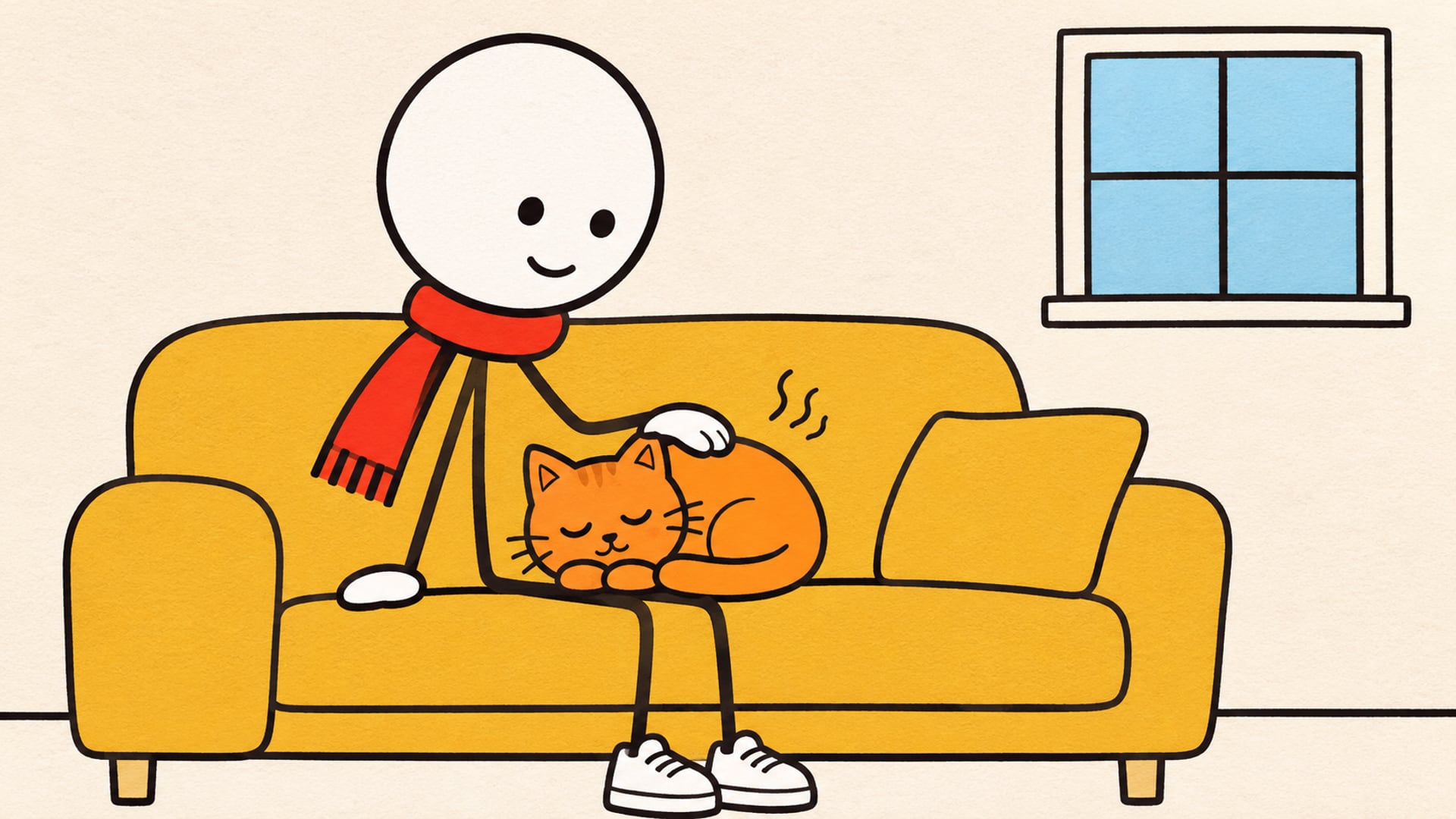
Now look at your lap. The adult cat working its paws on your leg is repeating that same movement. The strongest explanation for kneading is that it begins as nursing, and the other reasons people offer are proposals, not proven facts.
Here is the route. First, what kneading is and where it starts. Second, why grown cats keep doing it. Third, where the phrase "making biscuits" comes from.
1. Kittens knead to get milk moving
Start with the movement itself. Kneading is the rhythmic alternation of a cat's front paws against a soft surface, often with the claws extending and retracting.
VCA Animal Hospitals says kittens begin this instinctive action at birth, while nursing. They press their paws against the mother's mammary glands, the part of her body that makes milk, and the pressing stimulates milk flow. Scientific American tells the same nursing story.
In other words, the first kneading has a clear job. A hungry kitten pushes, and dinner arrives.
Keep an eye on that nursing scene. It comes back in section 3.
2. Why adult cats keep kneading
A grown cat on a couch is not hungry for milk. So, why does the paw routine survive?
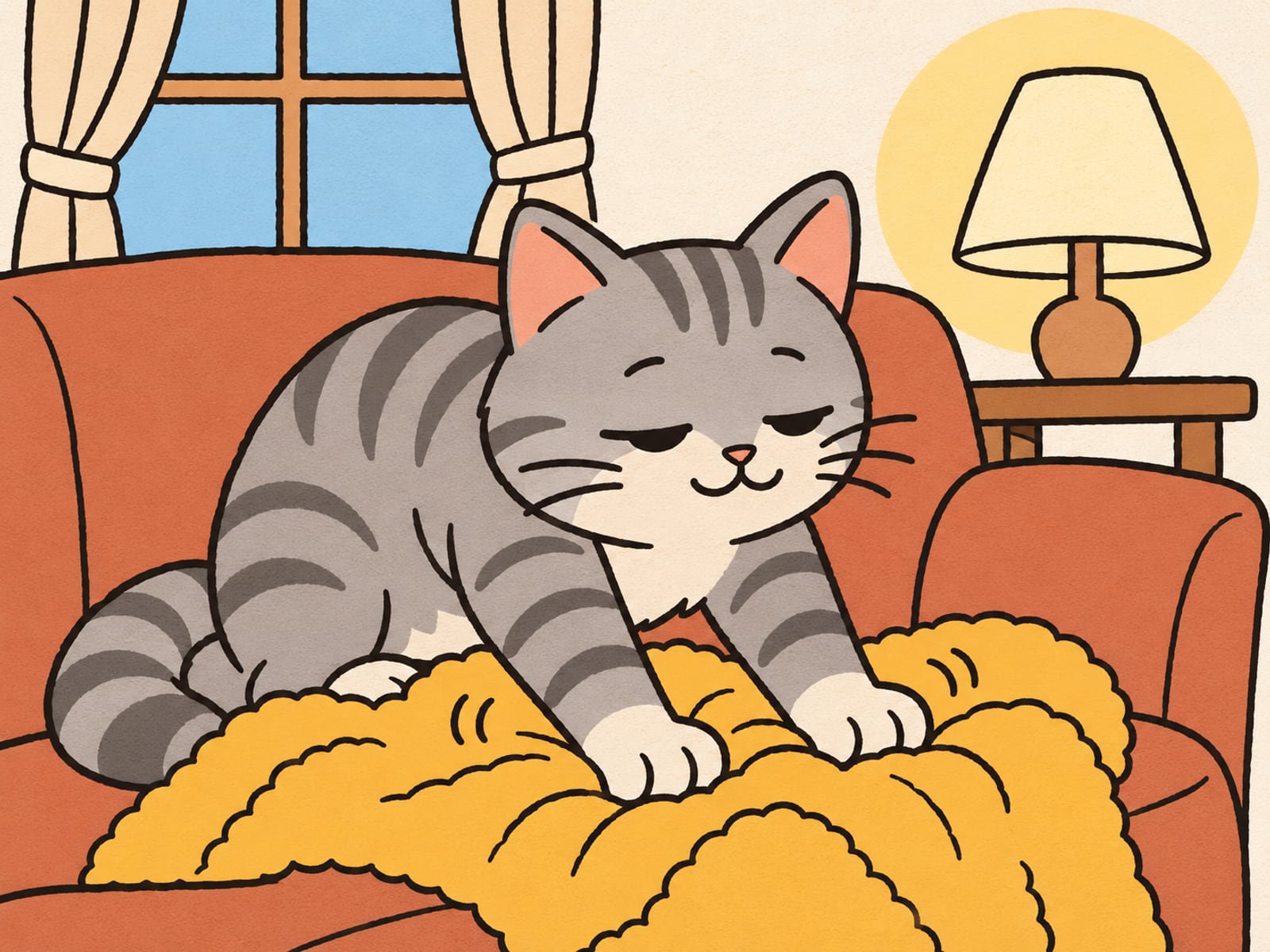
The well-supported answer is that adult kneading is a retained kitten behavior associated with nursing. The movement is linked with comfort and safety, so a cat may repeat it when it feels both. Adult cats commonly knead when they are relaxed, comfortable, or with a trusted person.
Researchers who catalog cat behavior put kneading among the affiliative behaviors, the friendly, bonding kind. The MDPI cat ethogram and the Cats Protection behaviour guide list it alongside purring, rubbing and half-closing the eyes. Cats Protection describes adult kneading on laps and fleecy blankets as a retained juvenile behavior tied to contentment.
Beyond that, the ideas are proposals. Each one is reasonable. None has been shown to be the purpose.
- A nest-making idea. Wild ancestors may have pressed down grass or foliage before lying down, and a cat on a cushion may be doing a softer version. This has not been directly established as the reason domestic cats knead.
- A scent idea. Cats have scent glands in their paws, so kneading might leave a trace on the surface. The evidence does not establish that scent marking is why a cat kneads.
- A social idea. Kneading may be a way of showing affiliation toward people and other trusted animals.
- A settling idea. The movement may stretch the front limbs or help a cat settle before sleep.
Several of these may be true at different times. The exact function of adult kneading remains unsettled, and that is the honest state of the question.
3. Purring and drooling while kneading
You have probably noticed that the paws and the purr arrive together. That makes sense. Both happen during nursing, and both are retained in some adult cats when they are relaxed and friendly. VCA Animal Hospitals covers the purr side of that pairing.
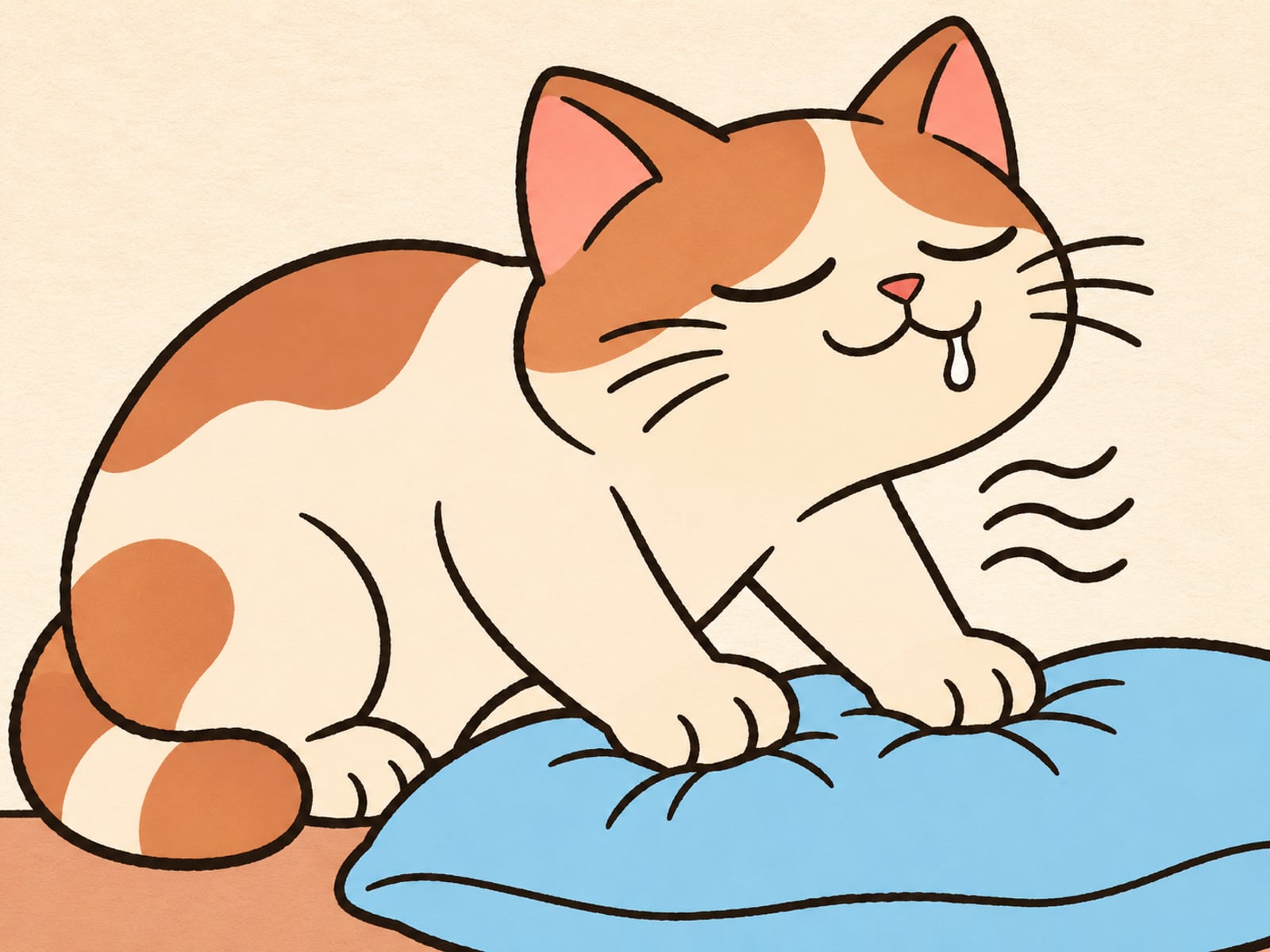
Some cats drool a little as well. Cats Protection notes that drooling can happen when a cat is deeply relaxed, especially while purring, kneading or being stroked. Not every relaxed cat drools, so a dry chin proves nothing.
Drool that is new, constant, excessive or foul-smelling is different. It can have other causes, including dental disease, nausea, toxins or a swallowed object, and it is a question for a veterinarian, not a part of kneading.
4. Where "making biscuits" comes from
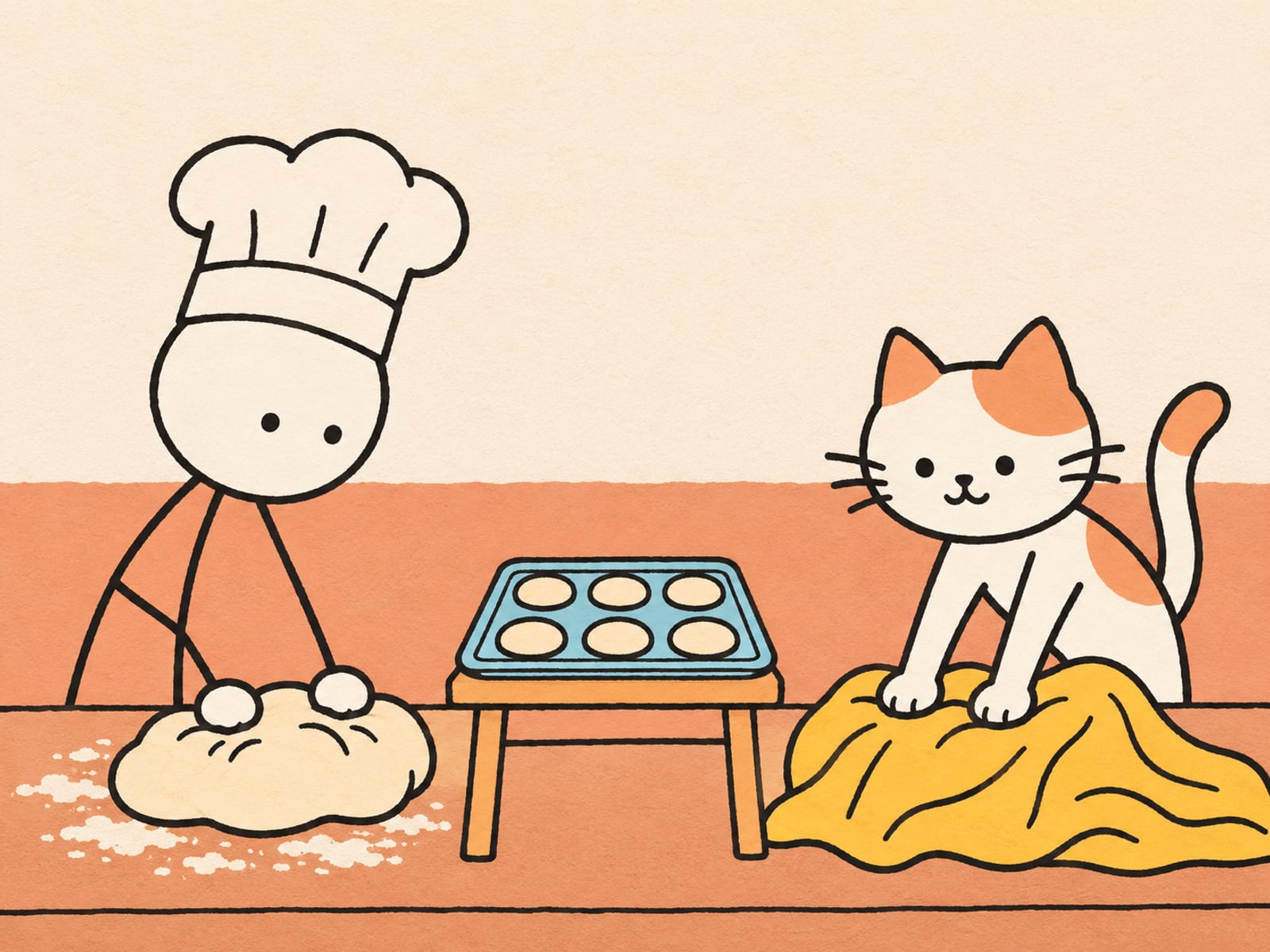
Why biscuits? Because of what the cat looks like. A cat pressing its paws into a blanket looks like a baker working dough, and "making biscuits" is a colloquial English comparison built on that likeness.
VCA Animal Hospitals uses the phrase, and the National Inventors Hall of Fame has a STEM activity page named for it. It is best described as a modern, everyday comparison to kneading dough. The first person to say it has not been established.
English has plenty of cousins for it: kneading, kneading dough, baking bread, making muffins, making a loaf and air biscuits.
The movement looks the same from country to country, and only the words change. A Mexican publication, El Despertador, describes cats kneading cushions, armchairs and carpets, and links it to nursing, scent, affection and trust. Spanish uses "amasar" and "amasamiento," meaning to knead, and a Spanish pet site, Ultima, describes it as a retained kitten behavior. Some Spanish pet sources also say "hacer galletas," a direct match for making biscuits. In Spain, Público describes cats doing it on blankets, cushions, beds and trusted people.
5. Do big cats knead too?
Yes, as far as the record shows. French Wikipedia's Patounage entry says cubs of large feline species make the same milk-stimulating movement, and that adult lions, tigers, snow leopards and other non-domestic cats have been seen kneading or pawing in captive settings. A zoo video listing from Lion Country Safari points the same way.
The adult evidence is mostly observation, and it is thin next to what we have on house cats. It shows that the behavior exists. It does not give one reason that fits every species, so the house-cat explanation should not be pasted onto a lion.
That's it. The same paw pressing, in a tiny kitten and in a very large one.
Questions people ask
Why does my cat knead me but not other people? 01
It comes down to individual trust, familiarity and the cat's preferred relationships. Kneading appears when a cat is relaxed and with someone it considers safe, so a cat may save it for one person.
Why does my cat knead before going to sleep? 02
Relaxation is part of it, since a cat that is about to doze is usually calm. There is also the proposed idea that kneading helps make a resting place comfortable, which is a suggestion and not a proven purpose.
Why does my cat knead with its claws out? 03
The claws extend and retract during the normal rhythm of the movement, so seeing them is part of ordinary kneading.
Why do cats make biscuits? 04
The phrase is a comparison to kneading dough. A baker presses dough with both hands in turn, and a cat presses a blanket with both front paws in turn.
A paw on your lap
Kneading is usually ordinary comfort behavior. A sudden change, especially one that comes with other signs, is a question for a veterinarian.
Otherwise, the next time those paws start pressing, you know what you are looking at. A cat kneading your lap is repeating a movement it first made as a kitten, while nursing.
Sources

- VCA Animal Hospitals, "True or false: do cats knead?"
- Scientific American, "Why do cats knead like they're making biscuits?"
- MDPI, "Ethogram of the Domestic Cat"
- Cats Protection, Behaviour Guide
- Cats Protection, "Why does my cat dribble?"
- VCA Animal Hospitals, meaning of cat sounds
- VCA Animal Hospitals, reasons pets make biscuits
- National Inventors Hall of Fame, "Make Biscuits"
- Ultima, "¿Por qué los gatos amasan?"
- Público, "La explicación de por qué los gatos amasan con las patas"
- El Despertador de Quintana Roo, issue 845 (PDF)
- French Wikipedia, "Patounage"
- Lion Country Safari, video listing