Who Invented Pizza?
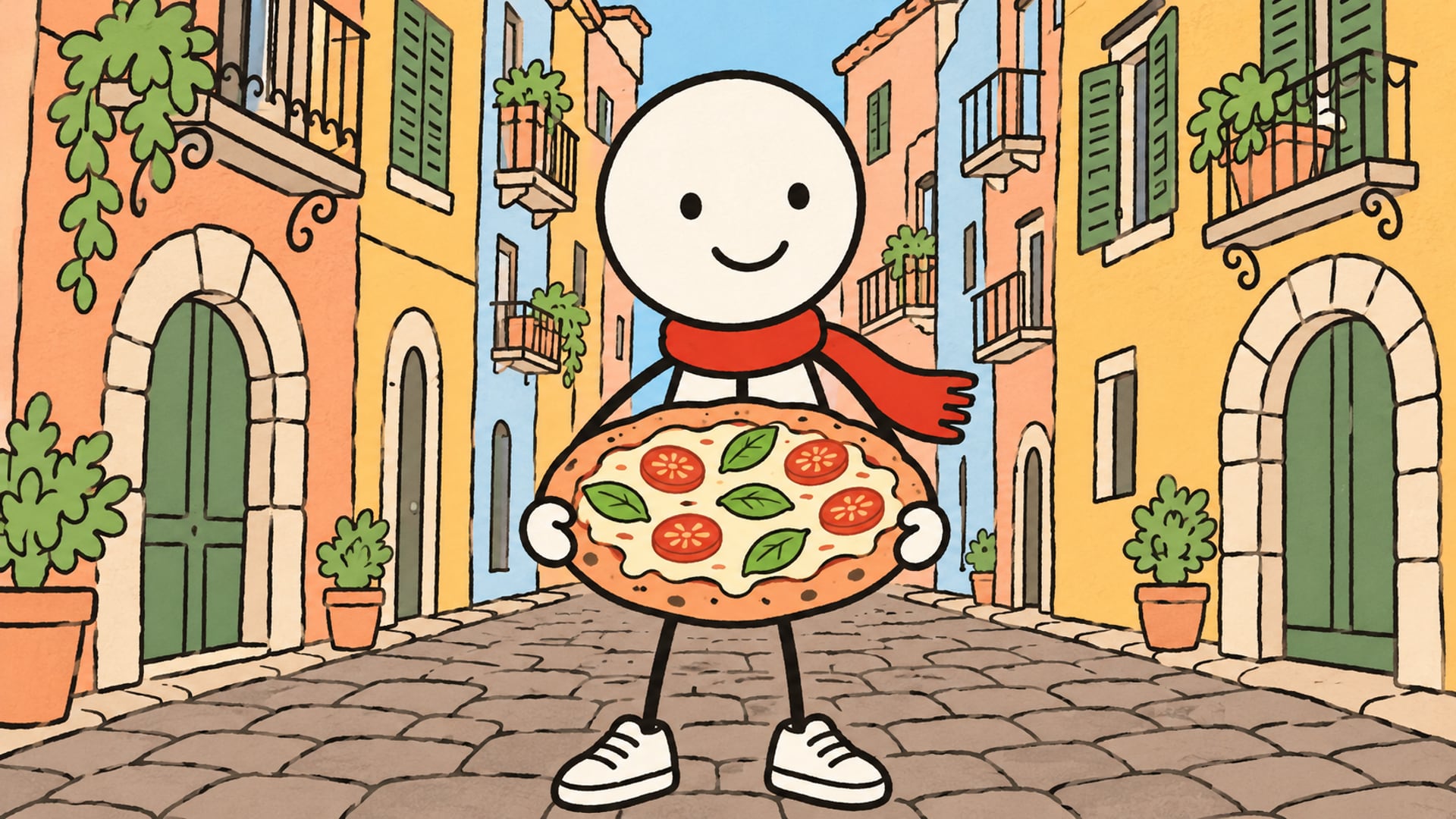
No one person is known to have invented pizza. Topped flatbreads are far older than Naples, and the modern pizza took shape there in the 1700s and 1800s. Raffaele Esposito is linked to the 1889 Margherita, named for Queen Margherita of Savoy in the traditional story, a tale historians have questioned.

In this explainer +
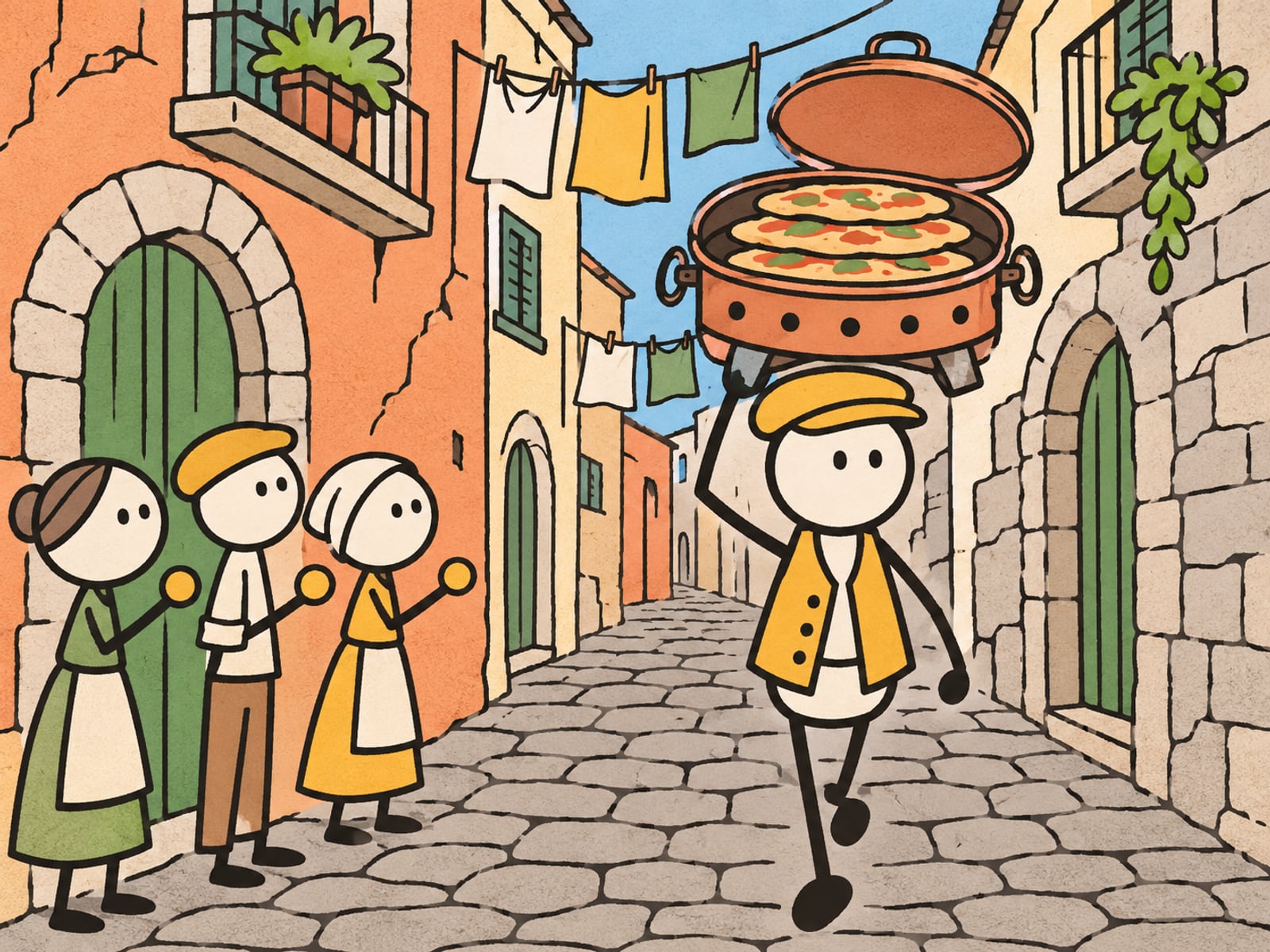
It's 1738, and you're in a crowded street in Naples. A street vendor walks past with a small copper stove balanced on the head. Inside it, pizzas stay warm, some flat and some folded.
Nobody in that street is asking who invented pizza. They're just eating it.
The question comes later, and the short answer is that no single inventor of pizza is established. Naples developed the modern form during the 1700s and 1800s. One cook, Raffaele Esposito, is tied to the famous 1889 Margherita story, which historians have questioned.
Esposito did not patent pizza, so the credit he gets is for a recipe and a name, not for pizza itself.
Flatbreads came first
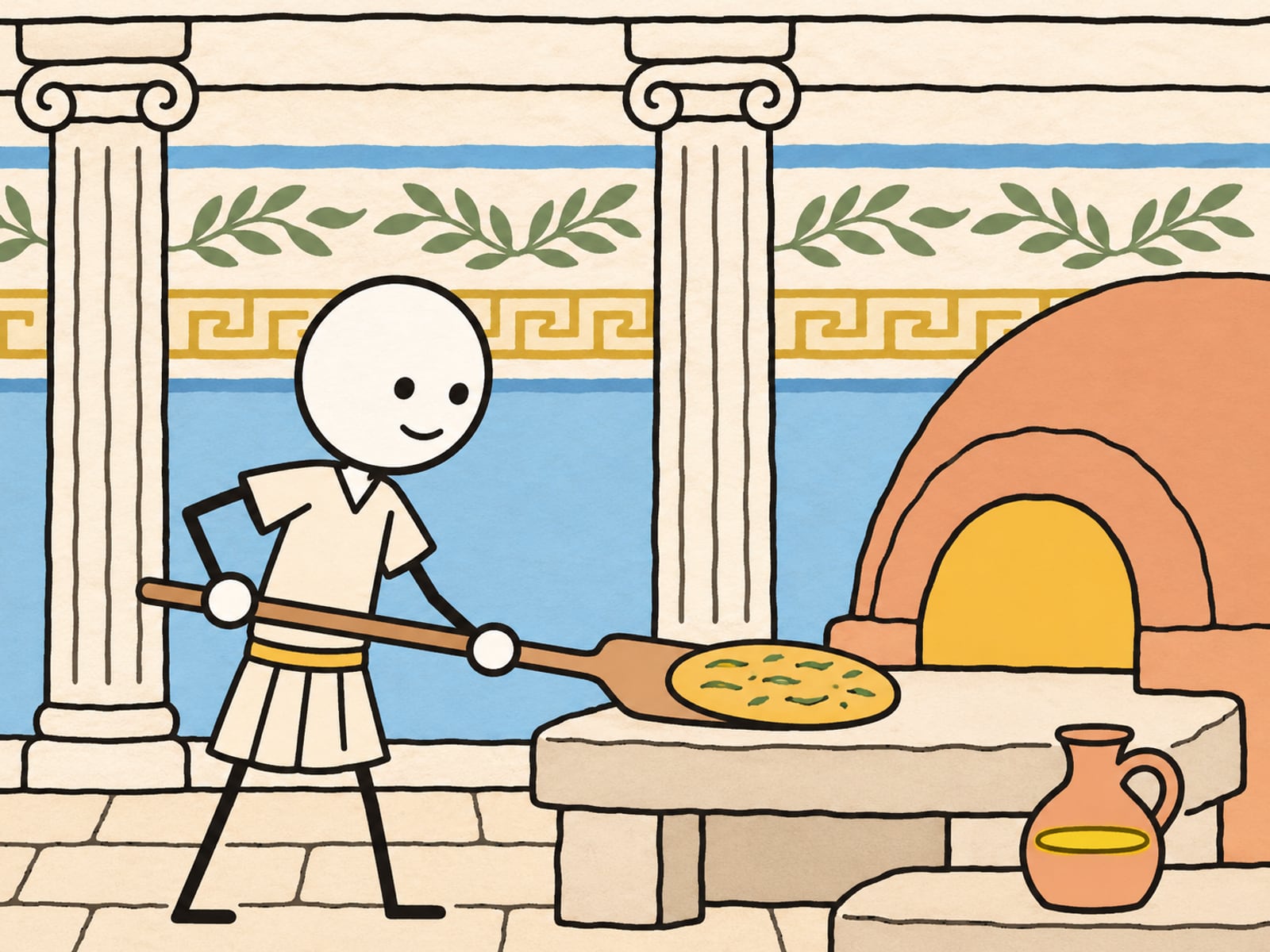
Long before Naples, people baked flat breads on hot stones, in ashes and in ovens. Greek cooks made plakous, a round flatbread with cheese, herbs and oil, from at least the first millennium BCE. Roman cooks developed panis focacius, a hearth bread that became focaccia.
Then there's Pompeii. A first-century CE fresco there shows a round flatbread with fruit, spices and other condiments. It has no tomatoes and no mozzarella.
In other words, it's a relative of pizza, not pizza. The ingredients that make a modern pie had not shown up yet.
Naples makes pizza
In the 1700s and 1800s, poor Neapolitans ate cheap flatbreads topped with oil, garlic, lard, cheese, anchovies and, eventually, tomatoes. It was street food for working people, sold by vendors like the one with the stove on his head.
The shops followed. Port'Alba began in 1738 as an open-air pizza stand and became a seated restaurant in 1830, according to the Smithsonian. On July 21, 1792, a baker named Giuseppe Sorrentino received a license to bake pizza in his shop in the Loreto district. It is one of the earliest pizzeria records, and it does not prove he invented pizza, as Treccani, the Italian encyclopedia, notes.
Writers noticed too. In 1835, Alexandre Dumas described several kinds of Neapolitan pizza, including versions with oil, lard, cheese, tomatoes and small fish. In 1853, Emanuele Rocco described pizza topped with basil, mozzarella and tomatoes.
Hold on to that last date. We'll need it in a minute.
So, who gets the credit for the pizza itself? The anonymous poor residents and street vendors of Naples, mostly. No name, no patent, just a city that kept making it.
The queen, the cook and the letter
Now for the story everyone knows.
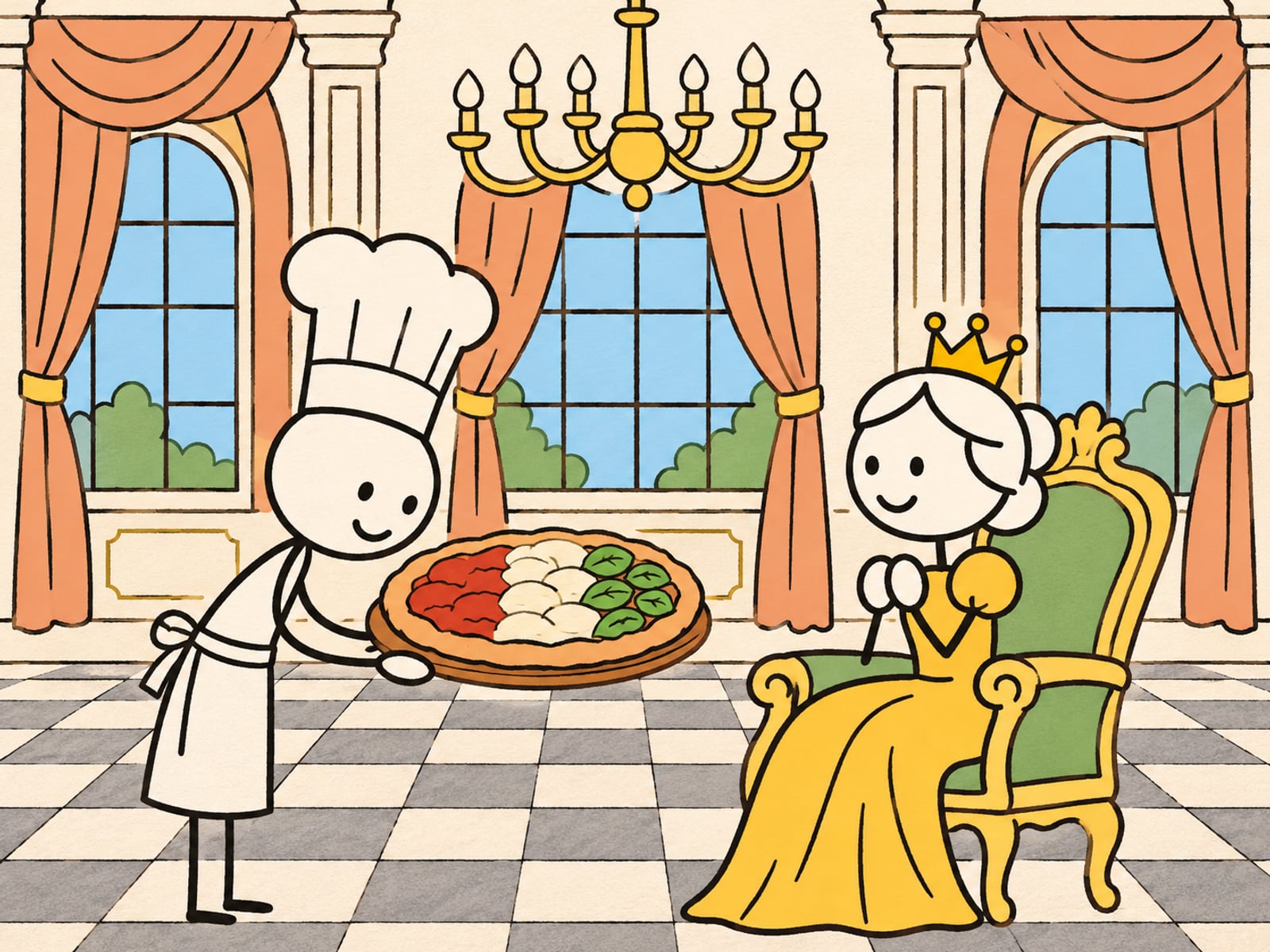
On the traditional account, Raffaele Esposito, a pizza maker in Naples, prepared three pizzas for Queen Margherita of Savoy at Capodimonte Palace in 1889. One was topped with tomatoes, mozzarella and basil. Red, white and green, the colors of the Italian flag. He supposedly named it after the queen.
It's a great story. It has a named cook, a queen, a year and a letter said to prove it.
The 1889 visit may have happened. But National Geographic reports that historians have questioned the letter that is traditionally used as proof. The letter's handwriting and seal have been challenged, and royal records from the time do not mention the incident.
There's also that 1853 description from Emanuele Rocco, which already had basil, mozzarella and tomatoes on a pizza at least three decades before the palace visit.
So, the safest reading is a narrow one. Esposito may have helped make the Margherita name and its legend famous. That's a real contribution to pizza's story. It's just not the same thing as inventing pizza.
Pizza crosses the ocean
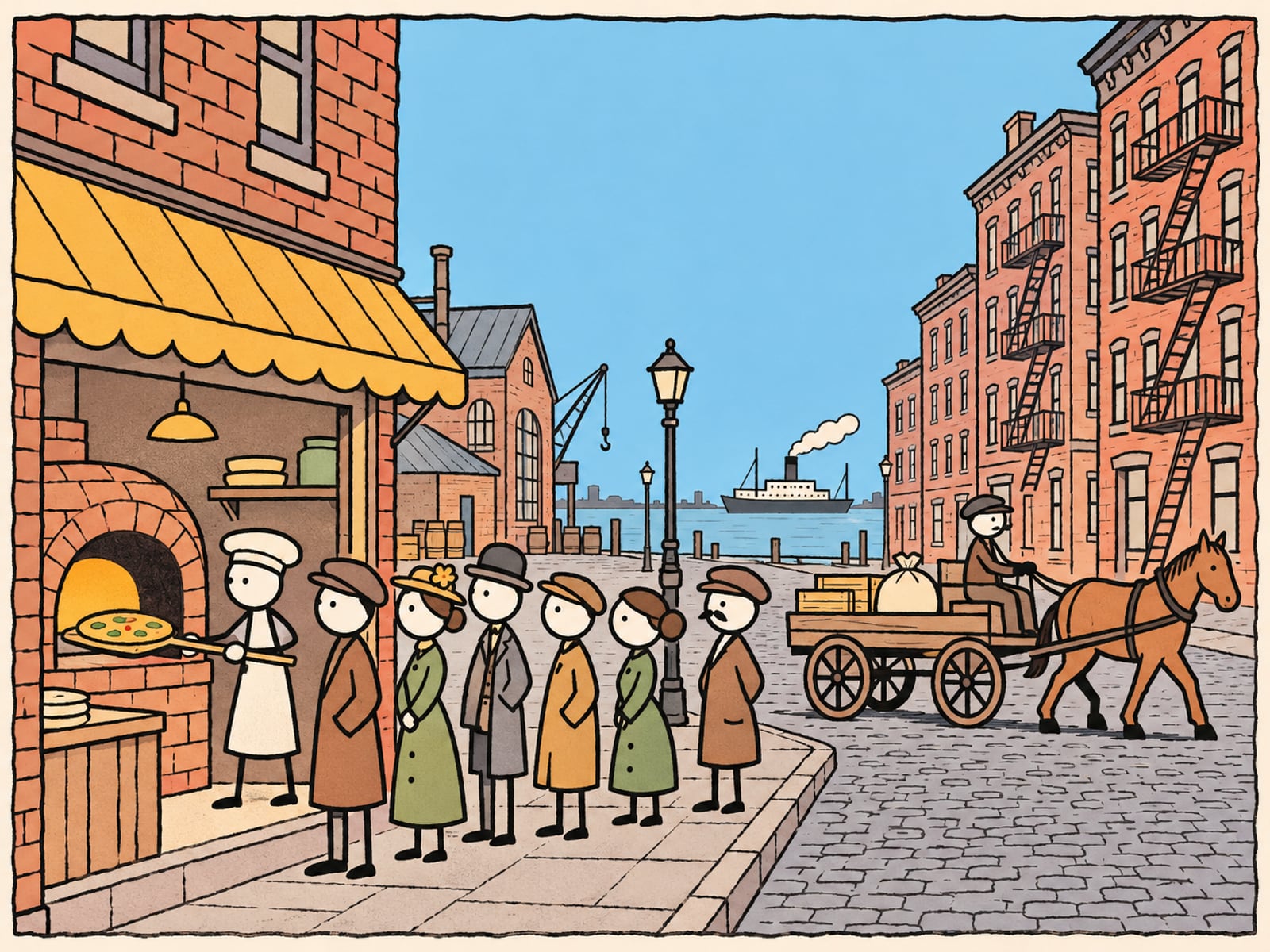
Pizza left Italy with Italian immigrants. In New York, Gennaro Lombardi opened a licensed pizzeria in Manhattan in 1905, and it is often named as one of the first documented American pizza businesses.
Lombardi may not have been first. Filippo Milone, an Italian baker in New York, advertised a pizzeria in the May 9, 1903 issue of Il Telegrafo, and he may have run pizza businesses before Lombardi. Lombardi's name stuck partly because his business was licensed and easy to identify, while earlier immigrant vendors were recorded less consistently.
After World War II, American servicemen who had eaten Italian food in Europe came home wanting more, and chains such as Pizza Hut grew the market, as HISTORY and TIME both tell it. Hint: after the war, pizza split into regional American styles, including New York, Chicago and California versions.
Britain has its own timeline. Pizza shows up in commercial records by 1934 at Olivelli's in London, and it grew after the war through PizzaExpress, which Peter Boizot founded in 1965.
In Mexico and Spain, the story is told the same way. A UNAM academic source and El País both present pizza's origin as Neapolitan.
The record
| Date | What happened | Source |
|---|---|---|
| 1738 | Port'Alba begins as an open-air pizza stand in Naples | Smithsonian |
| 21 July 1792 | Giuseppe Sorrentino receives a license to bake pizza in Naples | Treccani |
| 1830 | Port'Alba becomes a seated restaurant | Smithsonian |
| 1835 | Alexandre Dumas describes several Neapolitan pizza varieties | Treccani |
| 1853 | Emanuele Rocco describes pizza with basil, mozzarella and tomatoes | Treccani |
| 1889 | The traditional date of Esposito's pizzas for Queen Margherita, a story historians have questioned | National Geographic |
| 9 May 1903 | Filippo Milone advertises a pizzeria in Il Telegrafo, New York | HISTORY |
| 1905 | Gennaro Lombardi opens a licensed pizzeria in Manhattan | HISTORY |
| 1934 | Pizza appears in British commercial records at Olivelli's, London | University of Warwick |
| 1965 | Peter Boizot founds PizzaExpress | The Guardian |
Questions people ask
Who invented pizza? 01
No single inventor is established. The modern form developed in Naples in the 1700s and 1800s, shaped by poor residents and street vendors. Raffaele Esposito is the name attached to the Margherita story, not to pizza as a whole.
Where did pizza come from? 02
Topped flatbreads go back to ancient Greek and Roman cooking. The pizza most people mean today, with tomatoes and cheese, comes from Naples. From there it spread through Italian immigrants, American servicemen's tastes after World War II, and restaurant chains.
Is pizza Margherita named after a queen? 03
That is how the traditional account goes: Esposito named his red, white and green pizza after Queen Margherita of Savoy in 1889. Historians have questioned the letter used to prove it, and contemporary royal records do not mention the event. What is firmly on paper is the 1853 description of a pizza with basil, mozzarella and tomatoes.
Why does pizza have tomato sauce? 04
Tomatoes came from the Americas on Spanish ships in the 1500s. Italians first regarded them with suspicion, until Neapolitan cooks took them up. Poor Neapolitans were eating them on flatbreads in time for the 1700s and 1800s pizza boom.
What the menu is really telling you
The margherita on a menu today is the same combination Emanuele Rocco described in 1853, whatever happened at a palace in 1889. The 1889 event may have happened. The pizza was already there.
It would be neater with a single name and a single date. But a street food rarely gets a patent. It gets a city that keeps making it.
Naples made pizza, and no single cook is proven to have invented it.
Sources

- Smithsonian Magazine, "Inside Naples' World-Famous Pizza Culture"
- Smithsonian Magazine, "Does This Pompeii Painting Depict a 2,000-Year-Old Pizza?"
- Treccani, "L'arte 'immateriale' della pizza"
- National Geographic, "Pizza Margherita may be fit for a queen, but was it really named after one?"
- HISTORY, "Who Invented Pizza?"
- HISTORY, "Meet a Long-Lost Father of New York City Pizza"
- TIME, "What Take-Out Food Can Teach Us About American History"
- University of Warwick, "A Quick 'British' Meal?"
- The Guardian, "A slice of the action"
- UNAM, "Pizza"
- El País, "¿Pizza o pan con cosas?"