Why Are Hot Dogs Called Hot Dogs?
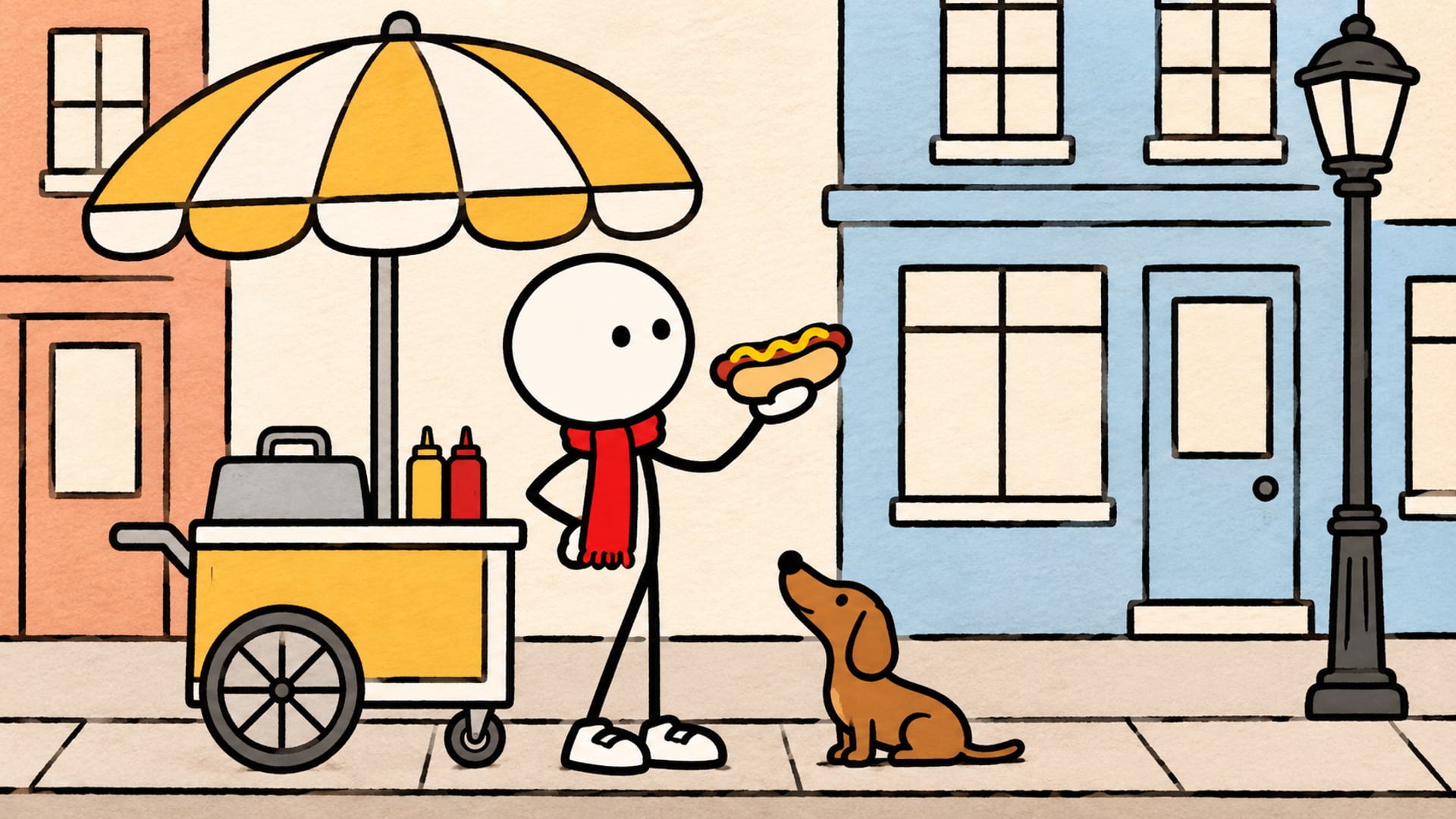
Hot dog comes from 19th-century sausage slang. "Hot" meant heated, and "dog" was a joke about what might be in a sausage. Newspapers used the phrase in 1884, 1892 and 1893, and Yale students used it by 1895.

In this explainer +
On September 14, 1884, the Evansville Daily Courier ran a small item about a man selling sausages on street corners. The paper called him "the innocent wienerworst man" and said he would be barred from "dispensing hot dog."
That is the earliest known print use of the words, and it is a good place to start, because the story most people tell about the name begins about sixteen years later.
Here is the short answer. "Hot" described the heated sausage. "Dog" was a joking word for sausages, tied to old suspicions that sausage makers used dog meat. The earliest dated records of the phrase, from 1884 to 1895, show it was already in use years before the famous cartoon story, and they do not name one person who coined it.
A sausage joke with a long reach
The joke is older than the bun. Sausage makers had a reputation for stretching their ingredients, and "dog" became a teasing word for the product. Add "hot" for a sausage fresh off the heat, and you have the phrase.
The newspaper trail shows it spreading from a throwaway line to an ordinary order.
- September 14, 1884, Evansville, Indiana. The Daily Courier mentions the "wienerworst man" and "dispensing hot dog," as AP News reports it.
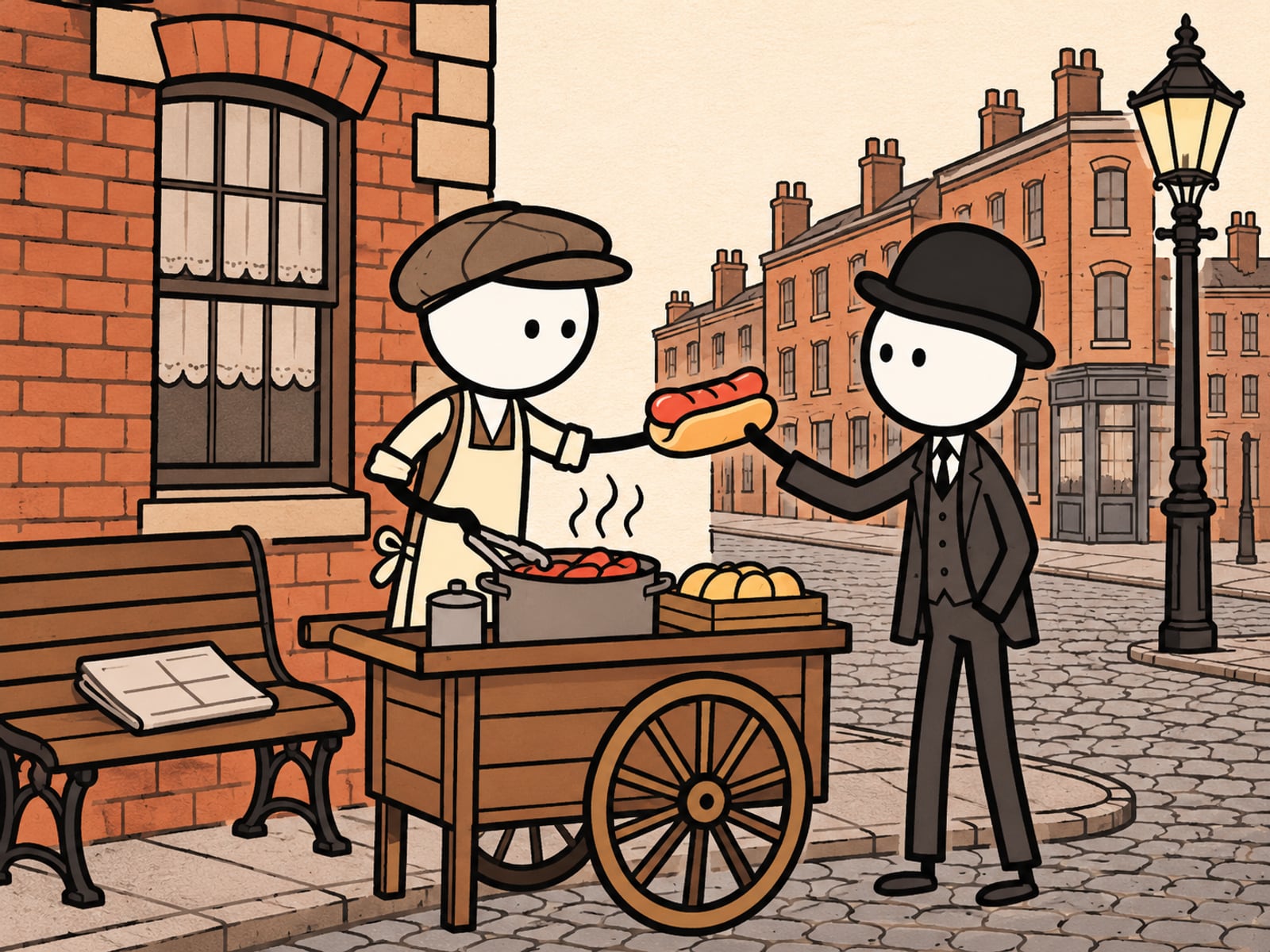
- December 31, 1892, Paterson, New Jersey. The Paterson Daily Press records a customer ordering "a hot dog," a sausage put into a cut roll and topped with mustard. The Yale Alumni Magazine tells that scene.
- 1893, New Brunswick, New Jersey. The New Brunswick Daily Times calls frankfurter vendors "hot dog peddlers."
In other words, by 1893 a reporter could say "hot dog peddlers" and expect readers to know what he meant.
What Yale students did with it
Then the phrase landed on a college campus, where slang travels fast.
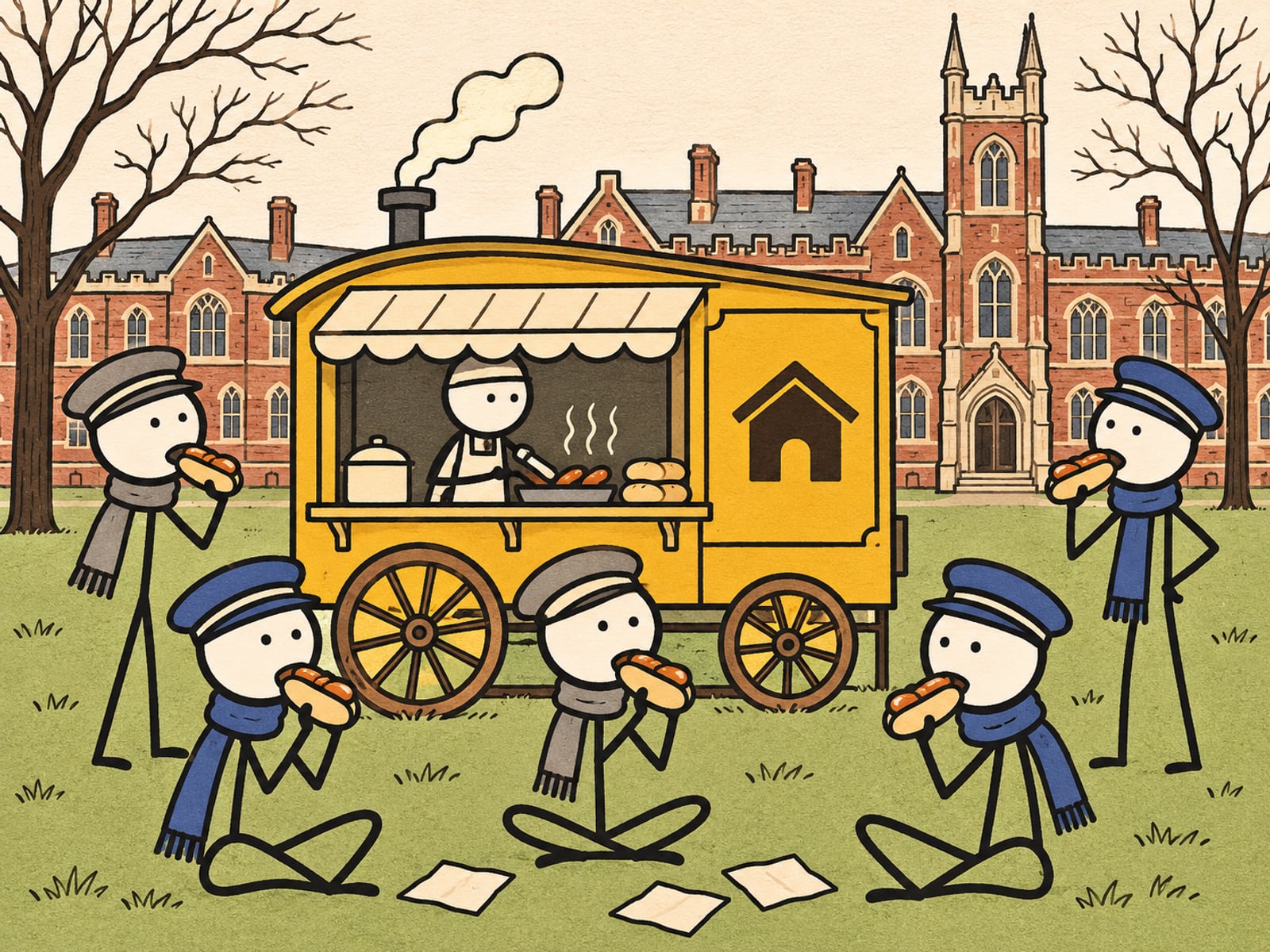
At Yale, students called the sausage-selling lunch wagons "dog wagons." One wagon nearby had a name that still earns a grin: The Kennel Club. By October 19, 1895, The Yale Record wrote that students "contentedly munch[ed] hot dogs," according to the Cambridge Dictionary blog.
Nobody at Yale needed the phrase explained. That tells you it had been around a while.
One more detail. In 1890s slang, "hot dog" also meant a flashy or self-important person. That was a separate use of the same two words, and it sat alongside the food.
The cartoon story, and what the record shows
Now the version most people have heard.
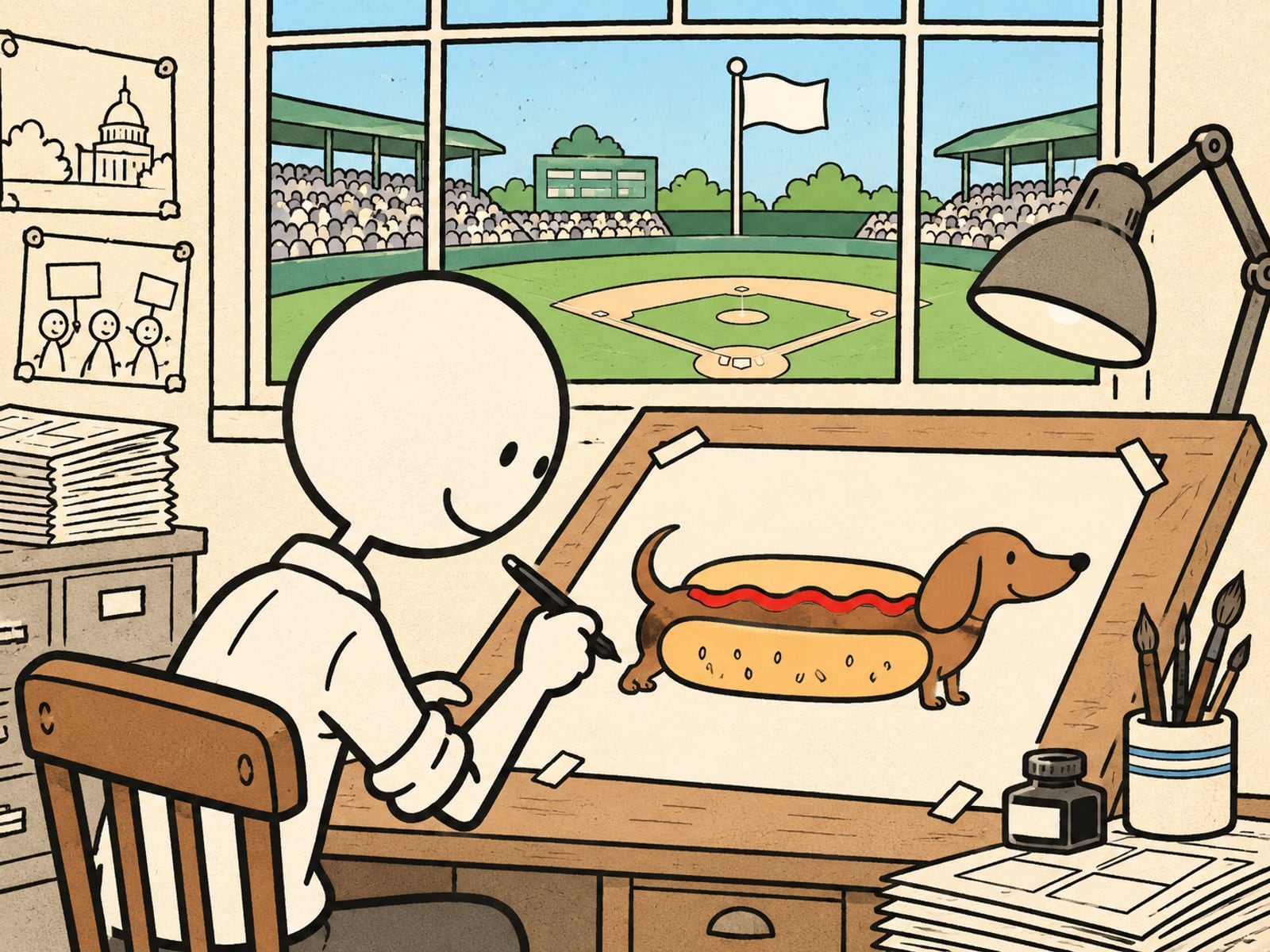
The popular story says that around 1900 or 1901, vendor Harry Stevens sold hot sausages in buns at New York's Polo Grounds. Cartoonist T.A. "TAD" Dorgan, so the story goes, drew a dachshund inside a bun and labeled it "hot dog" because he could not spell "dachshund."
It is a great scene, and it is the one the AP describes as the usual origin. Here is what the dated record adds. Researchers Gerald Cohen, Barry Popik and Leonard Zwilling found no copy of that cartoon, and Cohen offered $100 for a copy with its date and page. Cohen also found that Dorgan did not move to New York until 1903, which is later than the story needs. You can read the detail in Barry Popik's monograph.
Dorgan did use the phrase. Cartoons dated December 12 and 13, 1906, tied to a six-day bicycle race at Madison Square Garden, carry it, as the American Dialect Society archive records. So Dorgan may well have helped popularize an expression that was already out there.
Who put the sausage in the bun?
The name and the bun are two different stories.
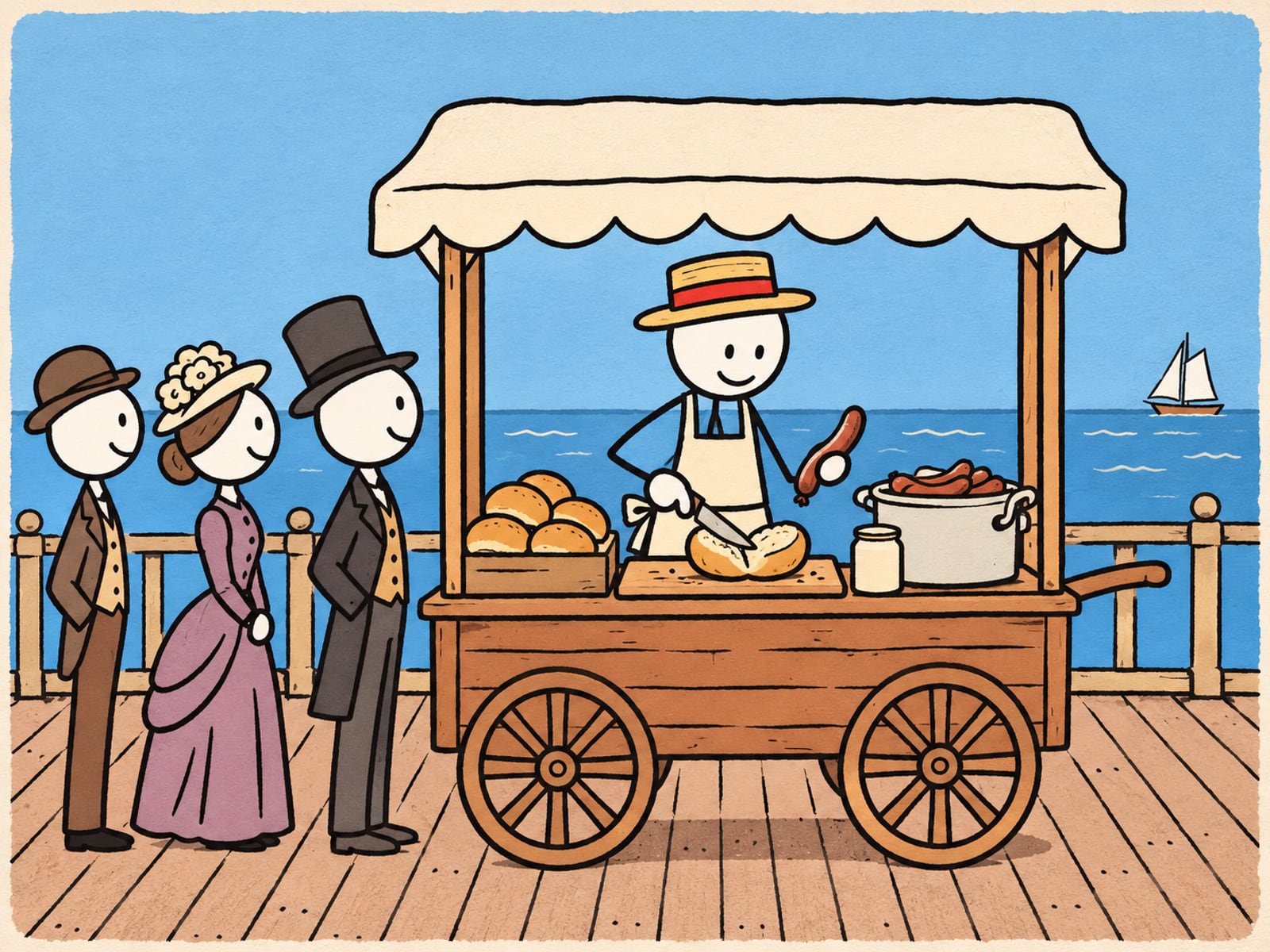
Charles Feltman, a German immigrant and Coney Island pie-wagon vendor, is widely credited with popularizing sausages served in split milk rolls. Accounts place his first version in 1867. The Coney Island History Project dates his Coney Island operation to 1871, and the National Hot Dog and Sausage Council reports he sold 3,684 sausages that year, according to Smithsonian Magazine.
"Widely credited" is the careful phrase here. German-American pushcart vendors may have sold similar food earlier. Anton Feuchtwanger is linked to a 1904 St. Louis version with a bun built to hold the sausage.
Then comes Nathan Handwerker. He worked at Feltman's and opened Nathan's Famous on Coney Island in 1916, selling hot dogs for five cents, half Feltman's price, as Nathan's own history tells it. He did not invent the name. He helped make the food a thing everyone could afford.
The record
| Date | What happened | Source |
|---|---|---|
| 1867 | Charles Feltman serves a hot sausage in a milk roll from his Coney Island pie wagon | Smithsonian Magazine |
| 1871 | Feltman's Coney Island operation begins; 3,684 sausages sold that year | Coney Island History Project |
| September 14, 1884 | The Evansville Daily Courier mentions the "wienerworst man" dispensing "hot dog" | AP News |
| December 31, 1892 | The Paterson Daily Press records a customer ordering "a hot dog" in a cut roll with mustard | Yale Alumni Magazine |
| 1893 | The New Brunswick Daily Times calls frankfurter vendors "hot dog peddlers" | Cambridge Dictionary blog |
| October 19, 1895 | The Yale Record writes that students "contentedly munch[ed] hot dogs" | Cambridge Dictionary blog |
| December 12 and 13, 1906 | TAD Dorgan cartoons use "hot dog" in connection with a six-day bicycle race at Madison Square Garden | American Dialect Society archive |
| 1916 | Nathan Handwerker opens Nathan's Famous and sells hot dogs for five cents | Nathan's Famous |
Questions people ask
Why is a hot dog called a dog? 01
It comes from 19th-century sausage jokes. "Dog" was a teasing word for sausages, linked to long-running suspicions about dog meat in them. College slang, including Yale's "dog wagons," kept the joke going.
Did TAD Dorgan really invent the name hot dog? 02
Printed uses from 1884, 1892, 1893 and 1895 came before the Polo Grounds cartoon story, and no copy of that cartoon is known. Dorgan's confirmed uses date to December 1906, so he may have helped spread a phrase that already existed.
Who invented the hot dog bun? 03
Charles Feltman is widely credited with popularizing sausages in split milk rolls, with accounts placing his first version in 1867. German-American pushcart vendors may have sold similar food earlier, and Anton Feuchtwanger is linked to a 1904 St. Louis bun made to hold the sausage.
Why does the same food have different names in Spanish-speaking countries? 04
Names come from borrowing, local slang and toppings. Mexico uses "hot dog," "perro caliente," "dogo" and "jocho," and Spain's usual name is "perrito caliente." Argentina says "pancho," Chile says "completo," and Guatemala City says "shuco." The Sonoran hot dog began in Hermosillo, Sonora, as a bacon-wrapped frankfurter in a soft bolillo-style roll with pinto beans and salsa, and it is especially associated with Tucson.
A name older than the cartoon
Plenty of food names have a single inventor and a plaque. This one has a newspaper item, a sausage joke and a college campus.
The cartoon is a good story, and Dorgan clearly used the phrase. The dated record simply puts the words in print years before him, on street corners and in campus slang, and it never lands on one name as the person who said it first.
A hot dog got its name from 19th-century sausage slang and college campus talk, years before the cartoon most people credit, and the food itself took its shape from a Coney Island pie wagon and a five-cent stand.
Sources

- AP News, hot dog origins
- Yale Alumni Magazine
- Cambridge Dictionary blog, "Hot diggity dog"
- Barry Popik, Polo Grounds monograph
- American Dialect Society archive, July 1999
- Coney Island History Project, Charles Feltman
- Smithsonian Magazine, origins of the Coney Island hot dog
- Nathan's Famous, our history