Who Invented the Internet?
Vint Cerf and Robert Kahn are usually credited as the principal inventors of the modern internet, for TCP/IP, which lets many different networks work as one. They began working together in 1973 and published their design in May 1974. Tim Berners-Lee came later and built the Web, which runs on top of the internet.

In this explainer +
"During my service in the United States Congress, I took the initiative in creating the Internet."
Al Gore said that in a 1999 interview on CNN, as the Washington Post's fact checker quotes him. It's a line about Congress and political initiative, and it raises the question this post is here to answer: who built the thing itself?
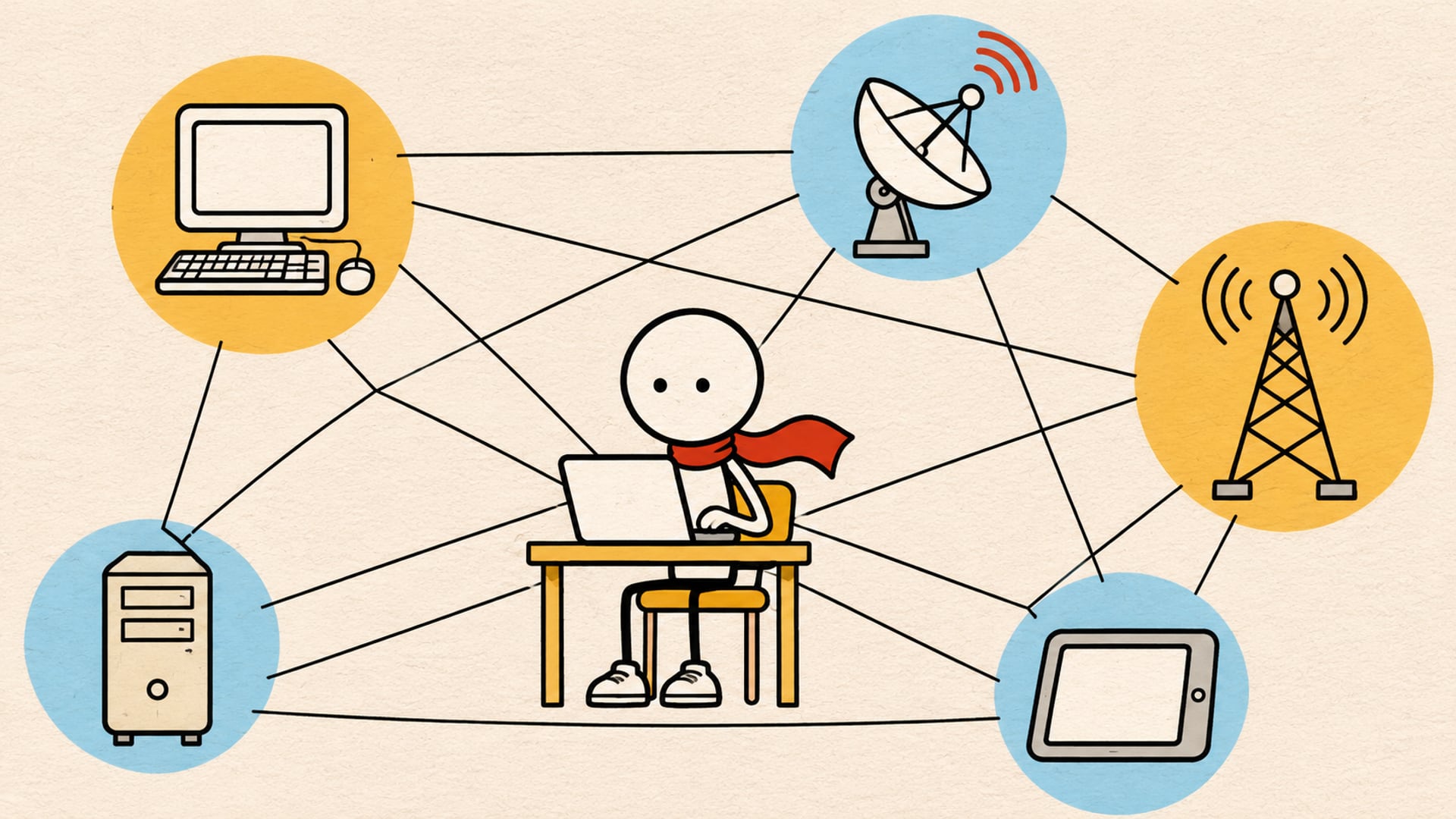
The two engineers usually credited as the principal inventors of the modern internet are Vint Cerf and Robert Kahn. They began working together in 1973, Cerf at Stanford University and Kahn at the U.S. Defense Advanced Research Projects Agency (DARPA) in Arlington, Virginia. Their invention was TCP/IP, the protocol that lets separate packet networks work as one network.
One qualification belongs right beside that credit. The National Inventors Hall of Fame names Cerf and Kahn as the designers of the internet's basic design and ties U.S. Patent No. 6,574,628 to Cerf's induction. But the historical credit rests on TCP/IP and its design, not on a single patent.
First, a network that could not talk to the others
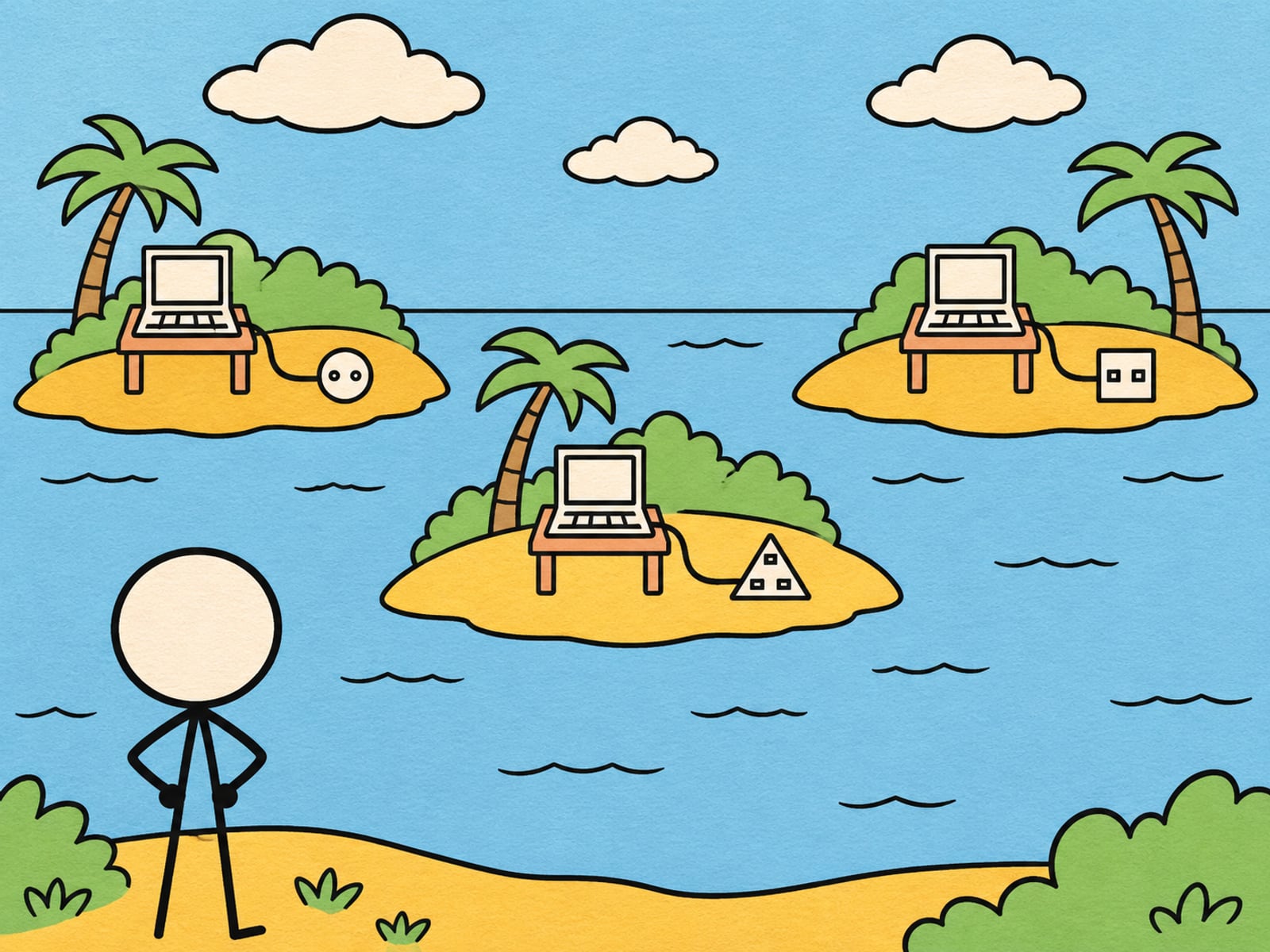
Before the internet, people had postal mail, the telegraph, the telephone, radio and later fax. Computers had standalone machines, leased telephone lines and private networks. Universities shared information through systems such as BITNET, CSNET and Britain's NPL packet network, according to the Internet Society's history of related networks. Each was usually limited to particular institutions, manufacturers or protocols.
The early ideas came from several places. Leonard Kleinrock, at MIT and UCLA from 1961 to 1964, developed the mathematical theory of packet switching. In 1964, Paul Baran at RAND proposed packet-switched networks for resilient military communications. In Britain, Donald Davies and Roger Scantlebury at the National Physical Laboratory developed packet-switching ideas of their own, and Davies helped establish the term "packet." Their network mattered, but it did not become the global internet.
In other words, the pieces were arriving. Nobody had yet joined them.
In 1967, Larry Roberts wrote the ARPANET plan for ARPA. In 1968, ARPA chose the firm BBN to build the Interface Message Processors, the early packet routers. The first one was installed at UCLA in September 1969, according to DARPA's 60th anniversary magazine.
The night the network said "LO"
On 29 October 1969, at about 10:30 p.m., UCLA programmer Charley Kline sat at a UCLA computer. His job was to log in to Bill Duvall's computer at Stanford Research Institute, over the new network.
He typed an L. It went through. He typed an O. That went through too. Then he typed the G, and the receiving computer crashed.
So, the first host-to-host message on ARPANET was "LO." The full LOGIN went through about an hour later, as Kleinrock's record of the first message tells it.
It was a start, but it was one network. ARPANET could link its own computers. It could not yet link ARPANET to a packet-radio network, a satellite network, or anything built on different technology.
Two engineers and one set of rules
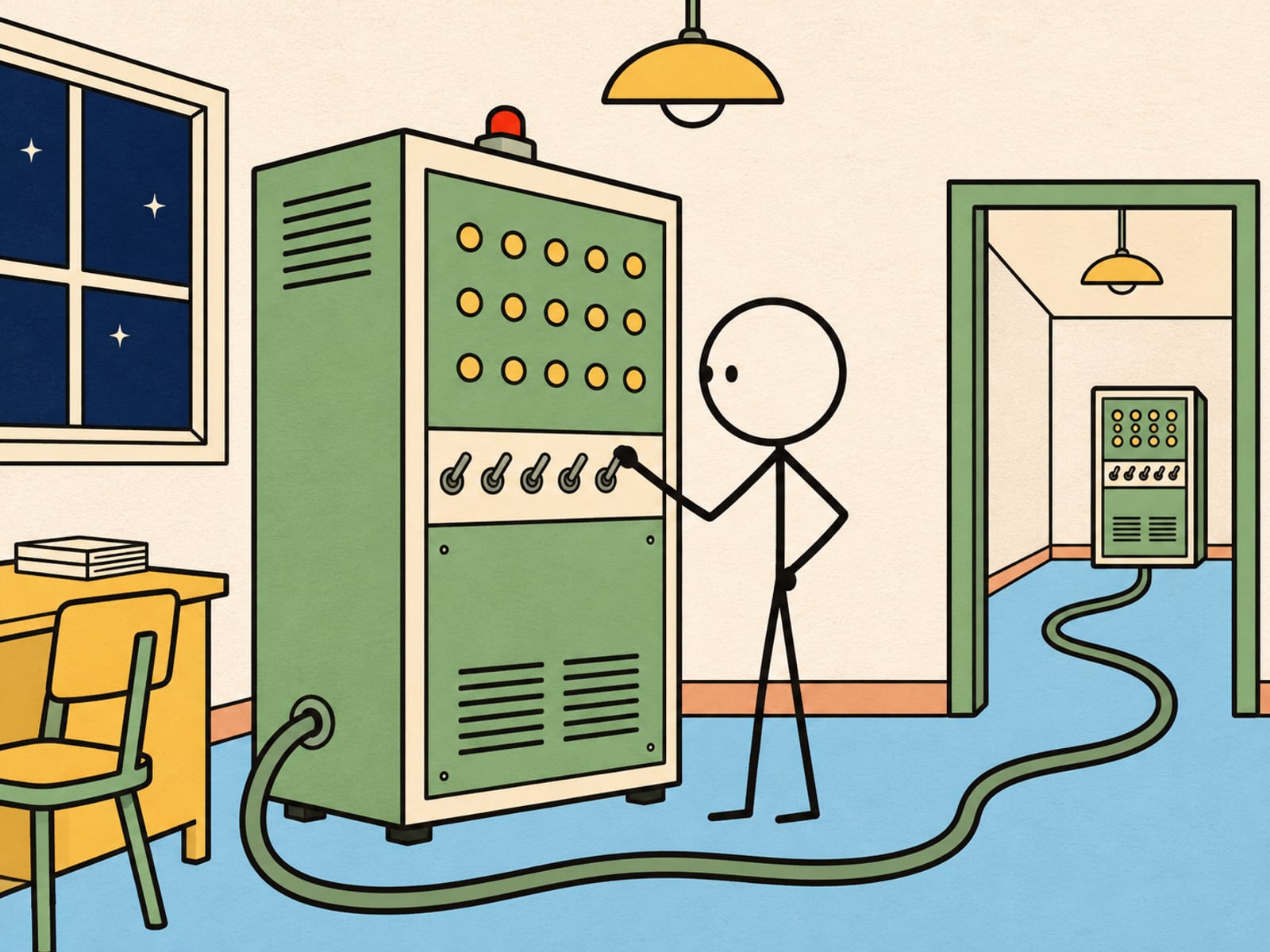
That gap is what Cerf and Kahn went after in 1973. In May 1974 they published "A Protocol for Packet Network Intercommunication", the paper that laid out the idea behind TCP/IP.
Think of it like this: every network speaks its own dialect, and TCP/IP is the common language they all agree to use when they talk to each other. It defines how data is divided into packets, addressed, routed, checked and reassembled. A network can keep its own insides, as long as it follows the shared rules at the border.
That's why the credit goes to Cerf and Kahn. ARPANET was one network. TCP/IP let many different networks work together, which is the "inter" in "internet."
The switch came on 1 January 1983, when ARPANET moved from its older Network Control Protocol to TCP/IP, according to the Internet Society. The goal was a single standard for connecting ARPANET with packet-radio, satellite and other networks.
Others added important parts along the way. Ray Tomlinson of BBN created the first network email program in 1971 or 1972, one of the earliest important ARPANET applications. Email made the network useful. It was not the internet itself.
Where the Web comes in
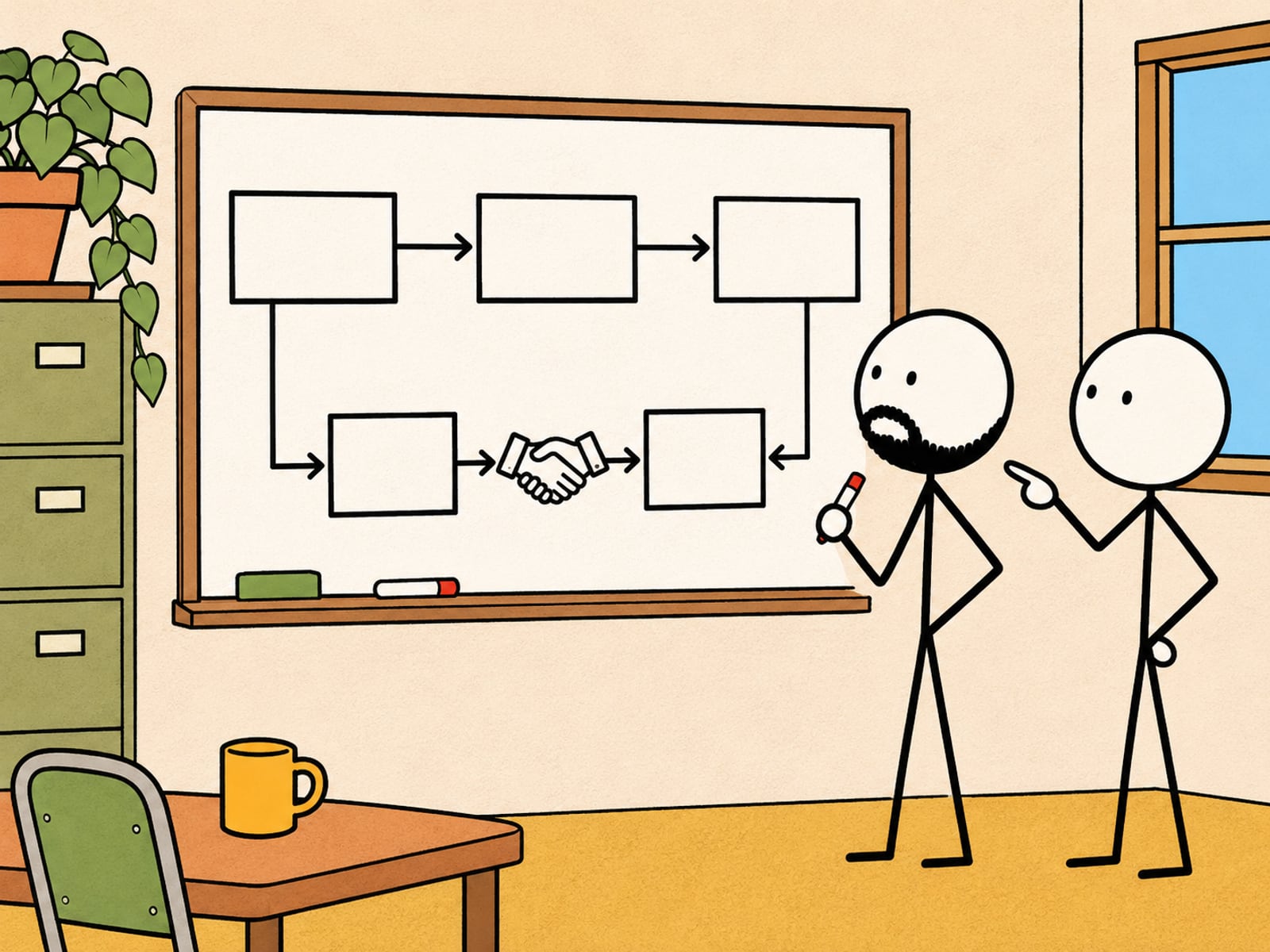
Tim Berners-Lee proposed the Web at CERN in March 1989, to help scientists share information. With Robert Cailliau, he developed it into a working system. By the end of 1990 he had built the first web server, browser and editor on a NeXT computer, according to CERN's short history of the Web.
The machine carried a handwritten warning: "This machine is a server. DO NOT POWER IT DOWN!!"
The Web used HTML for documents, HTTP for communication and URLs for addressing pages, and the first website was hosted at info.cern.ch. On 30 April 1993, CERN released the Web software on a royalty-free basis.
The split is simple. The internet is the global network of networks. The Web is an information system that runs on it. Berners-Lee gets the credit for the Web, and Cerf and Kahn for the rules underneath it.
As for Gore, the record puts his role on the legislative side: he sponsored the 1991 High-Performance Computing and Communications Act. The technical work on TCP/IP and ARPANET belongs to the engineers above.
The record
| Date | What happened | Source |
|---|---|---|
| 1967 | Larry Roberts writes the ARPANET plan for ARPA | DARPA |
| September 1969 | The first Interface Message Processor is installed at UCLA | DARPA |
| 29 October 1969 | The first host-to-host message, "LO," goes from UCLA to Stanford Research Institute | Leonard Kleinrock, UCLA |
| May 1974 | Cerf and Kahn publish "A Protocol for Packet Network Intercommunication" | Cerf and Kahn paper |
| 1 January 1983 | ARPANET switches from NCP to TCP/IP | Internet Society |
| March 1989 | Tim Berners-Lee proposes the Web at CERN | CERN |
| End of 1990 | Berners-Lee has built the first web server, browser and editor | CERN |
| 30 April 1993 | CERN releases the Web software royalty-free | CERN |
Questions people ask
Who invented the World Wide Web? 01
Tim Berners-Lee, working at CERN with Robert Cailliau. He proposed it in March 1989 and had built the first server, browser and editor by the end of 1990. It is a system that runs on the internet, so it came after the internet's basic rules.
Why was the internet designed as a network of networks? 02
Because the networks of the time used different technologies. TCP/IP lets many different networks interoperate, so none of them had to be rebuilt to join.
Why did ARPANET switch to TCP/IP on 1 January 1983? 03
To create one interoperable standard for connecting ARPANET with packet-radio, satellite and other networks. After the switch, one set of rules covered all of them.
Why was the first internet message only "LO"? 04
The attempt to send LOGIN crashed the receiving computer after the second letter. The full word went through about an hour later.
The rules are still running
Outside the United States the story has the same rules and different dates. Mexico's UNAM connected its Institute of Astronomy to the National Center for Atmospheric Research in Boulder, Colorado, by satellite on 20 July 1989, using TCP/IP. In Spain, the first full connection came in July 1990 through RedIRIS, at 64 Kbps. Argentina's first internet link came in March 1994.
TCP/IP, DNS and HTTP are the shared rules the modern internet still runs on, in every country that connects.
Cerf and Kahn wrote the rules that let networks talk, and the Web came later, on top of them.
Sources

- Washington Post, "A cautionary tale for politicians and the invention of the Internet"
- National Inventors Hall of Fame, Vinton Cerf
- Cerf and Kahn, "A Protocol for Packet Network Intercommunication"
- Internet Society, "A Brief History of the Internet"
- Internet Society, history of related networks
- Leonard Kleinrock, UCLA, "Accomplishments"
- Leonard Kleinrock, UCLA, record of the first message
- DARPA, 60th anniversary magazine
- CERN, "A short history of the Web"
- CERN, "World Wide Web at 35"
- UNAM Global, Mexico's first internet connection
- RedIRIS, history of the internet in Spain
- University of Buenos Aires, pioneers of email and communications