Why Do Ships Say Port and Starboard?
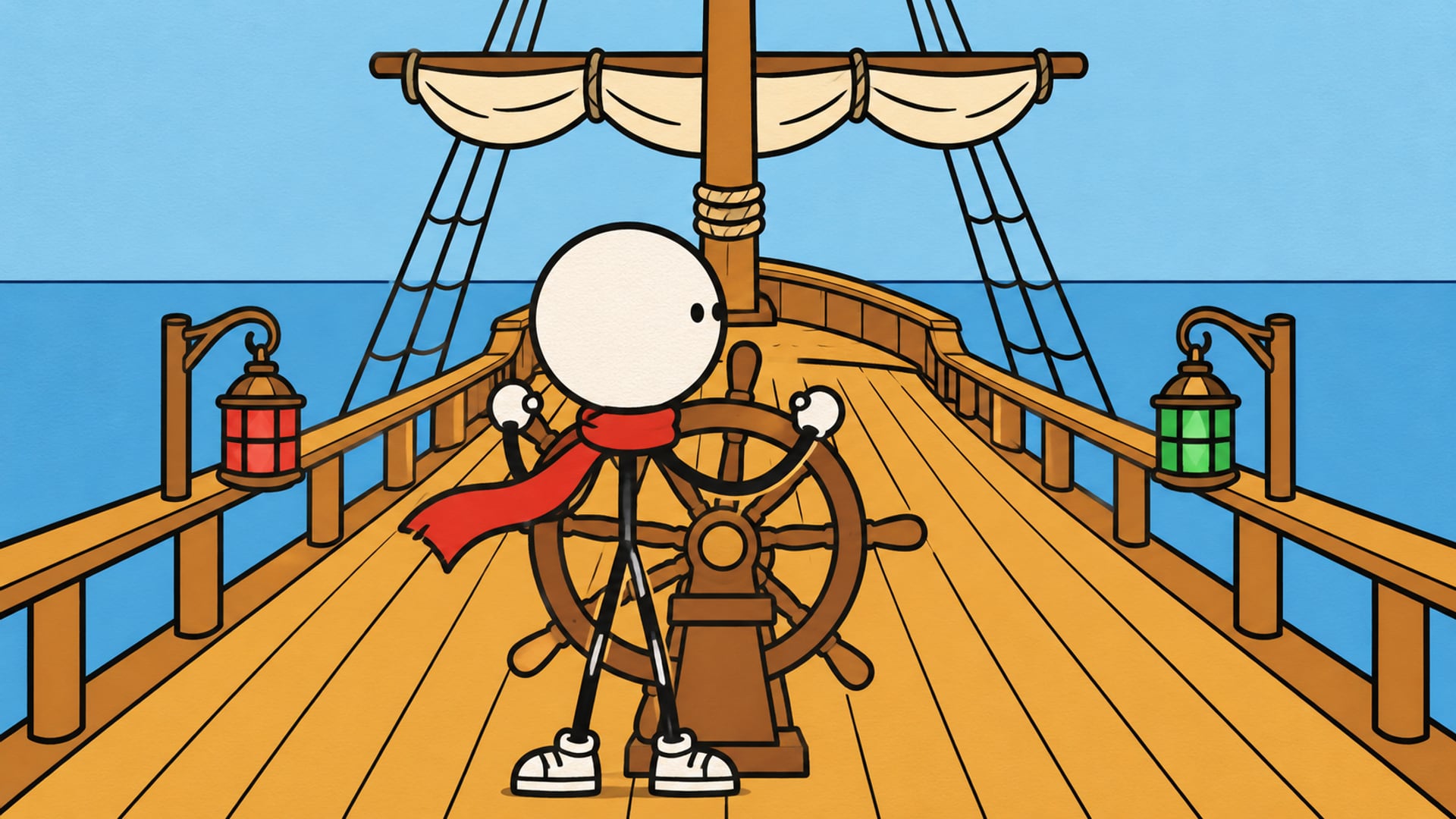
Ships use port and starboard because those names stay attached to the vessel, while left and right change with the way a person faces. Starboard comes from the old steering side on the right. Port replaced larboard in the 1840s because larboard sounded too much like starboard.

In this explainer +
In 1844, the Royal Navy ordered that "port" replace "larboard" on British ships, for a reason you can hear: the two words sounded too alike when shouted over wind, waves and shipboard noise.
Larboard was the old word for a ship's left side. Starboard, the word for the right side, was already in use. Shout them one after the other across a deck and they blur.
So, that is the answer in a few lines. Port and starboard are fixed names for the two sides of a ship. Starboard comes from the old steering side, and port took over from larboard so nobody would mix the two up at sea.
Six short answers follow, from a steering paddle to the lights on an airplane's wings.
1. Starboard was the steering side
Start with the word that stayed. Etymonline traces starboard to Old English steorbord. Steor meant a steering paddle, and bord meant the ship's side. Put them together and you get the side where the steering paddle hung.
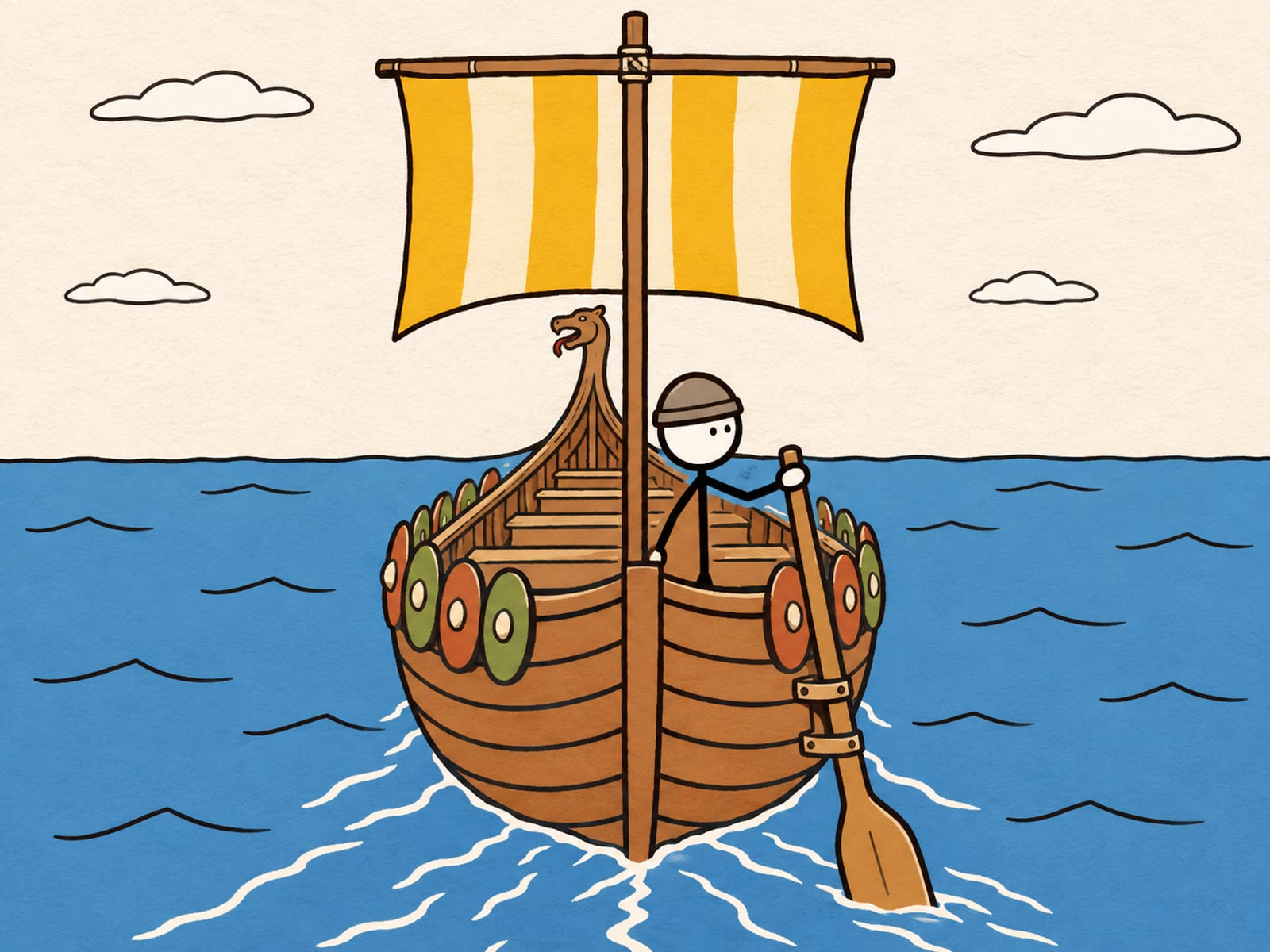
Early Germanic boats were commonly steered with a paddle on the right. The same right-side steering is documented on Egyptian, Carthaginian, Viking and medieval vessels, according to the U.S. Naval Institute's Sea Language and Its Origins, before the central stern rudder took over.
Why the right? A common explanation is that steering with the right hand made the right side the practical spot. That is a likely reason, not a proven rule for every boat. The record shows the right-side habit more firmly than it shows why.
2. Port replaced larboard
Larboard probably grew out of Middle English ladde-borde, the loading side. It makes sense. The side opposite the steering paddle was the handy one for coming alongside a dock and loading cargo, and "port" became an established nautical word for it.
The trouble was the sound. Larboard and starboard shared too much, and at sea a misheard order is a real problem. In 1844 the Royal Navy fixed it by ordering port in place of larboard.
The United States Navy followed. On February 18, 1846, Secretary of the Navy George Bancroft issued a General Order that substituted port for larboard because of the similarity in sound.
In other words, one of the most basic words on a ship was swapped out by order, and the reason was how it sounded.
3. Babor and estribor
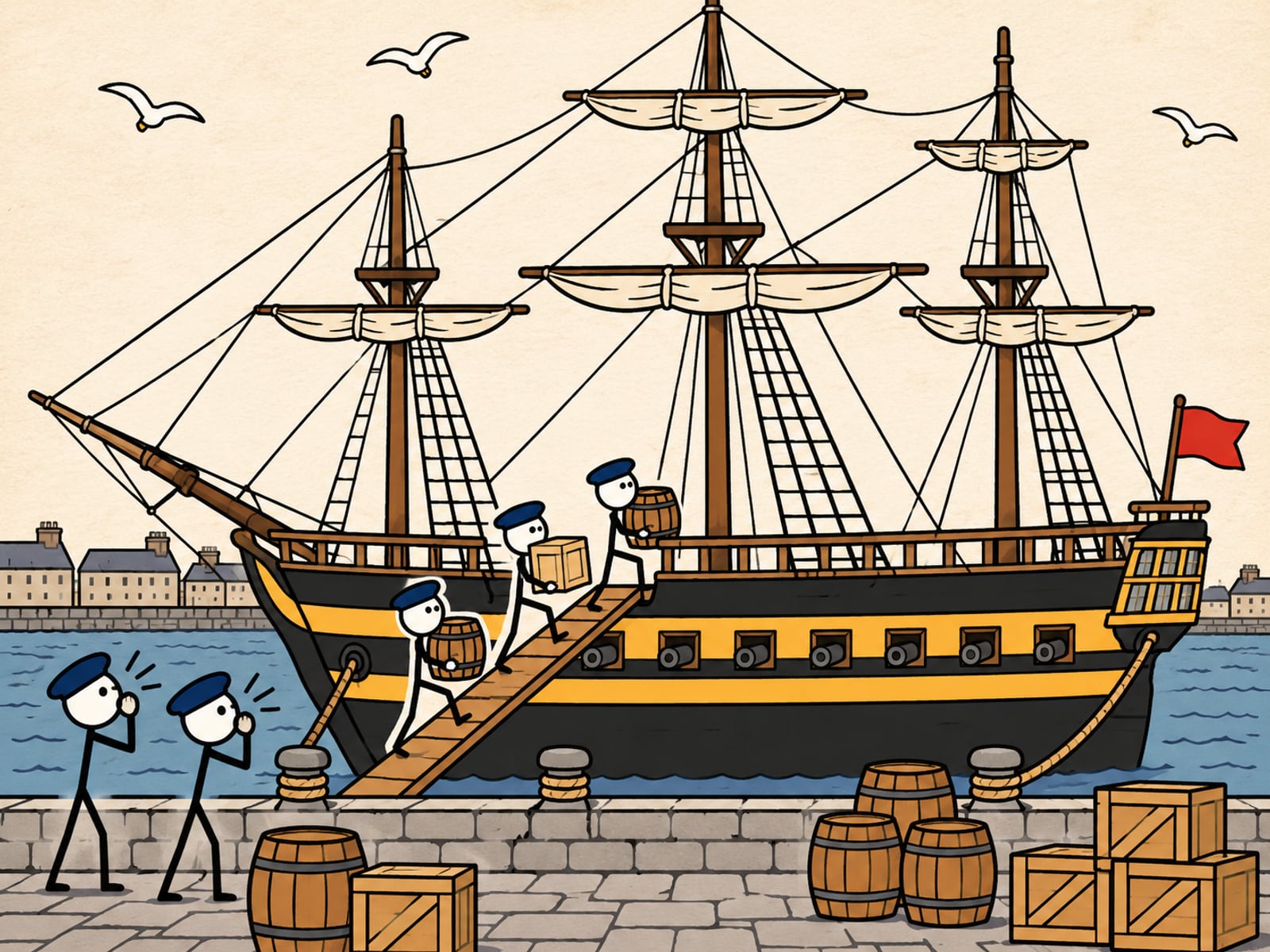
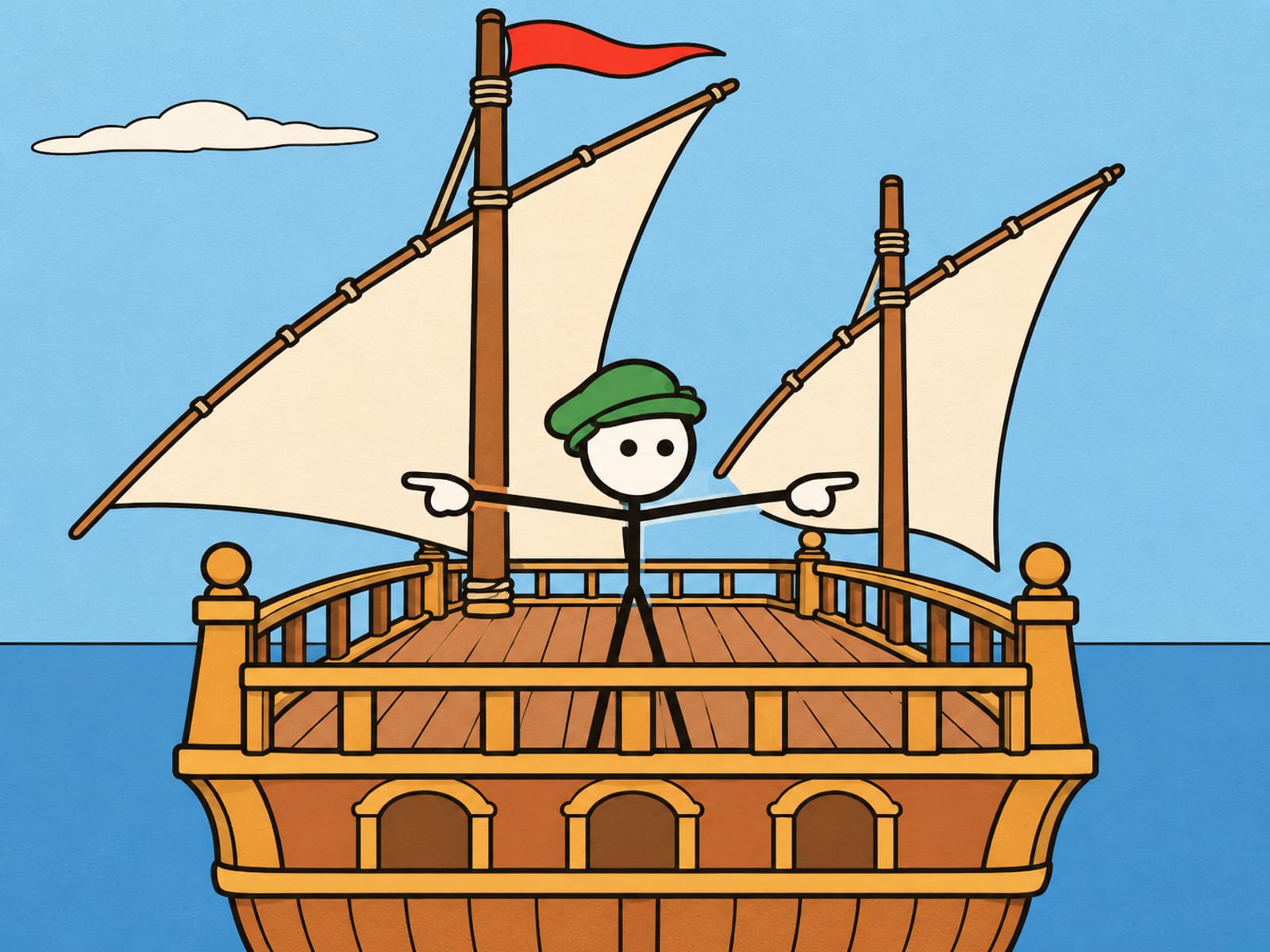
Spanish sailors got there by another road. In Spanish, babor is the left side of a vessel and estribor the right, when you face the bow.
Babor came into Spanish through French bâbord, from Germanic forms meaning the back side of the ship. Its first Spanish record is placed around 1527, in the work of Alonso de Chaves, though some references give 1526. The Universidad Católica Argentina study of Germanic sea words in Spanish covers both words.
Estribor came through Old French estribord, probably from Dutch stierboord or stuurboord. That is the steering side again, wearing a Spanish coat. Corominas documents it in Spanish in 1526.
Both words are Germanic sea words that reached Spanish through French and related languages. The meanings match across Mexico and Spain.
4. Red and green at night
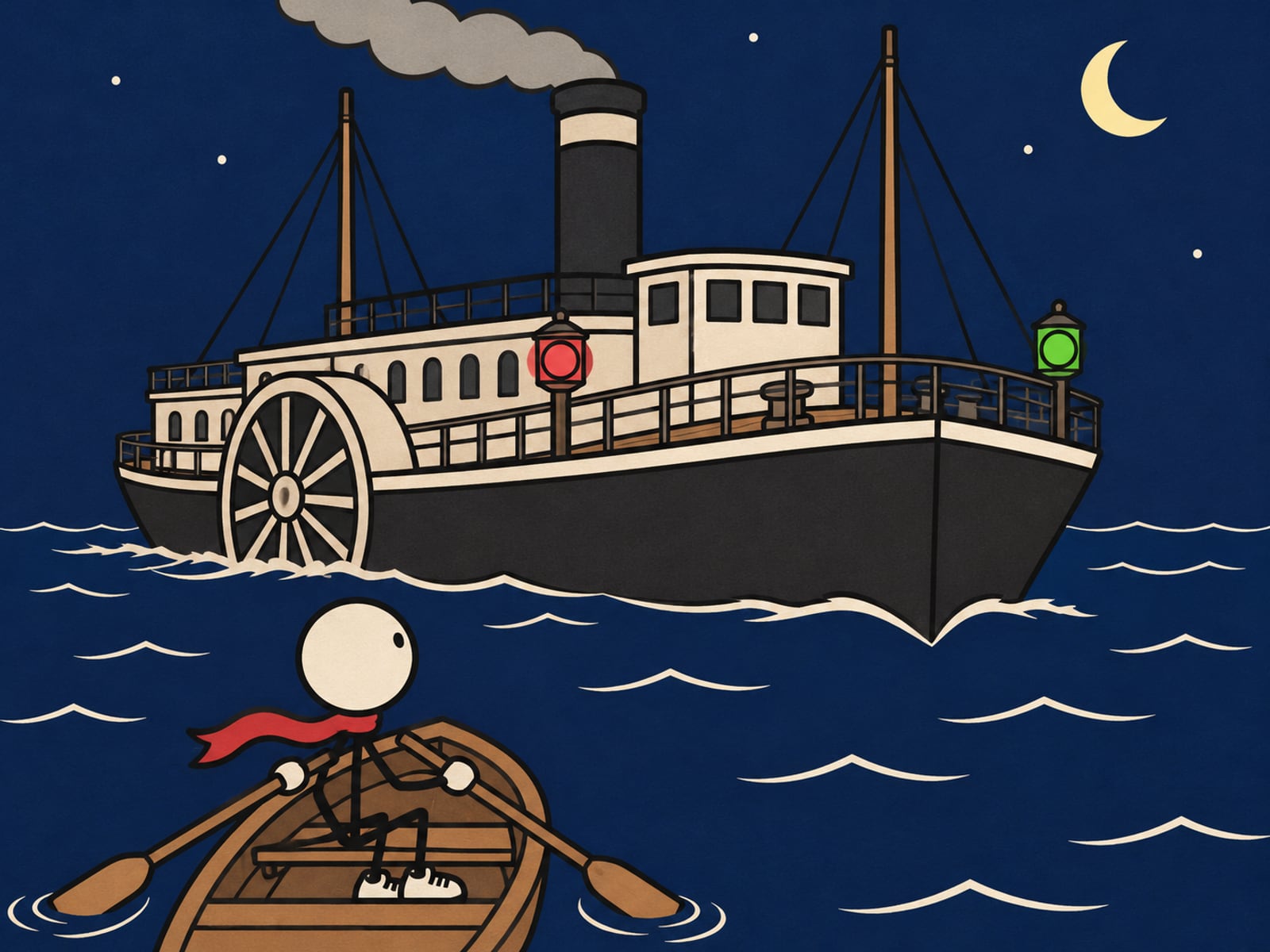
Names are one thing. At night, ships say it with light.
The British Admiralty required a green light on the starboard side and a red light on the port side for steam vessels in its July 11, 1848 "Steamers' Lights" notice. Another vessel could now tell which side of a ship it was looking at, and so which way the ship was heading.
Today the rule is COLREGs Rule 21, from the International Maritime Organization. It calls for a continuous green light on starboard and a continuous red light on port. Each shows from straight ahead to 22.5 degrees behind the beam on its own side.
The colors are a code. They say nothing about cargo or nationality.
5. Why airplanes use the same colors
Look at an airplane at night and you are reading the same code. Red marks the aircraft's left, or port, side. Green marks the right, or starboard, side. White marks the rear.
In the United States, 14 CFR 23.2530 requires a red light on the left, a green light on the right and a white light facing aft when position lights are required. The UK Civil Aviation Authority, in its Paper 2006/04, says the aircraft system uses "the same colour code as that used on ships."
So, a pilot spotting a stranger in the dark gets the same clue a ship's officer would.
6. Why buoys can look reversed
Here is a twist. A ship's side lights stay red on port and green on starboard, everywhere. Channel buoys follow a different system.
Under IALA Region A, port-hand marks are red and starboard-hand marks are green. The Americas commonly use Region B, where those colors are reversed. Spain uses Region A, according to the Spanish Armada's sailor's manual.
Argentina's Law 21.546 sets the same side-light rule, green on starboard and red on port, while its buoy colors can follow Region B.
That is a rule about channel marks. It does not touch the lights on the ship.
The record
| Date | What happened | Source |
|---|---|---|
| Late ninth century | A scribe records the Old English forms bæcbord and steorbord in King Alfred's Orosius | Revista de Historia Naval, issue 78 |
| 1526 | Estribor is documented in Spanish | Corominas |
| About 1527 | Alonso de Chaves uses babor in Spanish; some references give 1526 | Universidad Católica Argentina |
| 1844 | The Royal Navy orders "port" to replace "larboard" | Naval Historical Society of Australia |
| February 18, 1846 | Secretary of the Navy George Bancroft substitutes "port" for "larboard" | U.S. Navy |
| July 11, 1848 | The Admiralty requires green to starboard and red to port on steam vessels | London Gazette |
| 2024 | Mexico's NOM-034-SEMAR directs covered vessels to follow the collision regulations | Mexico, NOM-034-SEMAR-2024 |
Questions people ask
Why is it called port and starboard? 01
Starboard comes from Old English steorbord, the steering side of the boat, which was the right. Port replaced larboard, the older word for the left, in the 1840s. Port was already an established term for the side used for loading at a dock.
Why don't ships just say left and right? 02
Left and right depend on which way a person is facing. Port and starboard stay attached to the vessel, so they mean the same thing to everyone aboard, whether they face the bow or the stern.
Why did larboard sound dangerous? 03
Orders at sea are shouted over wind, waves and noise, and larboard and starboard could be confused. Navies fixed the problem by standardizing port, the Royal Navy in 1844 and the U.S. Navy in 1846.
Why do buoys sometimes reverse the ship-light colors? 04
Buoys follow the IALA buoyage regions, and Region A and Region B use opposite colors for the two sides of a channel. A vessel's side lights do not change. They stay red on port and green on starboard.
Old names, current lights
A naming choice from the 1840s still guides the lights of ships at night and the lights of aircraft in the sky. The problem was simple: how do you tell a stranger which side of you they can see?
Left and right belong to the person. Port and starboard stay with the ship, so they mean the same thing whichever way a sailor is facing.
Sources

- Naval Historical Society of Australia, "The Origin of Port"
- Etymonline, "Starboard"
- U.S. Naval Institute, "Sea Language and Its Origins"
- U.S. Navy, General Order, February 18, 1846
- Universidad Católica Argentina, "Préstamos léxicos náuticos de origen germánico en el español"
- Corominas, "Estribor"
- Revista de Historia Naval, issue 78
- London Gazette, Admiralty "Steamers' Lights," July 11, 1848
- International Maritime Organization, Preventing Collisions at Sea (COLREG)
- 14 CFR 23.2530
- UK Civil Aviation Authority, Paper 2006/04
- Spanish Armada, Manual del Marinero
- Argentina, Law 21.546
- Mexico, NOM-034-SEMAR-2024