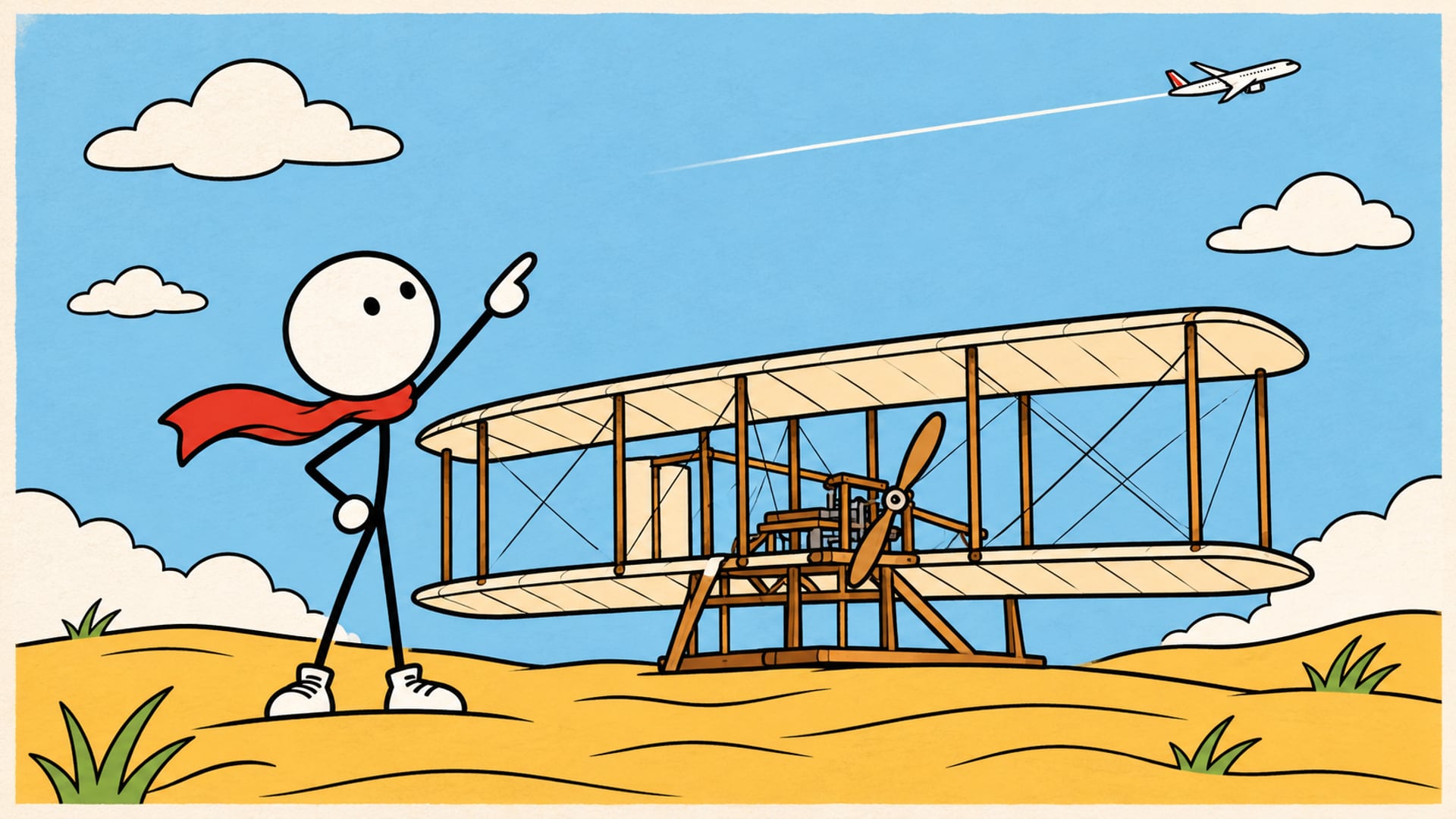
Why Is There a Hole in Airplane Windows?
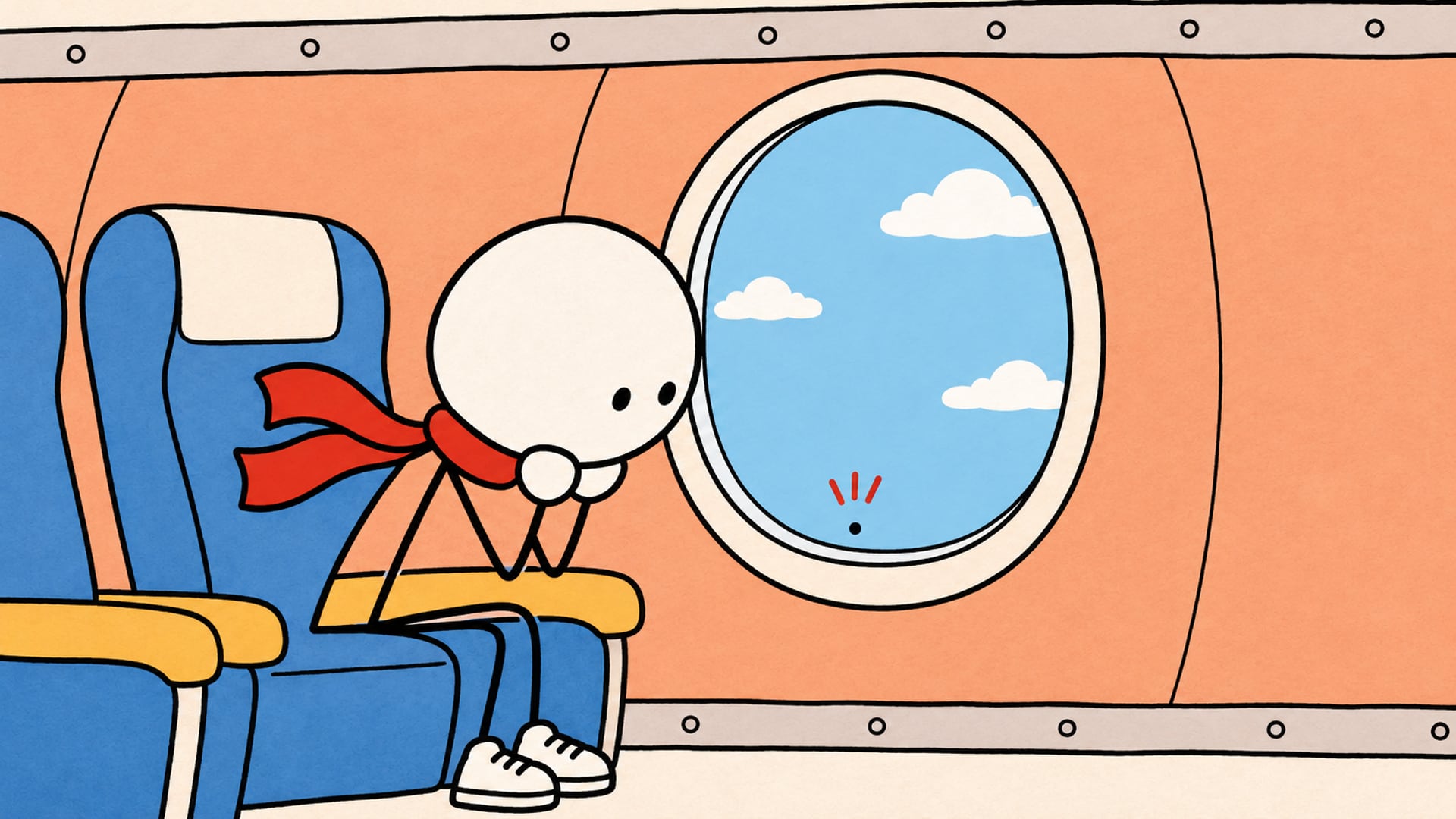
The small hole in an airplane window is a vent. It lets cabin air reach the space between the panes, which evens out the pressure there and leaves the outer structural pane to carry the normal load. It also lets moisture move through that space, which helps keep the panes from fogging or freezing.

In this explainer +
In 2008, something struck a passenger window on a US Airways Boeing 757, and the outer part of that window cracked.
The cabin stayed pressurized anyway. The NTSB's report on the incident says the middle pane carried the load, and the aircraft did not lose pressurization.
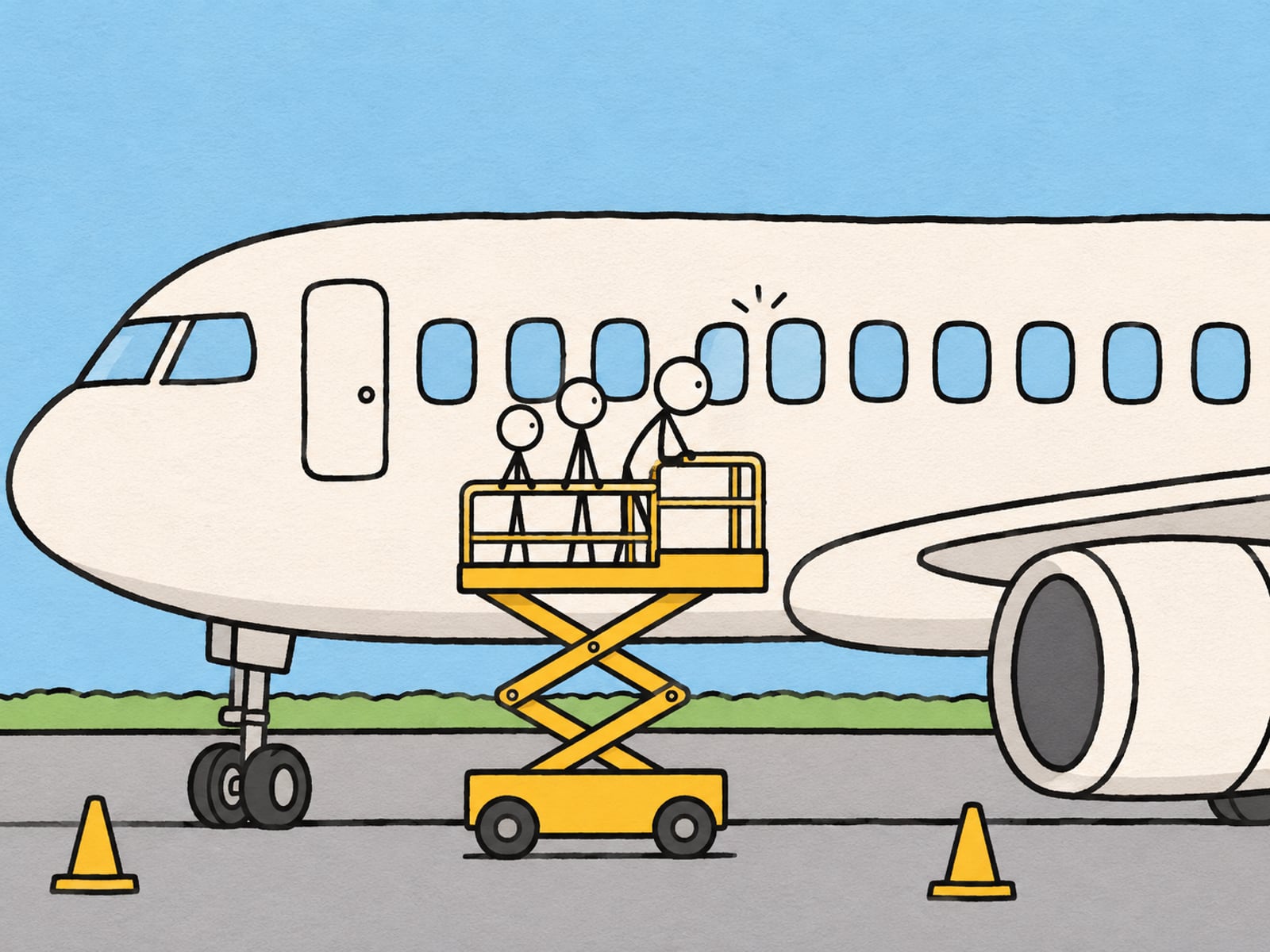
That middle pane had help from something you can spot from your seat: a tiny hole near the bottom of the window. It's a breather, also called a vent or bleed hole. It lets cabin air into the gap between the panes, so the outer structural pane carries the normal pressure load.
Pane names differ from one aircraft to the next. The hole is commonly described as sitting in the middle structural pane, while Airbus describes a comparable two-pane design with the vent on the inner pane. Either way, the job is the same.
What the hole actually does
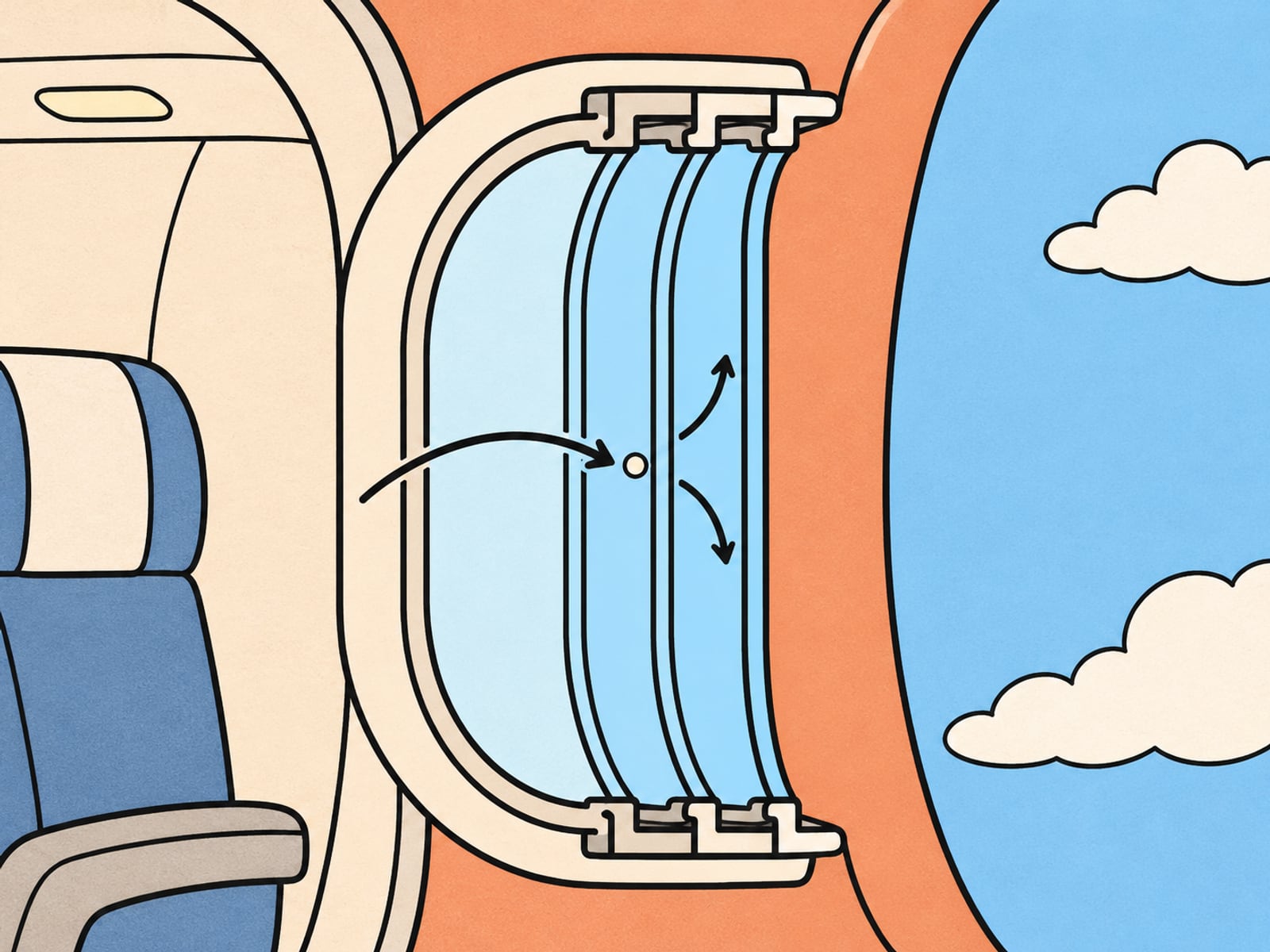
Start with the window you're looking through. A passenger window is not one sheet of plastic. A common arrangement has three panes: outer, middle, and inner. The FAA's inspection material for Boeing 707 and 720 passenger windows describes all three as acrylic.
Modern European guidance describes the usual construction a little differently: two structural panes, a main load-bearing pane and a fail-safe pane, plus an inner pane facing the passenger. EASA's CS-25 rules for large aeroplanes are where that description lives.
Now add the hole. Airbus Safety First says the vent lets cabin air into the space between the structural panes, so the pressure in that gap matches the cabin. With the pressure equalized, the outer pane sustains the loads. The vent also prevents the inner structural pane from going through the full pressurization cycle on every flight.
Think of it like this: two people lean on opposite sides of a door with the same force. The door barely feels it. The hole works on the same idea. Air on both sides of a pane means that pane isn't being asked to hold anything back, and the outer pane is left doing the heavy work.
In other words, the hole is not a leak. It is a pressure-sharing arrangement with a very small opening.
Three follow-up questions
The vent answers the question on your window seat. Three more come up right behind it, and they're worth answering before we get to what happens when a window fails.
1. What are the panes made of?
Passenger cabin windows are commonly made from stretched acrylic. Airbus describes its cabin panes as stretched acrylic, and the NTSB calls stretched acrylic durable for normal day-to-day service.
Flight-deck windows are a different build. They are usually laminated, with glass structural plies, interlayers, protective plies and heating elements. Airbus states that all of its cockpit windshields are glass, while some A320-family side windows can use glass or stretched acrylic. The exact mix varies by aircraft model and by window position.
2. Does the hole help with fog?
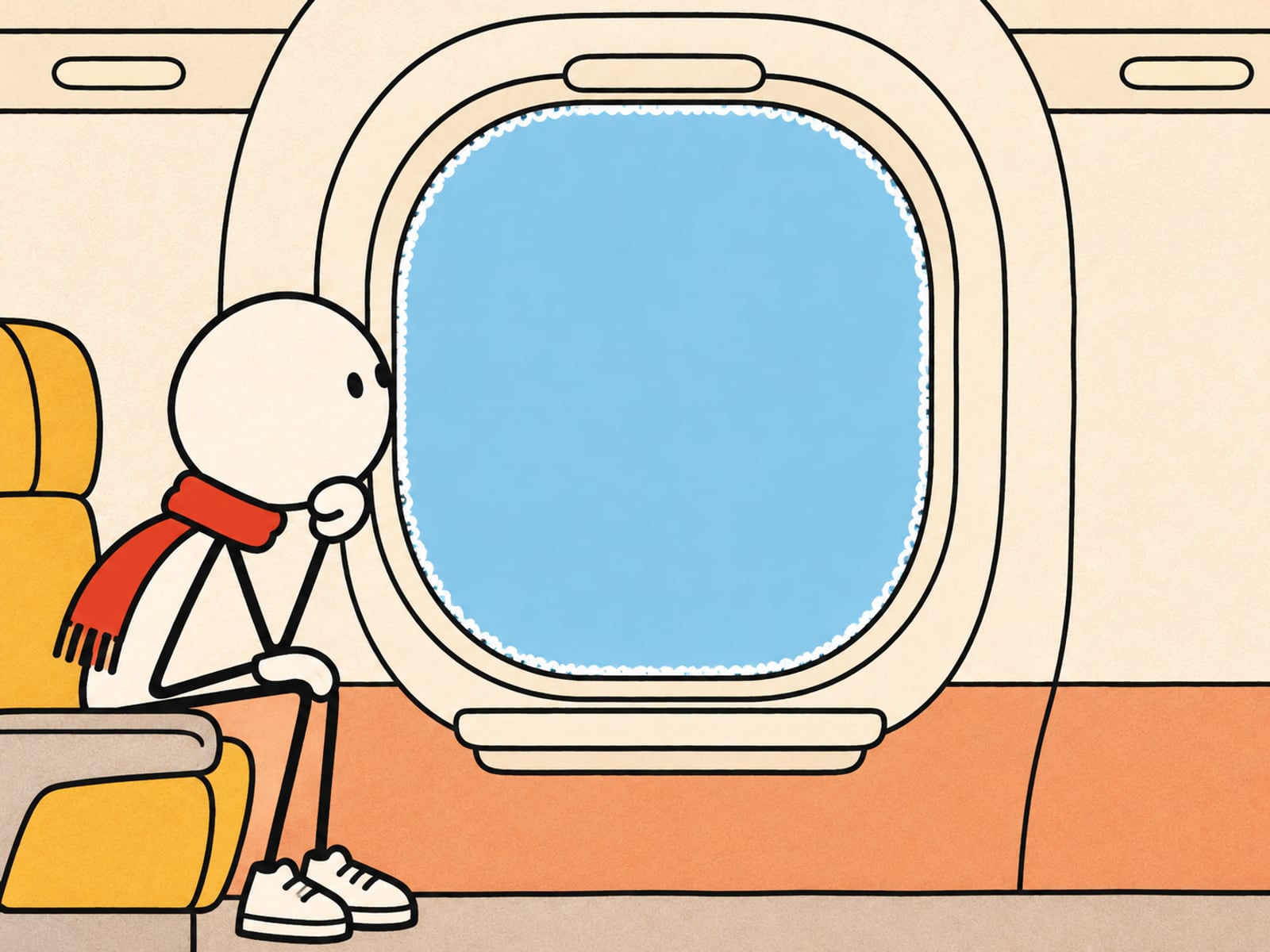
Yes, as a second job. The opening lets air and moisture move through the spacing between the panes, instead of trapping humid air in a sealed pocket. Spanish-language coverage from Europa Press and Clarín says this helps keep the panes from fogging or freezing.
Pressure comes first, though. The anti-fog effect is secondary. And the flight deck doesn't rely on the vent for clear glass: those windows have their own heating for anti-ice and anti-fog.
3. Is it the same outside the United States?
The same basic explanation shows up around the world. In Mexico, El Universal calls it an "agujero respirador," a breathing hole, and says it balances pressure and keeps the window clear.
In Spain, Europa Press describes three separated panels, with the outer and middle ones structural, and says the opening balances pressure. Clarín in Argentina says it helps equalize pressure and prevent fogging or freezing. The number and naming of panes vary by aircraft model.
When the outer pane cracks
Here is why the arrangement is worth the trouble. If the outer pane cracks or fails, the remaining structural pane is designed to carry the pressure load and keep the cabin pressurized. Airbus says each structural pane can independently sustain the maximum cabin differential pressure normally experienced in flight.
That is what happened on the 757 in 2008. An impact cracked only the outer portion of one passenger window, the middle pane carried the load, and the aircraft did not lose pressurization.
It is a good design, and it's not magic. Real cabin windows have failed, and investigators wrote down why.
On 25 April 2002, a right emergency-exit window on Air Labrador Flight 8300, a Beech 1900D, failed while the airplane was climbing out of Stephenville toward St. John's, Newfoundland and Labrador. The Transportation Safety Board of Canada found surface chip gouges deeper than the maintenance limit. It concluded the window probably failed because the outside surface had been excessively damaged, likely by debris thrown by the propeller.
On 17 April 2018, Southwest Airlines Flight 1380, a Boeing 737-700, lost a cabin window. The NTSB determined that fan-cowl fragments struck the fuselage near the window after an engine fan blade fractured. One passenger died and eight had minor injuries.
In both cases, investigators traced the failure to something hitting or damaging the window from the outside.
Why windows are round is a separate story, and it starts with the Comet crashes of 1954. That's a different question from this one.
The record
| Date | What happened | Source |
|---|---|---|
| 25 April 2002 | A right emergency-exit window on Air Labrador Flight 8300, a Beech 1900D, fails during climb from Stephenville | TSB Canada |
| 2008 | An impact cracks only the outer portion of a passenger window on a US Airways Boeing 757; the middle pane carries the load | NTSB |
| 17 April 2018 | A cabin window on Southwest Flight 1380, a Boeing 737-700, is lost after fan-cowl fragments strike the fuselage | NTSB |
Questions people ask
Why do airplane windows have several layers? 01
Each layer has its own job: pressure-bearing structure, a backup if the first pane fails, and a pane on the cabin side that faces the passenger and takes the scratches. The layers also add a gap that works as insulation.
Why does an airplane window sometimes look cloudy or cracked? 02
It depends on which part is affected. The mark may be on a cosmetic or protective pane, on an acrylic surface, on a structural pane, or in a window-heating system. The layers mean a mark on the pane nearest you isn't the same thing as damage to the pane carrying the load.
What happens if an airplane window breaks during flight? 03
It depends on which pane failed, whether the remaining fail-safe pane stays intact, and whether an outside object damaged the fuselage or the window assembly. When only the outer pane cracks, as on the 2008 757, the remaining structural pane keeps the cabin pressurized.
Why must airplane windows be heated? 04
Heat keeps ice and fog off the glass, and it matters most on the flight deck, where the crew's view out has to stay clear. Flight-deck windows have heating elements for exactly that. In the passenger cabin, the vent lets moisture move through the gap between panes, which helps with fogging and freezing.
A small hole with one main job
The hole is small and has one main job: to let the pressure settle between the panes so the outer pane can do the work. The fog help is a bonus.
Next time you're at the window, find it. It's near the bottom of the pane, easy to miss, and it's the reason a cracked outer pane can be a story with a quiet ending.
The hole lets the pressure settle between the panes, so the outer pane does the work.
Sources

- NTSB, US Airways Boeing 757 incident report
- Airbus Safety First, "Under the Spotlights"
- EASA, Easy Access Rules for Large Aeroplanes (CS-25)
- FAA, Advisory Circular AC 20-76
- Airbus Safety First, "Use of Non-Certified Equipment on Cockpit Windows"
- Europa Press, "Un pasajero 'abre' la ventanilla de un avión en pleno vuelo"
- Clarín, "¿Por qué las ventanillas de los aviones tienen un agujero?"
- El Universal, "¿Para qué sirve ese agujerito en la ventana del avión?"
- Cadena SER, on the small hole in airplane windows
- Transportation Safety Board of Canada, Air Labrador Flight 8300, report A02A0046
- NTSB, Southwest Airlines Flight 1380 findings