Why Is the Leaning Tower of Pisa Leaning?
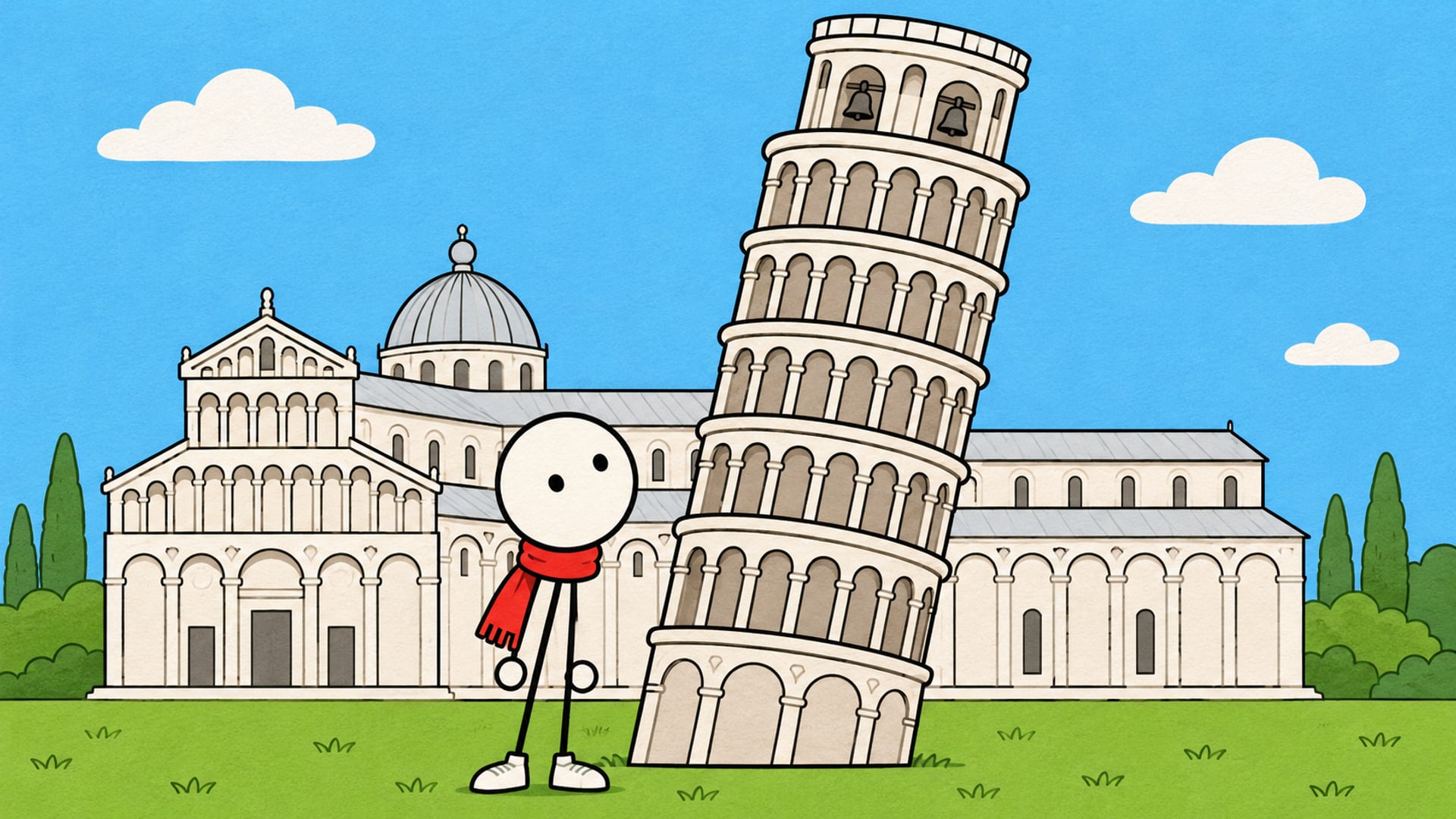
The Leaning Tower of Pisa leans because it stands on soft, highly compressible ground, and the south side settled more than the north. It has not fallen because its center of gravity stays inside the perimeter of its base. Engineers in 1990 to 2001 reduced the lean, but they did not remove it.

In this explainer +
Stand in the Piazza del Duomo in Pisa and tip your head back at the bell tower. The top hangs out past the bottom, and you can see it without a ruler.
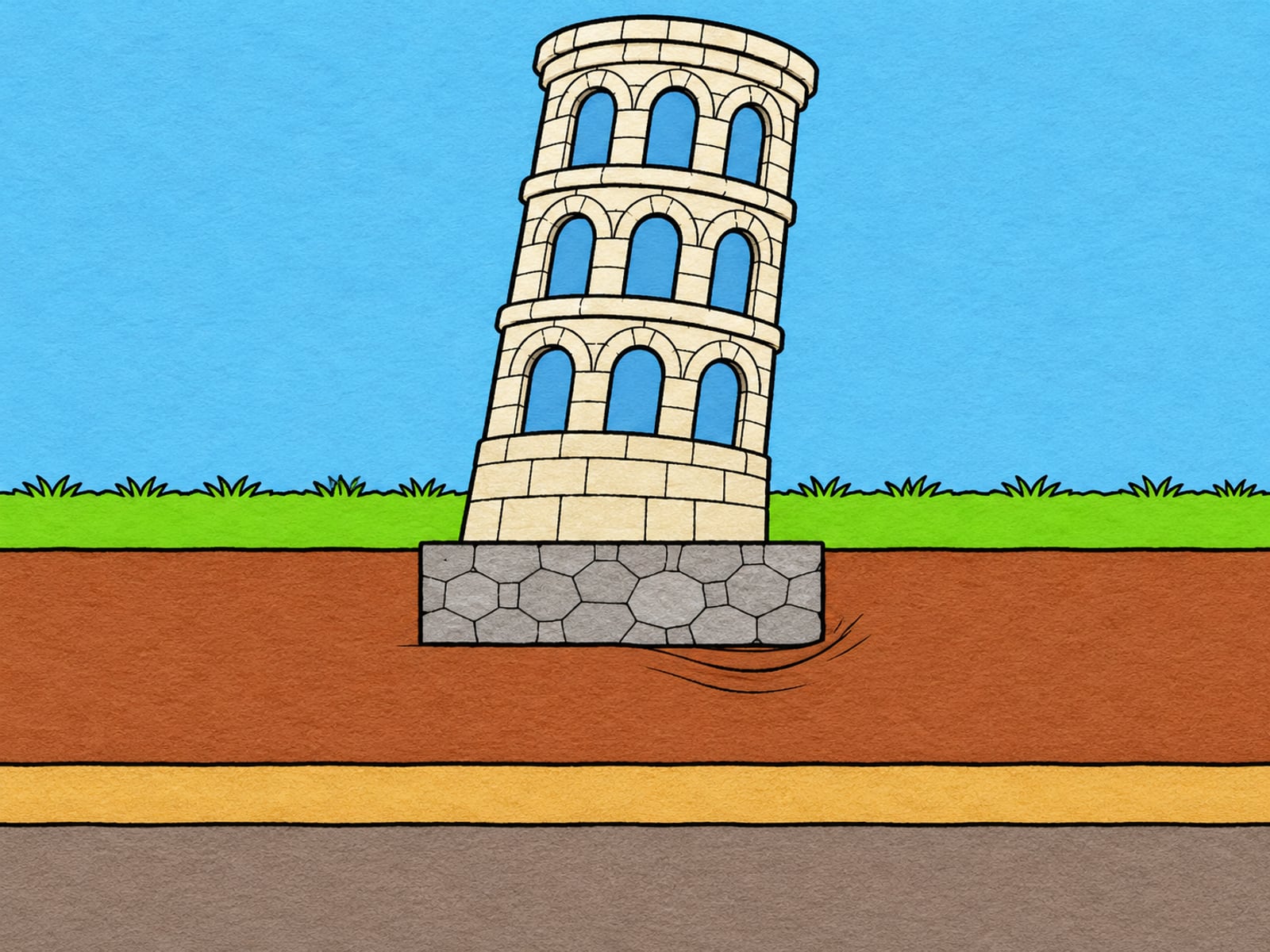
Now look down to where it meets the ground. Nothing props it up from the side. Under its stone foundation is soft soil, and below that is a layer of very soft marine clay about 40 metres deep.
So, how does a building this heavy stay up at an angle? The tower leans because that ground is weak and squashy, and one side sank more than the other. It has not fallen because its center of gravity still sits inside its base, although it is close to its stability limit, according to Ingenia.
The rest is how the lean got started, why it grew, and how engineers finally slowed it down.
The ground under the tower
Construction began on 9 August 1173, when the tower was started as the bell tower of Pisa Cathedral. Diotisalvi was probably the first works director.
The builders gave it a masonry foundation about 19.6 metres wide and only about 5.5 metres deep. That is shallow for a stone tower that would take nearly two centuries to finish.
The ground was the real trouble. The top layer is soft silts, sands and clays laid down in shallow water. Below it lies very soft marine clay, down to about 40 metres, and only then dense sand.
Think of it like this: a stack of books on a soft sponge. Press down and the sponge squashes more on one side. The stack tips toward the low side, and the more it tips, the more of the weight lands on that low side. In other words, a small tilt feeds itself.
That is close to what happened in Pisa. The clay under the tower compressed under the load, and because the ground was not equally strong everywhere, one side settled more than the other. The tower rotated instead of sinking straight down.
Two centuries of stop and start
The lean showed up early. By about 1178, with work partway through the fourth storey, the tower was already leaning. It first leaned north, and as building went on the direction turned south.
Work stopped after the third ring, as the foundation began to subside, according to PBS NOVA. The pause lasted nearly a century. The cause of that stop is uncertain.
Work picked up again around 1272 to 1275 under Giovanni di Simone and Giovanni Pisano. They built the upper levels with slight corrections opposite the lean. Around 1278, at the seventh level, work stopped a second time. The cause is uncertain, and it may have been military events.
The bell chamber went up around 1360 and was finished around 1370, nearly two centuries after the first stone.
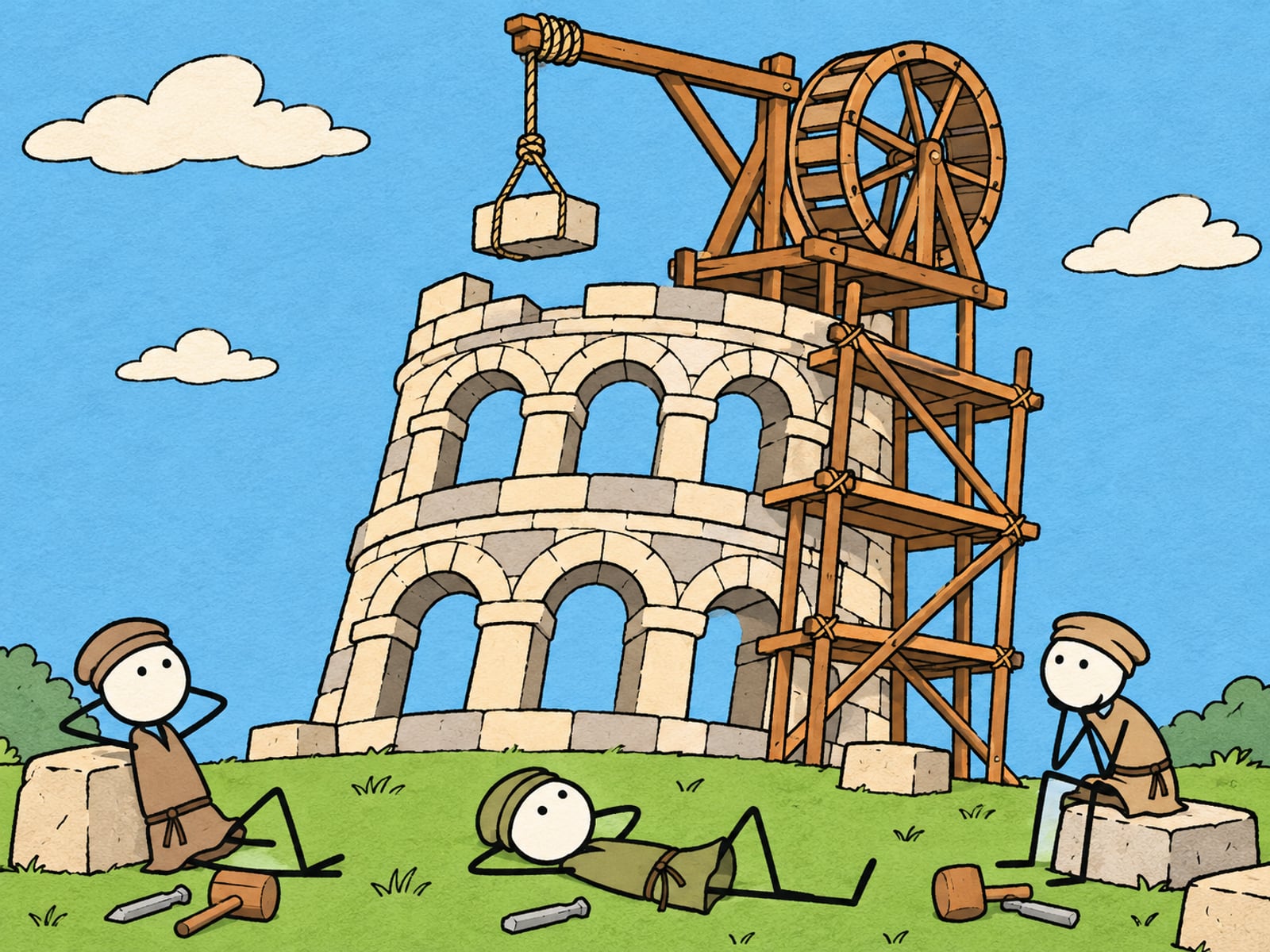
Those long pauses did something useful. While nothing new was added, the weight already on the clay squeezed it and made it stronger, a process engineers call consolidation. Then the builders added more load. The pauses did not straighten anything. They slowed the failure and kept the full weight from landing while the clay was at its weakest.
How far did it lean?
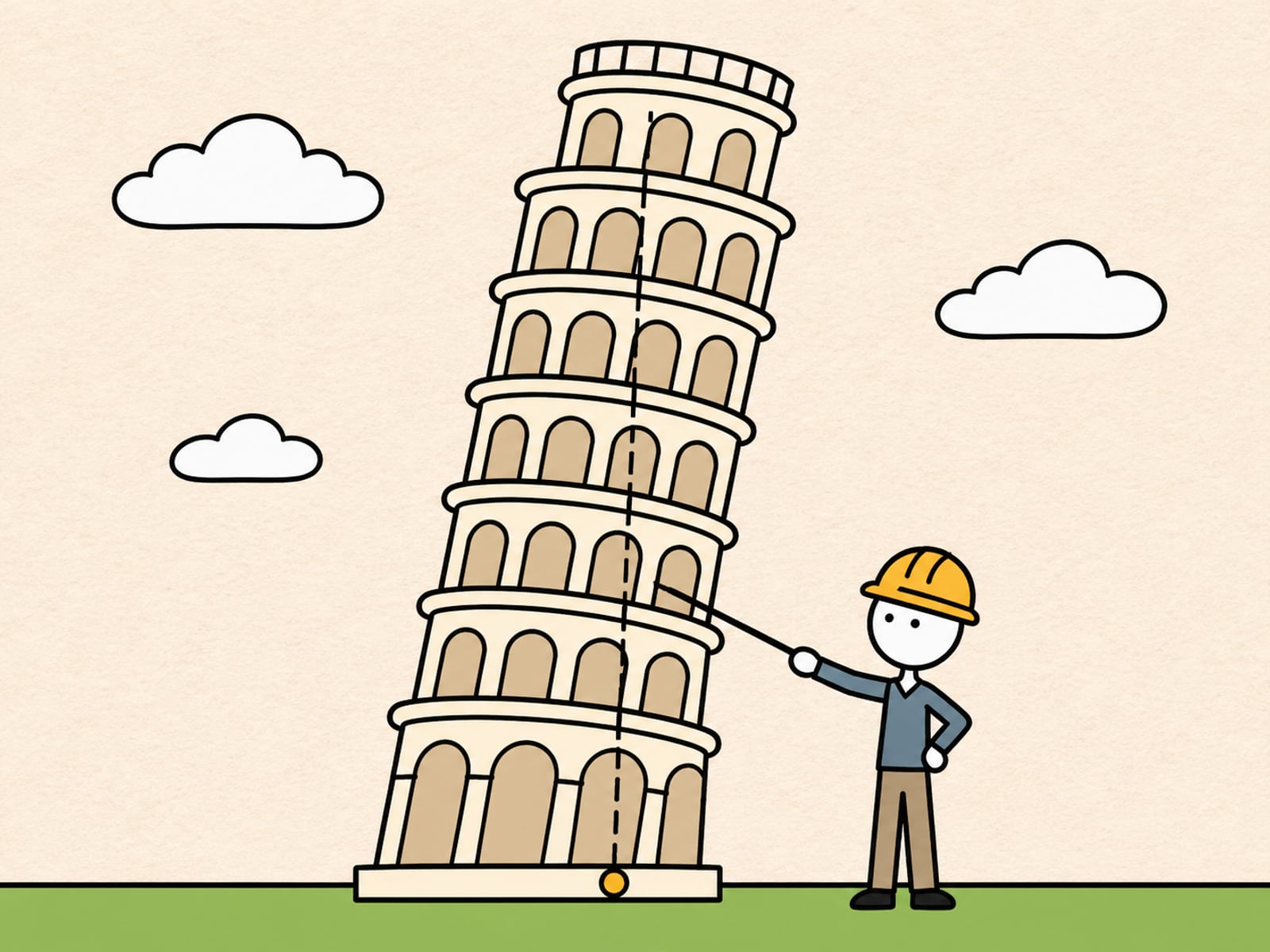
The south side kept settling more than the north, which moved the tower's center of gravity toward the edge of its foundation. The measurements climb through the centuries:
- About 0.6 degrees by 1278
- About 1.6 degrees by 1360
- About 5 degrees in a measurement from 1817
Here is why it stands at all. A tower falls when its center of gravity moves outside the perimeter of its base. Pisa's has not. The structure is close to its stability limit, as Ingenia puts it, but the masonry and foundation still produce a restoring effect.
"Close to the limit" is the part to remember. By 1990, the tower was in real trouble.
The rescue of 1990 to 2001
In 1990 the tower closed to visitors because its foundation had become dangerously unstable. An international committee studied the structure and the soil, with John Burland of Imperial College London as a leading soil-mechanics expert.
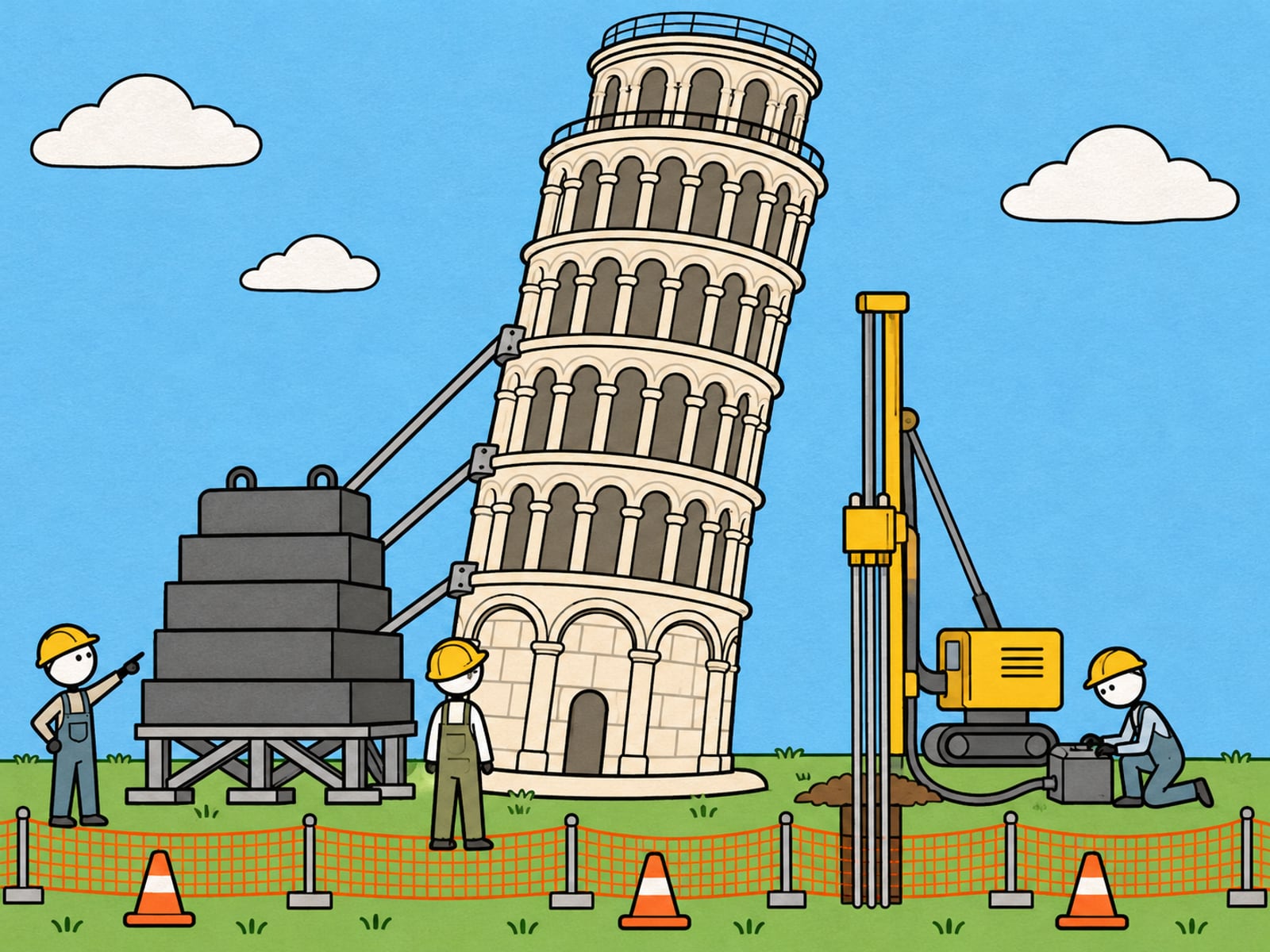
The fix came in steps. In 1993, engineers placed 600 tonnes of removable lead weights on the north side. Then came the clever part. From December 1999 to January 2000, they installed 41 extraction holes under the north side and removed about 120 litres of soil. The ground there settled slightly, the north side came down, and the lean eased.
Engineers also strengthened vulnerable masonry and reinforced the foundation ring, and the temporary lead was removed. The last extraction ended on 6 June 2001.
The lean dropped by about half a degree. Imperial College London reported that as approximately 45 centimetres, and the tower returned to roughly its 1838 position. It still leans, just less.
The record
| Date | What happened | Source |
|---|---|---|
| 9 August 1173 | Construction begins on the bell tower of Pisa Cathedral | Pisa Tourism |
| About 1178 | Work stops after the third ring as the foundation begins to subside; the tower already leans | PBS NOVA |
| About 1272 to 1275 | Work resumes under Giovanni di Simone and Giovanni Pisano | Pisa Tourism |
| About 1360 to 1370 | The bell chamber is added and finished | Ingenia |
| 1817 | A measurement records a lean of about 5 degrees | Ingenia |
| 1990 | The tower closes to visitors because its foundation is dangerously unstable | Ingenia |
| 1993 | 600 tonnes of removable lead weights go on the north side | Ingenia |
| December 1999 to January 2000 | 41 extraction holes are installed; about 120 litres of soil are removed | Ingenia |
| 6 June 2001 | The last soil extraction ends; the lean is down by about half a degree | Imperial College London |
Questions people ask
A few follow-ups come up every time someone looks at that tilt.
Why hasn't the Leaning Tower of Pisa fallen? 01
Its center of gravity stays inside the perimeter of its base. The masonry is strong enough to hold together, and the 1990 to 2001 work reduced the lean by about half a degree.
Why did the tower start leaning so soon after construction began? 02
The foundation is shallow, about 5.5 metres, and it sits on weak soil that does not compress evenly. With one side softer, the tower was leaning by about 1178, while work was still in the fourth storey.
Why did construction take nearly two centuries? 03
Building stopped twice for long stretches, once around 1178 and again around 1278. The second pause may have been tied to military events, though the cause is uncertain. The waiting gave the clay time to consolidate before more weight arrived.
Did Galileo really drop balls from the tower? 04
It is a famous anecdote, not a confirmed event. The story comes from a biography by his pupil Vincenzo Viviani, written decades after the supposed drop, according to Paolo Palmieri of the University of Pittsburgh. Galileo himself does not describe it. He did study falling bodies, using balls rolling down inclined planes. Nature has published a look at the tower story.
Where the lean really comes from
A tilt you can see from across a square makes it easy to look for a dramatic cause. This one is ordinary and underground: soft clay, a shallow foundation and a long wait while the ground slowly took the load.
The engineers who worked on it from 1990 to 2001 reduced the lean without removing it, and the tower went back to roughly where it stood in 1838.
The tower leans because of the soil beneath it, and it stands because its center of gravity still falls inside its base.
Sources

- Pisa Tourism, "Piazza del Duomo, Pisa, The Leaning Tower"
- Ingenia, "The stabilisation of the Leaning Tower of Pisa"
- PBS NOVA, "History of Interventions"
- Imperial College London, "Prof. who helped save Leaning Tower of Pisa returns to Italy"
- Paolo Palmieri, University of Pittsburgh, "Did Galileo ever think the most beautiful thought experiment in the history of science?"
- Nature, R. T. Gunther, "Galileo and the Leaning Tower of Pisa"