Who Invented Christmas?
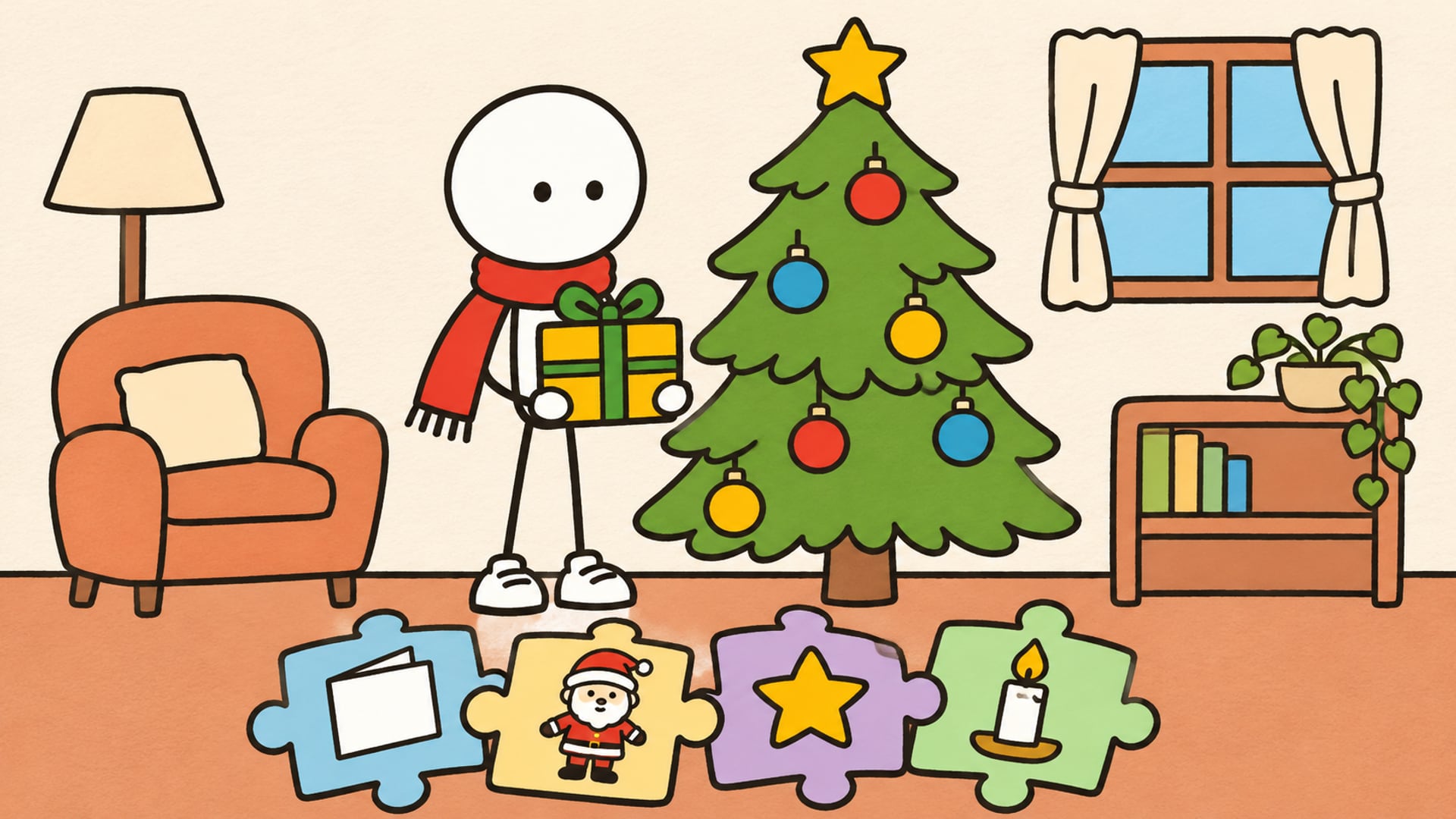
No one person invented Christmas. The December 25 date shows up in a Roman calendar from AD 354, the card came from Sir Henry Cole in 1843, the tree reached British homes through Prince Albert, and Santa Claus was assembled from Saint Nicholas, Dutch settlers in New York, a poem and a cartoonist.

In this explainer +
"The man who invented Christmas."
That phrase gets pinned on Charles Dickens, and it's easy to see why. On 19 December 1843, in London, he published a short book called A Christmas Carol, in which a miser named Ebenezer Scrooge gets visits from four ghosts.
Still, no single person invented Christmas. Its date, its customs and its modern figures each came from different people, over many centuries. Dickens gave the holiday a story. Other people gave it a day, a tree, a card and a man in a red suit.
Now for who did what, and when.
The date came from Rome
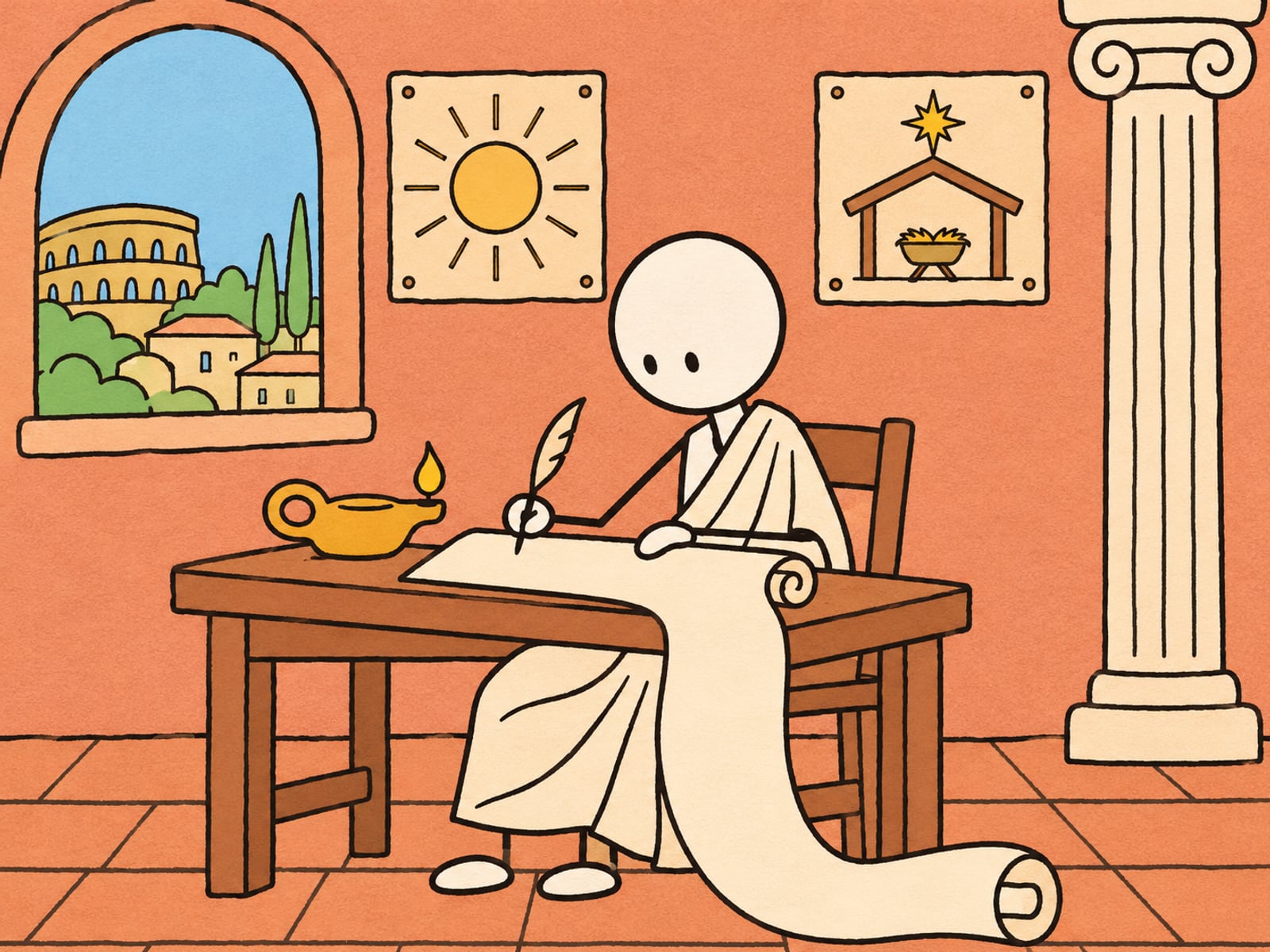
The earliest surviving record of Christmas on December 25 is the Chronography of 354, a Roman calendar compiled in AD 354. Its list of Christian martyrs states that Christ was born in Bethlehem on December 25.
A Roman church list sitting underneath that calendar may preserve a tradition from about AD 336. In other words, there may be a Christmas in Rome some eighteen years before the earliest written proof of one.
Why that day? Historians give several explanations, and they don't all point the same way.
Some early Christian writers counted from March 25, the day they linked to the Annunciation, when Mary was told she would have a child. Count nine months forward and you land on December 25.
The same calendar also lists December 25 as the birthday of "Invictus." Many historians link that name to the Roman sun god Sol Invictus, and some argue Christmas was set there to compete with a Roman sun festival. The sun-festival link is debated, and the surviving evidence does not establish which festival came first. The University of Chicago's Encyclopaedia Romana has an entry on Sol Invictus and Christmas.
Some eastern Christians put the weight on January 6 instead, the Epiphany, as one combined celebration of Christ's birth and baptism. Writers at BYU Studies lay out the dating arguments in more detail.
December also comes right after the winter solstice, when daylight starts to grow again. Christian writers could read that as light returning to the world.
One date, several roads to it. That's still the honest answer.
When Christmas was against the law
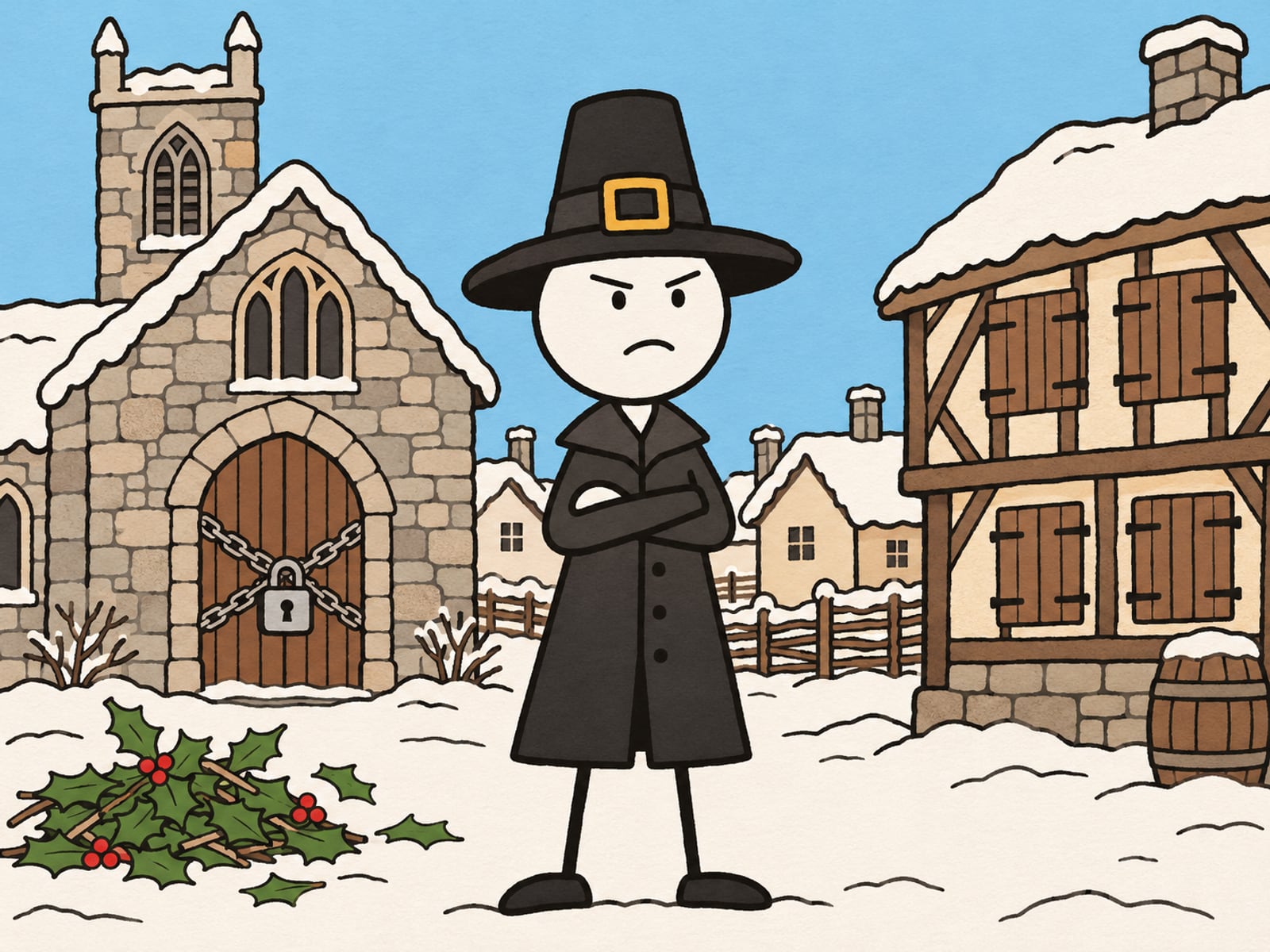
Fast forward more than a thousand years, and Christmas was a Christian feast with feasting, entertainment and plenty of drinking attached. English Puritans objected. It wasn't commanded in the Bible, they said, and it came with disorder and excess.
So, Parliament acted. A December 1644 ordinance confirmed the abolition of Christmas, Easter and Whitsun. Then Parliament's January 1645 Directory for Public Worship treated Christmas as a day for solemn contemplation, not celebration. According to Historic England, Christmas stayed officially illegal until the Restoration of 1660.
Oliver Cromwell, who ruled from 1653 to 1658, gets the blame in a lot of retellings. He did not personally originate the ban, though restrictive measures continued under him.
Across the Atlantic, Massachusetts did the same. In 1659 the General Court made public Christmas observance punishable by a five-shilling fine. The ban was repealed in 1681, and the Massachusetts Secretary of State's Commonwealth Museum tells the story. Christmas did not become a US federal holiday until 1870.
A holiday that was fined, banned and ignored for decades is not one person's invention. It's something people kept putting back.
Victorian Britain: a story, a card and a tree
Back to London, 1843. A Christmas Carol was an immediate success, with seven printings by May 1844. Scrooge turns from a miser into a generous employer and family benefactor, and the book tied Christmas to family gatherings, kindness toward poor people, children, food and games.
It also helped popularize the words "Merry Christmas," according to Duke University Libraries. But the customs weren't Dickens's. He gave a revived Victorian holiday a story about generosity and family. That's a big job, just not the same job as inventing it.
The same year, Sir Henry Cole, a British civil servant and a founding director of the Victoria and Albert Museum, commissioned the first commercial Christmas card. Artist John Callcott Horsley designed it, and Cole ordered 1,000 copies, sold at one shilling each, which the V&A describes in its history of the card. The card showed three generations of Cole's family raising a toast, with scenes of charitable giving around the edges. Hint: it was an expensive card that sold poorly at first. Cheaper printing and postage later turned it into a habit.
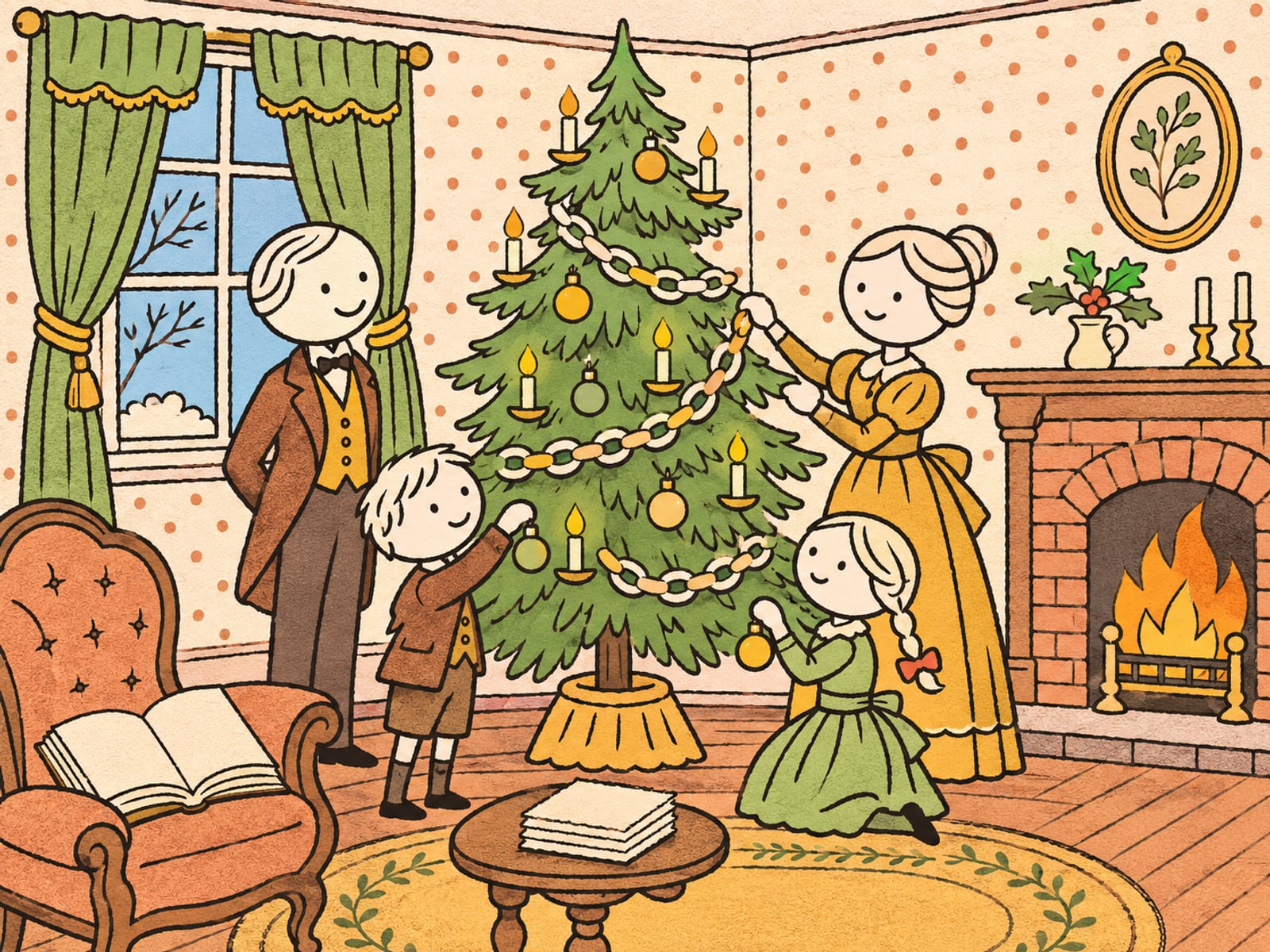
Then there's the tree. The decorated Christmas tree grew out of German-speaking Europe. Prince Albert, born in Coburg, Germany, brought the custom into the British royal household after marrying Queen Victoria in 1840. In 1848 the Illustrated London News printed an image of the royal family around their tree, and, as the Royal Collection Trust describes it, the widely circulated image helped make trees fashionable in British homes.
Santa Claus was built in New York
Santa has more parents than anyone else on the list.
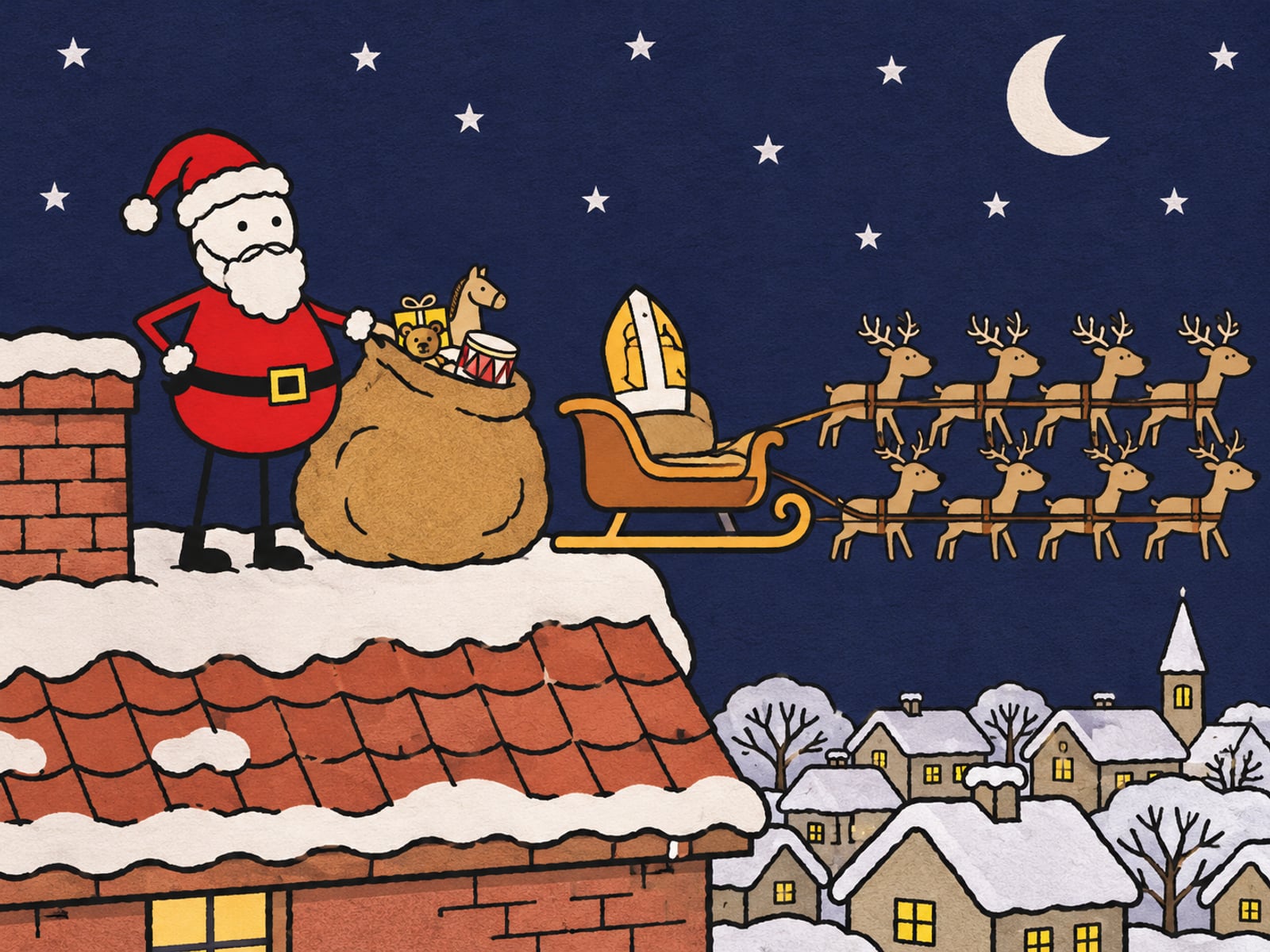
Start with Saint Nicholas, a Christian bishop remembered for generosity toward children, whose feast day is 6 December. Dutch immigrants in New York kept the name and customs of Sinterklaas, the Dutch form of the saint. In 1809 Washington Irving described a flying Saint Nicholas wagon in his A History of New York.
Then came a poem. "A Visit from St. Nicholas" was first published anonymously in the Troy Sentinel on 23 December 1823. Clement Clarke Moore later claimed it, although the Livingston family disputed that. The poem supplied the sleigh, the eight reindeer, the chimney, the toys, the pipe and the cheerful personality.
The last big piece was visual. Thomas Nast drew Santa for Harper's Weekly from 1862, and his later pictures supplied or popularized the North Pole, the workshop, the red clothing and the full-sized look. The Library of Congress has a look at the Santas people drew before him.
Saint, settlers, writer, poet, cartoonist. No single name on that list owns him.
The same date, many customs
Outside the United States, December 25 is common in western Christian traditions, but the rest of the season looks different.
In Mexico, nine nights of Las Posadas run from 16 to 24 December, with Three Kings' Day on 6 January. In Spain, families celebrate Nochebuena on 24 December, and the Three Kings bring children's presents on the night of 5 to 6 January. In Catalonia, the pessebre nativity scene and the caga tió, a Christmas log, are part of the season.
The record
| Date | What happened | Source |
|---|---|---|
| AD 354 | A Roman calendar lists December 25 as the day Christ was born in Bethlehem | Chronograph of 354 |
| January 1645 | Parliament's Directory for Public Worship treats Christmas as a day of solemn contemplation | Historic England |
| 1659 | Massachusetts makes public Christmas observance punishable by a five-shilling fine | Massachusetts Secretary of State |
| 23 December 1823 | "A Visit from St. Nicholas" appears anonymously in the Troy Sentinel | Library of Congress |
| 1843 | Sir Henry Cole commissions the first commercial Christmas card, 1,000 copies | Victoria and Albert Museum |
| 19 December 1843 | Charles Dickens publishes A Christmas Carol in London | Duke University Libraries |
| 1848 | The Illustrated London News prints the royal family around their tree | Royal Collection Trust |
| 1862 | Thomas Nast begins drawing Santa for Harper's Weekly | Library of Congress |
| 1870 | Christmas becomes a US federal holiday | Massachusetts Secretary of State |
Questions people ask
Why do people put up Christmas trees? 01
The decorated tree comes from German-speaking European customs. Prince Albert brought it into the British royal household, where trees at Windsor Castle carried candles and gifts. The royal couple also supplied trees for staff, schools and army barracks, and by Queen Victoria's death in 1901 trees were familiar across Britain.
Why does Santa Claus bring presents? 02
Saint Nicholas was remembered for generosity toward children, and that reputation carried into the Santa story. The 1823 poem then added the sleigh, the reindeer and the toys. Nast's drawings did the rest, with the workshop and the North Pole.
Why do people exchange Christmas cards? 03
It began with Henry Cole's 1843 card, which was expensive and sold slowly at first. Cheaper printing and postage later turned cards into a major Victorian custom, and that is how a one-shilling item became an annual routine.
Why do people say "Merry Christmas"? 04
The greeting was already part of older English use, and A Christmas Carol helped popularize it after 1843. The book was a hit, and readers met the words in a story about generosity.
Built in pieces
The Christmas most people know took its modern shape in Victorian Britain and in New York. A Roman calendar gave it a date, Puritans tried to take it away, and a Victorian author, a civil servant, a German-born prince, a poet and a cartoonist added the rest.
So, the question has many answers, which is a better deal than one.
Christmas was built in pieces, a date, a tree, a card and a Santa, by different people in different centuries.
Sources

- Chronograph of 354, Wikipedia
- University of Chicago, "Sol Invictus and Christmas"
- BYU Studies, "Dating the Birth of Christ"
- Historic England, "Did Oliver Cromwell Really Ban Christmas?"
- Massachusetts Secretary of State, "Christmas Comes to Massachusetts"
- Duke University Libraries, "Christmas and Consumerism"
- Victoria and Albert Museum, "The first Christmas card"
- Royal Collection Trust, "Royal Christmas Trees"
- Library of Congress, "A Visit from Santa...Who You Might Not Recognize"
- Gobierno de México, "Navidad Mexicana"
- Spain Tourism, "Navidad en España"
- Gran Enciclopèdia Catalana, "Nadal"