Why Do We Have Daylight Saving Time?
Daylight saving time began as a coal-saving measure in World War I. Germany adopted it in April 1916, and Britain followed that year, after proposals by George Vernon Hudson in 1895 and William Willett in 1907. Today each country decides by its own law whether to keep it.

In this explainer +
We change the clocks because, in April 1916, Germany tried to save coal in the middle of World War I. Britain followed within weeks, and the idea spread from there.
Here is the route we'll take. First, a joke from 1784 that gets credit it never earned. Then the two men who actually proposed moving the clocks. Then the wartime laws that turned a curious idea into a rule.
It's a short trip, and it ends with the reason some countries still change their clocks while others have stopped.
A joke from Paris, 1784
Benjamin Franklin is the first name many people reach for here. The record shows a joke.
On 26 April 1784, an anonymous letter appeared in the Journal de Paris. The Library of Congress's Inside Adams blog describes it as a satire. The writer suggested that Parisians wake at sunrise, use sunlight instead of candles, restrict nighttime activity, and tax or regulate shutters and candles.
The target was people who slept through bright mornings and then complained about what candles cost. It was a wink at the habits of a city, not a plan to move a clock. In other words, Franklin was teasing people about their sleep, and nobody was proposing a time change.
Nothing came of it. The real proposals showed up more than a century later.

Two men and an evening of daylight
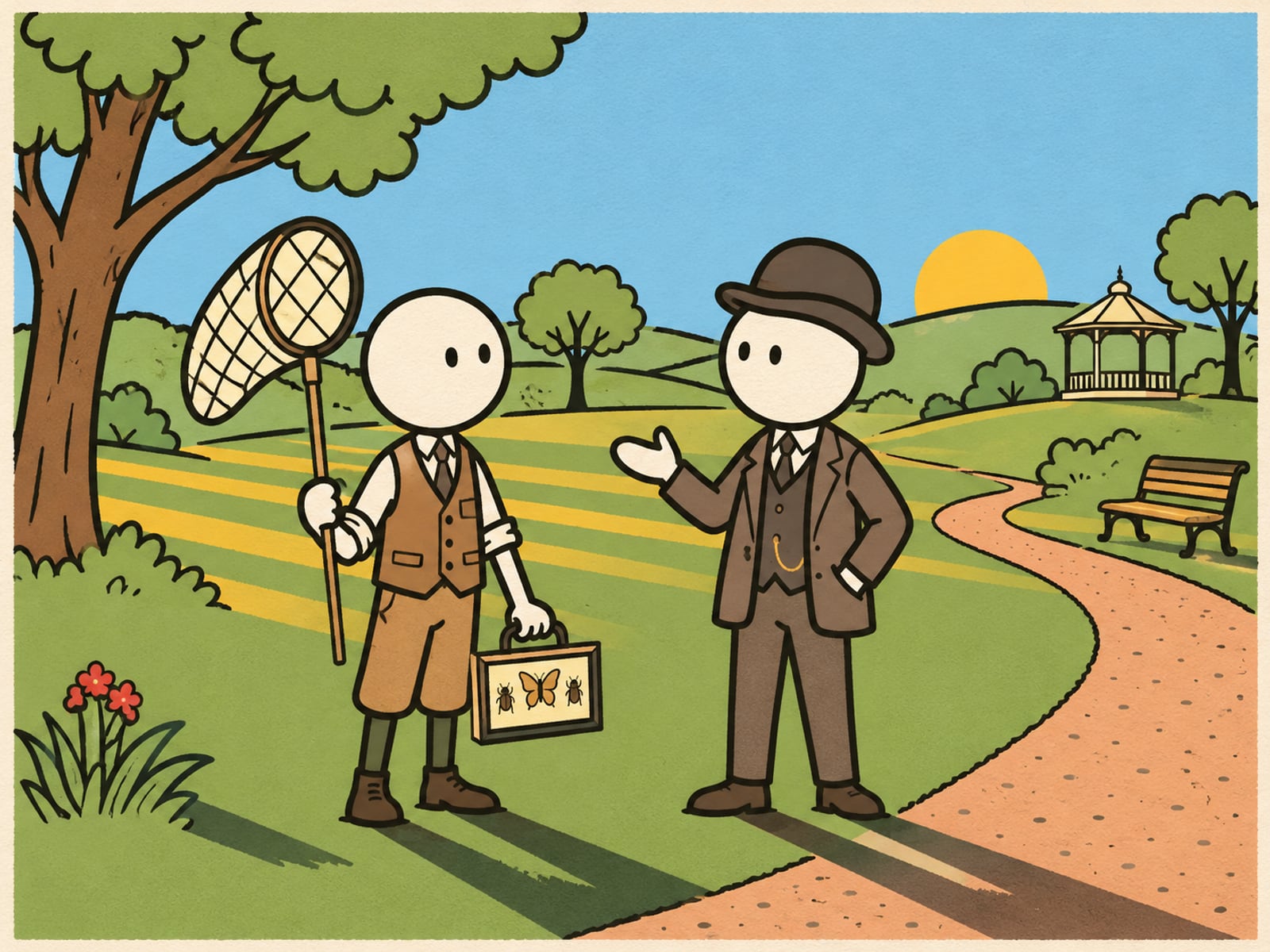
The first came from the far side of the world. George Vernon Hudson was an entomologist in New Zealand, and his job left him daylight for collecting insects only after work. In 1895 he proposed to the Wellington Philosophical Society that clocks move forward by two hours in summer and return in winter. According to the New Zealand Department of Internal Affairs, the idea was initially ridiculed and not adopted.
Twelve years later, a British builder named William Willett tried a gentler version. His 1907 pamphlet, The Waste of Daylight, proposed advancing clocks in small steps, until spring and summer carried 80 extra minutes of evening daylight. He argued for recreation, outdoor activity, and less artificial lighting.
Willett's idea got a hearing. The UK Parliament's briefing on British Summer Time notes that his proposal was debated in Britain. Debated is not the same as adopted, though. Neither man immediately created a national system.
It took a war.
Coal, 1916
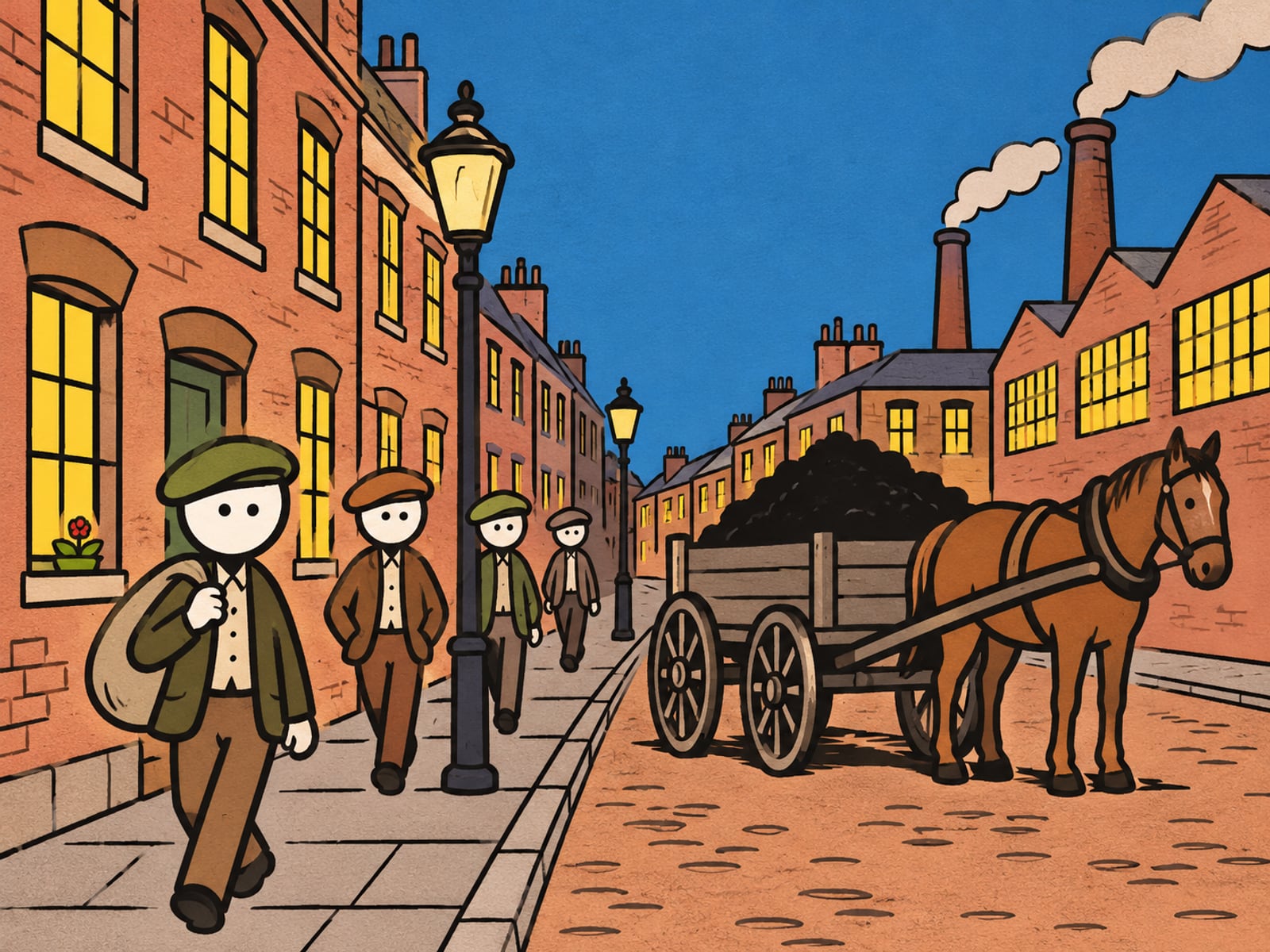
In April 1916, Germany introduced daylight saving time. The purpose was to conserve coal by cutting the need for artificial lighting. An hour of daylight moved to the evening meant fewer lamps burning when people were awake.
Britain followed. The Summer Time Act received royal assent on 17 May 1916, and the text of the Act is still online. The first British summer-time period ran from 21 May to 1 October 1916.
The reason matters, because another reason gets repeated. The British parliamentary record gives coal conservation as the wartime reason. Farmers, the group often named as the force behind the change, were among those who objected to moving the clocks.
Hint: if a story about clock changes starts in a field, it is probably not the 1916 story.
The United States joined in 1918. The Standard Time Act became law on 19 March 1918, and the first nationwide change took effect on 31 March 1918, according to the Library of Congress's daylight saving timeline. The law was tied to the wartime effort to save fuel.
From a war measure to a calendar rule
Wartime measures usually end with the war. This one turned into a habit, and each country wrote its own version.
In the United States, the Uniform Time Act of 1966 set up the federal system. States that observe daylight saving time follow the federal start and end dates, according to the U.S. Department of Transportation. A state may opt out by state law, but it may not choose permanent daylight saving time without an act of Congress.
Then the dates moved. Under the Energy Policy Act of 2005, starting in 2007 clocks go forward on the second Sunday in March, not the first Sunday in April. They go back on the first Sunday in November, not the last Sunday in October.
Some places never joined. The National Institute of Standards and Technology notes that Hawaii and most of Arizona do not observe it, and neither do the territories of American Samoa, Guam, the Northern Mariana Islands, Puerto Rico and the U.S. Virgin Islands.
Abroad, the paths split. Mexico's Law of Time Zones took effect on 30 October 2022 and ended the nationwide seasonal change. The law as published keeps seasonal time only in specified northern-border states and municipalities. Spain still advances clocks on the last Sunday of March and returns them on the last Sunday of October under Royal Decree 236/2002.

The record
| Date | What happened | Source |
|---|---|---|
| 26 April 1784 | An anonymous satirical letter about waking at sunrise appears in the Journal de Paris | Library of Congress |
| 1895 | George Vernon Hudson proposes a two-hour summer shift to the Wellington Philosophical Society | NZ Department of Internal Affairs |
| 1907 | William Willett publishes The Waste of Daylight | Willett's pamphlet |
| April 1916 | Germany introduces daylight saving time to conserve coal | UK Parliament |
| 17 May 1916 | The UK Summer Time Act receives royal assent | UK Summer Time Act 1916 |
| 19 March 1918 | The U.S. Standard Time Act becomes law | Library of Congress |
| 31 March 1918 | The first nationwide U.S. clock change | Library of Congress |
| 1966 | The Uniform Time Act sets federal start and end dates | U.S. Department of Transportation |
| 2007 | Energy Policy Act dates take effect: second Sunday in March to first Sunday in November | Energy Policy Act of 2005 |
| 30 October 2022 | Mexico's Law of Time Zones ends the nationwide seasonal change | Diario Oficial |
Questions people ask
Who invented daylight saving time? 01
No single person did. Franklin's 1784 essay was a joke, while Hudson proposed the idea in 1895 and Willett promoted it in 1907. Germany was the first to put it into law, in April 1916.
Why do we move the clocks forward in spring? 02
The spring change moves an hour of daylight from the early morning to the evening. Clocks say it is later, so the sun seems to set an hour later by the clock.
Does daylight saving time really save energy? 03
It depends on the country, the date, and how people use light, heating, cooling and transport. Mexico's lawmakers pointed to an estimated 2021 saving of 537 gigawatt-hours, equal to 0.16 percent of national electricity consumption, according to the Mexican Chamber of Deputies record. They also said the savings had fallen below 1 percent of annual consumption over the period discussed.
Why do some places not use it? 04
Local law decides, along with latitude, sunrise and sunset patterns, economic coordination and public preferences. Mexico's legislative case for ending it also cited public opposition and claimed effects on health and daily life, as well as the declining energy benefit.
Who decides your clock
The clocks still change in some countries and not in others, and the reason is not the sun. It is the statute book.
Germany's 1916 coal measure became Britain's Summer Time Act, then America's Standard Time Act, then a federal system with its own dates. Mexico wrote a law to stop. Spain kept its decree. The same hour, moved for the same first reason, now sits at the center of a different law in each place.
So, the next time you lose an hour in spring, you know who to blame, and it wasn't Franklin.
Daylight saving time began in 1916 as a way to save coal during World War I, and each country still decides it by law.
Sources

- Library of Congress, "Saving Energy: The Fall Back Position"
- New Zealand Department of Internal Affairs, George Hudson history
- William Willett, "The Waste of Daylight"
- UK Parliament, British Summer Time briefing
- UK Summer Time Act 1916
- Library of Congress, U.S. daylight saving timeline
- U.S. Department of Transportation, Uniform Time Act
- Energy Policy Act of 2005, Section 110
- National Institute of Standards and Technology, daylight saving rules
- Mexico, Law of Time Zones, Diario Oficial
- Mexican Chamber of Deputies record on the law
- Spain, Royal Decree 236/2002