Who invented the spoon?
No inventor of the spoon is named in the historical record. The oldest surviving spoon-like objects are bone, clay and wood pieces thousands of years old, and the earliest, a bone object from Jordan, is about 14,500 years old. Since wood and shell rot, the first spoons were likely older still.

In this explainer +
The historical record names no inventor of the spoon. No person, no year, no workshop.
That sounds like a dead end, but it turns into a better story. The oldest spoon-like objects we have are made of bone and clay, and the best-known bone spoons, from Grad-Starčevo in Serbia, date to about 5700 BC. They are associated with feeding infants, and some carry human tooth marks.
So, the spoon looks less like a flash of genius and more like a slow habit. Some of the oldest ones we can hold are associated with feeding babies, and they are not necessarily the first spoons ever made.
The oldest spoon-like objects, in order
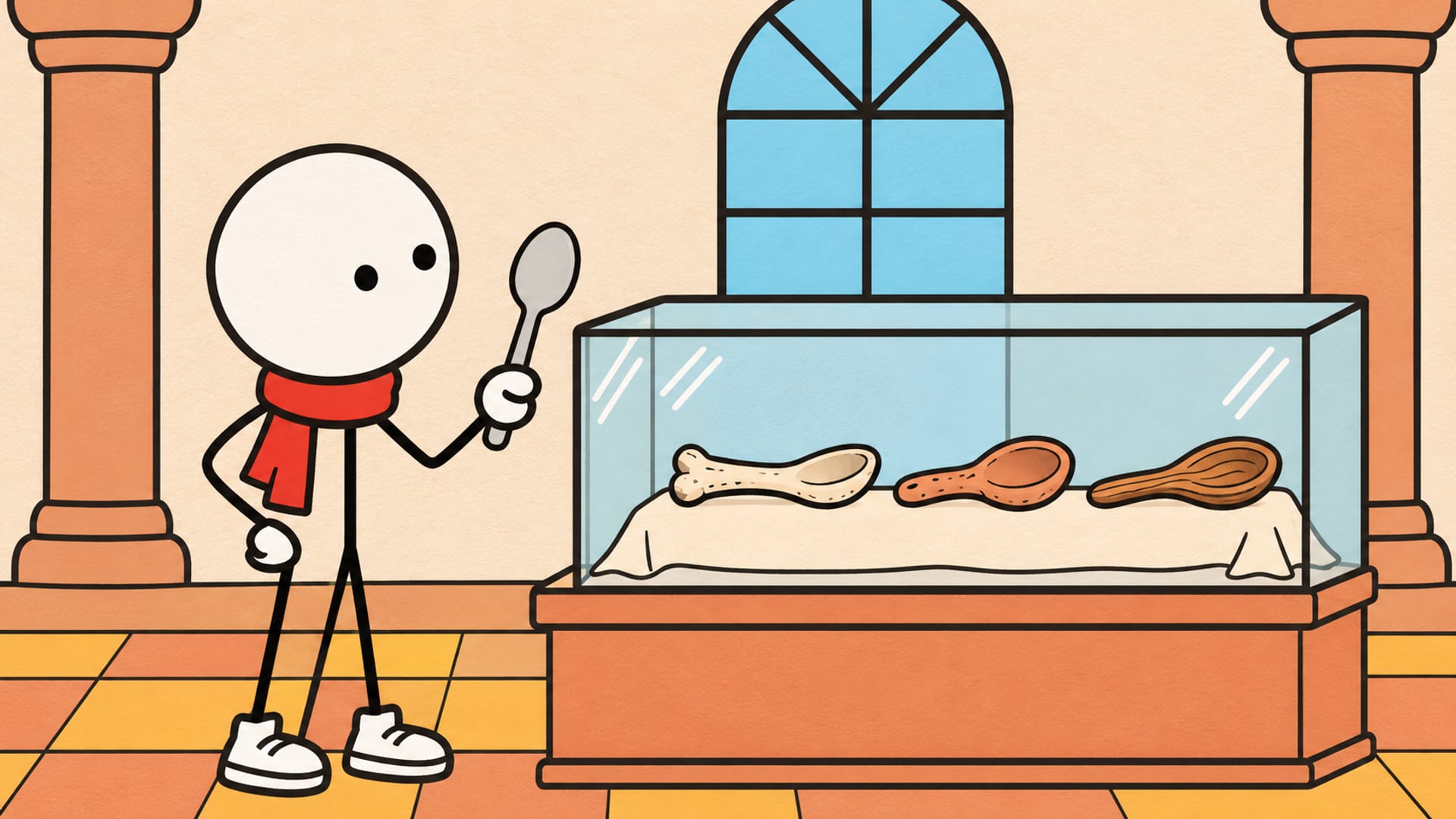
Start with the oldest and work forward. The earliest is a bone object from 'Uyun al-Hammam, Jordan, about 14,500 years old. It is interpreted as a spoon, though its function is not completely certain. Archaeologists are careful with that one, and so are we.
Next come the Serbian bone spoons from Grad-Starčevo, about 5700 BC. These are the ones tied to infant feeding, and some carry human tooth marks, which says a lot without a caption.
Clay takes over from there. A Neolithic ceramic spoon from Altenwalde, Germany, dated 4000 to 2800 BC, is held by the Archaeological Museum Hamburg. Later, between 2400 and 2150 BC, someone in Great Bradley, Suffolk, made a ceramic scoop. The Cotswold Archaeology Virtual Museum records it.
Then wood shows up in a tomb. A wooden spoon from the Tomb of Tjetji at Saqqara, Egypt, dates to about 1550 to 1300 BC and is held by The Metropolitan Museum of Art. Around the same period, a decorated wooden spoon with a lotus handle from New Kingdom Egypt, about 1539 to 1292 BC, sits in the Brooklyn Museum.
In other words, the spoon turns up in Jordan, Serbia, Germany, England and Egypt, in bone, clay and wood, across more than ten thousand years. Nobody gets credit because nobody was keeping score.
Why "first" is the wrong thing to look for
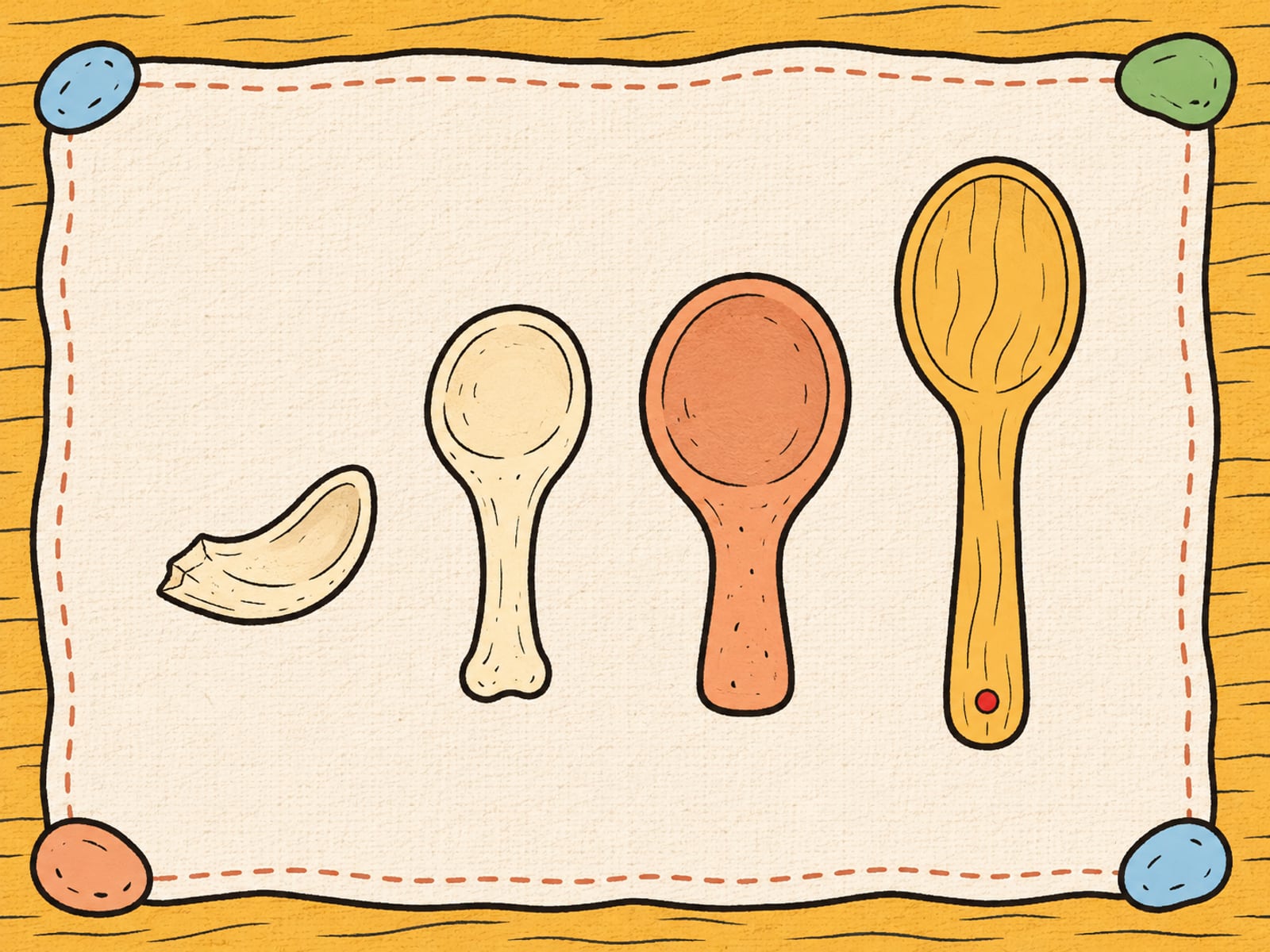
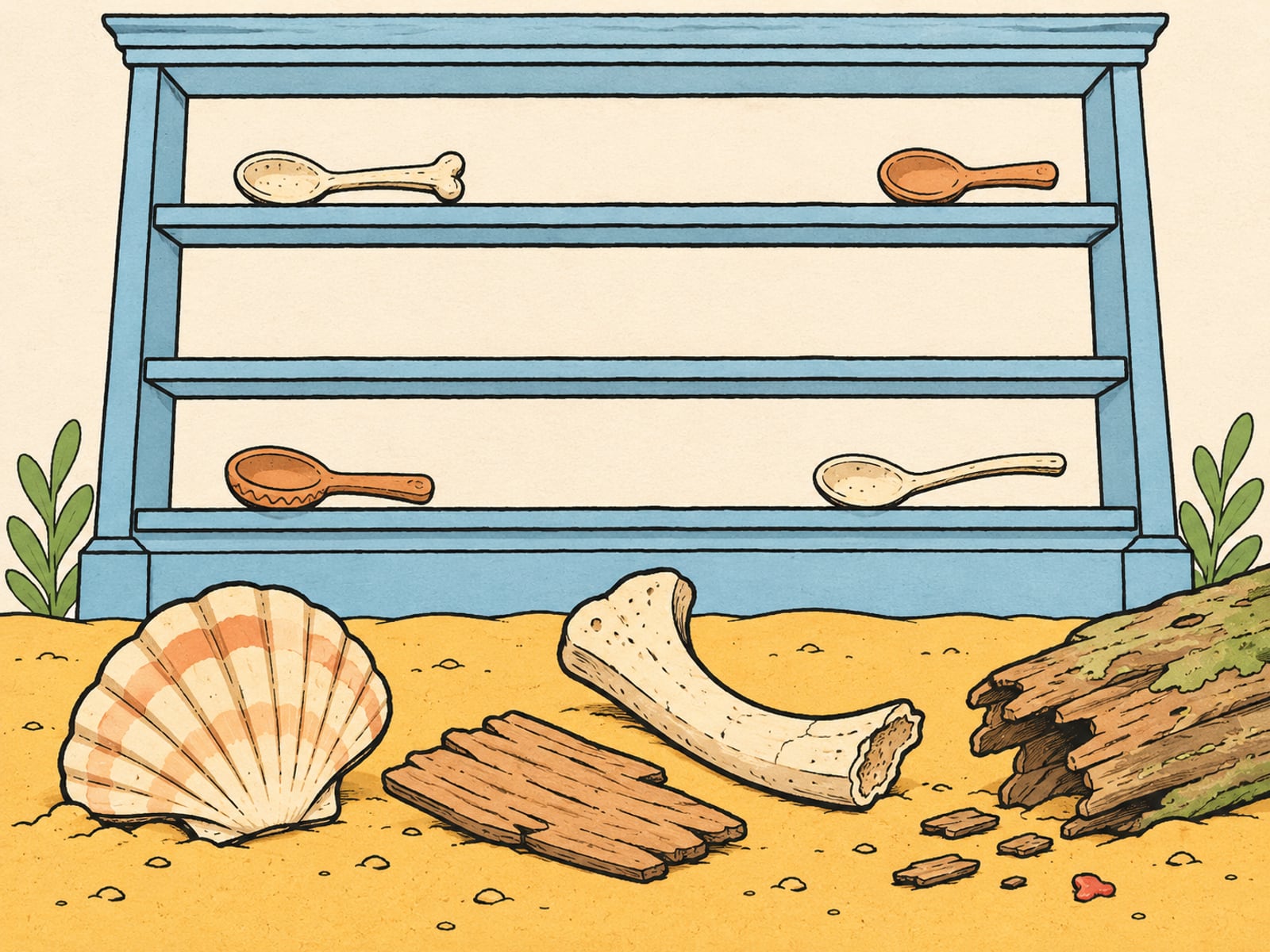
Think of it like this: if you had to guess the first spoon, you would guess a shell, a flat piece of wood, or a curved bit of bone. Wood and shell decay. Bone and fired clay survive. So, the museum shelf is a list of what lasted, not a list of what came first.
That is why the oldest surviving spoon-like objects are not necessarily the first spoons ever made. The record has holes, and the holes are mostly organic ones.
The word itself hints at the same humble start. English spoon comes from Old English spōn, a chip, sliver or splinter of wood. The eating-utensil sense appeared around 1300, according to Etymonline. A spoon was once, quite literally, a bit of wood.
Spanish took a different road. Cuchara comes through the older form cuchar from Latin cochlear, which is related to cochlea, meaning snail or shell. The likely reason is that early spoons looked like shells, as Universidad de Salamanca's Dicciomed and Corominas describe it.
One object, many local versions
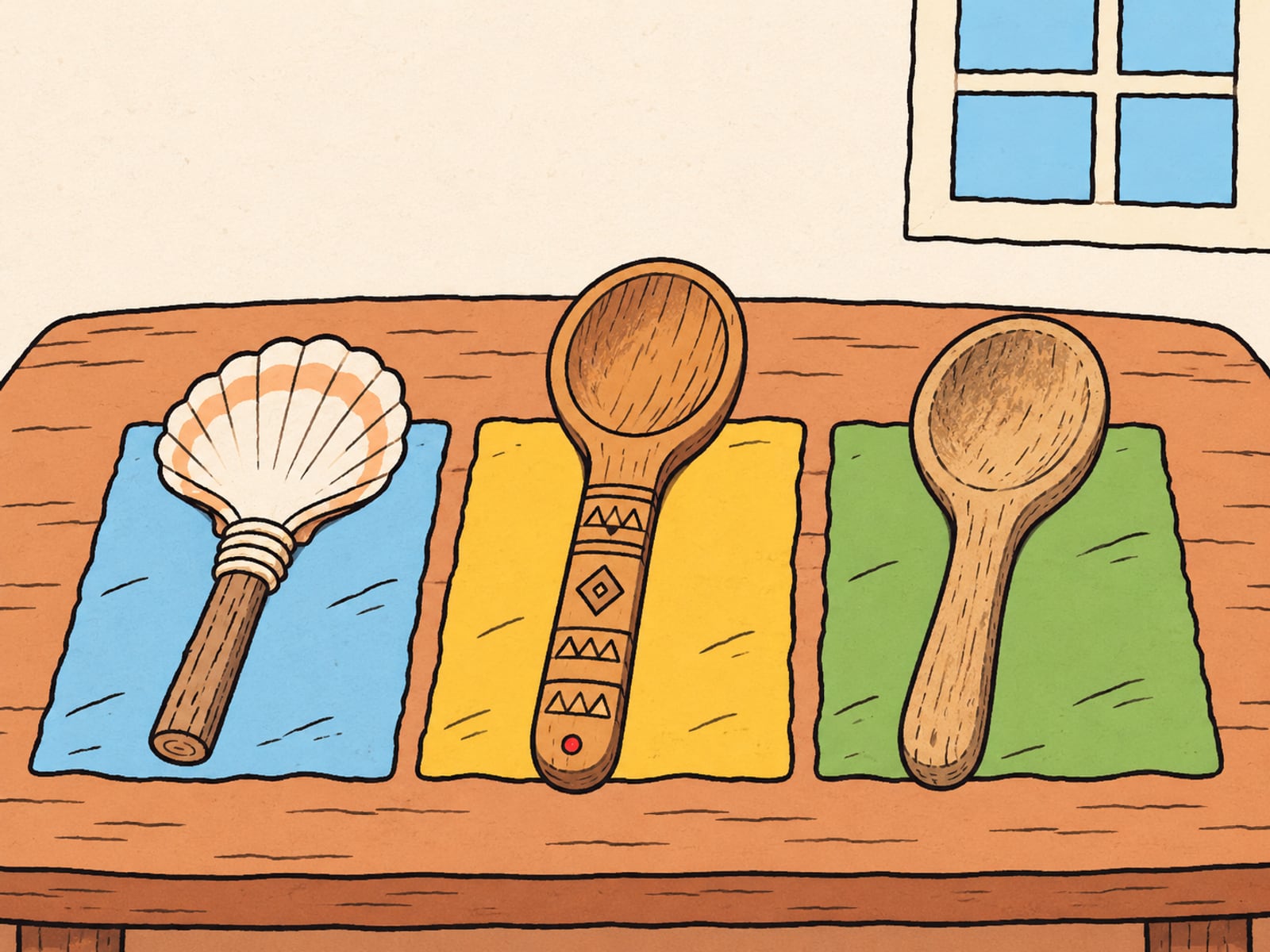
The same pattern shows up wherever people write about spoons in Spanish-speaking places. In Mexico, Spain and Colombia the everyday word is cuchara, and in each place the object appears in local materials, not under one credited name.
Mexican material describes shell utensils from Veracruz. Spanish museum material includes decorated wooden spoons from Salamanca, made as gifts for shepherds' brides. A Colombian regional museum catalogue records pre-Hispanic wooden spoons attributed to the Guane period, roughly the eighth to thirteenth centuries.
Different shells, different woods, different gifts. Same job.
From silver christening gifts to the table set
Spoons did pick up a few famous names along the way, just not an inventor's.
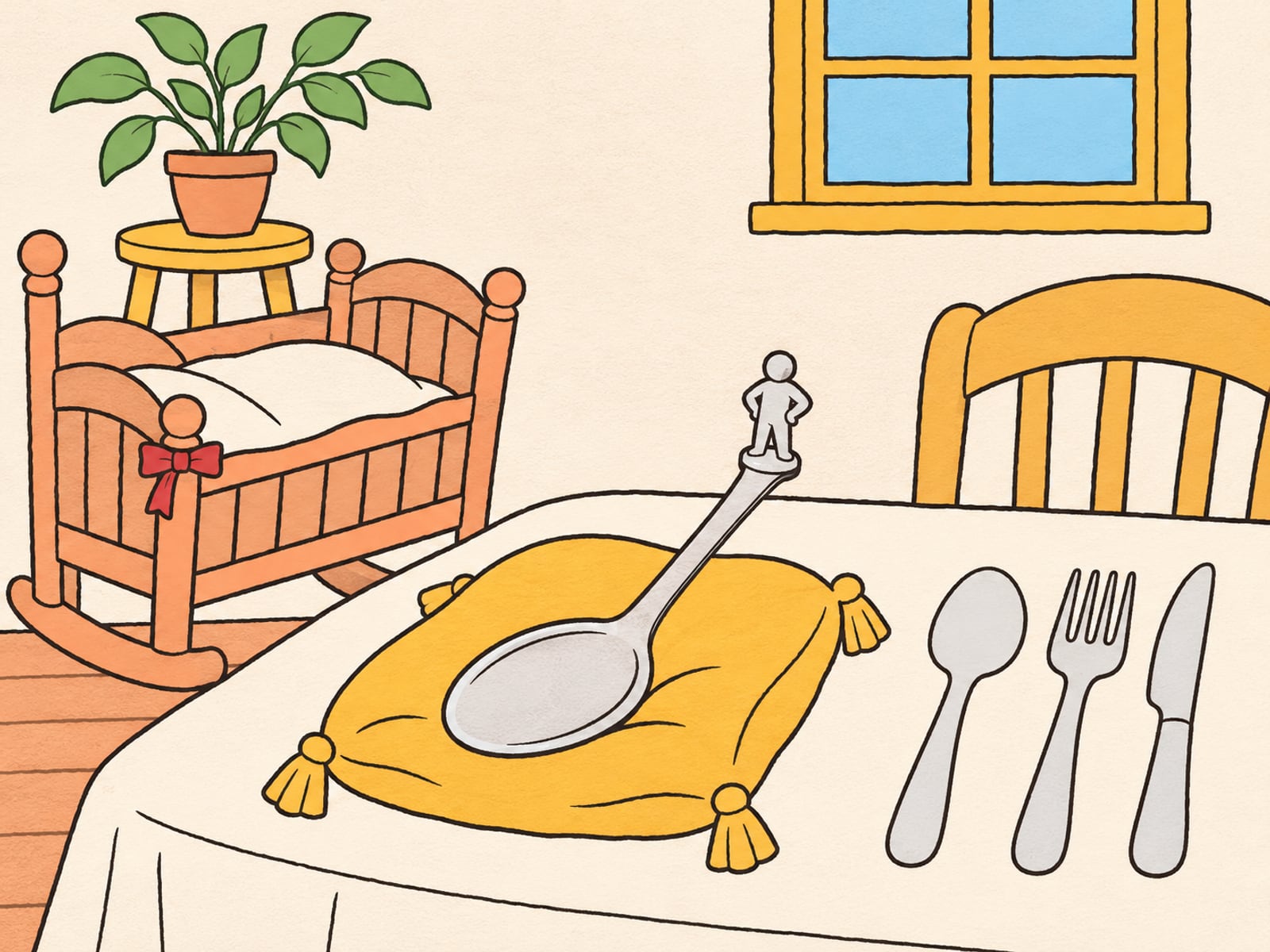
An apostle spoon has a figure of an apostle on the top of its handle. The earliest known written mention is a 1494 will from York that listed thirteen silver-gilt apostle spoons, according to The Metropolitan Museum of Art. A full set usually meant twelve apostles plus a thirteenth spoon for Christ. In Tudor England, wealthy godparents gave them to children at christenings.
That custom is the likely link to a famous phrase. "Born with a silver spoon in your mouth" was in print by 1719. Its connection to christening spoons is probable, but not proven, as the Holburne Museum notes.
The spoon also had a long head start on its dinner-table partners. The fork stayed unusual outside Italy and Spain until the late sixteenth and seventeenth centuries. Knife, fork and spoon sets began to take hold among wealthy European diners in the late seventeenth century, and were established by the eighteenth, according to the National Gallery of Victoria. The spoon had been at the table for thousands of years before the set arrived.
The record
| Date | What happened | Source |
|---|---|---|
| About 14,500 years ago | A bone object from 'Uyun al-Hammam, Jordan, is interpreted as a spoon; its function is not completely certain | PLOS One |
| About 5700 BC | Bone spoons from Grad-Starčevo, Serbia, are associated with infant feeding | PLOS One |
| 4000 to 2800 BC | A Neolithic ceramic spoon is made at Altenwalde, Germany | Archaeological Museum Hamburg |
| 2400 to 2150 BC | A ceramic scoop is made at Great Bradley, Suffolk | Cotswold Archaeology Virtual Museum |
| About 1550 to 1300 BC | A wooden spoon is placed in the Tomb of Tjetji at Saqqara, Egypt | The Metropolitan Museum of Art |
| About 1300 | The eating-utensil sense of "spoon" appears in English | Etymonline |
| 1494 | A York will lists thirteen silver-gilt apostle spoons | The Metropolitan Museum of Art |
| By 1719 | "Born with a silver spoon in your mouth" is in print | Holburne Museum |
| Late 1600s to 1700s | Knife, fork and spoon sets take hold among wealthy European diners | National Gallery of Victoria |
Questions people ask
What was the first spoon ever made? 01
No single first spoon is identified. The oldest securely dated examples are the bone object from 'Uyun al-Hammam, about 14,500 years old, and the bone spoons from Grad-Starčevo, about 5700 BC. Because wood and shell decay, older spoons may have existed and left nothing behind.
Why are spoons shaped like bowls? 02
The bowl carries liquids and soft foods without spilling them. A flat piece of wood or bone slides everything off, so a hollow is what turns a stick into a spoon. The shell-like shape that gave Spanish its word for spoon does the same job.
Why did forks take longer to become common than spoons? 03
The answer turns on food traditions and social attitudes, and on the fork's late acceptance in much of northern Europe. The fork stayed unusual outside Italy and Spain until the late sixteenth and seventeenth centuries. Spoons were already centuries, even millennia, into everyday use by then.
Why does "born with a silver spoon" mean born rich? 04
Silver cost a lot, and wealthy godparents gave silver or apostle spoons as christening gifts. That custom is the probable source of the phrase, which was in print by 1719. The exact origin is not proven.
The spoon has no author
Ask who invented the spoon and the best answer is a long list of materials. Bone, then clay, then wood, then silver, each in its own place and time. The spoon grew out of all of them over thousands of years rather than arriving with one inventor.
The spoon has no named inventor, only a very long history of shaping things to carry food.
Sources

- PLOS One, Neolithic bone spoons
- Archaeological Museum Hamburg
- Cotswold Archaeology Virtual Museum, ceramic spoon
- The Metropolitan Museum of Art, spoon from the Tomb of Tjetji
- Brooklyn Museum, wooden spoon with lotus handle
- Etymonline, "spoon"
- Dicciomed, Universidad de Salamanca, "coclear"
- Corominas, "cuchara"
- The Metropolitan Museum of Art, "Apostle Spoon"
- Holburne Museum, "Apostle Spoon: St James the Greater"
- National Gallery of Victoria, "Art of the Table"
- Relatos e Historias en México
- Fundación Pryconsa, "Los cubiertos"
- Museo Arqueológico Regional Guane catalogue