Why Are Pencils Yellow?

Most US pencils are yellow because the yellow KOH-I-NOOR from Europe became a famous premium pencil, and American makers copied its look. The color does nothing for the writing. A pencil is a No. 2 because of its core, not its paint.

In this explainer +
It's 1888, in Česká Budějovice, a town in Austria-Hungary, and Franz Hardtmuth of L. & C. Hardtmuth is showing off a new pencil.
It has a yellow lacquered body, it's called the KOH-I-NOOR 1500, and it comes in a long list of hardness grades. The company's own history says there were 17 of them.
That pencil is the main reason the one in your pencil cup is yellow. It became a famous premium pencil, American makers couldn't always match its quality, and they could match its look. Yellow was a design choice then, and it still is, because a No. 2 pencil works the same in any color.
How a pencil got its start
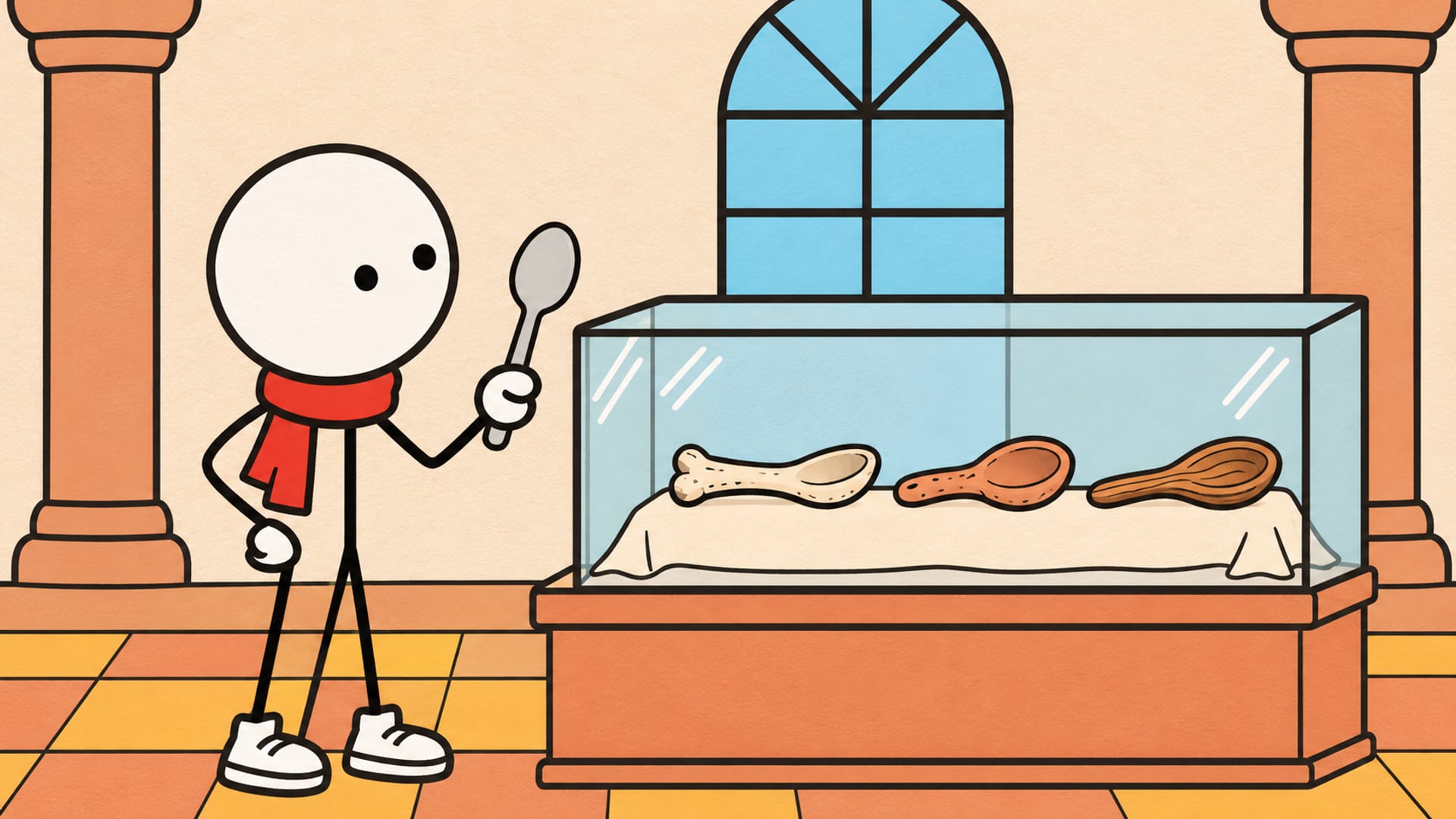
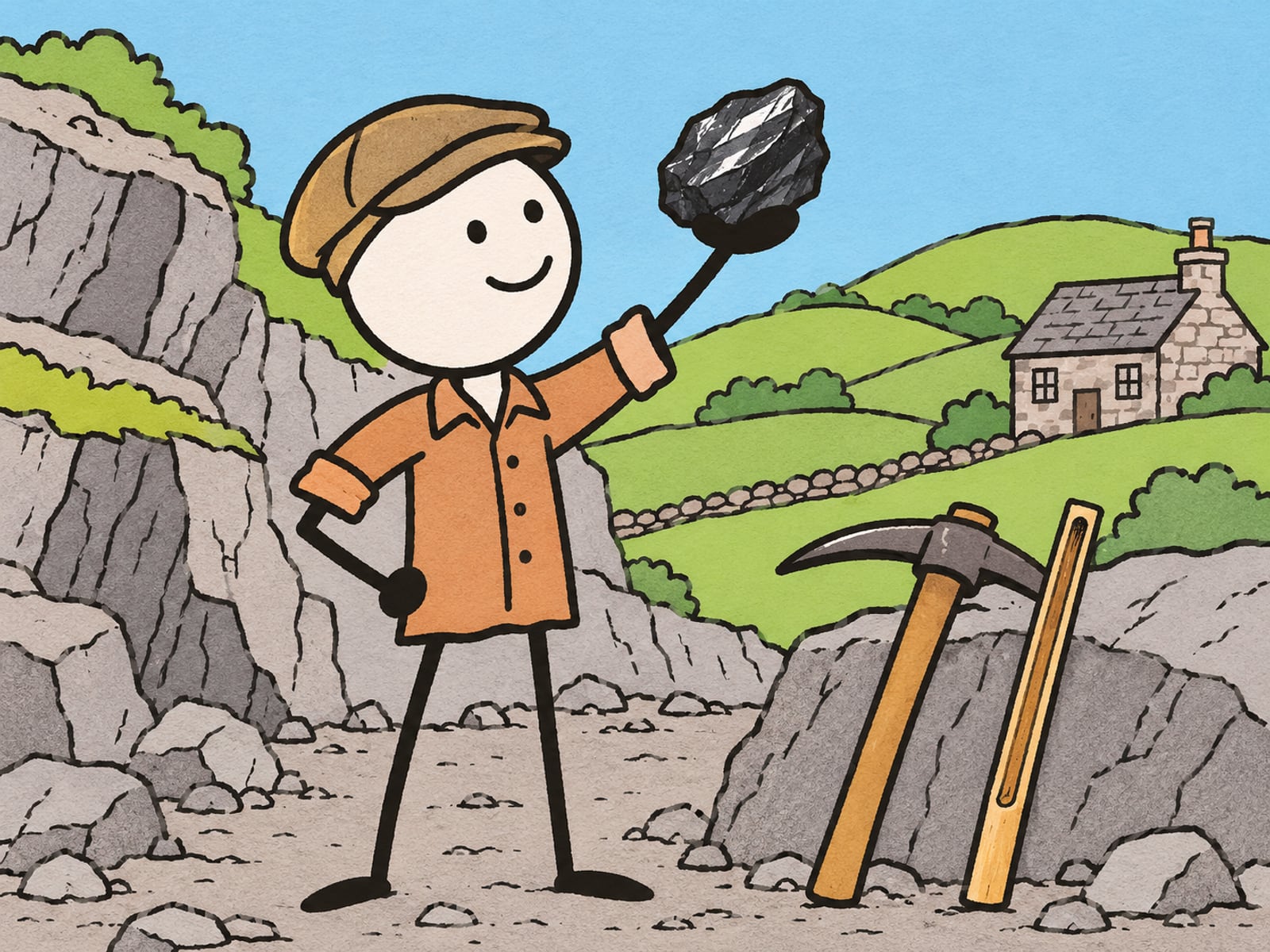
First, the pencil itself. The purest early lump graphite came from Borrowdale, near Keswick in England's Lake District, and it was discovered in 1564. Graphite is soft and it marks well, but it's fragile, so people wrapped it in string or fitted it into hollowed wooden sticks. That's the wood-cased pencil.
The oldest known pencil, according to the British Library, was found in a timbered house built in 1630. Keswick later grew a pencil industry of its own: Banks, Son & Co opened the first factory there in 1832.
Then came a shortage. In 1794, Britain was blockading France, and English graphite became hard to get. A French inventor named Nicolas-Jacques Conté mixed powdered graphite with clay, formed the mixture into rods, dried or fired them, and enclosed them in wood. He filed a patent for artificial pencils on January 3, 1795, as INPI, the French patent office records.
In other words, the clay stretched the graphite. It also gave makers a dial to turn. More clay and different firing gave a harder, lighter core; less clay gave a softer, darker one. That dial is what made standard grades possible, and standard grades are what a company like Hardtmuth would later sell by the dozen.
The yellow pencil that got noticed
Back to 1888. The company dates the production launch of the yellow KOH-I-NOOR 1500 to that year. The name comes from the famous diamond. In 1894, KOH-I-NOOR became part of the company's name, and in 1900 the yellow 1500 won a Grand Prix in Paris.
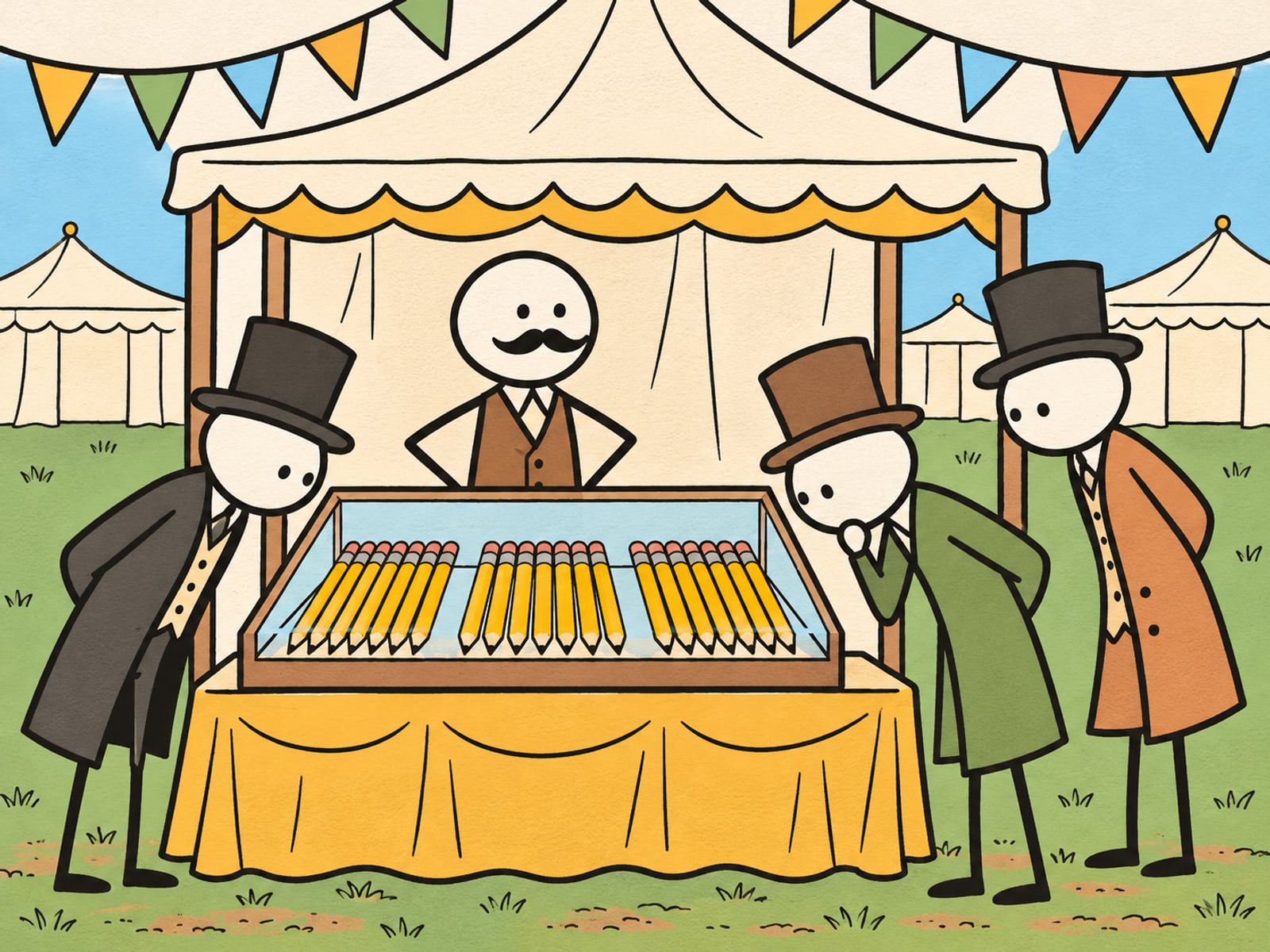
There's a second date in the story. A 1994 Washington Post column, which summarizes the writer Henry Petroski, gives 1890 as the first sale date. It says the pencil became especially successful after it was displayed at the 1893 Columbian Exposition in Chicago. So, the dates don't fight. One is when the company says production launched; the other is when the pencil really caught the American eye.
This was not the first yellow pencil, either. The same column reports that pencils had been painted yellow as early as the middle of the 19th century. The KOH-I-NOOR was the successful one.
Here's where the Americans come in. According to Petroski's account as the Post reports it, American manufacturers could not necessarily match the European pencil's quality, but they could imitate its yellow appearance. Yellow became a signal: this one is the good pencil. By the early 20th century, yellow had spread widely among American makers. It wasn't one copycat, either. Competing American makers all leaned on the same successful look.
Why yellow, though?
Why did Hardtmuth pick yellow in the first place? Two accounts are on the table, and neither is settled.
The first is the China story, and it's worth taking in pieces. A Mexican medical journal's article "El lápiz" says that after English graphite ran short, A. W. Faber obtained rights in 1847 to mines in Siberia near the Chinese border. The Post, summarizing Petroski, calls the pure graphite of Asiatic Siberia the "Oriental" source of premium graphite. That part is on the record: premium graphite was linked to the East.
The yellow link comes later. Universidad Anáhuac México says Hardtmuth chose yellow because the purest graphite supposedly came from China, and yellow stood for the imperial dynasties and for quality. The company's own history tells of the launch and the yellow lacquer. The imperial-color reason is best read as a marketing tradition, a later explanation of the choice.
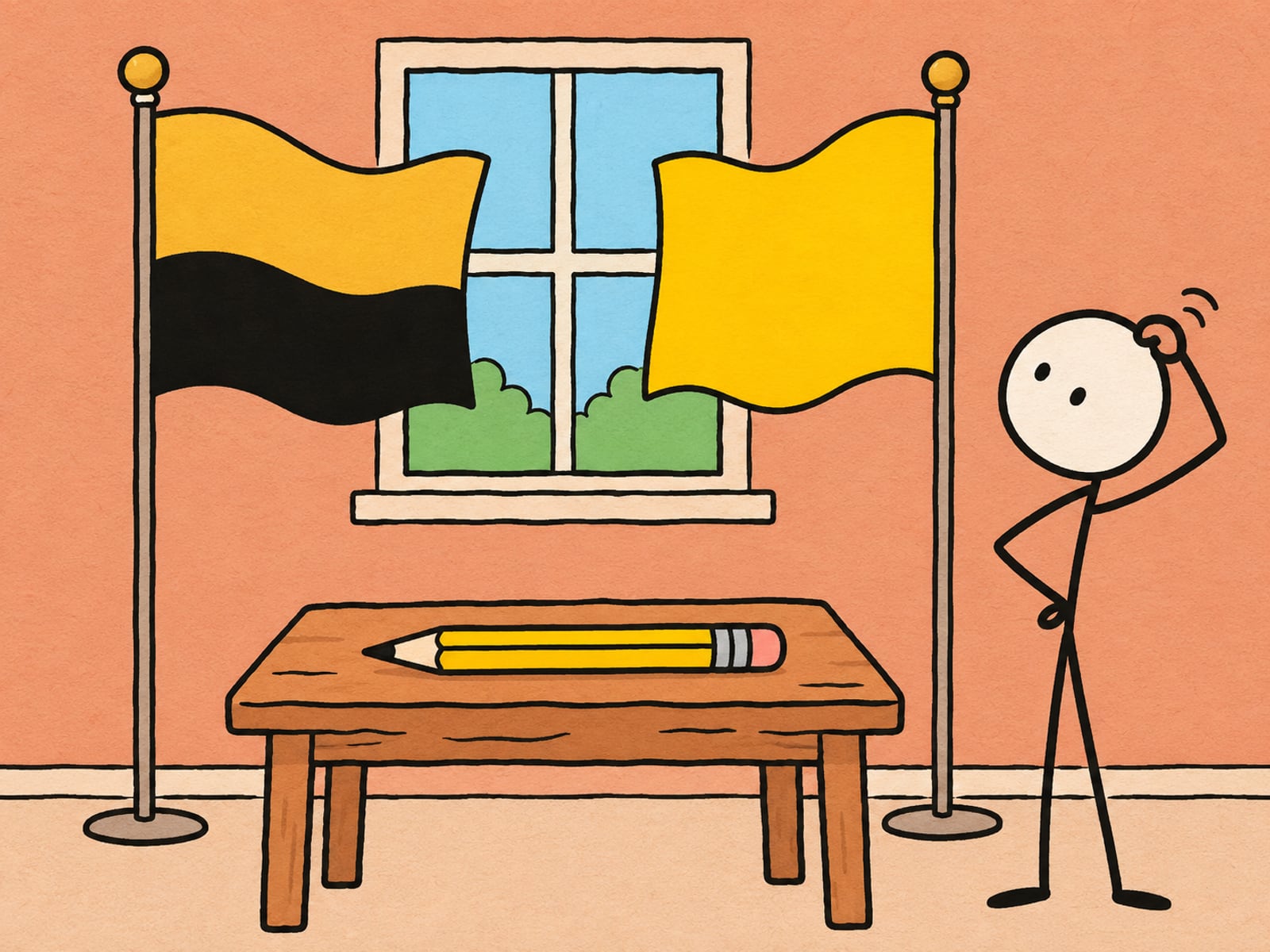
The second account is from Petroski, again by way of the Post: the yellow echoed the gold and black of the Austro-Hungarian flag. Two explanations, and both stay on the table.
What both agree on is the part that matters here. Yellow was meant to say "premium," and it worked.
What "No. 2" means, and what other countries use
The yellow is a story about looks. "No. 2" is a story about the core.
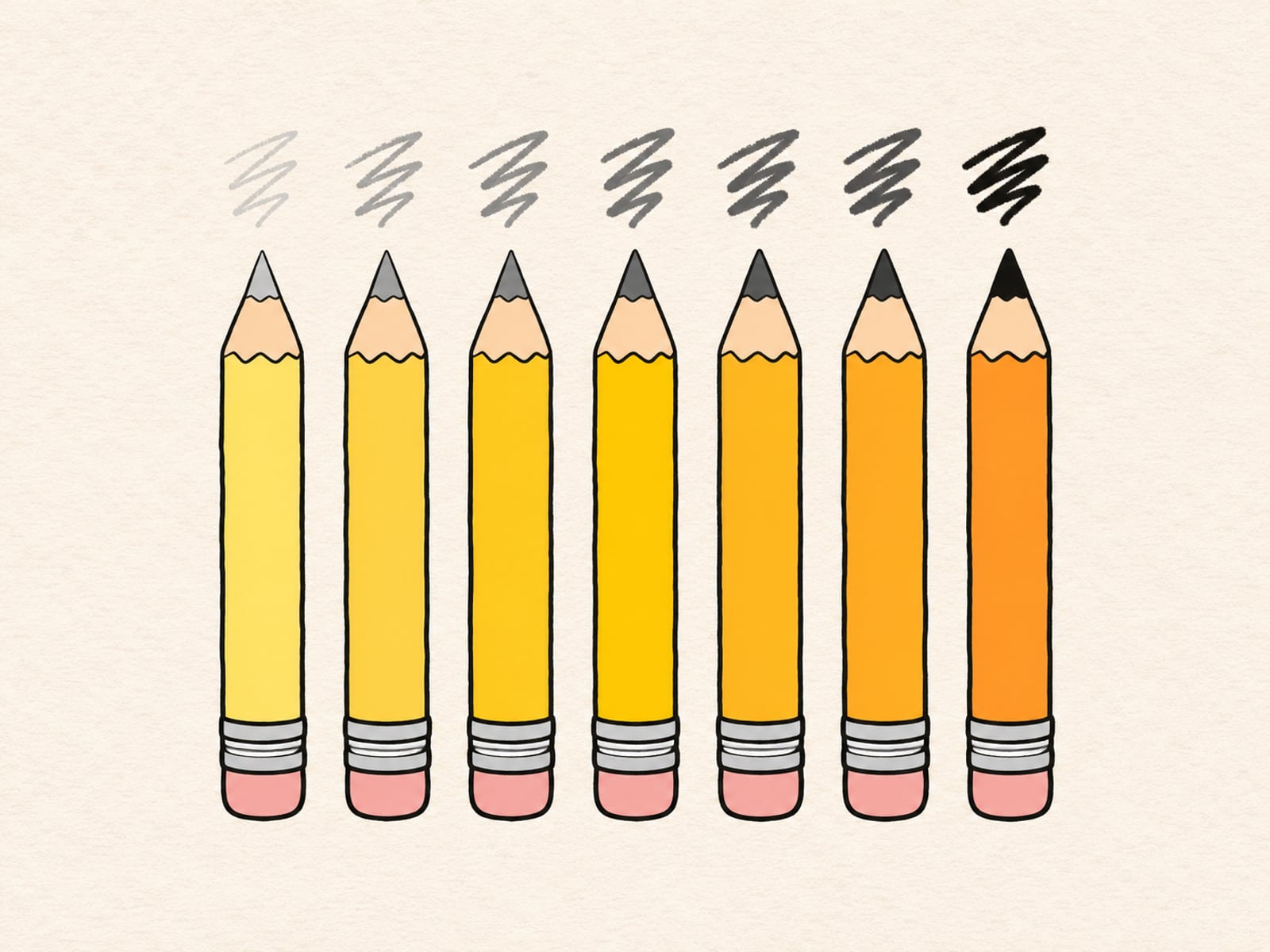
It's a US hardness number. The US International Trade Commission describes a scale running from No. 1, the softest and darkest, to No. 4, the hardest and lightest. No. 2 sits in the middle of the writing grades. The same commission says virtually all No. 2 pencils sold in the United States share the same color and general features. But color isn't part of the grade. A green pencil can be a No. 2 and a yellow one can be something else.
Outside the US, the labels change more than the paint. The Metropolitan Museum of Art treats the popular No. 2 as the equivalent of HB, the letter system used widely outside the United States. The match is approximate, though, since core formulas vary by maker. The grade printed on each pencil is the one to compare.
Germany shows how it goes. STAEDTLER's Noris 1100 launched in 1934 as yellow or orange with dark brown stripes, and the familiar yellow-and-black design dates from 1955. Current German-made Noris pencils are graded HB, B, 2B, H and 2H. So, a yellow pencil, but a European grading system.
In Spain, the Hispania factory in Ferrol, founded in 1934, made a yellow-and-black school pencil used across Spain through the 20th century, Cadena SER reports. In Mexico, school and consumer sources commonly discuss numbered graphite pencils. The US yellow No. 2 format isn't a worldwide requirement anywhere.
The record
| Date | What happened | Source |
|---|---|---|
| 1564 | Pure lump graphite is found at Borrowdale, near Keswick, England | British Library |
| 1630 | The timbered house where the oldest known pencil was found is built | British Library |
| January 3, 1795 | Conté files a patent for artificial pencils, no. 1 BA 12 531 | INPI |
| 1847 | A. W. Faber obtains rights to Siberian graphite mines near the Chinese border | Revista Médica del IMSS, "El lápiz" |
| 1888 | Hardtmuth launches the yellow KOH-I-NOOR 1500 | KOH-I-NOOR HARDTMUTH |
| 1893 | The pencil is displayed at the Columbian Exposition in Chicago | Washington Post |
| 1894 | KOH-I-NOOR becomes part of the company name | KOH-I-NOOR HARDTMUTH |
| 1900 | The yellow 1500 wins a Grand Prix in Paris | KOH-I-NOOR HARDTMUTH |
| 1955 | STAEDTLER's Noris gets its yellow-and-black design | STAEDTLER |
Questions people ask
A few more pencil questions come up every time this one does.
Why is a No. 2 pencil called No. 2? 01
It's a grade on the US numerical hardness scale, which runs from No. 1, the softest and darkest, to No. 4, the hardest and lightest. No. 2 is the middle writing grade, and it roughly matches HB.
Why do pencils say HB, H or B? 02
The letters describe the core, which is a balance of graphite and clay. H marks a harder core, and B marks a blacker, softer one. HB sits near the middle.
Why are pencil cores called lead when they contain no lead? 03
The old name for graphite was "black lead," and the word stuck even after graphite was identified as a form of carbon. The core is graphite and clay, so no lead is involved.
Why do pencils have erasers on the end? 04
Attached erasers developed in the 19th century. The American pencil then became a combination of yellow paint, a metal ferrule and an eraser, a package that is discussed through the case Reckendorfer v. Faber.
An old look on every desk
An everyday object still carries the look of a premium pencil from 1888 and a fair in 1893. Nobody needs the yellow. Schools, stores and families just know what a pencil looks like.
American makers copied the look of a premium pencil, and the look stayed.
Sources

- KOH-I-NOOR HARDTMUTH, company history
- Washington Post, "Wonder Why Your Pencil's Yellow?"
- British Library, "The history of the pencil"
- INPI, "Conté ou l'art du crayon (1795)"
- Metropolitan Museum of Art, "Graphite"
- US International Trade Commission, "Cased Pencils from China"
- Revista Médica del Instituto Mexicano del Seguro Social, "El lápiz"
- Universidad Anáhuac México, "¿Cómo se fabrican los lápices?"
- STAEDTLER, "Celebrating 125 Years of Noris"
- Cadena SER, "Los lápices gallegos con los que aprendió a escribir España"
- Library of Congress, "Reckendorfer v. Faber"