Who Invented Video Games?

Ralph H. Baer is usually credited with inventing the home video game, which reached stores as the Magnavox Odyssey in 1972. The earliest documented electronic game with a screen is Goldsmith and Mann's 1947 patent application, and OXO (1952), Tennis for Two (1958) and Spacewar! (1962) each fit a different definition of "first." Nolan Bushnell's lasting role is the arcade industry that grew from Pong.

In this explainer +
It's January 25, 1947, at DuMont Laboratories in New Jersey. Thomas T. Goldsmith Jr. and Estle Ray Mann are working with vacuum-tube circuitry connected to a cathode-ray tube. A bright electron beam moves toward airplane-shaped target overlays.
That day, they file a patent application for what becomes US2455992A, granted on December 14, 1948. It is the earliest documented electronic game with a screen.
Here is the short answer to who invented video games. Ralph H. Baer is usually credited with the home video game. Which game was first depends on your definition, because Goldsmith and Mann, Alexander Douglas, William Higinbotham and Steve Russell all have strong claims.
The rest of the story runs from that glowing beam to a television engineer's workbench, and every stop has a date.
Four claims, four definitions
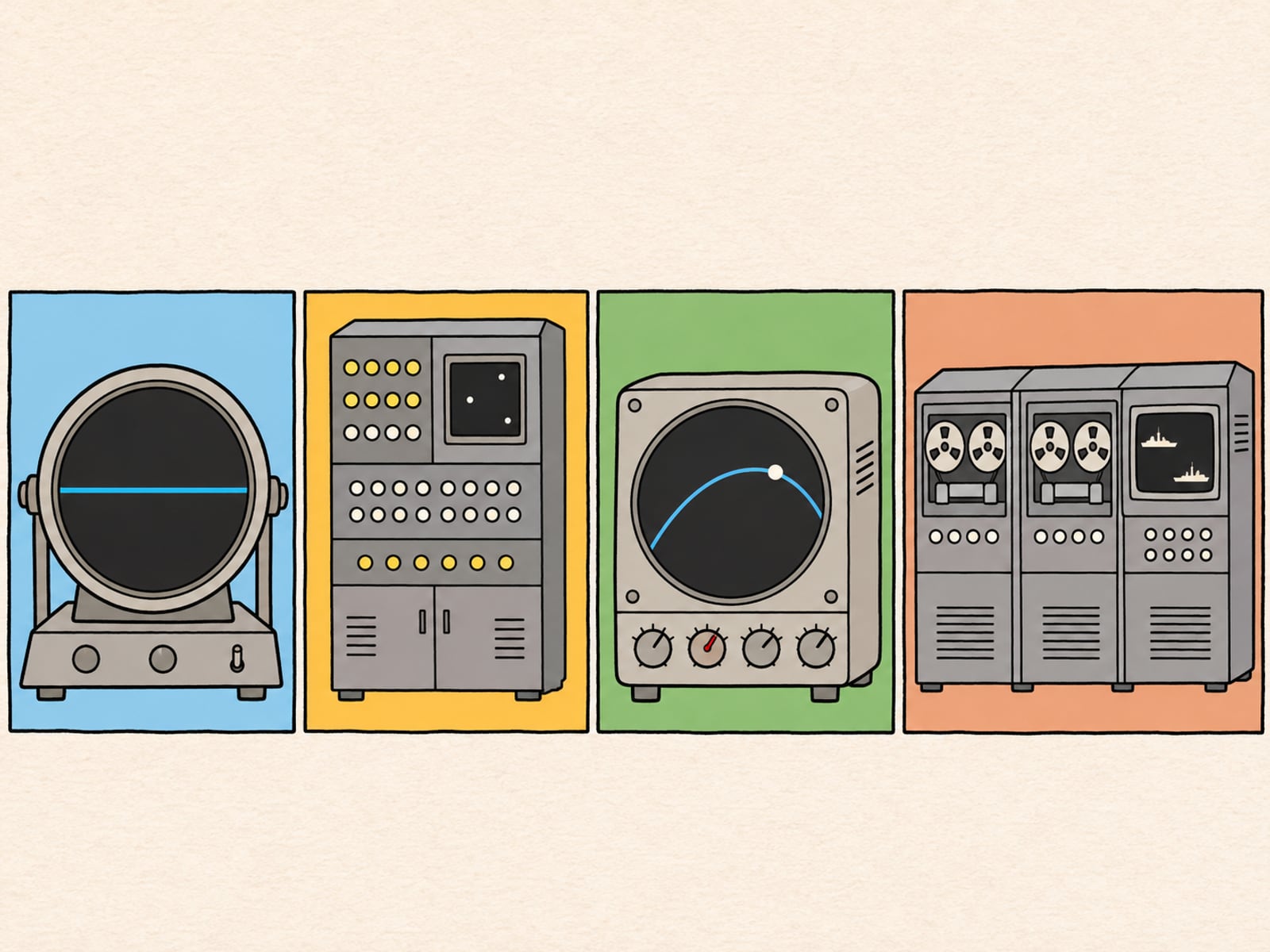
Start with that 1947 device. The player steered an electron beam at physical target overlays. The targets were physical pieces placed over the screen, not something the machine drew. That is why it counts as the earliest documented electronic game with a screen, and why some people hold back the title "video game."
In 1951, Ferranti's Nimrod played the old strategy game Nim at the Festival of Britain. It used fixed lights, not moving graphics, and its job was to show off computing power. The Brookhaven National Laboratory history covers it.
Next came Alexander S. Douglas at the University of Cambridge in 1952. His OXO was tic-tac-toe on the EDSAC computer. A rotary telephone dial entered each move, and the board showed on a cathode-ray display. You could play against the machine. It was built for Douglas's doctoral research, not for entertainment.
Then, in October 1958, at Brookhaven National Laboratory in New York, William Higinbotham and David Potter showed Tennis for Two. Two visitors held controller boxes while a ball arced over a line on an oscilloscope. It was designed to entertain people, and it is often called the first video game under a definition that needs moving graphics and direct player control.
Steve Russell and collaborators at MIT followed in 1962 with Spacewar! on the DEC PDP-1. Two players flew spaceships, fired missiles and fought gravity around a star. It spread to other computers, according to the Computer History Museum timeline, but it was never a commercial product.
Hint: ask what the word "first" is doing. Earliest patent, earliest computer game, earliest moving picture, first home product. Each one gives a different name.
A television engineer in New Hampshire
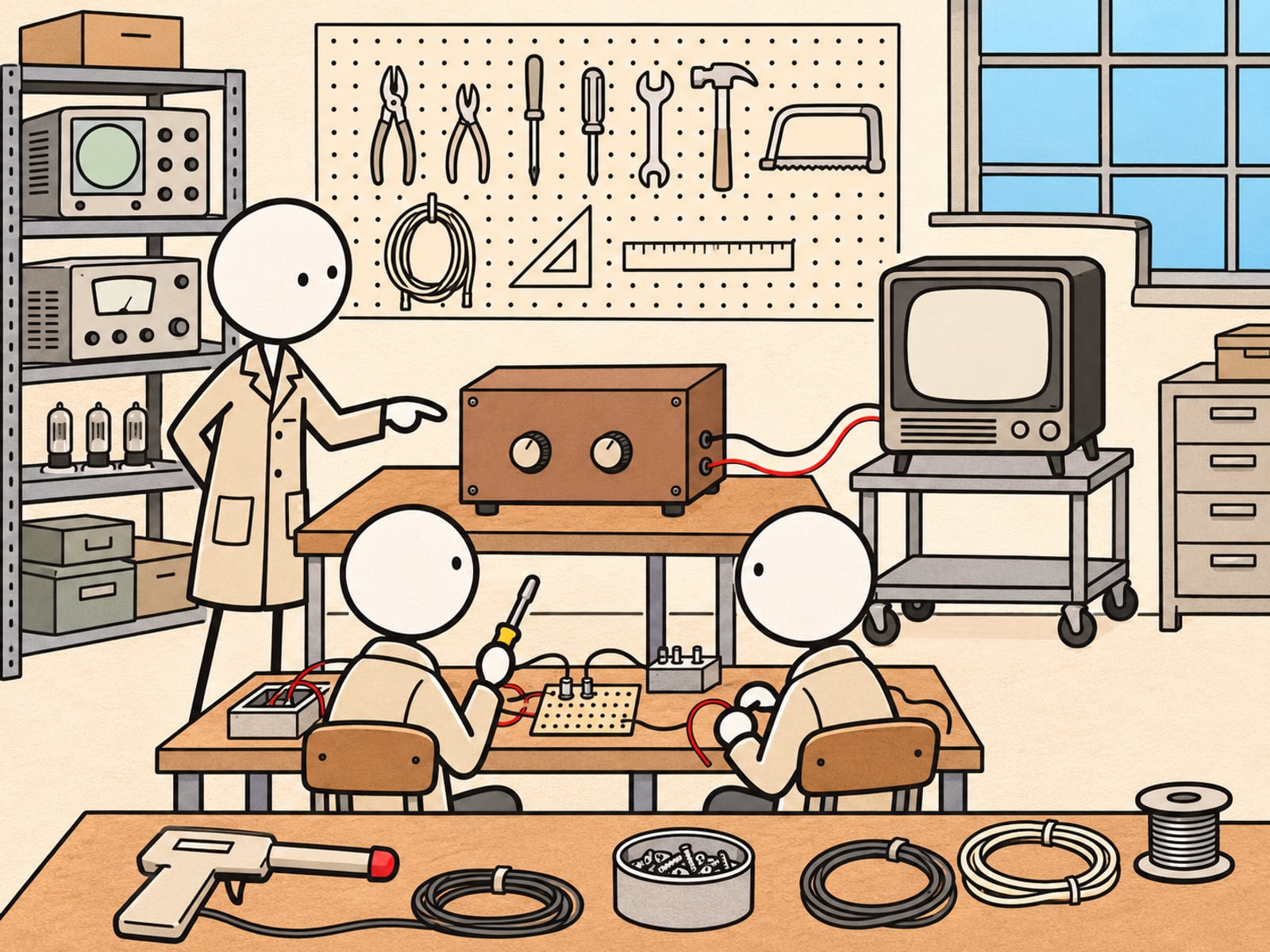
In 1966, Ralph Baer was a television engineer at Sanders Associates in Nashua, New Hampshire. He began developing games to play on an ordinary television set.
By 1967 and 1968 he had the Brown Box. It supported two players and several games, including table tennis, hockey and shooting games with a light gun. It needed no computer and no software, according to the Smithsonian's record of the Brown Box.
Baer worked with William T. Rusch and William L. Harrison. Sanders Associates filed the patent application on August 21, 1969. US3659285A was granted on April 25, 1972, with all three men named as inventors.
So, why does Baer get the headline? The Brown Box was the first multiplayer, multiprogram system built for ordinary television sets. It took games out of the laboratory and put them where families already sat.
Odyssey first, Pong second
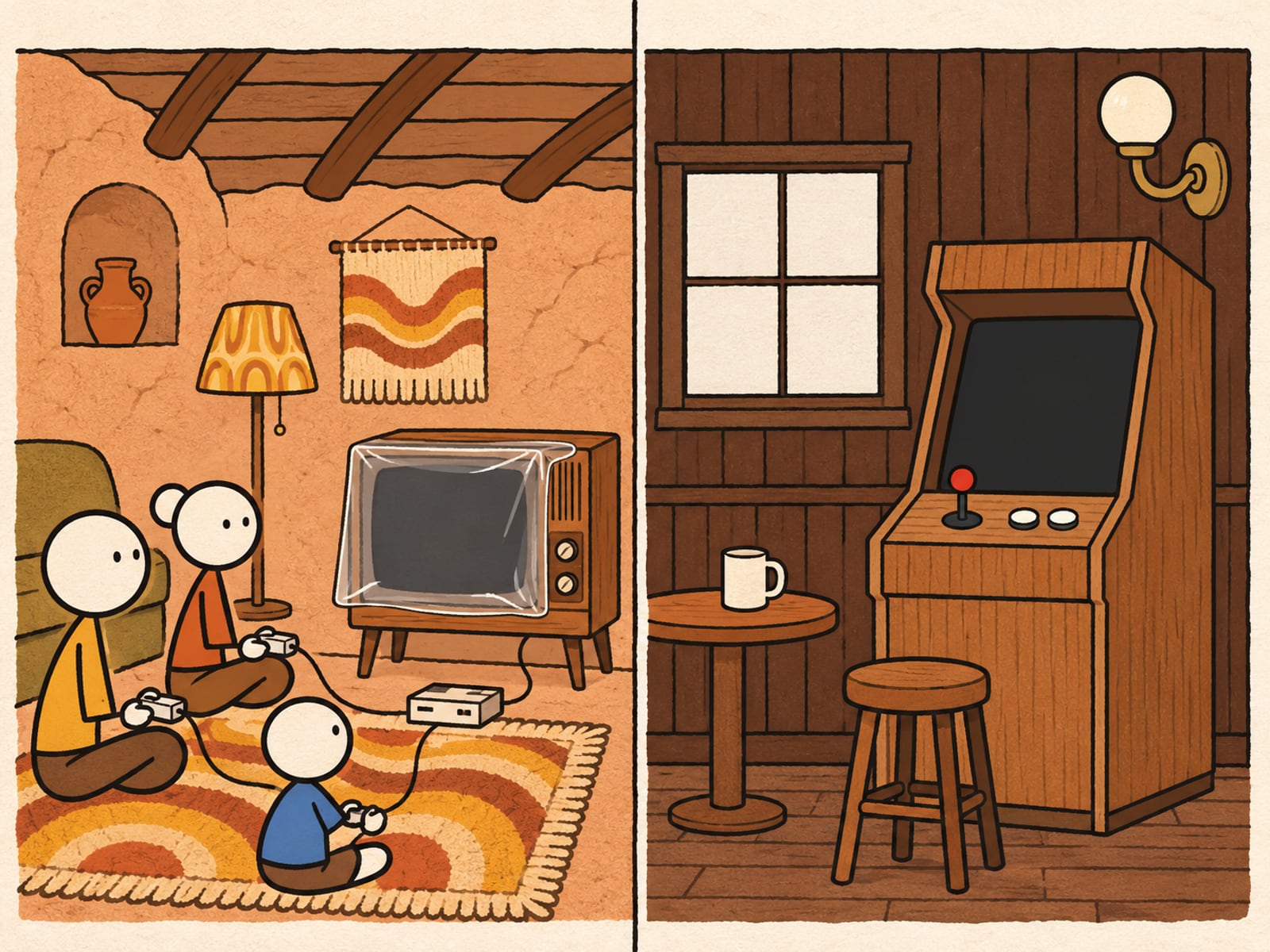
Magnavox licensed the technology and released the Magnavox Odyssey in 1972. The Computer History Museum calls it the first commercially sold home video game console.
Now it's a Magnavox store or a living room in 1972. The Odyssey plugs into a television. Players use controllers, plastic screen overlays, cards, dice and scoring pieces. Overlays again, twenty-five years after the airplane targets of 1947.
The same year, Nolan Bushnell founded Atari and assigned Al Alcorn to build Pong. A Pong cabinet stood in Andy Capp's Tavern in Sunnyvale, California. Players turned two knobs while a white square ball crossed a black screen.
Pong was not the first electronic game, and it was not the first television game. What it did, as the Computer History Museum's Pong history tells it, was help start the commercial arcade video game industry. That is where Bushnell's lasting role lies.
In 1977, Atari released the Video Computer System, later called the Atari 2600. It was the first widely successful console to use interchangeable cartridges. After that, games spread to PCs, phones and online services.
The same story, other countries
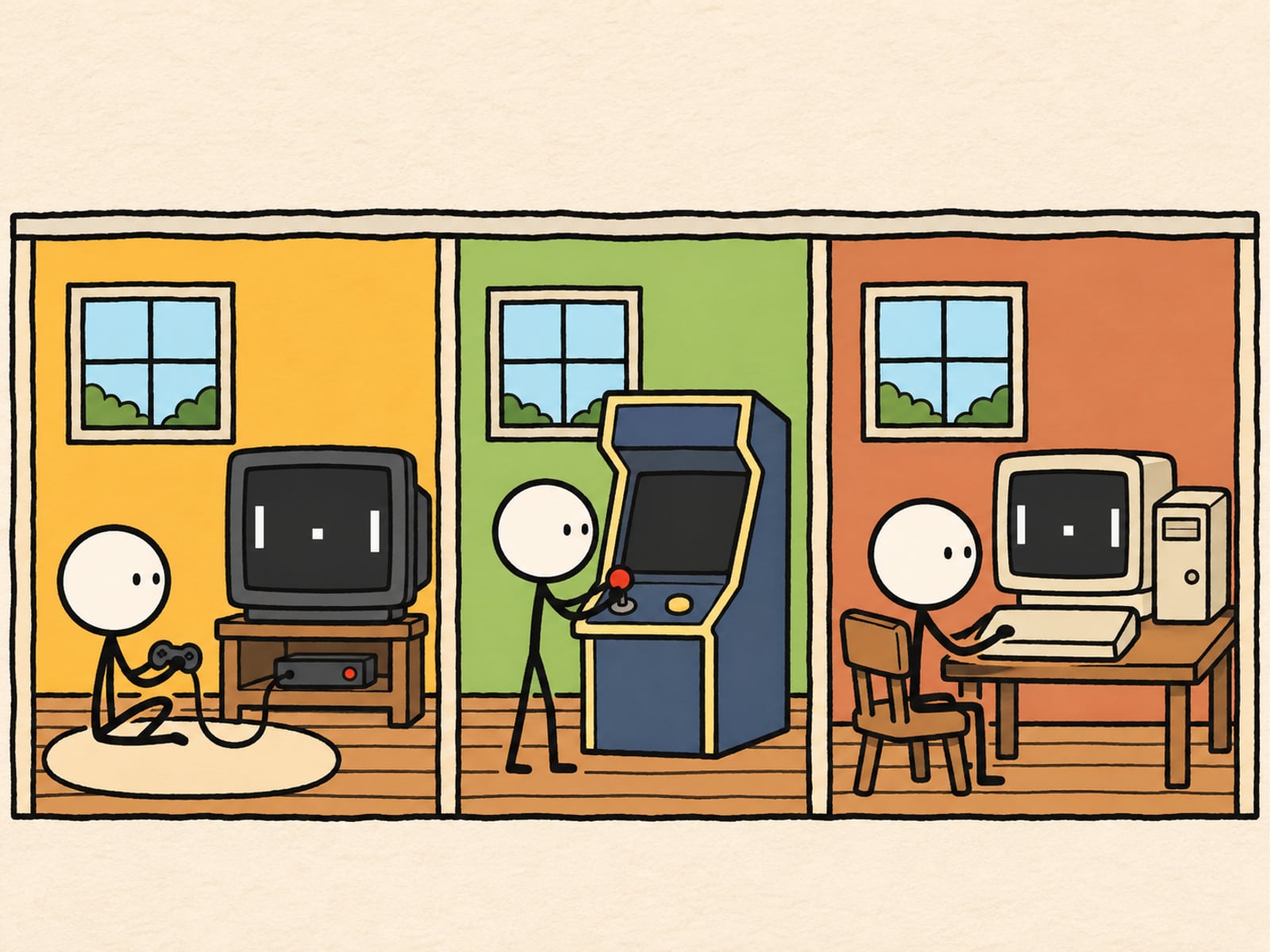
The invention sequence is not only American. The first steps happened in the United States and the United Kingdom, and other countries met games through imports, clones and their own studios.
In Barcelona in 1973, Inter Electrónica made the Overkal, a local clone of the Magnavox Odyssey, according to the Museo del Videojuego. Spain's Dinamic, founded by Nacho, Víctor and Pablo Ruiz, received its first order for games on May 8, 1984.
In Mexico, games arrived through imported Atari systems, Pong-style consoles and arcade machines. A UNAM history adds that Sigma Commodore entered Mexico in 1973 with microcomputers and Spanish-language software.
The record
| Date | What happened | Source |
|---|---|---|
| January 25, 1947 | Goldsmith and Mann file the application for their cathode-ray target game | Google Patents, US2455992A |
| 1952 | Douglas creates OXO on the EDSAC at Cambridge | Brookhaven National Laboratory |
| October 1958 | Higinbotham and Potter show Tennis for Two | Brookhaven National Laboratory |
| 1962 | Russell and collaborators create Spacewar! at MIT | Computer History Museum |
| 1967 to 1968 | Baer's Brown Box supports two players and several games | Smithsonian |
| August 21, 1969 | Sanders Associates files Baer's patent application | Google Patents, US3659285A |
| April 25, 1972 | US3659285A is granted | Google Patents, US3659285A |
| 1972 | Magnavox releases the Odyssey | Computer History Museum |
| 1972 | Atari's Pong helps start the arcade industry | Computer History Museum, Pong |
| 1977 | Atari releases the Video Computer System, later the Atari 2600 | Computer History Museum |
Questions people ask
A few follow-ups come up whenever this story gets told.
Who invented video games? 01
Nobody has one clean claim. Ralph Baer is usually credited with the home video game, while Goldsmith and Mann, Douglas, Higinbotham and Russell each built an earlier or different kind of electronic game.
What was the first video game ever made? 02
It depends on the definition. The 1947 cathode-ray device is the earliest documented electronic game with a screen, OXO (1952) is an early computer game, and Tennis for Two (1958) is often named when moving graphics and direct control are required.
Why is Tennis for Two sometimes called the first video game? 03
It showed a moving ball on an oscilloscope and gave two players direct control. If a video game must show moving objects on a display and let players control them, Tennis for Two is the earliest entry on this list that fits.
Why did the Magnavox Odyssey reach homes before Pong? 04
Baer began developing games for television sets in 1966, and his Brown Box followed in 1967 and 1968. Sanders Associates filed its patent in 1969, and Magnavox licensed the technology and released the Odyssey in 1972. Pong began as an arcade cabinet in the same year, not a home console.
Why the answer keeps moving
Think of it like this: "first" is a finish line that different people drew in different places. A patent, a computer program, a lab demonstration and a store shelf are all real firsts.
The game that reached living rooms came from a television engineer's workshop, and games on phones and PCs still trace back to ordinary television sets. The first video game depends on what you count, and the living-room game came from a television engineer.
Sources

- Google Patents, US2455992A (Goldsmith and Mann)
- Brookhaven National Laboratory, history of the first video game
- Computer History Museum, graphics and games timeline
- Smithsonian National Museum of American History, Brown Box
- Google Patents, US3659285A (Sanders Associates)
- Computer History Museum, "50 Years of Fun with Pong"
- Museo del Videojuego, Overkal
- RTVE, 40 years of Dinamic
- UNAM, history of computing and entertainment