Why Do Leaves Change Color in Fall?
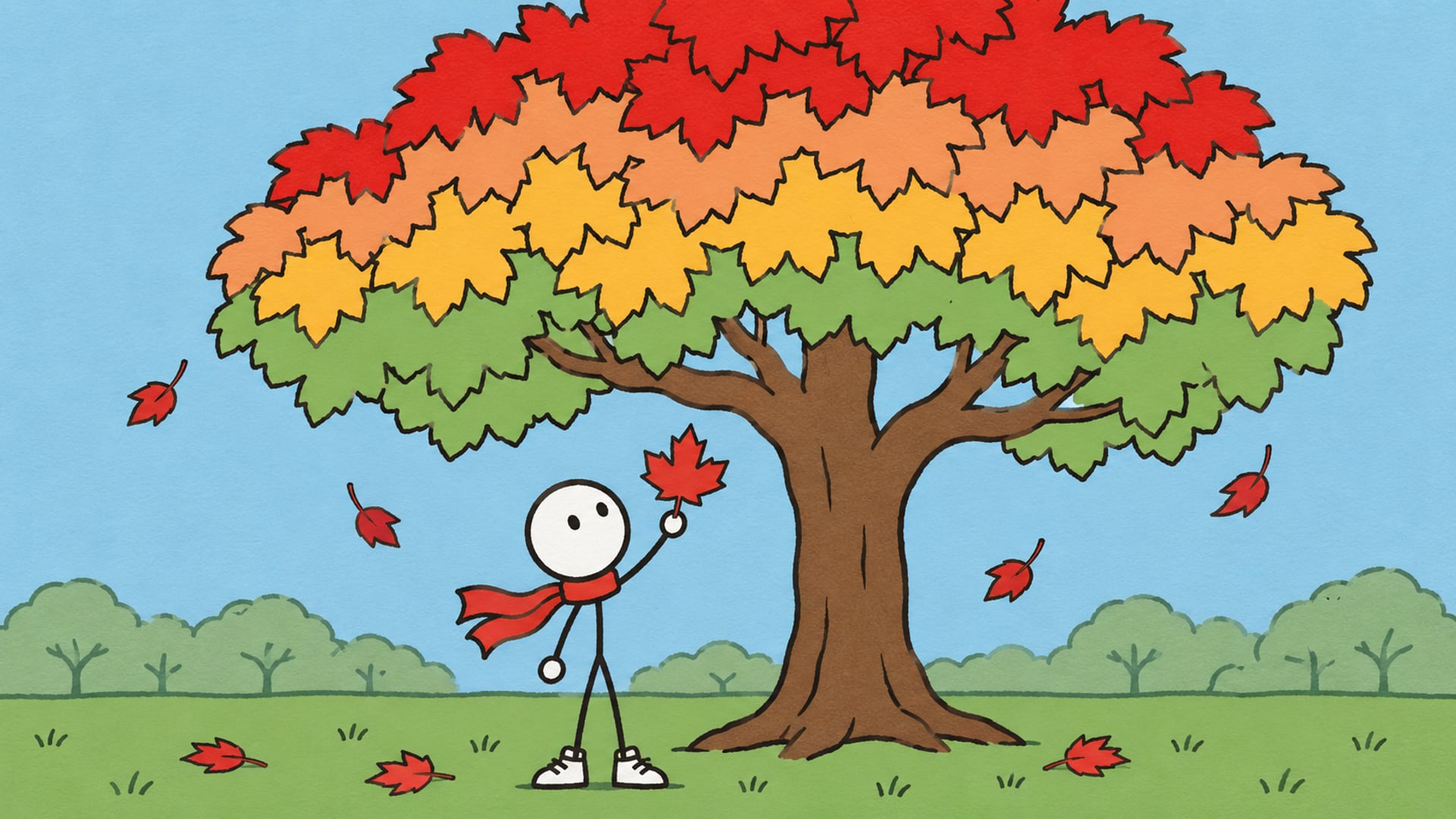
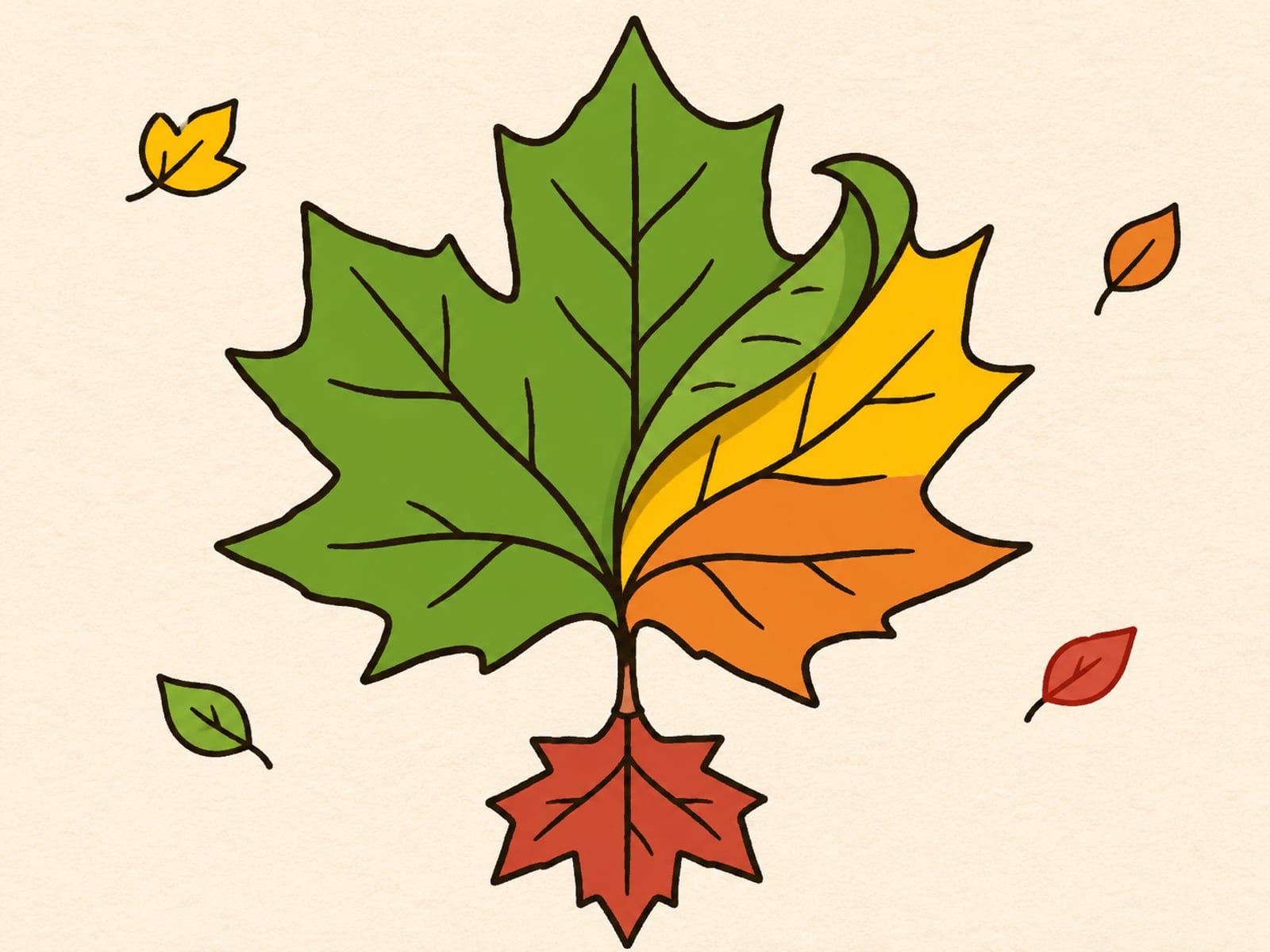
Leaves change color because chlorophyll, the green pigment used in photosynthesis, breaks down in autumn. That reveals yellow and orange pigments already in the leaf. Many reds and purples come from pigments called anthocyanins, which are commonly made new in autumn, and sun, cool nights and drought change how bright the result gets.

In this explainer +
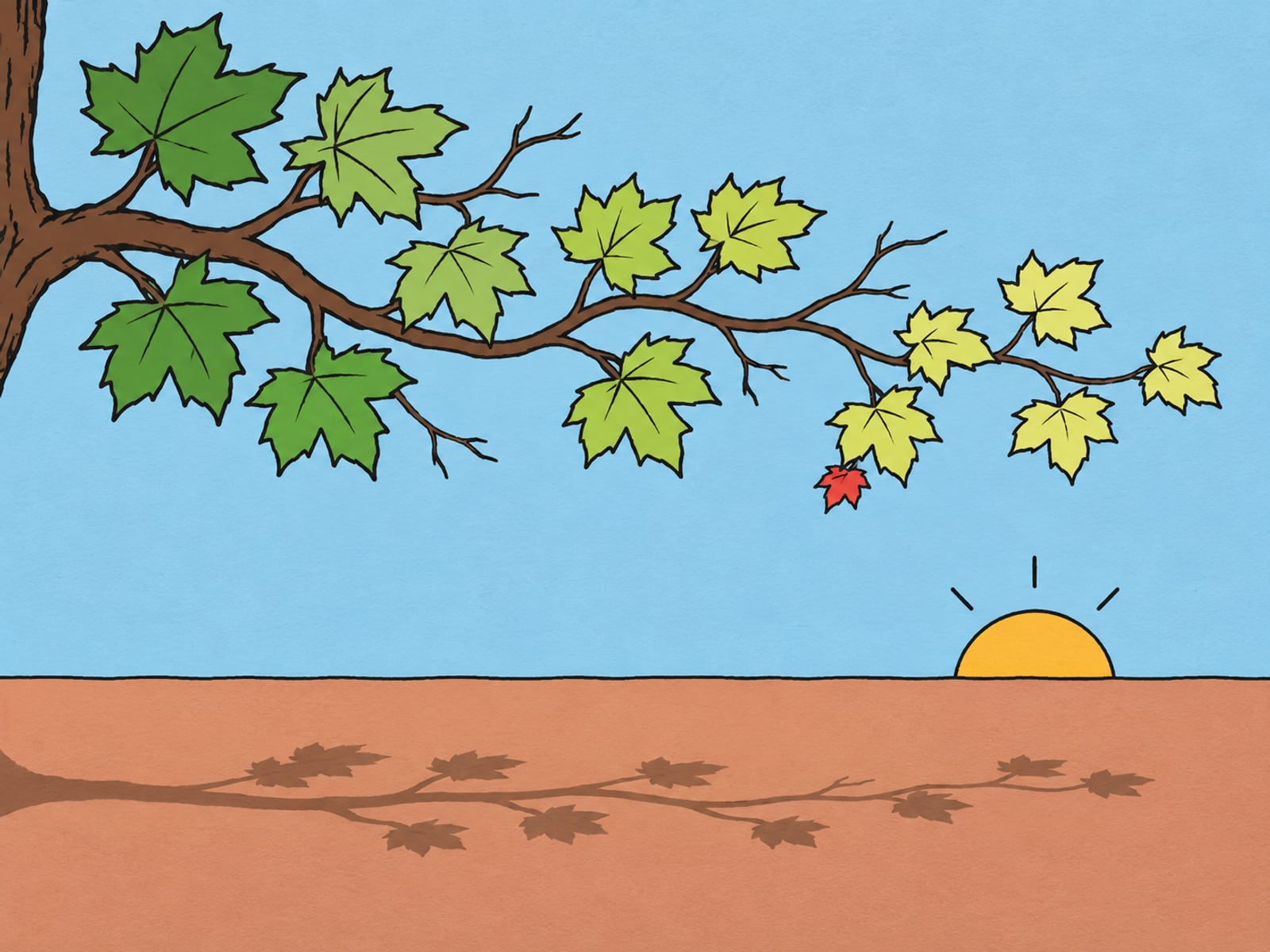
Pick one leaf on a sugar maple branch that gets full sun. It's summer, and the leaf is green.
It's green because it's busy. Chlorophyll, the pigment that absorbs sunlight for photosynthesis, fills the leaf, as the botanists at Royal Botanic Gardens, Kew describe it. Now ask what has to change before that same leaf turns yellow, orange or red.
The answer comes in one sentence: in autumn the tree stops replacing chlorophyll and the old chlorophyll breaks down, which reveals yellow and orange pigments that were in the leaf all along, while many of the reds and purples are pigments the tree makes new at the end of the season.
Why the tree does it, and why the same hillside can look different from one October to the next, is the rest of the story.
What turns the green off
Deciduous trees, the kind that drop their leaves each year, slow down and then stop replacing chlorophyll as days get shorter and temperatures fall. The chlorophyll already in the leaf then breaks down. The USDA Forest Service reported this response in 2001: lower temperatures and shorter day length set it off.
The trigger itself is not simple. A 2019 USDA Forest Service report says day length, temperature and, in some cases, drought are all implicated, and no single model explains every species. The signals overlap, and trees differ in which one counts most.
While the green fades, the tree is also working. It pulls back nitrogen and other useful nutrients from the leaf before winter, according to the Spanish National Museum of Natural Sciences. In other words, the color show is a side effect of a tree packing up.
Yellow and orange were there all summer
Carotenoids make yellow and orange. They sit in the leaf through the whole growing season, and chlorophyll simply outvotes them. Kew also names yellow flavonols among the compounds that show once the green declines.
Think of it like this: a wall painted yellow, then covered with a thick coat of green. Nothing new is added when the green coat thins. The yellow was underneath the whole time.
The reds work differently. Anthocyanins produce most red and purple autumn colors, and a 2009 USDA Forest Service paper separates them from carotenoids on exactly this point: carotenoids are already there, while anthocyanins are commonly produced new in autumn, shortly before the leaves fall.
Their exact shade can shift with cell chemistry, including pH. That is one reason two red leaves on the same tree don't always match.
Brown is a different case. It usually reflects cell death and chemical browning, not the same pigment process.
How weather turns the dial
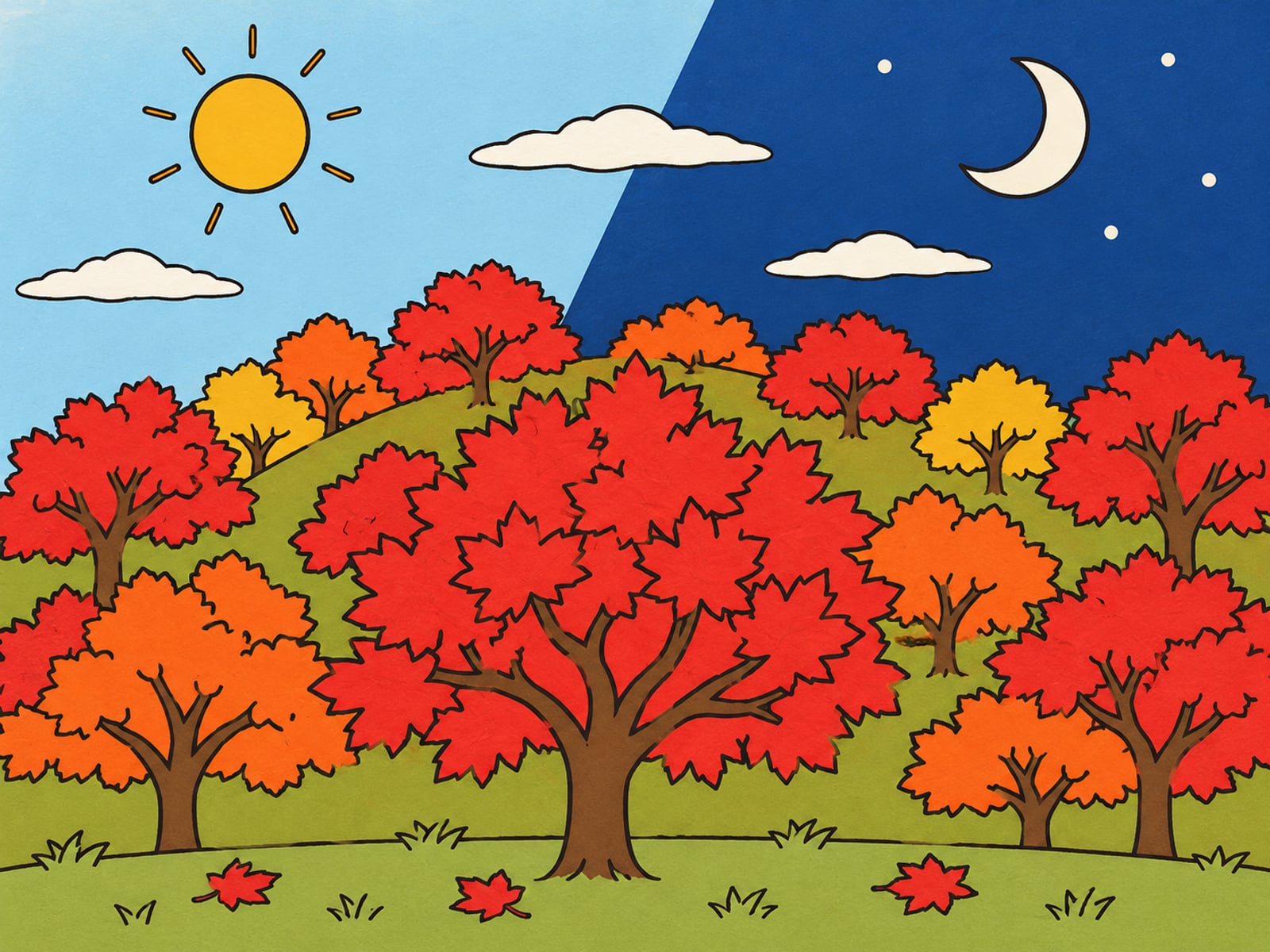
Sunny autumn days can increase sugar production in leaves that are still doing photosynthesis. Those sugars can support more anthocyanin, which means stronger red. Cool nights speed up the chlorophyll breakdown, and when temperatures stay above freezing, they favor red.
The University of New Hampshire Extension calls sunny days and cold nights ideal for strong color. The Woodland Trust describes cold nights, dry weather and sunny days as conditions that can intensify red. Kew describes warm, dry weather followed by colder nights as good for a strong display.
Drought is less predictable. Severe drought can cause early yellowing or browning and early leaf fall. Dry conditions can also concentrate sugars and push red up, but the same UNH Extension page cautions that drought's overall effect on color is still not well pinned down.
Mild, wet weather can leave leaves brown or let the color come in unevenly. Wind and frost can take the leaves down before they reach full color.
Two follow-up questions
Two natural next questions are where the leaf goes and why some places do this better than others.
1. Why do leaves fall after changing color?
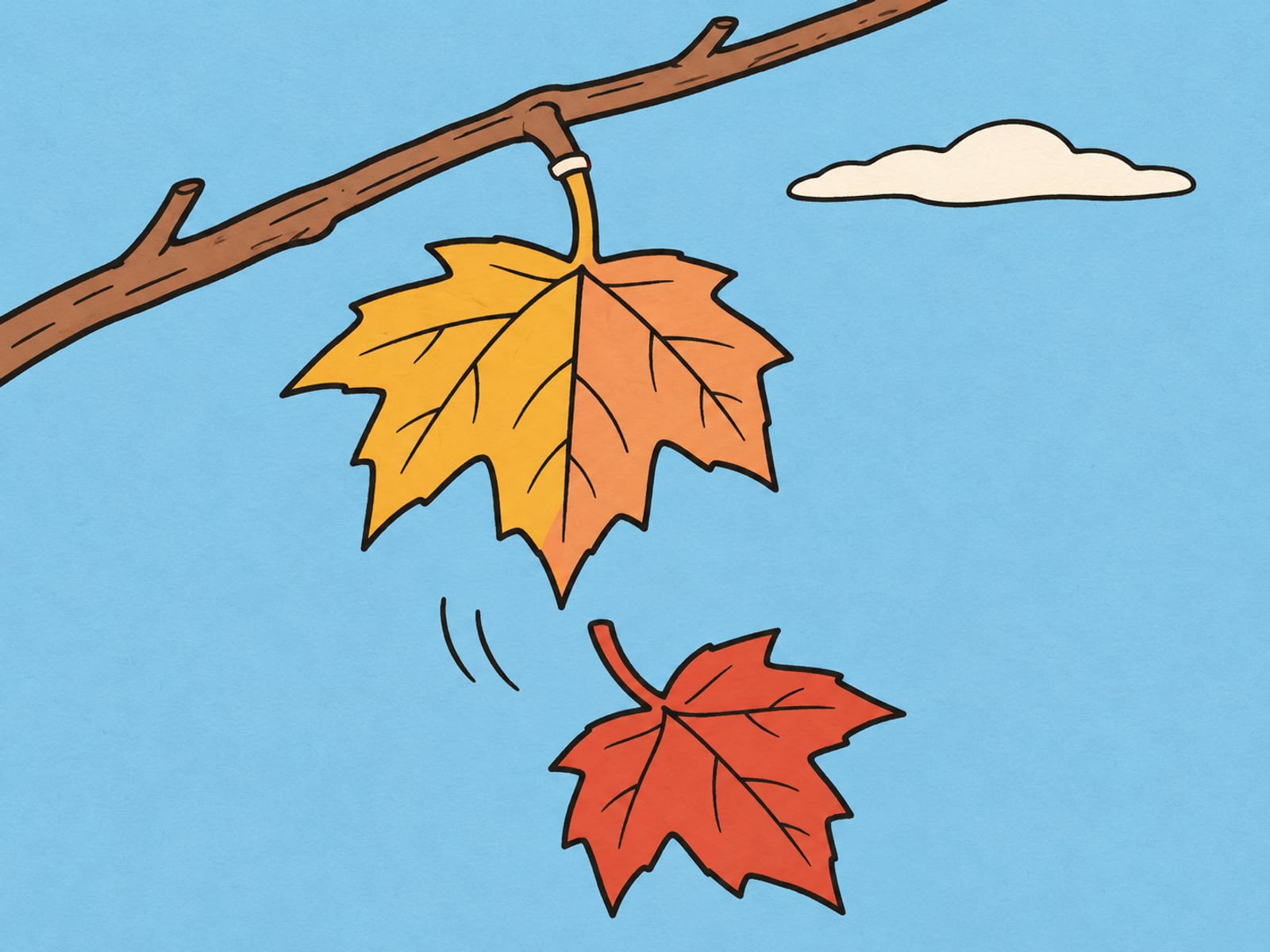
A layer of specialized cells, the abscission layer, forms where the leaf stalk joins the stem. As autumn goes on, auxin declines while signals involving ethylene and abscisic acid increase, according to the Woodland Trust and Kew. The cells in that layer weaken or separate, and the leaf's connection to the tree is cut. Then it falls from its own weight or is blown off.
Dropping leaves also cuts water loss when cold or frozen soil limits what the roots can take up, per the Spanish museum's account. A leafless tree has less surface for winter storms to grab, too.
2. Why is New England so famous for it?
It comes down to the mix of trees. The 2009 USDA Forest Service paper reports that about 70 percent of woody species in New England's mixed forests turn red and about 30 percent turn yellow. Across temperate tree species generally, the figures are about 10 percent red and 15 percent yellow.
University of New Hampshire Extension lists sugar maple, American beech, yellow birch and red maple among the species in the state's northern hardwood-conifer forests. Different species with different pigments and schedules means different colors across one hillside.
Autumns can run duller where there are fewer deciduous species, more evergreens, warmer or wetter weather, severe drought, early frost or strong wind. Tropical regions generally have less widespread autumn color, since many species stay evergreen, as the Academia Mexicana de Ciencias reports.
By the numbers
| Figure | Value | Source |
|---|---|---|
| New England mixed-forest woody species that turn red | About 70 percent | USDA Forest Service, "Unravelling the Evolution of Autumn Colours," 2009 |
| New England mixed-forest woody species that turn yellow | About 30 percent | USDA Forest Service, 2009 |
| Temperate tree species overall that turn red | About 10 percent | USDA Forest Service, 2009 |
| Temperate tree species overall that turn yellow | About 15 percent | USDA Forest Service, 2009 |
| Autumn tinting in the UK | Late September through November or early December, depending on weather | Woodland Trust, "Why do leaves change colour and fall off in autumn?" |
Questions people ask
Why do leaves turn red instead of yellow? 01
Red comes from anthocyanins, which are often made new in autumn rather than uncovered. Sunlight and the sugars it helps build, plus cool nights above freezing, favor more of them. Cell chemistry, including pH, can also nudge the exact shade.
Why do some trees stay green in winter? 02
It depends on the kind of tree. Evergreens keep leaves and renew them through the year, deciduous trees drop theirs in autumn, and marcescent trees hold on to dead leaves into winter, as the Spanish National Museum of Natural Sciences explains.
Why are autumn colors brighter in some years? 03
The run of weather matters most: sunny days, cold nights, rain, drought, frost and wind all play a part. Tree health and the mix of species matter too. A string of sunny days and cold nights tends to help, while early frost or strong wind can end the show early.
Is this the same outside the United States? 04
The basic process is the same elsewhere. The USDA Forest Service paper notes that pure stands of southern beech (Nothofagus) in Patagonia turn orange and red in autumn, and Kew and the Woodland Trust describe the same pigments in Britain. Timing and intensity change with latitude, climate and how many deciduous trees a region has.
The leaf was never just green
Go back to that sugar maple leaf. Its yellow was in the leaf all summer, hidden under green. Its red, if it turns red, is often made fresh as the season closes.
That is also why weather matters: sun, cold nights and dry spells change how much red gets made and how long the leaf hangs on to show it.
The yellow was there all summer, and many of the reds are new.
Sources

- Royal Botanic Gardens, Kew, "Why do leaves change colour in autumn?"
- USDA Forest Service, "Development of Fall Foliage Color," 2001
- USDA Forest Service, "Forest Physiology and Phenology," 2019
- USDA Forest Service, "Unravelling the Evolution of Autumn Colours," 2009
- University of New Hampshire Extension, "How to Make the Most of Fall Foliage Season," 2020
- University of New Hampshire Extension, "Northern Hardwood-Conifer Forests"
- Woodland Trust, "Why do leaves change colour and fall off in autumn?"
- Spanish National Museum of Natural Sciences, "The Role of Light and Temperature in Leaf-Litter Decomposition"
- Academia Mexicana de Ciencias, Ciencia, volume 75, number 4, 2024