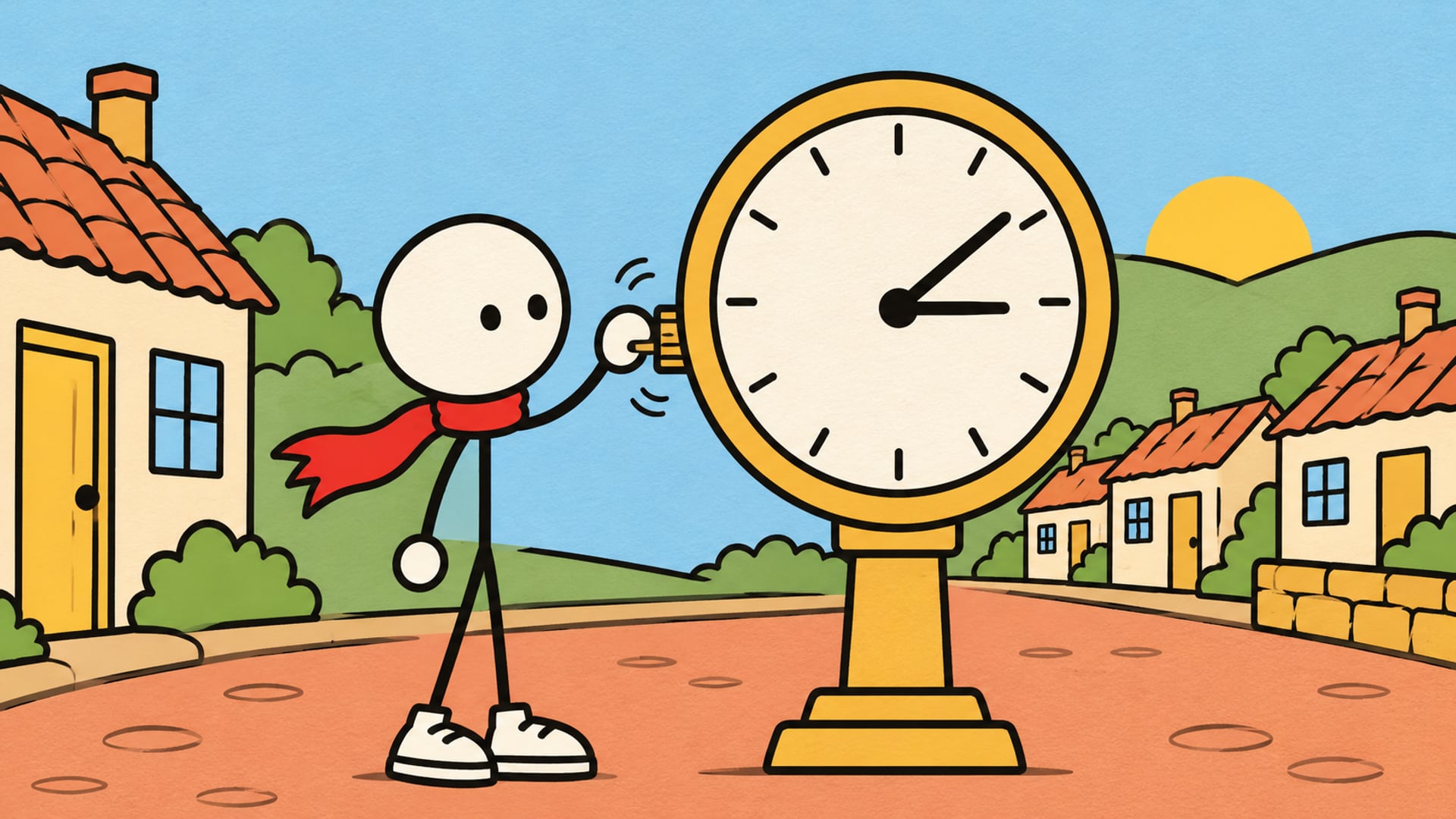
Why does February have 28 days?

February has 28 days because the old Roman calendar made it the leftover month. Romans liked odd numbers, February was tied to purification and rites for the dead, and it was a place for corrections. A leap day is added when needed to keep the calendar in step with the seasons.

In this explainer +
Start a year in March and end it in December. Count the days, and the Roman tradition says you get ten months and 304 days.
Now look at a calendar on your wall. A full year is 365 days. So, where did the roughly 61 days of winter go? In that early Roman year, they were simply left outside it, a gap with no month name.
Filling that gap is how we got January and February, and it is why February ended up the short one. Roman writers later credited Numa Pompilius, Rome's second king, with adding both months, and the Romans favored odd-numbered months, so February got the leftover even number: 28. These details come from tradition, so treat them as the best Roman story we have, not a signed contract.
The year with a hole in it
Here is the tradition. Romulus's calendar began in March and had ten months: Martius, Aprilis, Maius, Iunius, Quintilis, Sextilis, September, October, November and December. According to the University of Chicago's Roman calendar page, the Romans treated February as a month of purification rites and rites for the dead, and as an unlucky one.
Add up the ten months and you reach 304 days. That leaves about 61 days of winter that no month claimed, as Time and Date describes it.
Look at the names September, October, November and December. They come from the Roman words for seven, eight, nine and ten, because they really were the seventh through tenth months of a year that began in March.
Then Numa arrives. Roman writers later credited him with adding Ianuarius and Februarius, which brought the year to 12 months and 355 days, as Live Science also reports. Some modern historians date the documented Republican calendar's organization to the Twelve Tables, around 450 BCE. So, the exact who and when stays fuzzy.
Why February drew the short straw
Why 28, and not 29 or 30? Two things pushed it there.
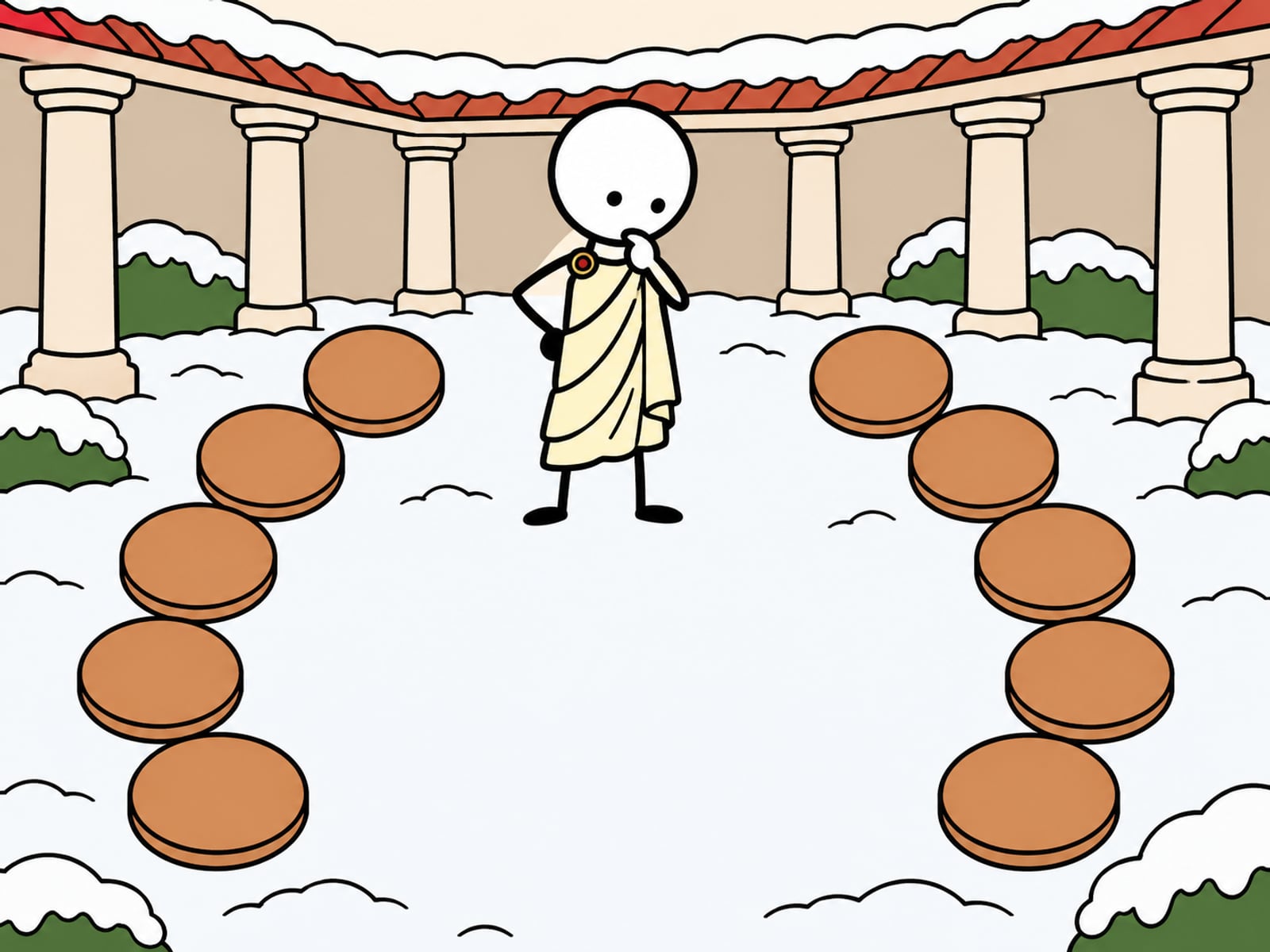
First, the Romans distrusted even numbers. Most months were given odd lengths, which they considered more fortunate. After January was given an extra day, February was left holding an even number: 28.
Second, February had a reputation. Its name is connected with februa, rituals of purification and expiation. It was devoted to rites for the dead and purification, and it was treated as an unlucky month. If one month had to carry the unlucky even number, the grim one was the obvious pick.
There is one more reason, and it matters for the leap day later. In the early arrangement, February was the final month of the Roman year. That made it the place where calendar corrections and intercalary days, the extra days slipped in to patch the calendar, were inserted.
In other words, February was the end of the line, and the end of the line is where you put the repairs.

Why a calendar needs repairs at all
Think of it like this: a year is a bit longer than 365 days, and a calendar that ignores the extra bit slowly slides away from the seasons, like a watch that loses a few minutes a day.
NASA's calendar page puts the length of Earth's tropical year at about 365.2422 days. A calendar of plain 365-day years drifts against the seasons by almost a quarter of a day each year. Left alone, it ends up with spring arriving on the wrong date.
The Roman calendar had drifted badly by the time Julius Caesar was in charge. The Royal Observatory of Belgium describes his reform of 46 BCE, which produced the exceptionally long "year of confusion," and the Julian calendar began in 45 BCE. It used 365-day years and added one leap day every fourth year. Where did the extra day go? Into February, which made it 29 days in leap years, according to the Royal Observatory of Belgium.
The old habit stuck. Corrections had always lived in February, so the leap day went there too. A leap day keeps dates such as the March equinox near the same calendar date, per NASA.
The same February in Mexico, Spain and the UK
February works the same way in Mexico and Spain as it does in the United States. Mexico uses the Gregorian calendar for civil dates, with February at 28 days in common years and 29 in Gregorian leap years, as an IBM document on the Mexican Spanish calendar lays out. Spain's official calendar follows the Gregorian system as well, per the Boletín Oficial del Estado.
The United Kingdom got there later. Under the Calendar Act 1750, September 2, 1752 was followed by September 14. Eleven dates simply vanished.

The record
| Date | What happened | Source |
|---|---|---|
| Around 738 BCE (traditional) | Romulus's calendar runs March through December, leaving the winter days outside it | Time and Date |
| Around 713 BCE (traditional) | Numa Pompilius adds Ianuarius and Februarius | Live Science |
| 46 BCE | Julius Caesar orders a major correction, the "year of confusion" | Royal Observatory of Belgium |
| 45 BCE | The Julian calendar begins: 365 days, a leap day every fourth year | NASA |
| 44 BCE | Quintilis is renamed July for Julius Caesar | University of Chicago |
| 8 BCE | Sextilis is renamed August for Augustus | University of Chicago |
| 1582 | Pope Gregory XIII's reform: October 4 is followed by October 15 in the first adopting countries | NASA, Five Millennium Catalog of Solar Eclipses |
| 1752 | In Britain, September 2 is followed by September 14 | UK legislation |
Questions people ask
A few follow-ups tend to come right after the first one.
1. Why does February have 29 days in leap years? 01
Because Earth's year is about 365.2422 days, not 365. Caesar's Julian calendar added a day every fourth year to catch up, and the Romans' habit of putting corrections in February meant the leap day landed there.
2. Why are leap years not always every four years? 02
Julian years were slightly too long on average. So Pope Gregory XIII's reform of 1582 kept the four-year rule but skipped century years unless they are divisible by 400, according to the Royal Observatory of Belgium. That is why 2000 was a leap year, while 1900 and 2100 are not.
3. Why are July and August both 31 days? 03
July was renamed for Julius Caesar in 44 BCE and August for Augustus in 8 BCE. A popular story says Augustus took a day from February to make August as long as July. The identifiable origin of that story is a 13th-century account by Johannes de Sacrobosco, and no surviving ancient source records Augustus removing a day from February, as the University of Chicago notes.
4. Why is February so short, in one sentence? 04
Because the old Roman calendar made it the leftover even-numbered month, and its place at the end of the year made it the home for corrections.
Short month, long job
February is short because the old calendar left its corrections there, and a leap day keeps the calendar in step with the seasons.
That is the whole trick. The shortest month was the one the Romans trusted to absorb the mistakes, and it still does it. Every four years or so, it gets one extra day to keep spring where spring belongs.
Sources

- University of Chicago, "Roman Calendar"
- University of Chicago, "The Month of Augustus"
- Time and Date, "The Roman Calendar"
- Live Science, "Keeping Time: Months and the Modern Calendar"
- Royal Observatory of Belgium, "The Roman and Julian calendars"
- Royal Observatory of Belgium, "The Gregorian calendar"
- NASA, "Calendar Calculations"
- NASA, "Five Millennium Catalog of Solar Eclipses"
- IBM, "Mexico Spanish Calendar"
- Boletín Oficial del Estado, "Calendario 2026"
- UK legislation, Calendar (New Style) Act 1750