Why Does Swiss Cheese Have Holes?
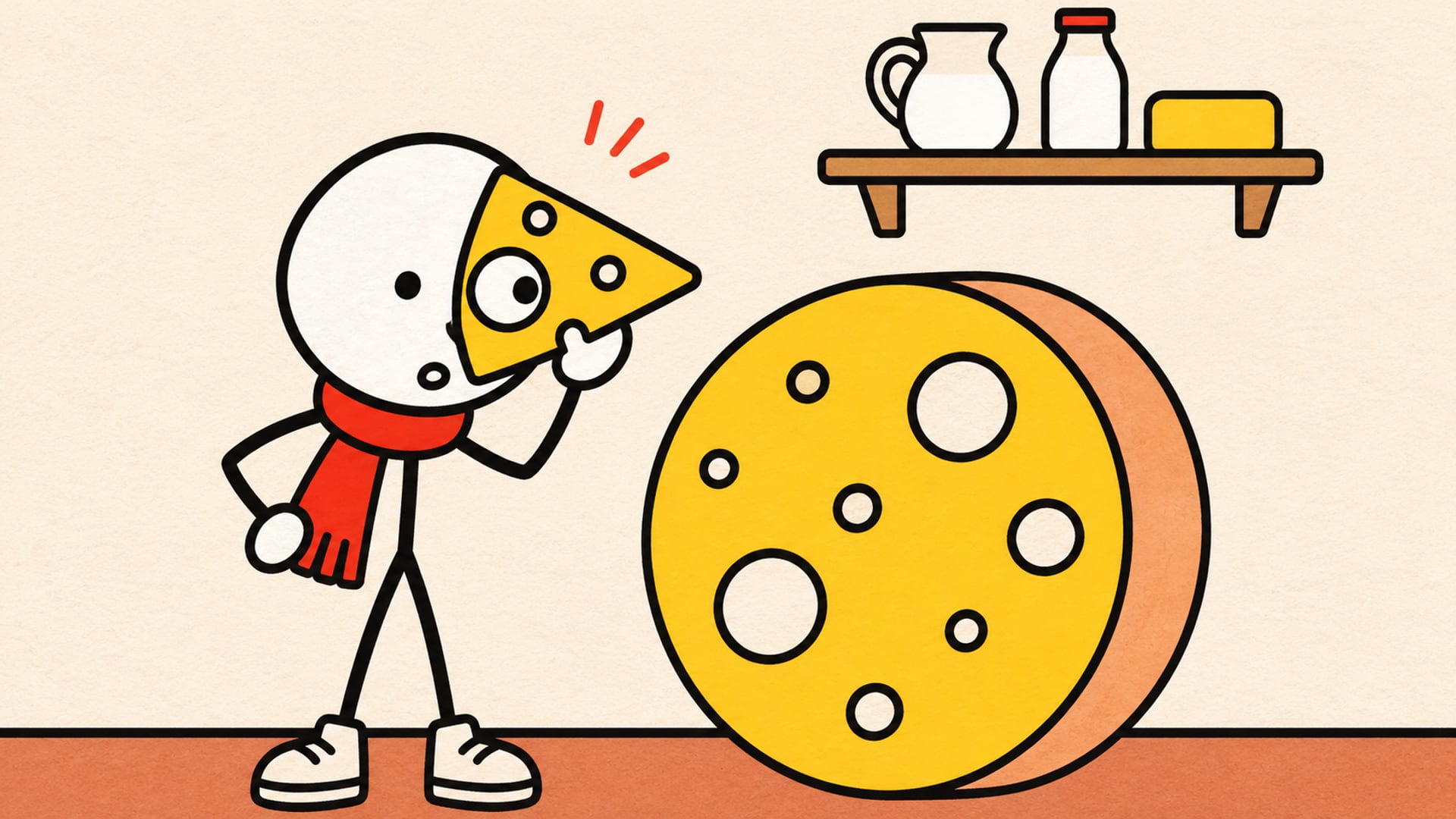
The holes in Swiss cheese are gas bubbles. The bacterium Propionibacterium freudenreichii ferments lactic acid into propionic acid, acetic acid and carbon dioxide, and the carbon dioxide collects in weak points or microscopic specks in the cheese. Cheesemakers call the finished holes eyes.

In this explainer +
Swiss cheese gets its holes from gas. Bacteria make carbon dioxide as the cheese ripens, and the gas collects around tiny specks, some of which can come from hay in the barn.
The story runs in three steps. First the bacteria, then the hay particles, then the names, because cheesemakers have words for all of this, and the "Swiss cheese" in a US store is not quite the cheese the Swiss mean.
The short version comes from Agroscope, the Swiss agricultural research body. After lactic-acid bacteria turn the milk sugar lactose into lactic acid, a second bacterium eats that acid and gives off gas.
The bacteria that make the gas
Start in the dairy. The milk is heated, stirred, mixed with rennet and bacterial cultures, then cut into curds, as the Swiss government's House of Switzerland describes it. Then the slow part begins.
Two kinds of bacteria work in turn. The first, lactic-acid bacteria, convert lactose into lactic acid. In other words, they turn the sugar in milk into acid.
The second is the star: Propionibacterium freudenreichii. It uses the lactic acid as food. What comes out is propionic acid, acetic acid, carbon dioxide and energy for the bacterium.
The wheel does this in a warm ripening room, at about 20 to 24°C, according to Agroscope's 2008 paper. The gas dissolves in the cheese at first. Then it needs somewhere to go.
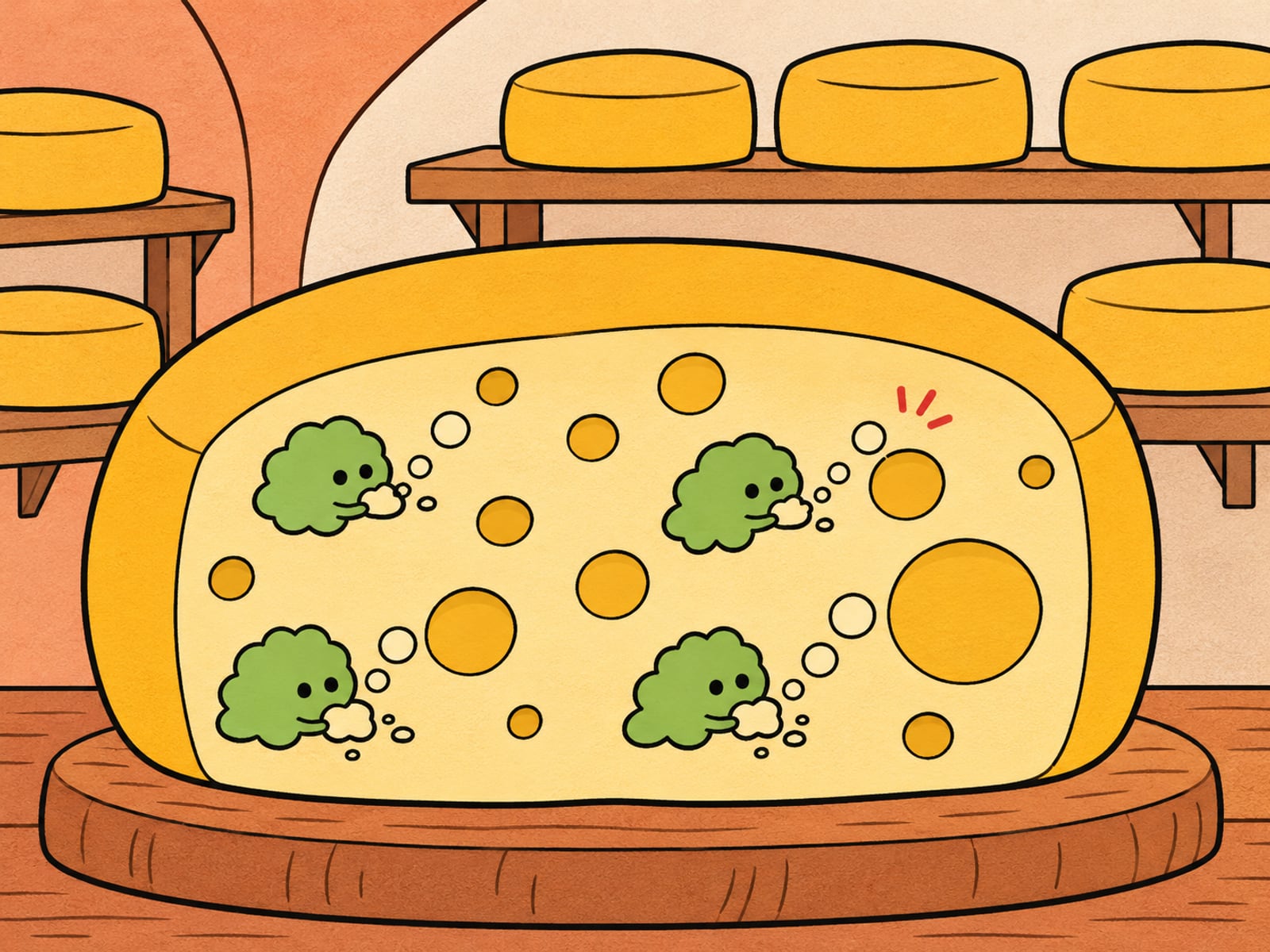
Where the gas collects
The carbon dioxide gathers in weak points or microscopic nuclei in the curd. A nucleus here is just a tiny speck that gives the gas a place to start a bubble. The bubble grows, and it becomes a hole.
Think of it like this: a bubble forming on a rough spot in a glass of soda. The gas is already in the drink. The rough spot gives it a place to collect. Cheese works the same way, only slower, and the "glass" is a ripening wheel.
So, what are the specks? That question got an answer in 2015.
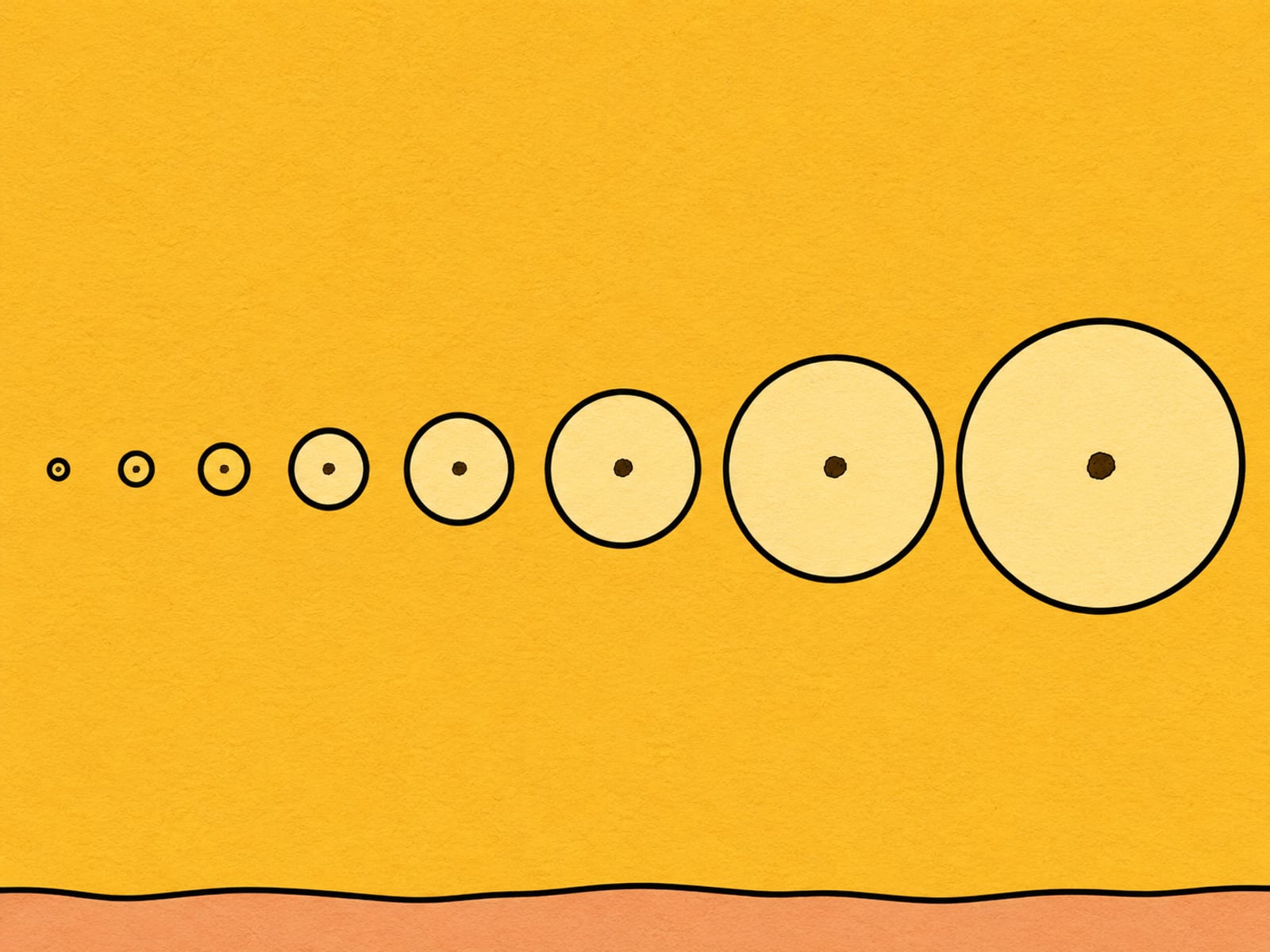
The hay study
Agroscope and the Swiss Federal Laboratories for Materials Science and Technology made experimental Emmental cheeses from microfiltered milk. They added trace amounts of powdered hay, then monitored the cheeses for 130 days with computed tomography, a scanning method. The study appeared in the International Dairy Journal, and swissinfo reported it on May 28, 2015.
The hay acted as nuclei where carbon dioxide could collect. And controlling the amount of hay controlled the number and volume of eyes. The amount of hay dust, not the amount of cheese, set how holey it would be.
The finding also explained a puzzle. Modern Swiss cheese had been developing fewer holes. A Swiss Federal Administrative Court release of April 11, 2025 describes the cause: modern milking systems filter milk straight into tanks, so less hay dust gets in from the barn. Fewer specks, fewer places for the gas to gather.
Later Agroscope work reported that approximately 1 to 2 milligrams of hay particles smaller than 100 micrometres per 90 litres of milk can induce the desired number of eyes. That is a very small amount of hay.
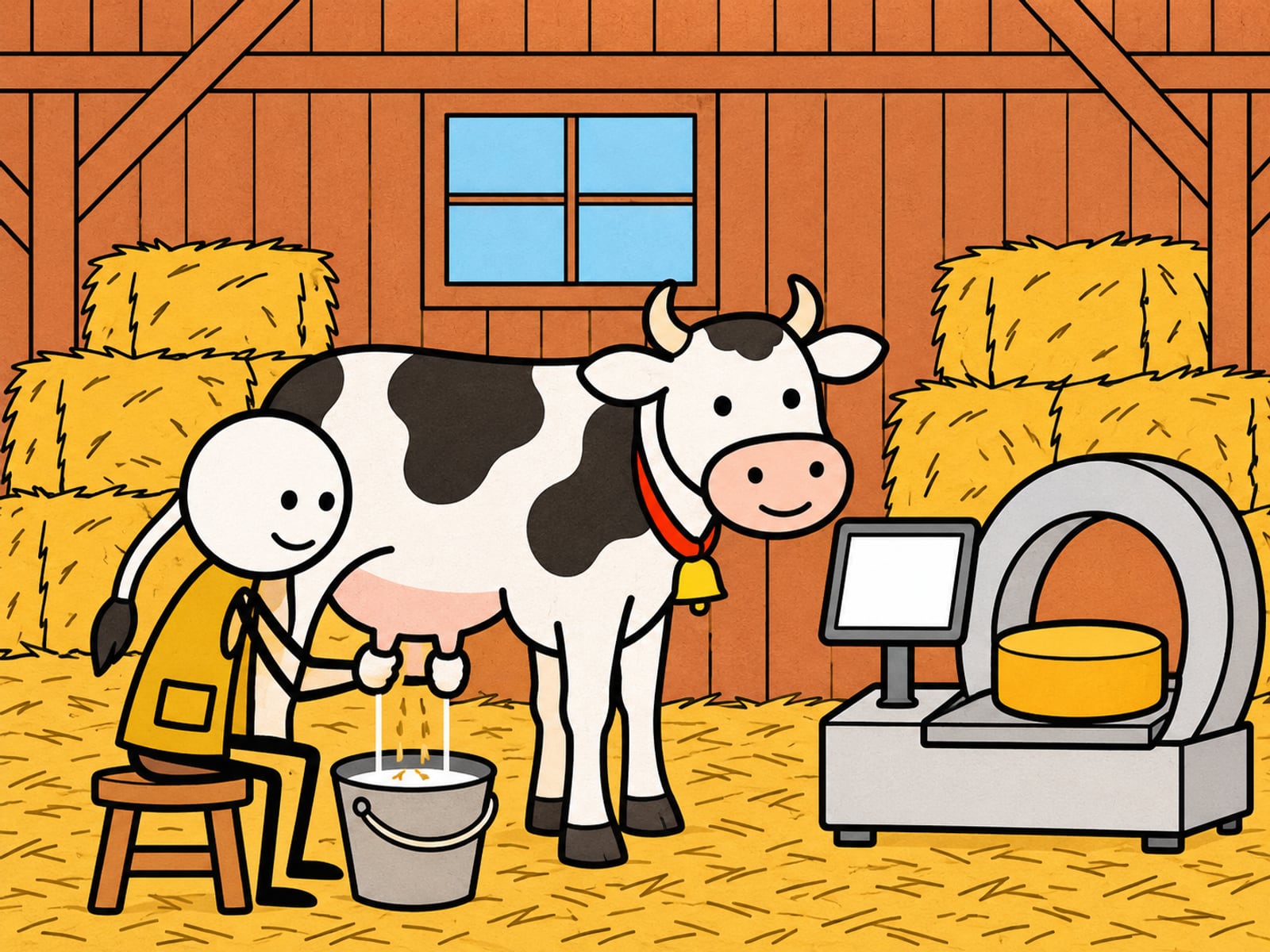
Eyes, blind cheese and the name
Cheesemakers call the holes eyes. A Swiss-type cheese with no eyes is called blind.
Agroscope describes blindness as a defect, caused when the gas-making bacteria or the nuclei are missing. Microfiltration or centrifugation can strip out those nuclei, and without nuclei the cheese can end up with no holes at all, as El País also reported on February 3, 2020.
Then there is the name. Emmentaler is a hard Swiss cheese from the Emme Valley in the canton of Bern, traditionally made from cow's milk and matured so that propionic-acid fermentation forms the eyes, per House of Switzerland. In the United States, "Swiss cheese" is a generic category. The USDA standard treats Swiss and Emmentaler as interchangeable names for cheese made by the Swiss process or an equivalent, and it requires eyes that form from microbes. So, a supermarket slice is usually a domestic Swiss-style cheese, and Emmentaler AOP from Switzerland is one specific protected-origin product.
The biology is broadly the same elsewhere. The names are not. Mexico has a national standard for a product called queso Suizo, NMX-F-753-COFOCALEC-2015. Swiss government information in Spanish says the cheese commonly called queso suizo abroad is usually Emmental. And France makes Emmental de Savoie, listed by the UK as a French protected geographical indication.
Holey cheese is also a handy shortcut in cartoons, where artists commonly draw mice peeking through wedges full of holes, as MeTV Toons notes. The holes say "cheese" at a glance.
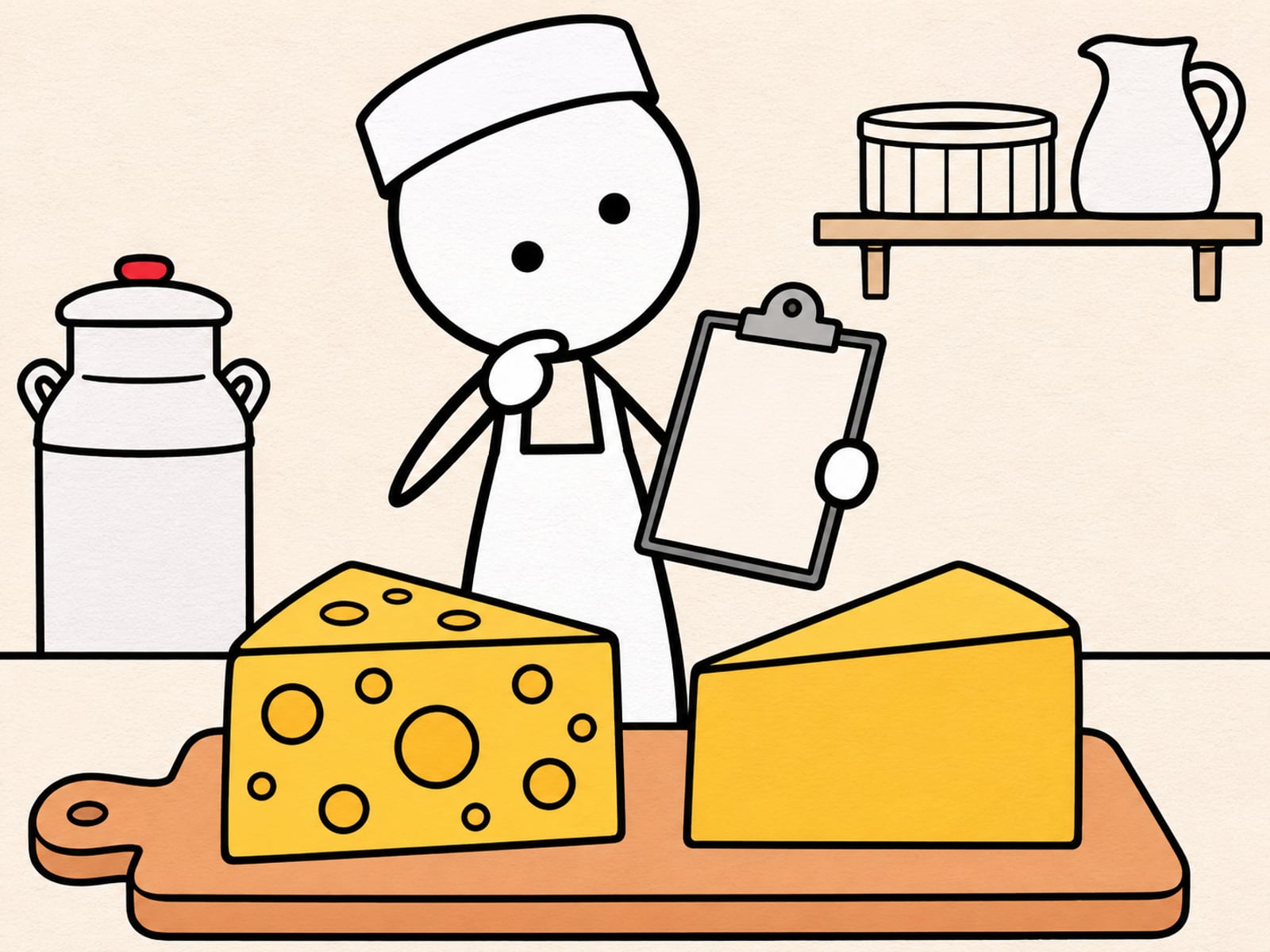
By the numbers
| Figure | Value | Source |
|---|---|---|
| Length of the 2015 hay study | 130 days of monitoring | swissinfo, May 28, 2015 |
| Warm ripening temperature | about 20 to 24°C | Agroscope, 2008 |
| Size of those hay particles | smaller than 100 micrometres | Swiss Federal Administrative Court, April 11, 2025 |
| Products of the bacterium's fermentation | propionic acid, acetic acid, carbon dioxide | Agroscope, 2026 research paper |
Questions people ask
1. Why are the holes in Swiss cheese called eyes? 01
It is cheesemaking vocabulary, built on the long-standing comparison between a visible opening and an eye. The word is the same for the holes in any Swiss-type cheese, whether the cheese is Emmentaler or a domestic Swiss-style one.
2. Why are modern Swiss cheese holes getting smaller? 02
Cleaner milking. Modern systems filter milk directly into tanks, so less hay dust enters from the barn, and the cheese has fewer specks for the gas to collect around.
3. Why do some Swiss cheeses have no holes at all? 03
Agroscope describes a cheese without eyes as blind, and the usual causes are missing nuclei, too little carbon dioxide, or gas escaping through the rind. Microfiltering or spinning the milk can remove the nuclei too.
4. Why does Swiss cheese taste nutty? 04
The taste is tied to what the propionic bacterium makes: propionic acid and acetic acid. The cheese's aging conditions play a part as well. The same fermentation that blows the bubbles also builds the flavor.
What the holes tell you
Next time you hold up a slice and look through it, you are looking at a record of what happened inside the wheel. Bacteria ate lactic acid and made gas. The gas found specks. The specks may have blown in from a barn.
The holes are not an absence of cheese. They are the part of the cheese that bacteria made out of thin air, with a little help from hay.
Swiss cheese gets its holes from gas that bacteria make, and the specks it gathers around can come from hay.
Sources

- Agroscope, 2026 research paper
- Agroscope, ALP science 2008
- Guggisberg et al., "Mechanism and control of the eye formation in cheese," International Dairy Journal, 2015
- SWI swissinfo, "Hay particles responsible for holes in Swiss cheese," May 28, 2015
- Swiss Federal Administrative Court, "Enough holes in Emmental cheese," April 11, 2025
- El País, February 3, 2020
- House of Switzerland, "Cheese"
- House of Switzerland in Spanish, "Queso"
- USDA Agricultural Marketing Service, Swiss Cheese and Emmentaler Standards
- Mexico's Diario Oficial, NMX-F-753-COFOCALEC-2015
- GOV.UK, Emmental de Savoie
- MeTV Toons, "Mice don't actually like cheese, but it's not Tom and Jerry's fault"