Why Is the Keyboard QWERTY?
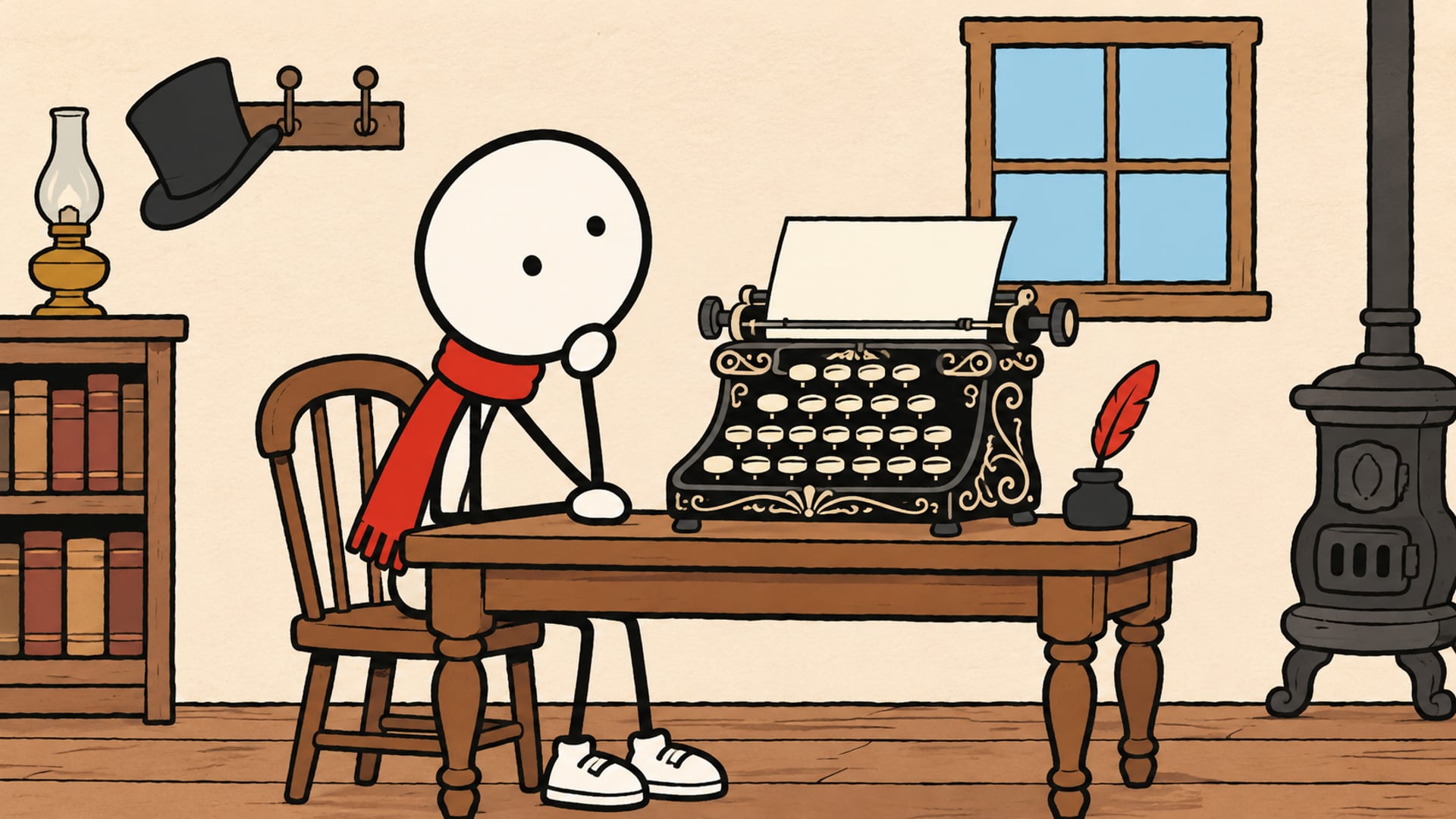
The first typewriter keyboard from Milwaukee in 1868 was close to alphabetical. Over about ten years, inventors, telegraph operators and Remington's machinists kept moving letters, and QWERTY was the result. It stuck because typists, schools and manufacturers all learned the same arrangement.

In this explainer +
The letters on your keyboard are not in alphabetical order, and the reason starts with a writing machine built in Milwaukee in 1868.
Here is the route, in order. First comes that machine, which looked more like a small piano than a keyboard. Next come the changes that followed, then the 1873 deal with Remington, then the claim that the layout was designed to slow typists, which is disputed. Last, we get to why the order stuck.
The short answer: QWERTY grew out of early typewriter mechanics, feedback from telegraph operators, and manufacturing and sales decisions between 1868 and 1878. Nobody sat down and drew it once.
Milwaukee, 1868: a keyboard shaped like a piano
Christopher Latham Sholes was a Milwaukee newspaper editor, printer and inventor. Carlos Glidden was an inventor and lawyer in the same city, and Samuel W. Soule was a printer and mechanical inventor. Together they built a writing machine with type bars, a carriage and a paper platen.
The patents came fast. U.S. Patent 79,265 was granted on June 23, 1868, and U.S. Patent 79,868 followed on July 14, 1868, covering a circular type-bar arrangement and related parts.
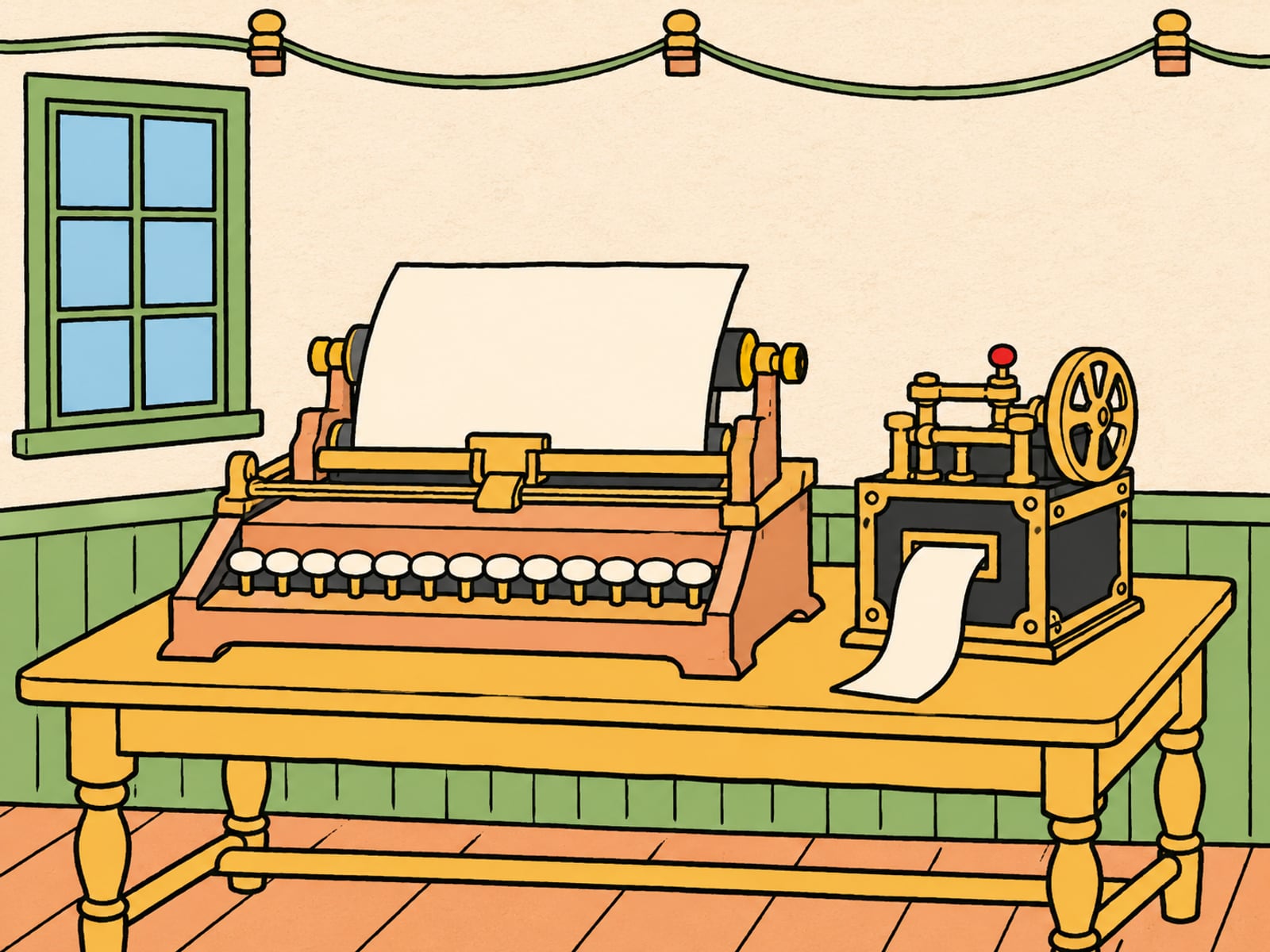
In November 1868, the first machine reached Edward Payson Porter's Telegraph College in Chicago. It had 28 keys laid out like a small piano, with the letters broadly alphabetical: A through N running left to right and O through Z running right to left. Nearby sat a Hughes-Phelps Printing Telegraph, and the keyboard resembled it, as described in the 2011 study On the Prehistory of QWERTY by Koichi Yasuoka and Motoko Yasuoka.
That detail matters. The people trying this machine first were telegraph people.
Ten years of moving letters
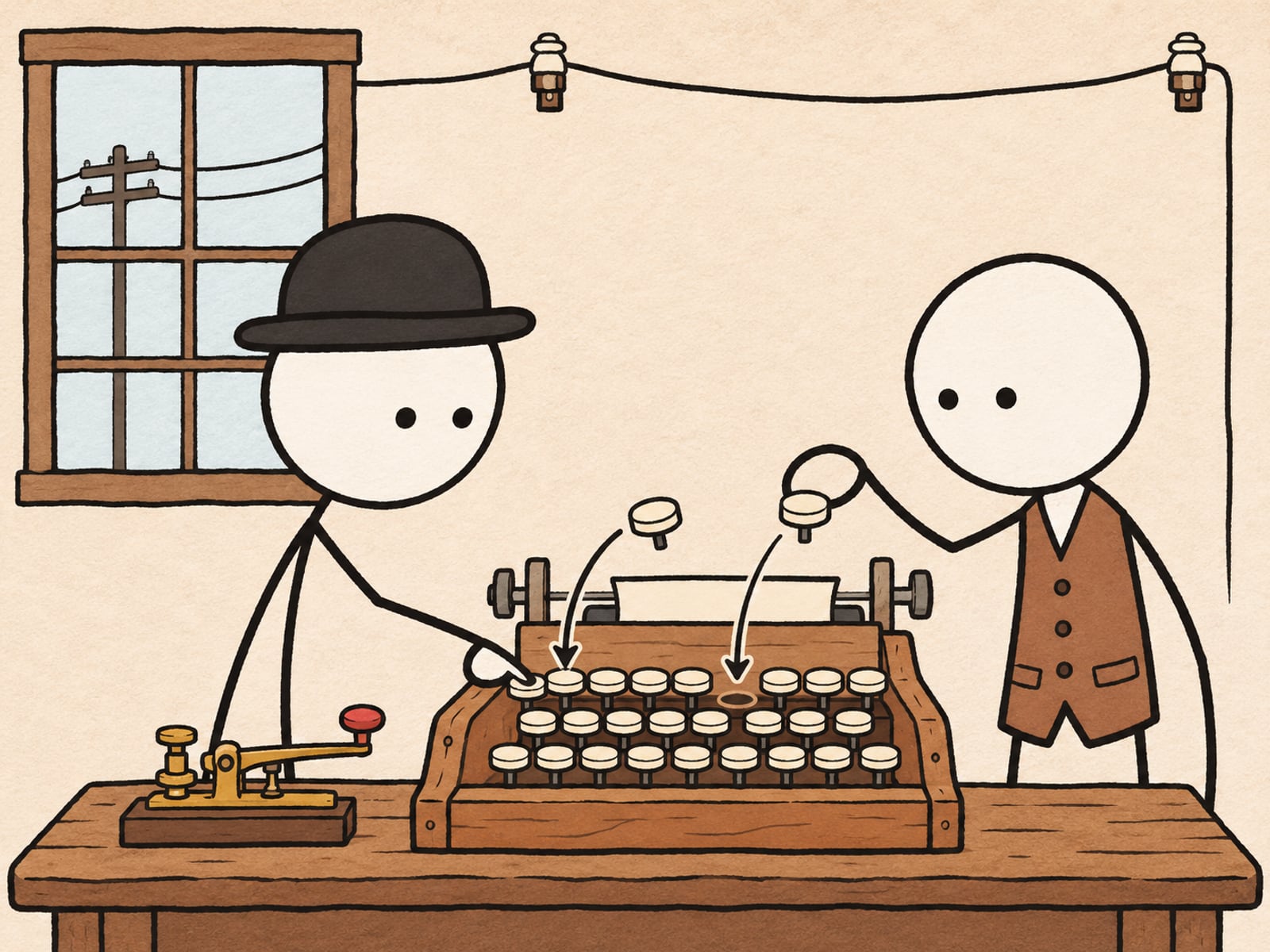
Telegraph operators had a job to do: receive Morse code and turn it into readable text. They noticed what worked and what did not.
In April 1870, Sholes, assisted by Matthias Schwalbach, produced a 38-key machine with capital letters, numerals 2 through 9, punctuation and four rows still close to alphabetical order. Then telegraph specialists George Harrington and Daniel Hutchins Craig gave their feedback, and letters began to move. T went toward the center, W moved up, and Q went toward the edge. S ended up near Z and E because of ambiguities in American Morse code.
In other words, some of the shuffling had nothing to do with typing speed. It had to do with how a Morse receiver read dots and dashes.
A 42-key layout appeared in Scientific American in August 1872, and the machine that went to Remington in February 1873 had 43 keys. By August 27, 1878, Sholes's patent 207,559 showed a recognizable QWERTY arrangement, although the number row and some punctuation still differed from a modern keyboard.
The 1873 Remington deal
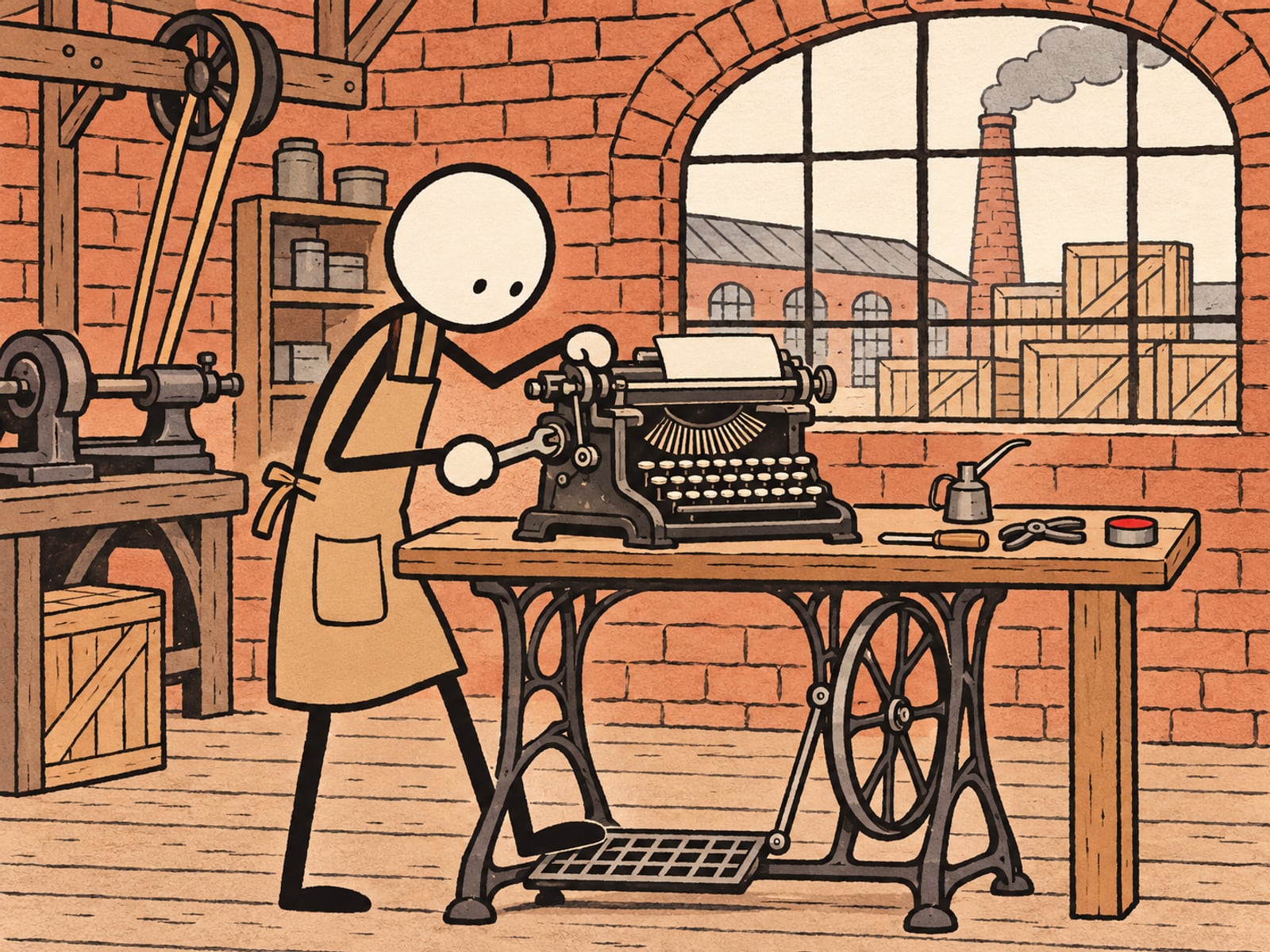
In February 1873, James Densmore, Sholes's business associate and financial backer, carried the 43-key Type-Writer to E. Remington & Sons in Ilion, New York. Remington was known for firearms, farm equipment and sewing machines. A maker of guns and sewing machines was about to take on a writing machine.
On March 1, 1873, the agreement called for Remington to make 1,000 machines for $10,000, with an option for more, according to the Library of Congress. It first covered manufacturing, and Remington later acquired complete ownership of the business and its rights. In May 1873, after a visit from Sholes, the machine was named the Sholes & Glidden Type-Writer.
Then the Remington machinists went to work. In autumn 1873, Jefferson Clough and William Jenne produced a trial model with a revised layout. Sholes asked for Y to move next to T, and the resulting arrangement became the basis of QWERTY.
The machine went on sale in 1874 for $125, according to the ASME landmark history. It printed capital letters only and sat on a stand like a sewing machine's.
Was QWERTY built to slow typists down?
This is the part of the story people ask about most, and the record leaves it open.
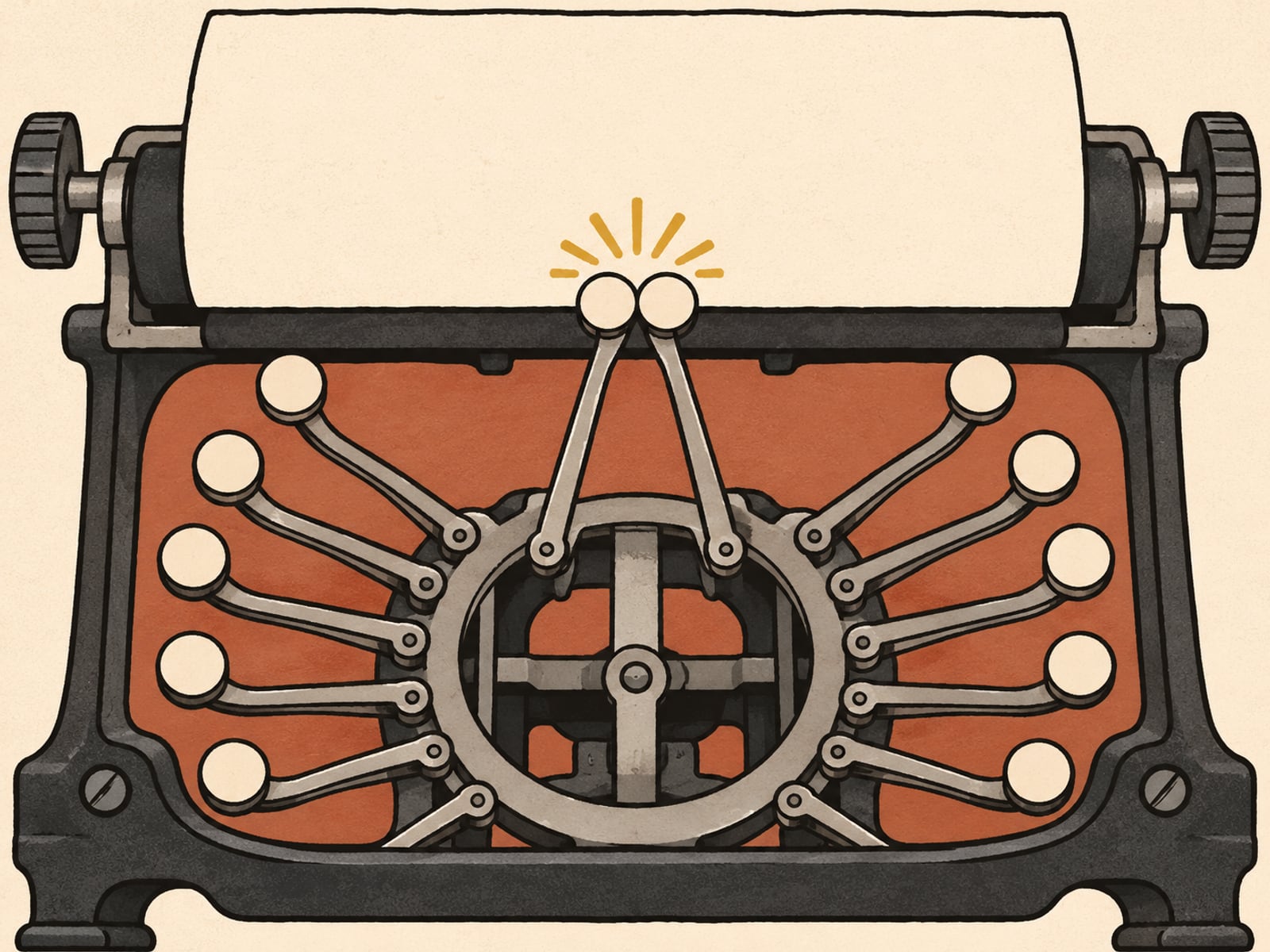
The type-bar explanation goes like this. Early typewriters held their metal bars in a circular basket. If neighboring bars were struck in quick succession, they could collide before returning to rest. Separating common letter pairs could cut down the collisions. The Smithsonian describes QWERTY as adopted to keep type bars from clashing, in its record of the Sholes and Glidden Type Writer.
Think of it like this: a crowd squeezing through one narrow doorway. Two people try to pass at the same moment, and both get stuck. Type bars swinging toward a single spot can do something similar.
So, mechanical interference was a real design problem, and it probably influenced some decisions. But that is different from saying the layout was deliberately designed to slow typists, and that claim is disputed.
The Yasuokas looked at the actual type-bar arrangement. Some frequent pairs were separated, but others, including ER and RE, stayed close. They also argue that early operators included Morse receivers who had to keep pace with the sender, which does not fit a plan to make typing slower. Their conclusion is that QWERTY emerged through a winding process, not from one consistent policy.
Why the order stuck
Remington's No. 2, released in 1878, used a recognizable QWERTY arrangement and became a major product. After that, people started learning to type on it.
William Ozmun Wyckoff taught a six-finger method on Remington machines at the Phonographic Institute after 1878. In 1882, Elizabeth Margaret Vater Longley began teaching an eight-finger method at the Cincinnati Shorthand and Type-Writer Institute. Her school used both Remington and Caligraph machines, so her classroom was not tied to one brand.
On March 30, 1893, five leading companies formed the Union Typewriter Company: Remington, Caligraph, Yost, Densmore and Smith-Premier. They coordinated patents, sales and keyboard arrangements. According to the Yasuokas, by June 1898 QWERTY was the de facto standard.
Once typists, schools, manufacturers and employers all shared one arrangement, switching meant retraining people and buying new machines. Habit kept QWERTY in place even after the type-bar problem stopped mattering. The Library of Congress adds that Teletype adopted QWERTY in the 1910s, and later Teletype terminals carried it into computer keyboards.
The record
| Date | What happened | Source |
|---|---|---|
| June 23, 1868 | U.S. Patent 79,265 granted to Sholes, Glidden and Soule | Google Patents |
| July 14, 1868 | U.S. Patent 79,868 granted, covering a circular type-bar arrangement | Patent image |
| November 1868 | First machine, 28 keys, reaches Porter's Telegraph College in Chicago | Yasuoka and Yasuoka, 2011 |
| April 1870 | Sholes and Matthias Schwalbach produce a 38-key machine | Yasuoka and Yasuoka, 2011 |
| August 1872 | A 42-key layout appears in Scientific American | Yasuoka and Yasuoka, 2011 |
| March 1, 1873 | Remington agreement for 1,000 machines at $10,000 | Library of Congress |
| Autumn 1873 | Clough and Jenne make a trial model; Sholes asks for Y next to T | Yasuoka and Yasuoka, 2011 |
| 1874 | The Sholes & Glidden Type-Writer goes on sale for $125 | ASME |
| August 27, 1878 | U.S. Patent 207,559 shows a recognizable QWERTY arrangement | Patent 207,559 |
| March 30, 1893 | Union Typewriter Company formed by five makers | Yasuoka and Yasuoka, 2011 |
Questions people ask
Why isn't the keyboard in alphabetical order? 01
The first Milwaukee machine was close to alphabetical. Over the next ten years, Sholes kept changing the layout in response to the mechanics of the machine and the needs of telegraph operators, so the order drifted away from the alphabet.
Was QWERTY really designed to slow typists down? 02
That explanation is disputed. Neighboring type bars could collide, which was a real mechanical concern. But the Yasuokas found that ER and RE stayed close, and they point out that early operators included Morse receivers who had to keep up with the sender.
Why is there an Ñ key on Spanish keyboards? 03
Ñ is a letter of the Spanish writing system, so Spanish keyboards add a dedicated key for it. According to Microsoft's keyboard page, the Spanish layout stays broadly QWERTY and adds Ñ plus extra accent and punctuation functions. Other countries adapt it too: France commonly uses AZERTY, and Germany and Austria commonly use QWERTZ, with Y and Z exchanged.
Why didn't the Dvorak keyboard replace QWERTY? 04
August Dvorak and William L. Dealey patented the Dvorak Simplified Keyboard as U.S. Patent 2,040,248, granted May 12, 1936. Retraining costs, existing machines, typing schools and the commercial network around QWERTY made replacement hard. The evidence supports calling it a deliberate ergonomic redesign, not a layout that makes everyone faster.
A typewriter's habit on a phone screen
The keys under a phone or laptop still follow choices made between 1868 and 1898. The metal bars are long gone, but the arrangement traveled from typewriters to teletypes to computers, because changing it means retraining everyone who uses it.
The order came from early typewriters, telegraph feedback and sales, and it stuck because typists had learned it.
Sources

- Yasuoka and Yasuoka, "On the Prehistory of QWERTY" (2011)
- Google Patents, U.S. Patent 79,265
- U.S. Patent 79,868
- U.S. Patent 207,559, Sholes, 1878
- Library of Congress, "Typewriter production began"
- ASME, Sholes & Glidden Type-Writer landmark history
- Smithsonian, Sholes and Glidden Type Writer
- Library of Congress blog, "QWERTY"
- Microsoft, Spanish keyboard
- Google Patents, U.S. Patent 2,040,248