Why Is the Moon Orange?
The Moon looks orange near the horizon because its light passes through a longer stretch of Earth's atmosphere, which scatters shorter blue wavelengths and leaves more of the longer orange and red ones. The Moon itself is not changing color. As it climbs, its light crosses less air and turns paler, often toward yellow or white.

In this explainer +
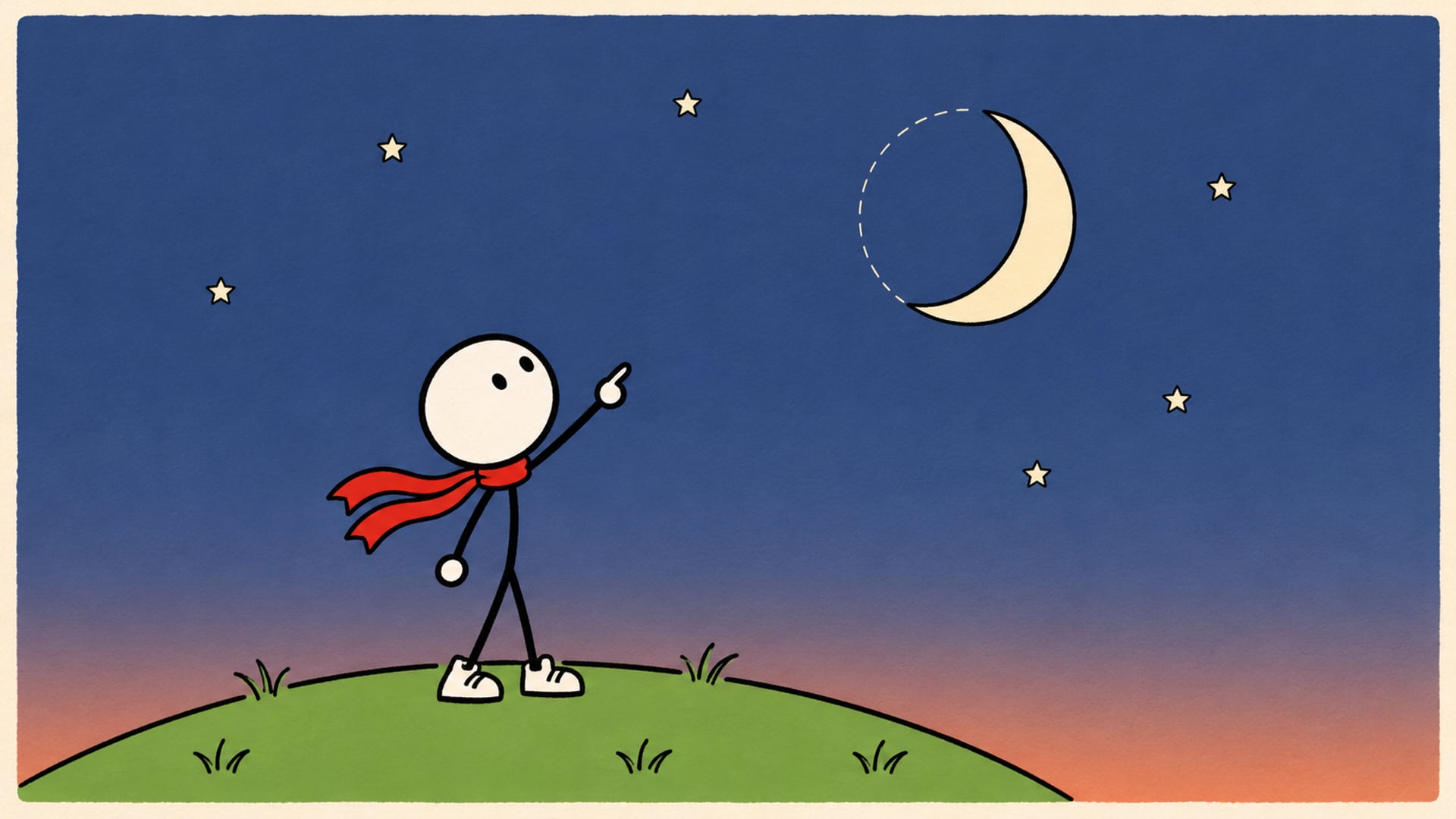
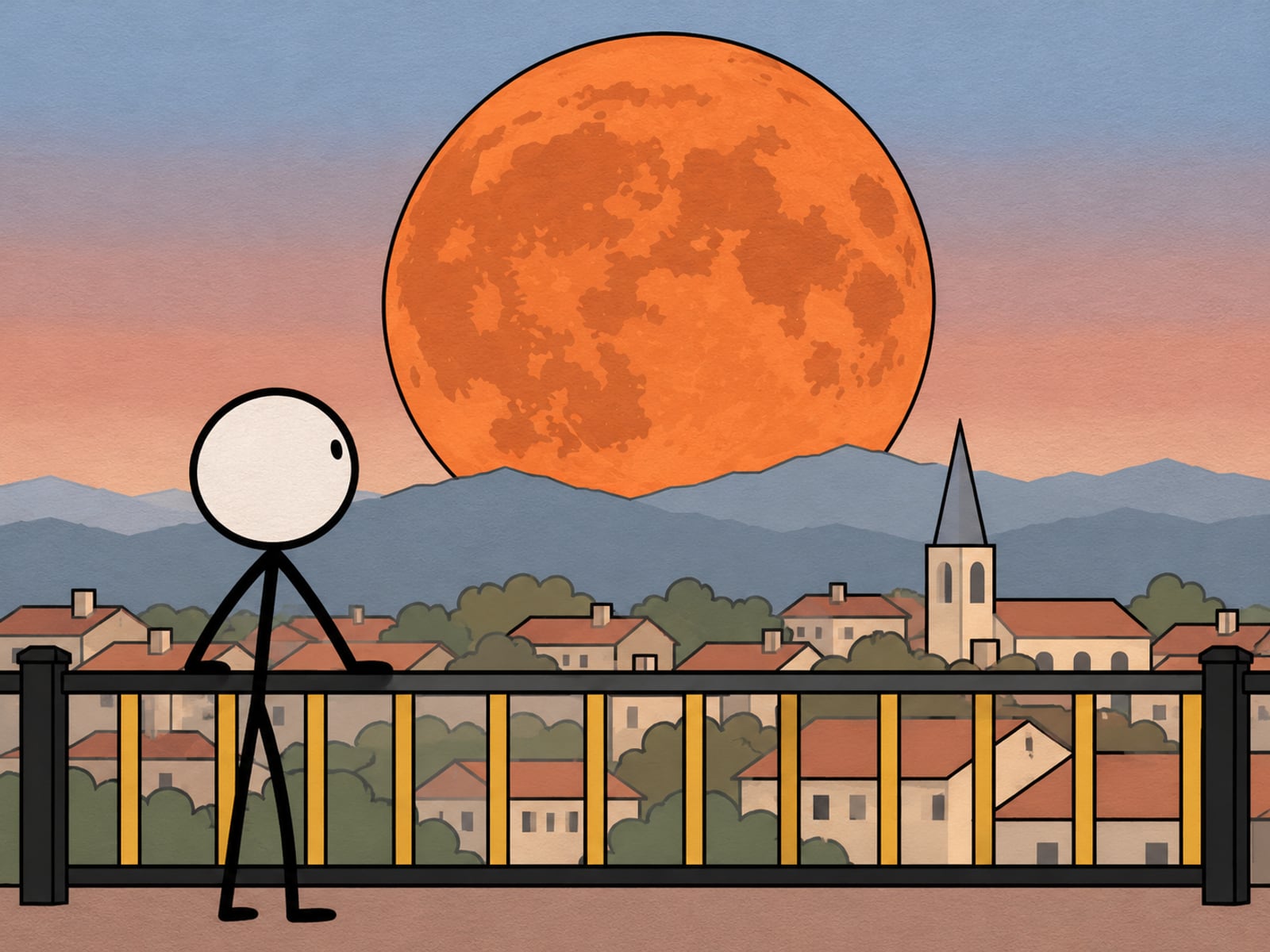
Step outside just after sunset, somewhere with a clear view to the east, and wait for the Moon to clear the trees or the rooftops.
It's low, and it's orange. Maybe a little red around the edges. Now give it a while and look again. The Moon has climbed, and it looks paler, closer to yellow or white.
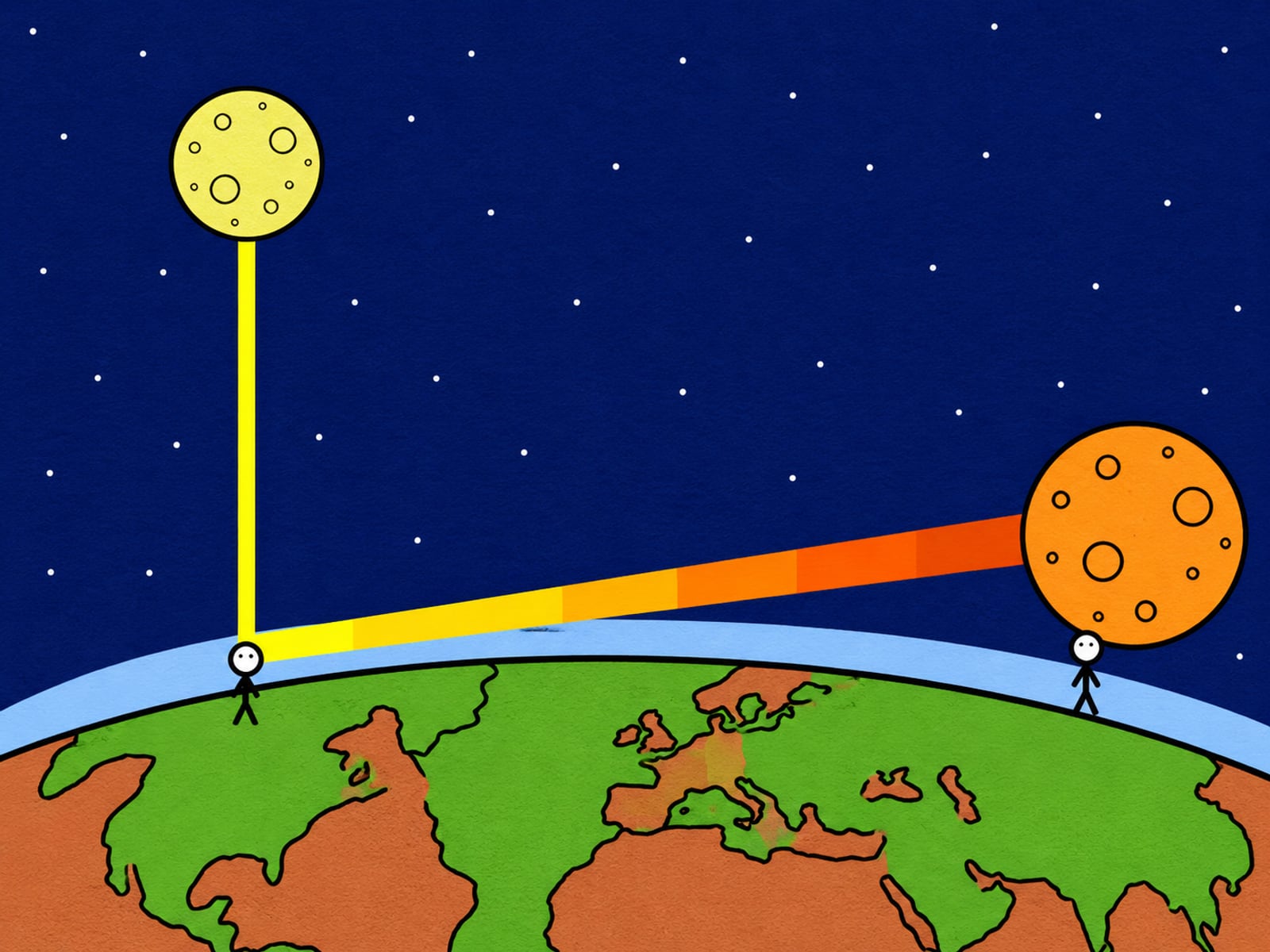
It's the same Moon, so what changed? Not the Moon. Moonlight near the horizon travels through more of Earth's air, and that air scatters the blue and leaves more orange and red, according to NASA Science and its Colors of the Moon page.
Same Moon, different amount of air
Moonlight is reflected sunlight, and sunlight carries every color. On its way to your eyes it has to cross Earth's atmosphere. Air molecules scatter the short blue wavelengths more strongly than the long orange and red ones.
When the Moon is high overhead, that trip through the air is short, so little is lost. When the Moon sits on the horizon, the trip is much longer. More blue gets scattered out of the direct beam, and what reaches you leans orange and red.
Think of it like this: you're wearing sunglasses that take out a little blue. Put on one pair and the world looks slightly warm. Stack a few pairs and everything turns orange. The low Moon is looking at you through a lot of lenses. The high Moon is looking through one.
That's the same basic scattering that makes sunsets red, just working on moonlight instead of sunlight.
As the Moon rises, the path shortens and the color fades. NASA Science describes it in its photographing the Moon illusion page: a Moon that starts out yellow, orange or red turns paler, often toward yellow or white, as it climbs.
The size is a separate trick
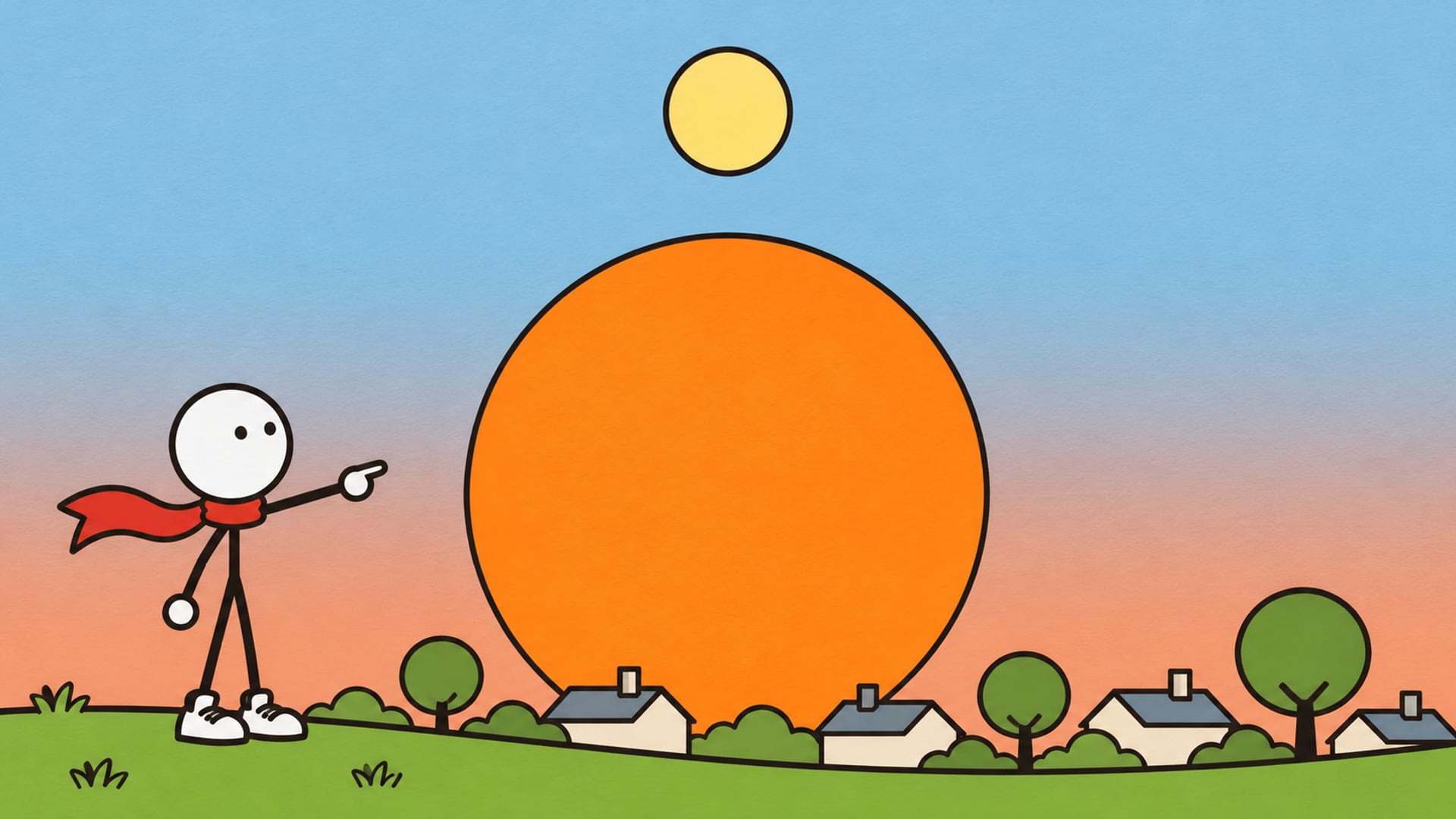
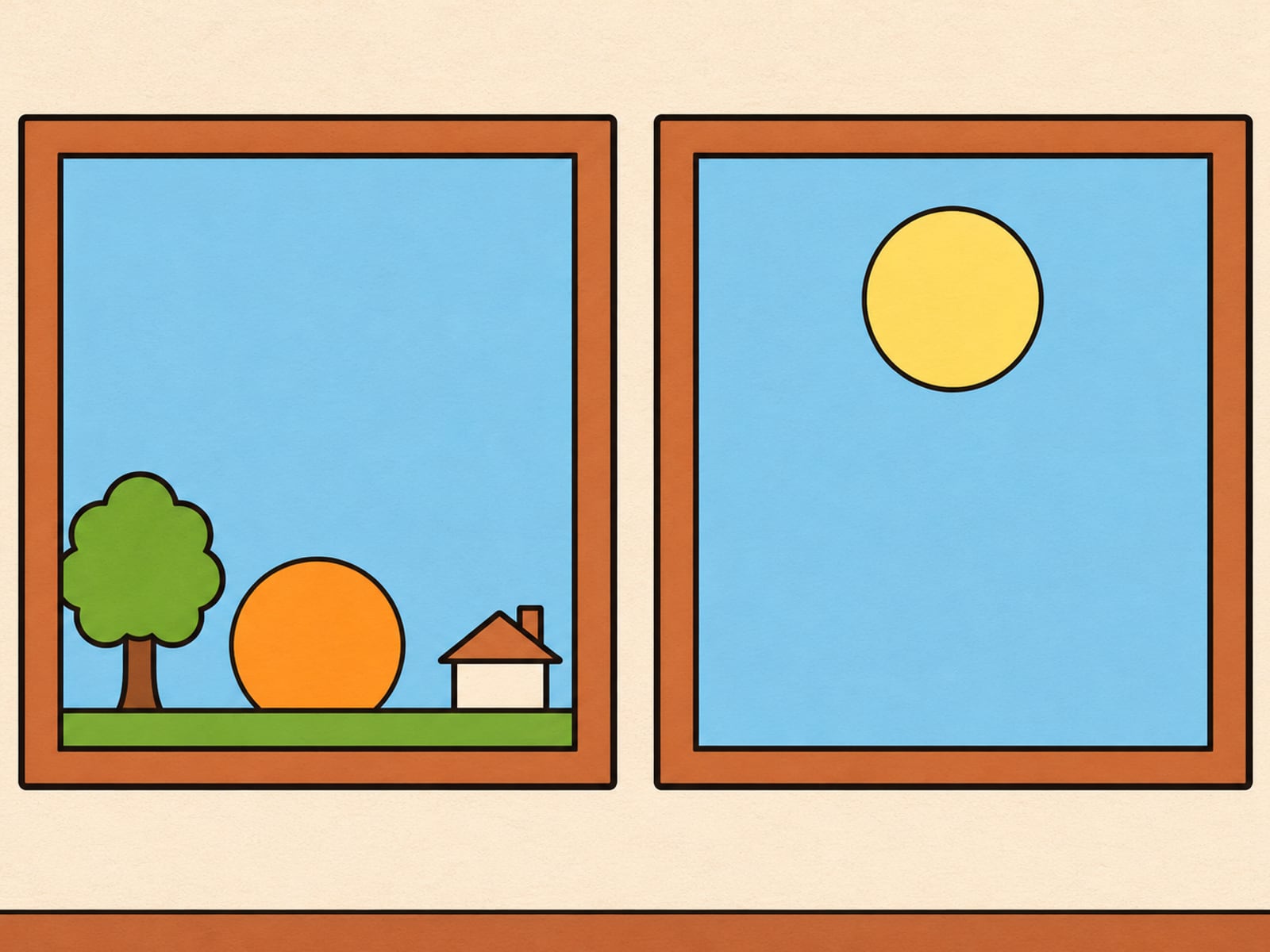
A low Moon also looks huge, especially next to a building, a mountain or a tree. So, it's easy to assume the color and the size come from one cause.
They don't. Photographs taken with the same camera setup, one with the Moon near the horizon and one with it high in the sky, show essentially the same width. The bigger look is called the Moon illusion, and it happens in your head, not in the sky.
NASA says there is no complete scientific consensus on what causes it. The leading explanations involve how the brain judges distance and size, especially when trees, buildings or mountains give it something to compare against. The orange, by contrast, comes from the air.
Three questions that follow
A low orange Moon leads to three more questions, and each one has a short answer.
1. Does smoke or dust make it redder?
Yes, it can. Smoke, dust, pollution and volcanic ash add more particles for the light to pass through, and those particles take more blue and green out of the direct beam. What's left looks more orange, red or brown.
NASA names dust and pollution as factors that can deepen the reddish color. How strong the effect is depends on where you are and which night it is. UNAM's astronomy teaching material in Mexico describes the same thing: a thicker path through the air scatters blue and green light.
2. What is a blood moon?
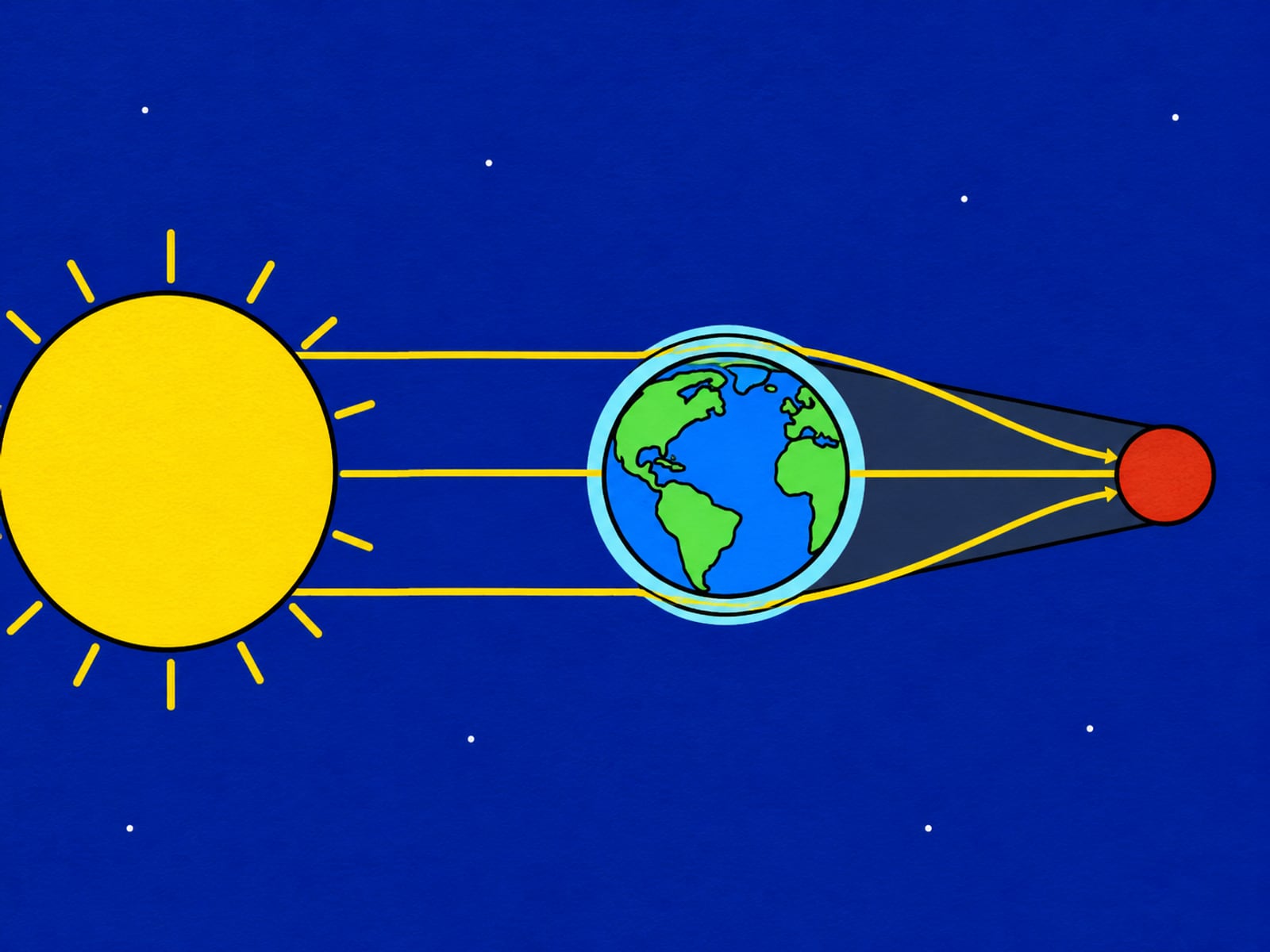
A blood moon is the popular name for the Moon during a total lunar eclipse. Earth moves between the Sun and the Moon, and the whole lunar disk sits inside Earth's darkest shadow, called the umbra.
Direct sunlight is blocked, but some light still passes through the edges of Earth's atmosphere. NASA explains in its Blood Moon Lunar Eclipse image article that this air scatters much of the blue, so the light that reaches the Moon is red and orange. That filtered light bounces off the lunar surface, and the eclipsed Moon glows red.
In other words, a blood moon is a sunset's worth of red light, sent around the edge of the planet and thrown onto the Moon.
3. What is a harvest moon?
The harvest moon is the full Moon nearest the autumnal equinox. It is a seasonal name from the years before electric lighting, according to NASA Space Place, when the bright Moon helped extend the harvest after sunset.
It often looks orange because people usually see it rising near sunset, when it is low and its light crosses a long path through the air. The name describes a season, not a special color or a special kind of Moon. In the Northern Hemisphere the autumnal equinox comes in September. In the Southern Hemisphere the seasons run the other way.
The same physics in other countries
The explanation doesn't change at the border. UNAM says the Moon looks more orange near the horizon because the thicker path through the air scatters blue and green light. Spain's Instituto Geográfico Nacional says a totally eclipsed Moon turns reddish because the atmosphere scatters and refracts sunlight.
In Colombia, Telecafé reported that during the August 27, 2026 partial lunar eclipse, the Moon could look reddish or copper-colored because sunlight passed through Earth's atmosphere before reaching the lunar surface.
What does change from place to place is how strong the color looks and when the Moon rises. Latitude, the shape of the horizon, weather, smoke and dust all play a part.
By the numbers
| Figure | Value | Source |
|---|---|---|
| Moon's width in two same-setup photos, one low and one high | Essentially the same | NASA Science, "Photographing the Moon Illusion" |
| Part of the Moon inside Earth's umbra during a blood moon | The entire lunar disk | NASA, "Blood Moon Lunar Eclipse" |
| The harvest moon | The full Moon nearest the autumnal equinox | NASA Space Place, "Supermoon, Blood Moon, Blue Moon and Harvest Moon" |
| Scientific consensus on the cause of the Moon illusion | No complete consensus | NASA Science, "The Moon Illusion" |
| Colombian partial lunar eclipse that could look copper-colored | August 27, 2026 | Telecafé |
Questions people ask
Why does the Moon look bigger near the horizon? 01
That's the Moon illusion, and it comes from how the brain reads distance and the size of things in the foreground. It isn't the atmosphere acting like a magnifying glass. NASA says there is no complete scientific consensus on the cause.
Why does the Moon turn red during an eclipse? 02
Earth's shadow blocks direct sunlight, but Earth's atmosphere filters the sunlight that bends around the planet's edge. Much of the blue is scattered away, so the light reaching the Moon is red and orange.
Why is it called a harvest moon? 03
It's the full Moon nearest the autumnal equinox. Before electric lighting, farmers used its light to keep harvesting after sunset, and the name stuck.
Why does smoke make the Moon redder? 04
The amount and type of particles in the air matter. They scatter and absorb more of the shorter wavelengths, so less blue and green gets through and the Moon looks redder or darker. NASA's Spanish-language La Luna y los eclipses page describes this.
The air is the paint
A low orange Moon on a hazy night is the same air that paints a sunset. The color tells you what the light passed through: a long path, maybe some smoke, maybe some dust.
That's worth remembering the next time a friend points at the horizon. The Moon is not changing color, the air between you and it is.
Sources

- NASA Science, "The Moon Illusion: Why Does the Moon Look So Big Sometimes?"
- NASA Science, "Colors of the Moon"
- NASA Science, "Photographing the Moon Illusion"
- NASA, "Blood Moon Lunar Eclipse"
- NASA Space Place, "Supermoon, Blood Moon, Blue Moon and Harvest Moon"
- NASA Science, "La Luna y los eclipses"
- UNAM, "Astronomía Primaria"
- Instituto Geográfico Nacional, "Eclipses de Luna"
- Telecafé, August 27, 2026