Why Is the Ocean Salty?
The ocean is salty because rain and rivers carry dissolved minerals from weathered rock into the sea, and hydrothermal vents and undersea volcanoes add more. Fresh water keeps cycling through the air and the rivers, while the ocean keeps many of the dissolved ions. Over a very long time, that adds up to about 35 parts per thousand of salt.

In this explainer +
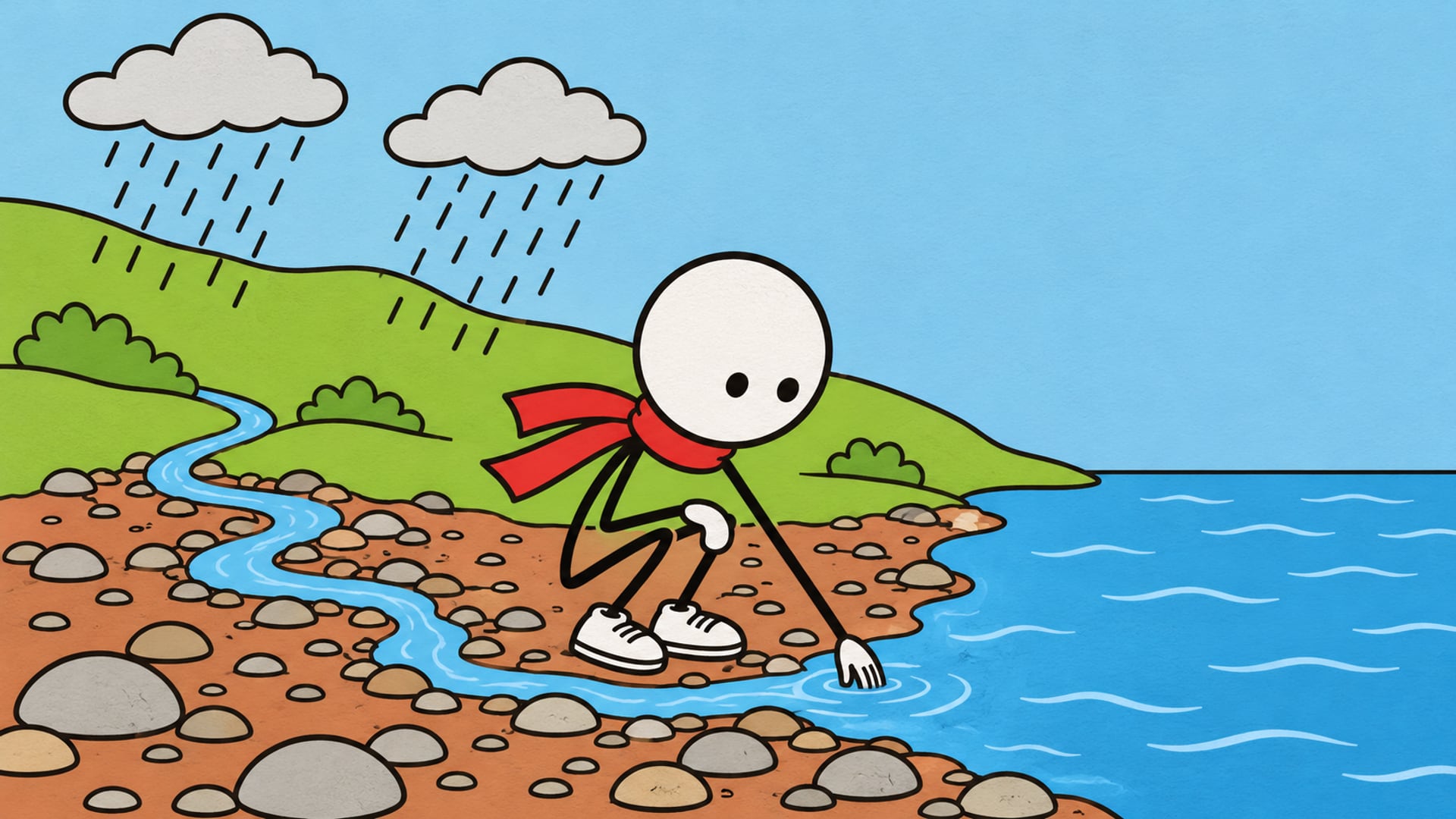
Stand next to a clear stream the morning after a rain. The water looks like nothing but water, and you can see straight down to the pebbles.
Now follow it. It runs downhill into a bigger stream, then into a river, then out to the sea. The whole way, it is carrying something you can't see: minerals, dissolved so finely that the water stays clear.
The ocean is salty because rain and rivers keep carrying dissolved minerals from weathered rock to the sea, and the ocean keeps many of those ions while the water itself cycles on through the air and the rivers. An ion, here, is just a dissolved piece of a mineral.
NOAA says rainwater is slightly acidic, which helps it dissolve rock as it falls and runs over land. NOAA also estimates that rivers worldwide deliver about four billion tons of dissolved salts to the ocean each year.
What the stream is carrying
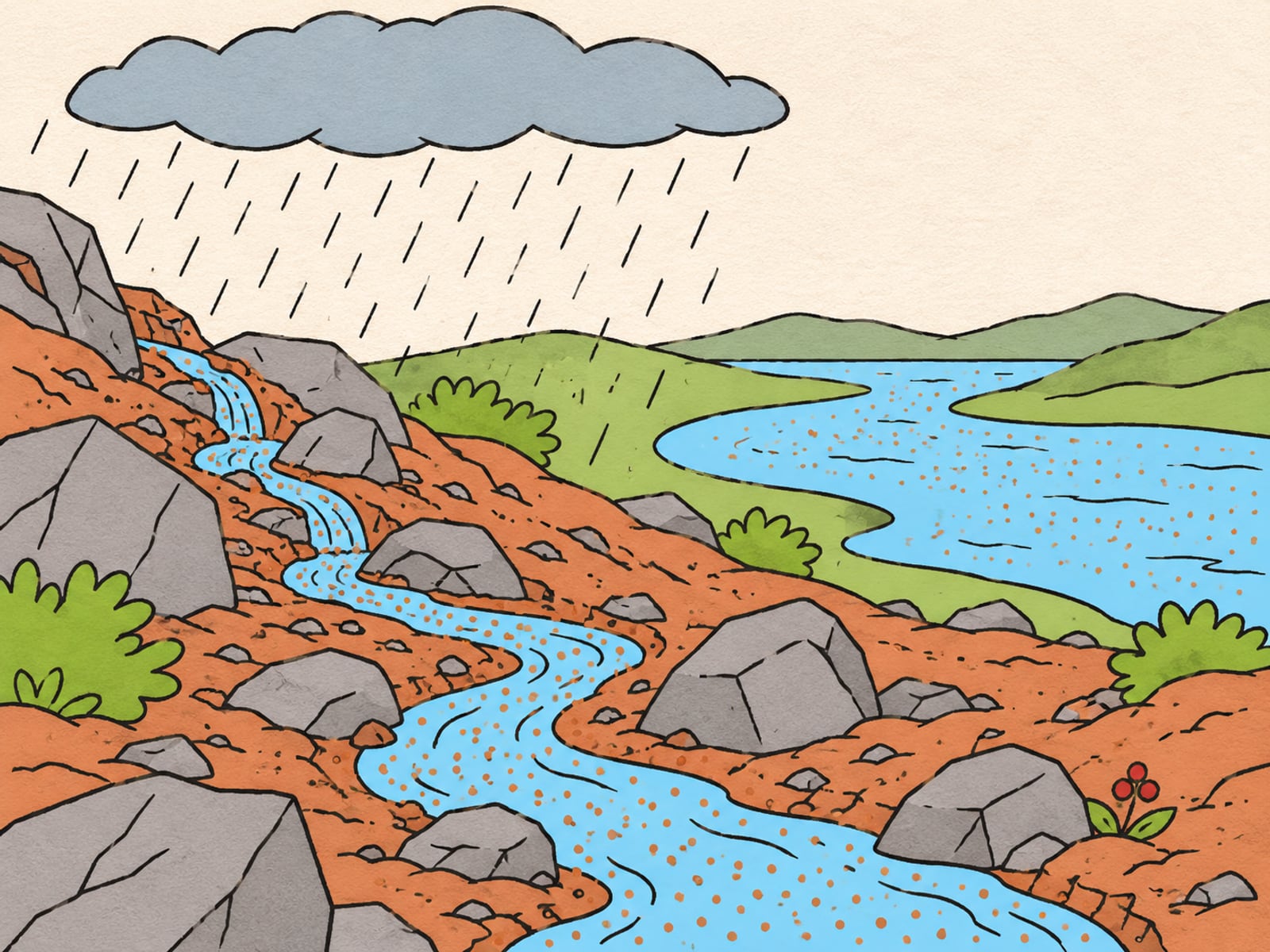
Rainwater is slightly acidic, and as it falls and runs over land it weathers rock, dissolving ions and minerals. Every shower on a hillside takes a little of the hillside along.
Streams pick up what the rain loosens and carry it along. The water stays clear, so nothing looks different. But the cargo adds up.
Four billion tons a year is the NOAA estimate for what rivers deliver, in dissolved salts alone. That is a lot of invisible freight for water that looks this clean, and NOAA explains that the ocean keeps many of those ions while fresh water keeps moving.
The same story plays out on every continent. Fundación Aquae, a Spanish foundation, names the Mississippi, the Amazon and the Yukon as rivers carrying dissolved material toward the Gulf of Mexico, the Atlantic Ocean and the Pacific Ocean.
Help from below
Rivers are not the only supplier. The seafloor adds salts and metals too.
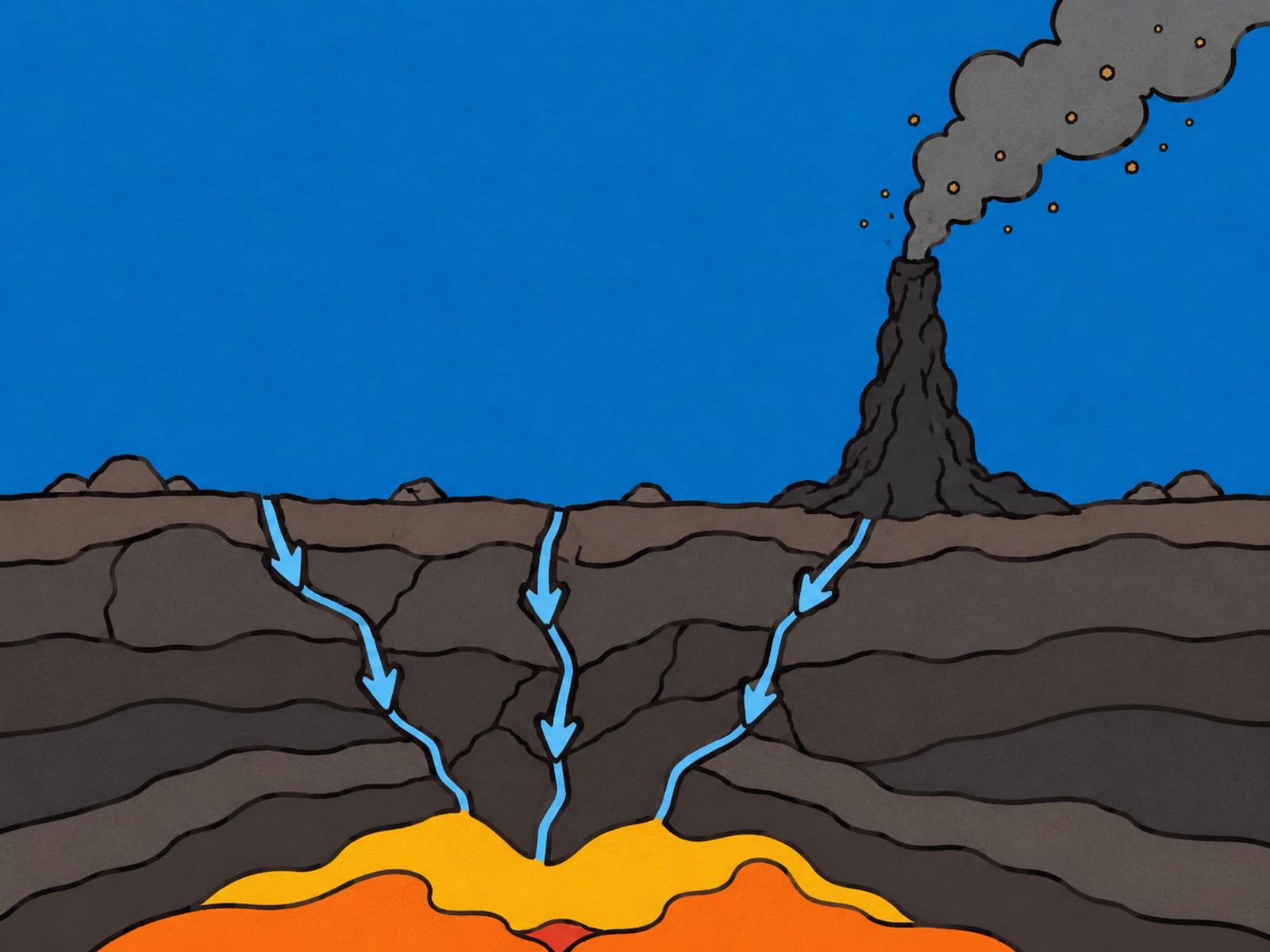
Near the places where the oceanic crust is spreading, seawater seeps down into cracks. Magma below heats it to roughly 300 to 400°C. At that temperature the water dissolves metals and other elements out of the basalt around it, then the mineral-rich fluid comes back up through hydrothermal vents, according to NOAA's Pacific Marine Environmental Laboratory.
Some vents are called black smokers. They release metallic sulfide particles, including compounds of iron, zinc, copper and sulfur.
Underwater eruptions add to the mix. NOAA says volcanic activity releases minerals directly into seawater.
So, the ocean gets its minerals from two directions at once: down from the land, and up from the seafloor.
Why the rivers stay fresh and the sea doesn't
Here is the puzzle most people hit next. If rivers deliver salt, why aren't the rivers salty?
The answer is time. NOAA JetStream gives an average river residence time of about 12 to 20 days. Water can stay in the ocean for thousands of years. In other words, a drop in a river is on its way out in a matter of weeks, while a drop in the ocean can sit for ages.
Dissolved minerals pass through rivers quickly. Then they collect in the ocean, from rivers all over the world, over geological time.
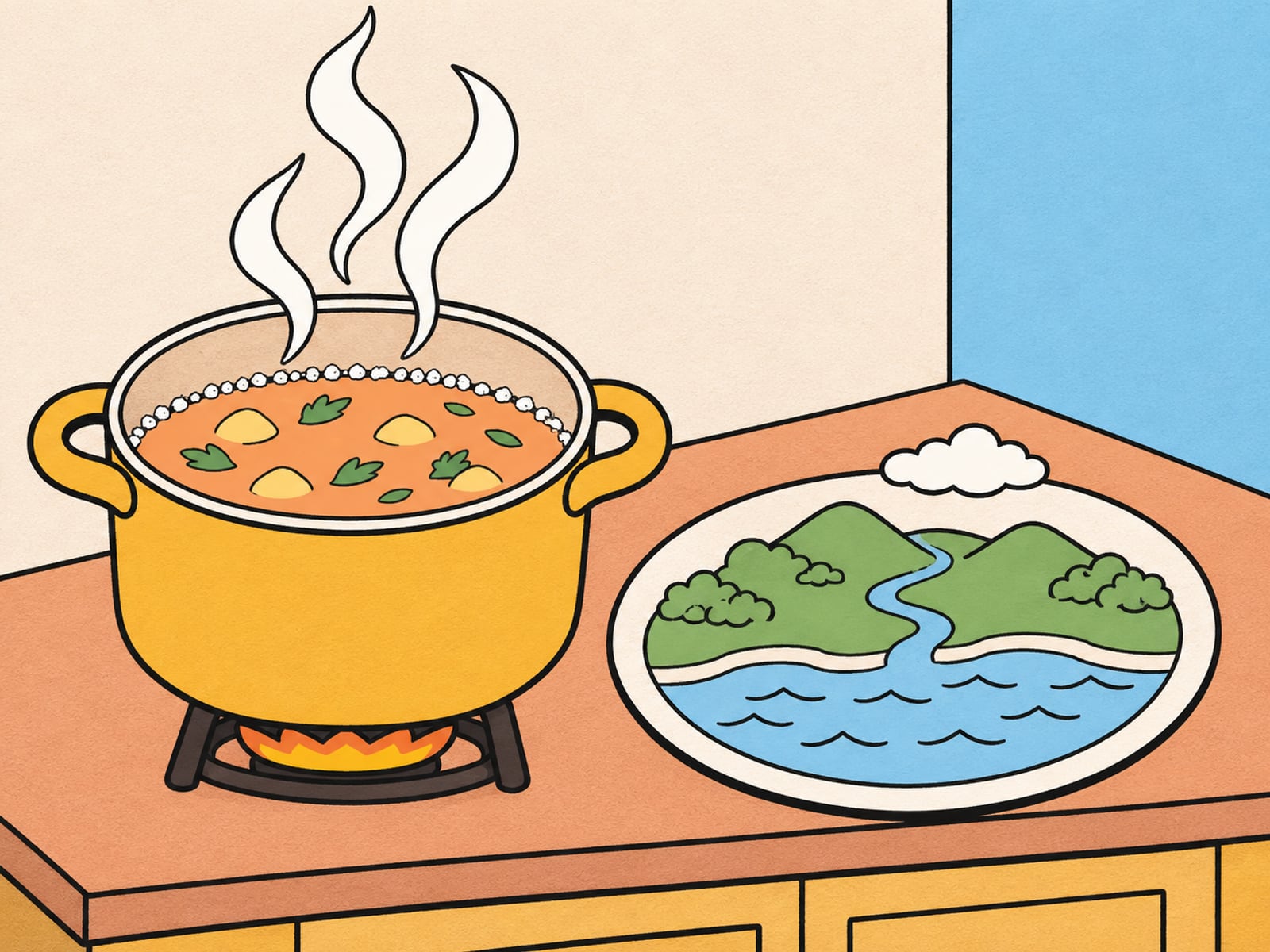
Think of it like this: a pot of soup on a low simmer. Steam leaves. The salt doesn't. The water that evaporates from the ocean goes around again through the air and the rivers, and the dissolved salts are left behind.
What does that leave? NOAA JetStream puts average ocean salinity at about 35 parts per thousand, or roughly 3.5% dissolved salts by weight. Sodium and chloride ions together make up about 85% of the dissolved ions, and they form the sodium chloride of table salt. Magnesium and sulfate add roughly another 10%. Calcium, potassium, bicarbonate and other ions make up the rest.
Rivers bring the salt, and the ocean keeps many of the ions.
Two places saltier than the ocean
Average is just an average. Two famous bodies of water show what happens when the balance tips.
1. The Dead Sea: no way out
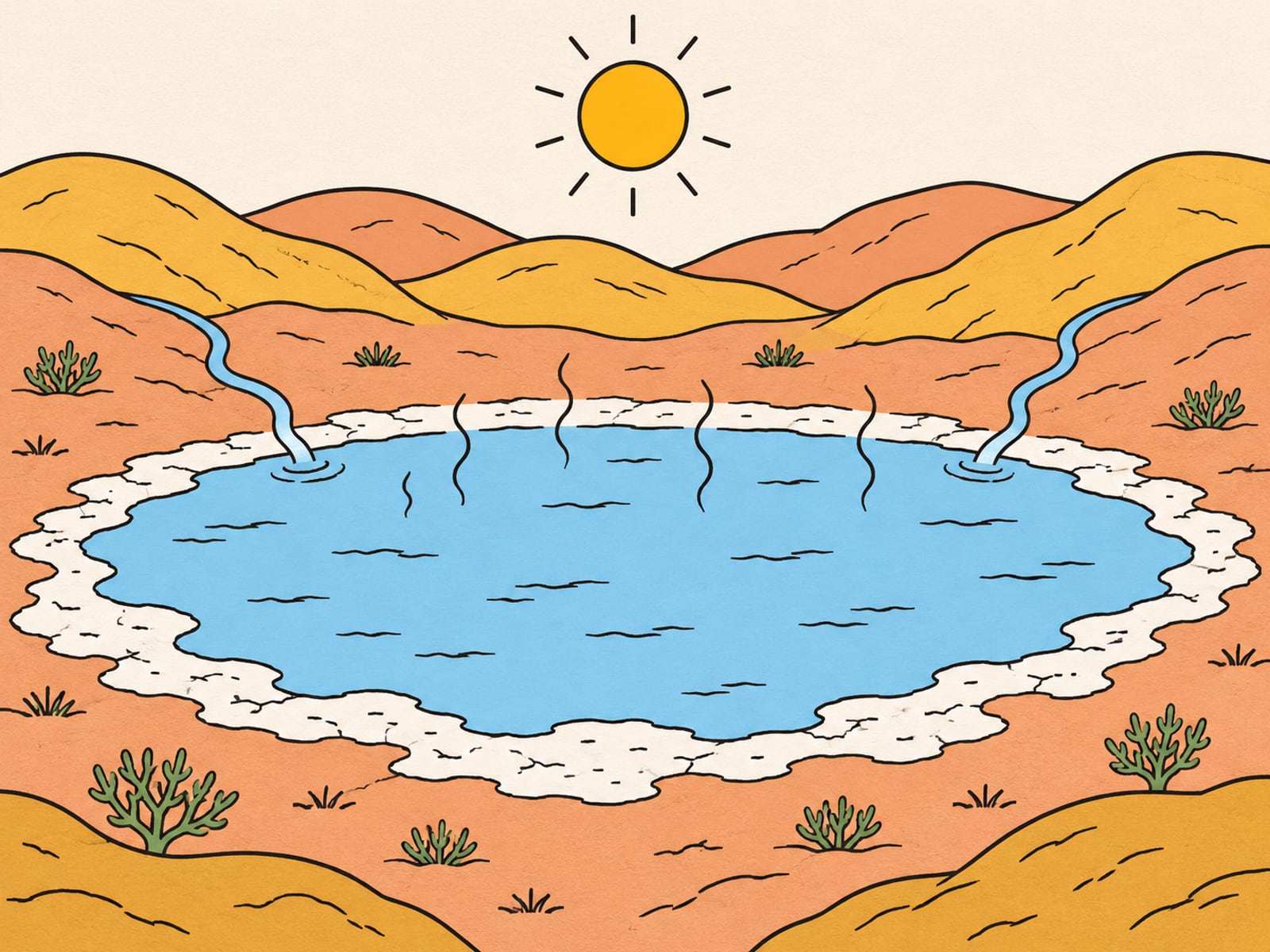
The Dead Sea is technically a hypersaline lake, not an ocean sea. It has no outlet, so water leaves only by evaporation, and the dissolved minerals stay put. USGS reported about 34% salinity in 2022, roughly ten times the average ocean.
2. The Red Sea: a narrow door
The Red Sea is one of the saltiest open seas. A 2015 coastal environment report gives about 40.6 parts per thousand in its deep basins. Evaporation there is intense, rainfall is minimal, river inflow is negligible, and exchange with the Indian Ocean is restricted through the Bab el-Mandeb Strait.
The record
| Date | What happened | Source |
|---|---|---|
| Dissolved salts rivers deliver to the ocean each year | about 4 billion tons | NOAA, "Why is the ocean salty?" |
| Temperature of seawater heated in the crust near vents | roughly 300 to 400°C | NOAA PMEL, "Hydrothermal vents" |
| Time water stays in a river, and in the ocean | about 12 to 20 days; thousands of years | NOAA JetStream, "What a Cycle!" |
| Average ocean salinity; sodium and chloride share of the ions | about 35 parts per thousand; about 85% | NOAA JetStream, "Sea Water" |
| Salinity in the Red Sea's deep basins (2015 report) | about 40.6 parts per thousand | State of the Coast Environment Report, 2015 |
| Dead Sea salinity (USGS, 2022) | about 34%, roughly ten times the ocean | USGS, "Landsat Update March 2022" |
Questions people ask
Why doesn't rain make the ocean fresh? 01
The ocean holds an enormous inventory of salt. When water evaporates from it, the dissolved salts are left behind, and the water that returns through rain and river flow keeps cycling. The salt stays in the basin.
Why is the water near a river mouth less salty? 02
River water and seawater mix there. The U.S. EPA describes estuaries as mixing zones where river water becomes increasingly saline toward the sea. Research on Chile's Valdivia estuary, from the University of Chile, shows that greater river flow produces a salt wedge, while lower flow produces more mixing.
Why can some lakes become salty while others stay fresh? 03
It depends on whether the lake has a way out. A lake with regular inflow and an outlet or other drainage is usually fresh. A closed lake can turn salty, because evaporation leaves the minerals behind.
Why are some parts of the ocean saltier than others? 04
Each region has its own balance of evaporation, rainfall, river inflow, melting ice and ocean circulation. Mexico's UNAM Institute of Geography reports that salinity varies among the Gulf of Mexico, the Gulf of California and Pacific waters because of climate, circulation and river influence. The Gulf of California is saltier where evaporation exceeds precipitation and runoff.
Where all that salt goes
The ocean works as a very slow collection point. Rain loosens minerals from rock, rivers carry them downhill, vents and volcanoes add their own, and the water that leaves by evaporation leaves the salt behind.
Go back to that clear stream. Its water was only passing through. The salt it carried is the part that stays.
Rivers bring the salt, and the ocean keeps many of the ions.
Sources

- NOAA, "Why is the ocean salty?"
- NOAA, "Why is the ocean salty, but rivers flowing into it are not?"
- NOAA Pacific Marine Environmental Laboratory, "Hydrothermal vents"
- NOAA JetStream, "Sea Water"
- NOAA JetStream, "What a Cycle!"
- U.S. EPA, "Indicators: Salinity"
- USGS, "Landsat Update March 2022"
- State of the Coast Environment Report, Red Sea salinity section, 2015
- UNAM Institute of Geography, "Salinidad"
- Fundación Aquae, "Por qué el agua del mar es salada"
- University of Chile, "Caracterización hidrográfica del estuario del río Valdivia"