 SPICYIQ
Why Can You See the Moon During the Day?

The Moon shines by reflecting sunlight, and that light is bright enough to show against the blue daytime sky. Stars are far fainter, so the sunlight scattered by the air hides them. Whether the Moon is up in daylight depends on its phase, because each phase rises and sets at different hours.
In this explainer +
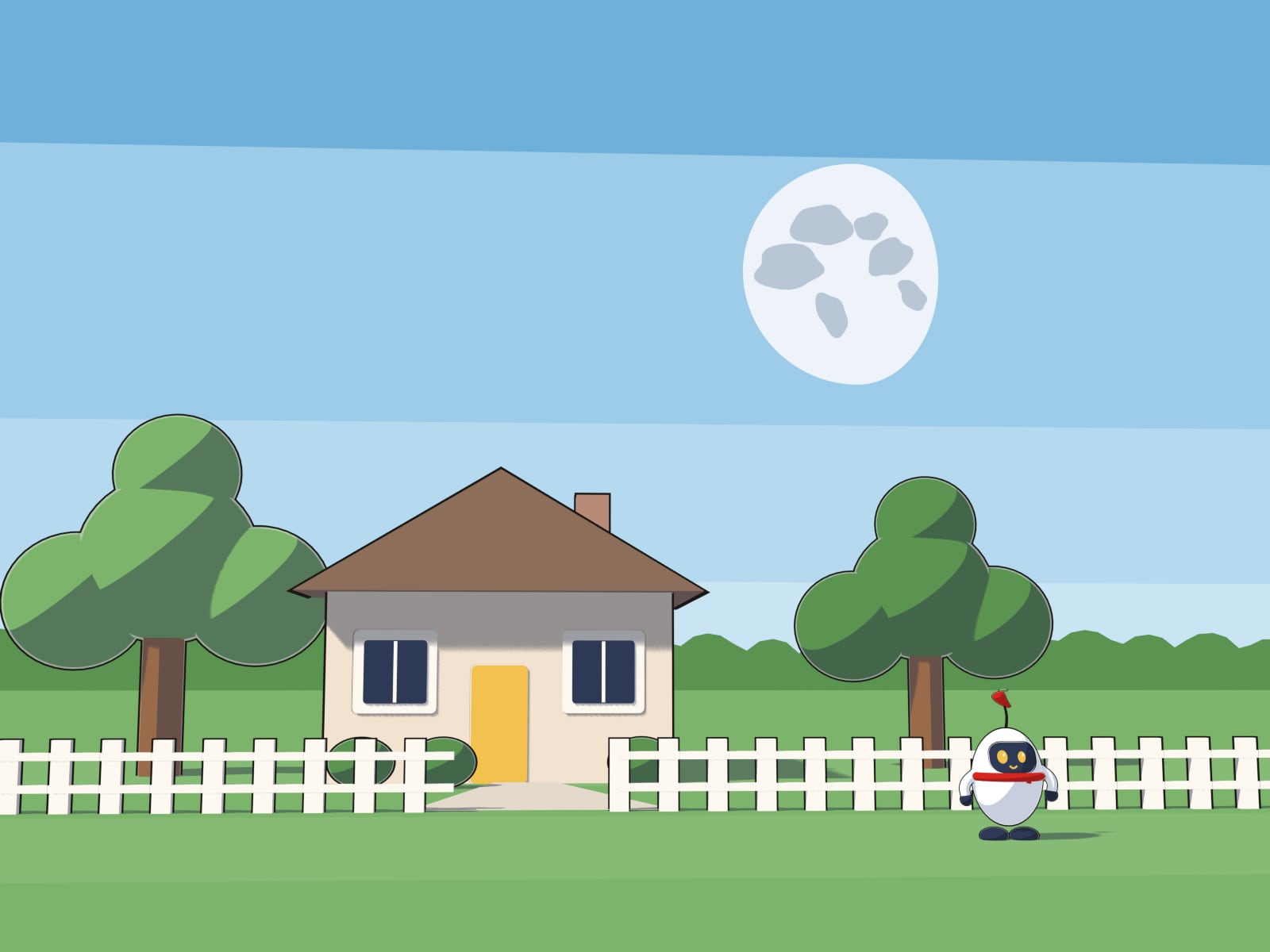
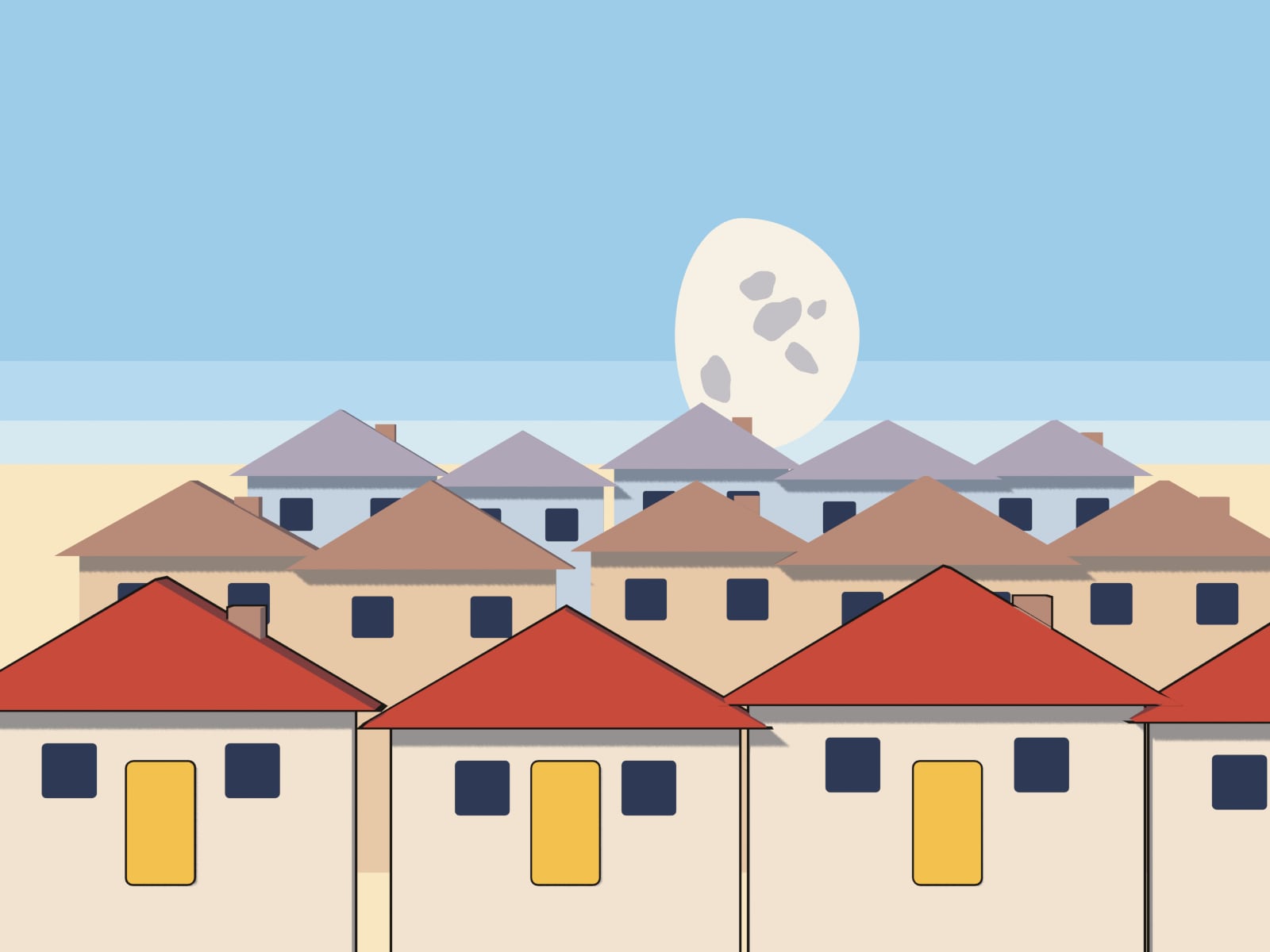
On the morning of November 28, 2026, a pale Moon hung in a clear blue sky just outside Houston, Texas.
It is a little past full, the stage astronomers call waning gibbous. The disk is bluish-white with soft gray markings, and the sky around it is empty. No stars, no clouds, just a Moon that seems to have turned up for the wrong shift.
The answer is short. You can see the Moon during the day because it reflects enough sunlight to stand out against the blue sky, while stars are much fainter and the scattered sunlight in the air overwhelms them.
The rest is timing. Every phase of the Moon keeps its own hours in the sky, and a Moon this close to full is visible only briefly after sunrise or before sunset.
A floodlight against a sky full of candles
The Moon makes no light of its own. It is a ball of rock lit by the Sun, and half of it is always lit. What reaches your eyes is that sunlight bouncing back.
That bounce is strong. The Moon is also close, which gives it a greater apparent surface brightness than distant stars. The Moon can be seen day or night, as long as it sits in the right part of the sky.
Think of it like this: a lit candle in a sunny room is still lit, you just stop noticing it. Stars are the candles. Their light is much fainter, and sunlight scattered through Earth's atmosphere drowns it out before it gets to you. The Moon is closer to a floodlight, so it holds its place while the candles vanish.

Why the daytime Moon looks pale and bluish
The Moon over Houston that November morning was pale, close to white with a cool tint.
The cause is the same air that makes the sky blue. Between you and the Moon lies a layer of atmosphere full of scattered sunlight, so blue skylight adds to the Moon's reflected sunlight. The result is a bluish-white disk. The same air is why a Moon low on the horizon can look orange. How the eye and brain read a bright object against a blue background adds to the effect.
The gray markings tell a different story. They are the maria, dark plains made from ancient lava flows that absorb much of the visible light reaching them. Against the brighter lunar terrain they read as darker gray patches. In daylight the bright sky lowers the contrast, so the gray patches are harder to pick out by eye. That morning they were there, but soft.
Why moonrise slides later every day
A Moon that is up in daylight is a matter of clocks. The Moon rises, on average, about 50 minutes later each day.
The reason is the Moon's orbit. It takes about 27.5 days to circle Earth, and it moves eastward along that path while Earth turns. So, when Earth has made one full turn, the Moon has moved on. Earth must turn a little farther before the Moon reaches the same spot on the horizon.
Add up those delays and moonrise slides through the whole day over a month. Some days the Moon rises in the evening, some days near noon, some days after midnight. That puts the Moon in the daylight sky on nearly every day of the month, except the few days around new Moon and full Moon.
On an average day the Moon is above the horizon for about 12 hours, but those hours do not always line up with the Sun's, so the daylight share changes from day to day. The Moon spends almost as much time in the daytime sky as in the nighttime sky.
The same orbit works the same way from Mexico or from Spain. Latitude, season and local sunrise times change the exact hours.
A half-lit Moon in the afternoon sky
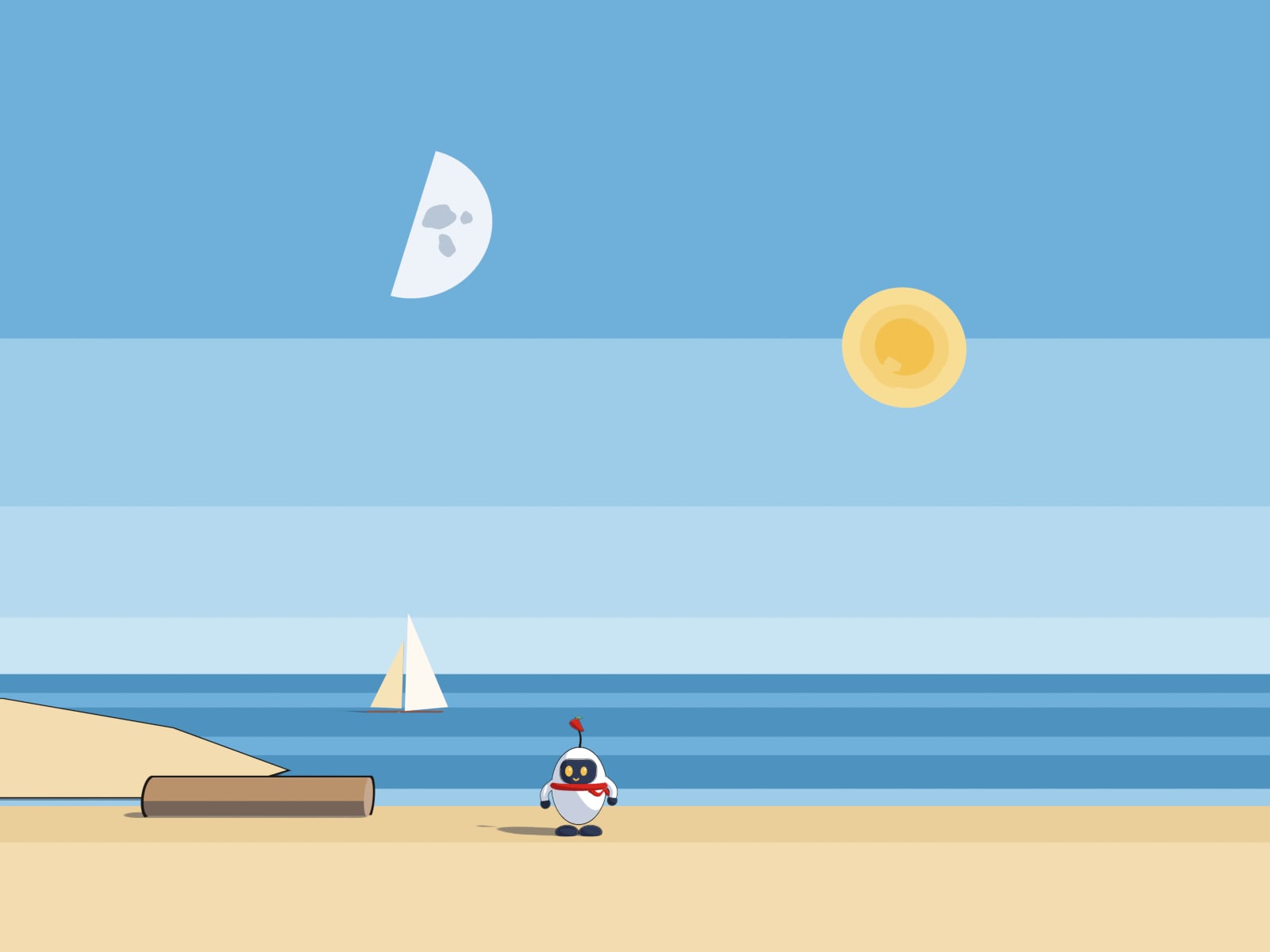
A first-quarter Moon rises around noon, stays up through the afternoon and sets around midnight. That is a half-lit Moon crossing a blue sky while the Sun is still up.
A last-quarter Moon runs the other way, and the shapes follow the Moon's phases. It rises around midnight and sets around noon, so the morning is its best time. In other words, each phase has a shift, and you can guess the shift from the shape.
The two extremes are the hard ones. A full Moon rises around sunset, opposite the Sun, so it is almost never a daytime sight. A new Moon sits close to the Sun with its dark side facing us, and the Sun's glare hides it. A nearly full Moon, like the one over Houston, can still show up briefly before sunset or after sunrise.
Can the Sun and Moon share the sky? Yes. Both can be above the horizon at once, and the Moon's lit side always faces the Sun. A crescent's bright edge therefore points toward the Sun's side of the sky, though perspective can make that look slightly off.
Sometimes they overlap. On June 10, 2021, the Moon covered part of the Sun in a partial eclipse, photographed from Arlington, Virginia, as the Sun rose behind the United States Capitol. A solar eclipse happens when the Moon moves between the Sun and Earth.
By the numbers
| Figure | Value | Source |
|---|---|---|
| Average delay in moonrise each day | about 50 minutes | NASA Skywatching FAQ |
| Time for the Moon to orbit Earth | about 27.5 days | NASA Skywatching FAQ |
| First-quarter Moon | rises around noon, sets around midnight | The American Practical Navigator, Chapter 15 |
| Last-quarter Moon | rises around midnight, sets around noon | The American Practical Navigator, Chapter 15 |
| Time the Moon spends above the horizon on an average day | about 12 hours, not all of it in daylight | NC State University; Space.com |
| Full Moon | rises around sunset | NASA, Why Can You See the Moon During the Day? |
Questions people ask
Why is the Moon out during the day? 01
Its orbit keeps shifting its rise and set times. Over a month, that puts it above the horizon in daylight for much of the cycle, and the phase tells you which part of the day to check.
Why does the Moon have phases? 02
The phase depends on the changing angle between the Sun, Moon and Earth. It does not come from Earth's shadow, except during eclipses. Half of the Moon is always lit, and the angle decides how much of that lit half faces us.
Why does the Moon rise about 50 minutes later each day? 03
The Moon moves eastward in its orbit while Earth turns once. Earth has to rotate a little farther to bring the Moon back to the same horizon spot, and that extra turn takes about 50 minutes on average.
Why can't we see a new Moon easily? 04
At new Moon, its dark side faces Earth and it sits close to the Sun. The thin lit edge is lost in the Sun's glare, so there is nothing bright enough to find.
The Moon is not only a night object
Think back to that November morning: a pale Moon, a little past full, in a clear blue sky just outside Houston, Texas. Nothing is wrong with it. It is doing what the orbit says it should.
The Moon reflects sunlight, the air scatters the Sun's light into a blue backdrop, and the rise time slips about 50 minutes a day until the Moon lands in daylight hours. The Moon is not only a night object, and its phase tells you when to look for it in daylight.
Sources
Where the facts come from, and where to read more.
- NASA, "Why Can You See the Moon During the Day? We Asked a NASA Scientist, Episode 19"
- NASA Imagine the Universe, "Why the Moon looks white in daytime"
- NASA Science, "Moonlight"
- NASA Skywatching, "FAQ"
- U.S. Naval Observatory, "The American Practical Navigator, Chapter 15"
- NASA Cosmicopia, "Questions and Answers: Earth"
- NC State University, "Why We Can See the Moon During Daylight Hours"
- Space.com, "Why Do We See the Moon in Daylight?"
- Live Science, "Daytime moon: Why can we sometimes see the moon in broad daylight?"
- NASA, "A Partial Solar Eclipse"
- NASA, "June 10, 2021 Eclipse"
- UNAM, "Preguntas frecuentes a Julieta Fierro"
- RTVE, "¿Por qué a veces se ve la Luna de día?"